Start with the closure, not just the fabric
A jacket with a stuck zipper or trousers with a loose hook can feel unwearable even when the rest of the garment is in good condition. Closures take repeated strain as you dress, move and launder clothes. A quick check before washing can help you spot trouble while it is still small.
Look for loose threads near zipper teeth, fabric caught in a slider, a snap that no longer meets its other half, or a hook that has begun to pull away from its stitching. Check the care label before cleaning, especially if the garment has a coating, lining or delicate trim. Treat a damaged closure gently rather than testing it over and over; repeated pulling may turn a manageable repair into a larger one.
Handle zippers without forcing them
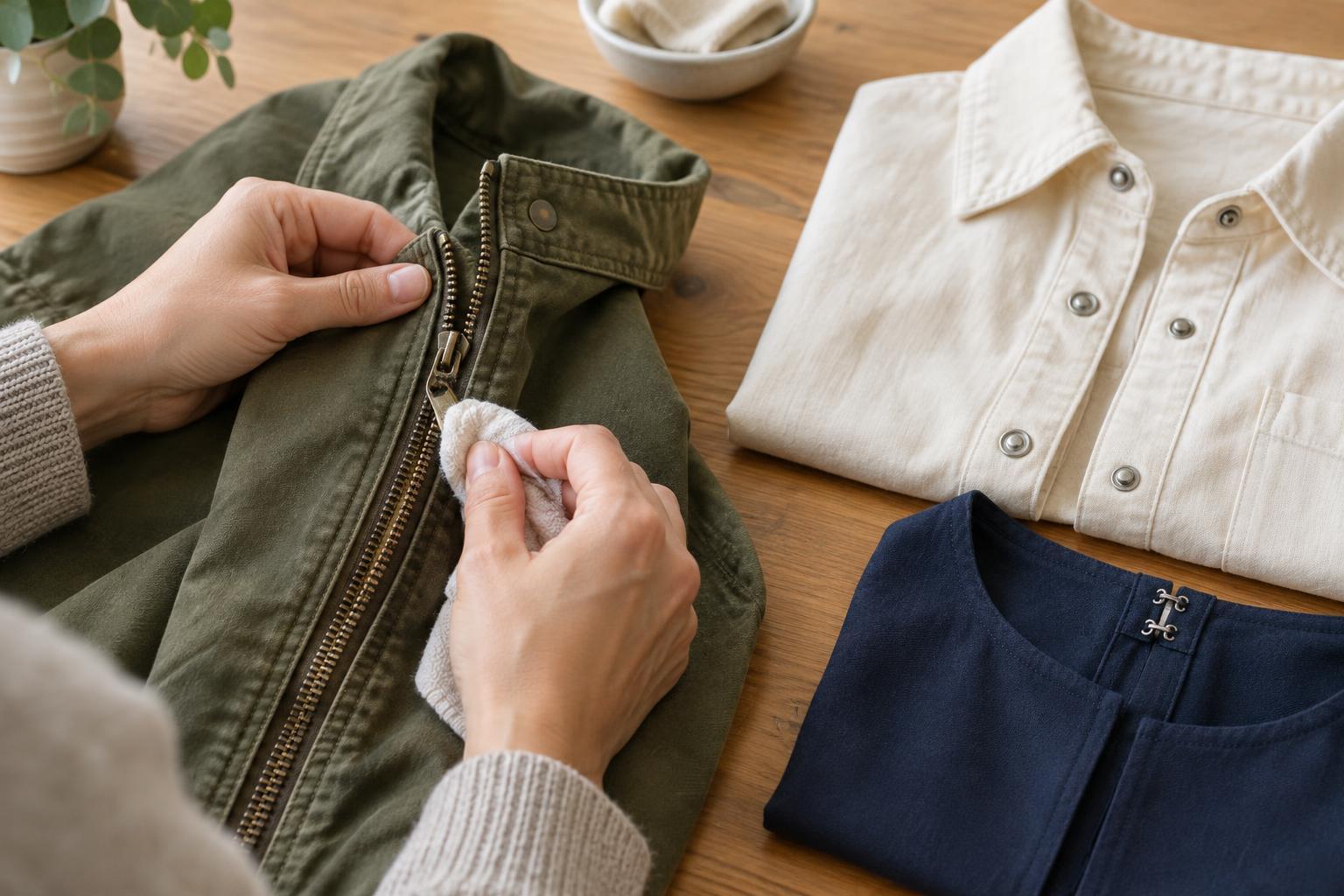
When closing a zipper, bring the two sides of the garment together so the slider does not have to pull tight fabric into place. On a separating jacket zipper, seat the insertion pin fully in its box before pulling the slider upward. If the zipper resists, stop and look for trapped lining, a loose thread or misaligned teeth. Pulling harder can damage the slider or catch more fabric.
If fabric is caught, ease the slider back a little while gently freeing the material. Work slowly instead of tugging the garment in opposite directions. A soft brush can remove visible lint from zipper teeth. Avoid applying household oils or waxes without considering the fabric around the zipper: they can leave marks and may not solve a damaged-tooth or worn-slider problem.
For laundering, close zippers unless the garment’s care instructions say otherwise. This helps keep the teeth from snagging nearby fabric and reduces twisting around the opening. Turn a particularly snag-prone item inside out or place it in a mesh laundry bag if its care label permits machine washing.
Give snaps and hooks a lighter touch
To open a snap, hold the fabric close to both halves and separate them with steady pressure. Pulling from the edge of a shirt or pocket puts extra strain on the fabric and stitching around the fastener. To close it, line up both halves before pressing. If a snap needs unusual force, check whether it is misaligned or surrounded by folded fabric.
Hooks and eyes often sit at a waistband or neckline, where they bear tension when the garment is worn. Fasten them before washing so they are less likely to catch on other items. A mesh bag can offer additional protection for small, exposed hooks. If a hook has loosened, avoid bending it back and forth repeatedly; metal can weaken, and the underlying stitching may be the real issue.
Closures should not have to hold a garment together under constant heavy strain. If a waistband hook repeatedly comes undone or the fabric around a snap puckers sharply when fastened, check the fit and alignment. Repairing the fastener alone may not address the pressure causing it to fail.
Prevent damage in storage and know when to repair
Before putting a garment away, make sure its closures are clean and dry. Hang structured pieces without crowding them, so a zipper or hook is not pressed against neighboring fabric. For folded items, tuck exposed hooks inward and avoid placing a heavy stack directly over a rigid closure. These small habits can reduce snags and pressure marks.
Some problems are suitable for a simple fix: loose stitching around a hook can often be reinforced, and a caught thread may be removable without disturbing the zipper. Missing teeth, a separating zipper that will not stay closed, or a snap that has torn through fabric generally calls for a more substantial repair. A tailor or repair shop can help assess whether the closure can be replaced and whether the surrounding material is strong enough to support it.
Make closure checks part of an occasional garment-care routine rather than waiting until something fails. Fasten each item once, notice whether it moves smoothly, and set aside anything that needs attention. A few careful seconds can make favorite clothes easier to wear and help you decide when a small repair is worthwhile.