Decide what you want the shoes to do
Shoe color is easier to choose when you start with a question: should the shoes blend in, connect parts of the outfit, or stand out? None of these is the correct choice for every look. A dark shoe under dark trousers can create a quiet, continuous line. A shoe that echoes the color of a top can make the outfit feel connected. A bright shoe can become its main point of interest.
Try setting out an outfit before choosing footwear. If the clothes already have a strong pattern or several colors, shoes that blend with one existing shade may let the rest of the outfit lead. If you are wearing a simple shirt and trousers, a contrasting shoe may add enough interest on its own. This gives you a more useful starting point than trying to match every item exactly.
Use the trousers or hem as a starting point
The clothing nearest your shoes has a strong effect on how their color reads. Black shoes with black trousers look relatively continuous, while white shoes beneath the same trousers make a visible break. Neither result is better; the difference is where the eye pauses. If you want an uninterrupted line, try footwear close in depth to your trousers or tights. If you want to draw attention to the shoes, choose a lighter, darker, or more colorful pair.
Hem length changes the effect. With wide trousers that cover most of a shoe, even a vivid color may appear only in small flashes as you walk. Cropped trousers, shorts, and shorter skirts reveal more of the shoe and often more of the leg, so the footwear plays a bigger visual role. When a combination feels surprising in the mirror, check how much of each color is visible before deciding that the colors themselves clash.
Repeat a color without demanding an exact match
One way to make distinctive shoes feel at home is to repeat their color somewhere else in the outfit. Burgundy shoes could pick up a burgundy stripe in a shirt, for example. The second appearance does not have to be equally large or precisely the same shade. A small detail can be enough to make the choice look deliberate.
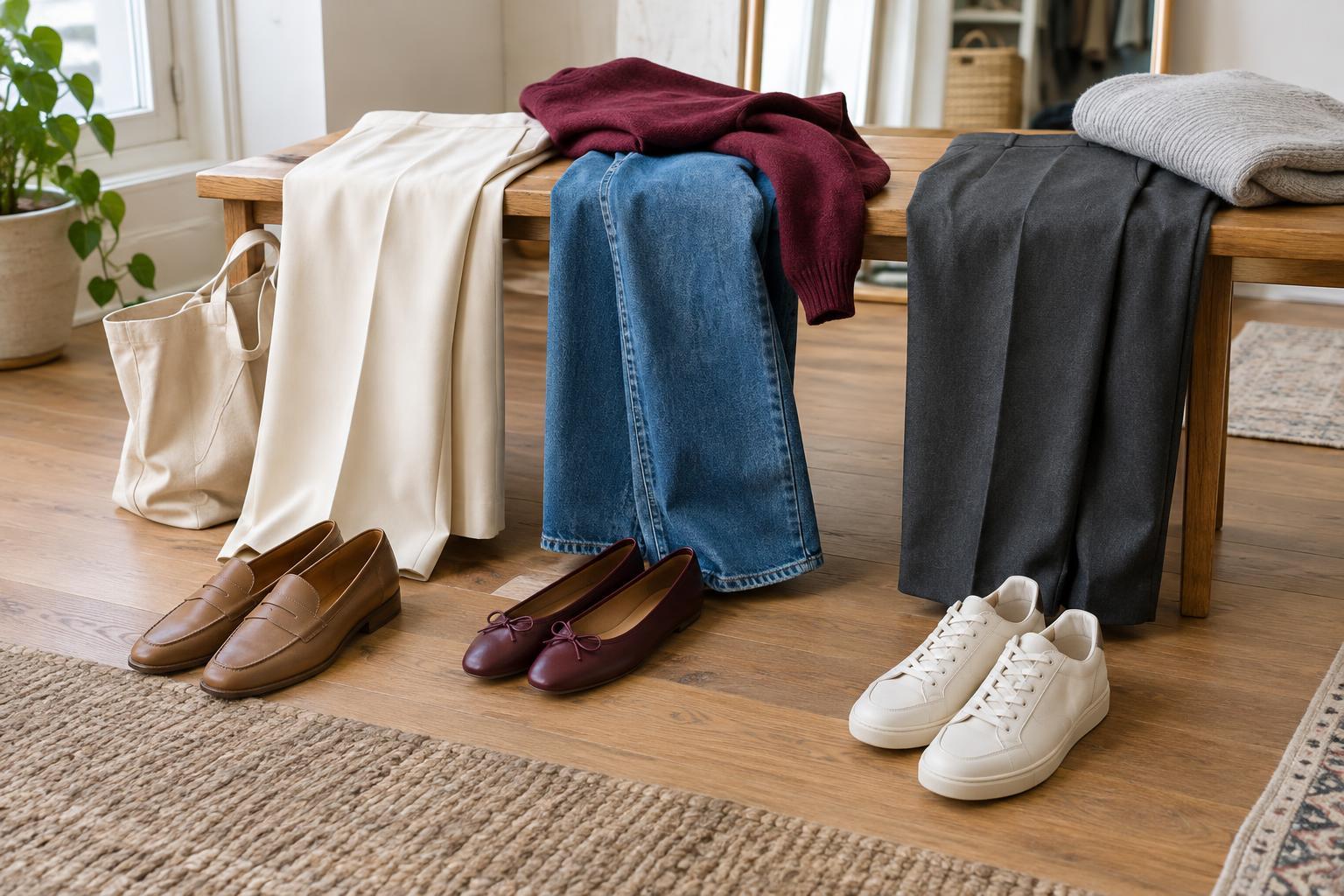
You can also repeat a broader color family. Tan loafers might work with a warm brown bag or a cream knit because the colors share a gentle, warm feel. If matching your shoes to an accessory makes the outfit seem too coordinated for your taste, skip the repeat. Shoes can relate to the trousers or to a pattern in a garment instead. Think of repetition as an option, not a rule that requires buying another item.
Choose contrast that suits the rest of the outfit
Contrast depends on more than whether two colors are different. Bright white sneakers against a dark outfit have a sharp light–dark contrast, even though white is a neutral. Deep red shoes beneath navy trousers differ in hue but may feel less visually abrupt because both colors are relatively dark. Looking at lightness as well as color can help you predict which pair will stand out.
If a shoe color feels too prominent, try placing another light or bright element higher up, such as a pale shirt beneath a jacket. You are not matching the shoes; you are giving the eye another place to land. Alternatively, let the shoes be the only strong contrast and keep the rest of the outfit simple. Wear the complete outfit for a few minutes before judging it, since a pair viewed alone can seem bolder than it does in context.
Test what works with the wardrobe you own
Before buying shoes in a new color, picture three outfits you could wear them with using clothes you already have. Make the examples specific: a pair of jeans and a striped shirt, dark trousers and a knit, or a printed skirt and a plain top. This reveals whether the color fits your real wardrobe rather than an imagined one. It also helps you decide whether you want that pair to be versatile or simply enjoyable with a few favorite outfits.
Photographing two shoe options with the same outfit can make small differences easier to see. Compare whether you prefer a continuous line, a repeated shade, or a clear contrast, then keep whichever serves the day and feels comfortable. There is no need to settle on one shoe color for everything. If you also enjoy looking after collections beyond your wardrobe, browse Vinyl Care · Amsterdam Vinyl Journal for a detour into caring for records.