A finish is not a fiber
Two shirts can both be labeled cotton yet feel completely different. One may have a crisp, smooth surface; the other may feel almost fuzzy. That difference can come from how the fabric was made, but it can also come from a surface finish. Brushing, peaching and sueding are terms commonly used for treatments that raise or alter surface fibers to create a softer hand feel.
These words describe an effect rather than a guaranteed level of warmth, durability or thickness. A lightly finished shirt can still be thin, while a dense fabric can remain relatively firm. Retail terminology also varies, so treat the name on a product page as a starting point. The useful question is what you can see and feel in the garment itself.
What the three terms tend to describe
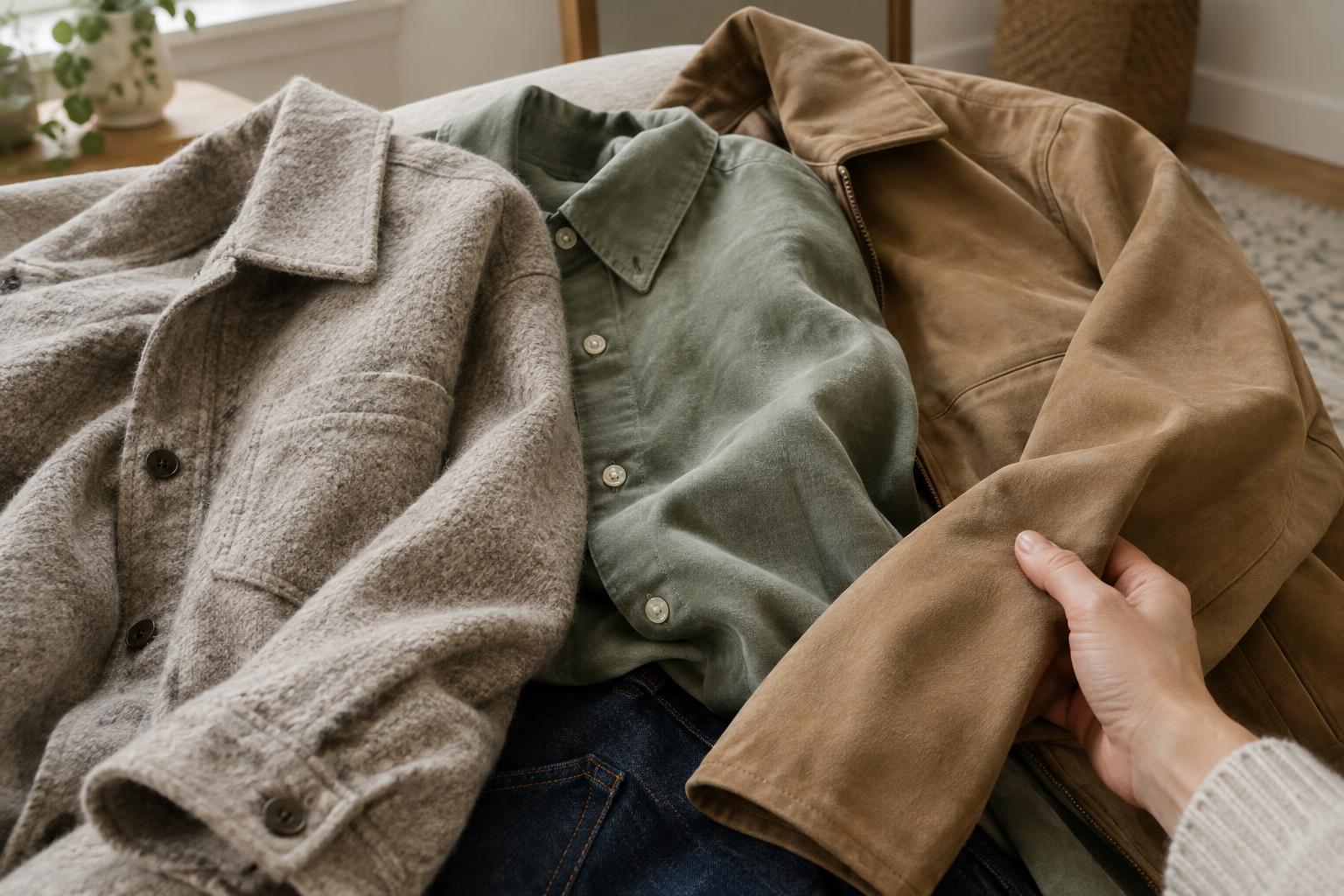
Brushed fabric usually has a noticeable soft nap: tiny fibers have been lifted from the surface. Depending on the fabric and how it is finished, the result may look gently fuzzy or simply feel less crisp. A brushed cotton shirt, for example, can look more relaxed than a smooth cotton shirt in the same color. Brushing may be applied to one side or both, so check the inside as well as the outside.
Peached fabric generally has a finer, subtler surface. The name suggests the soft feel of peach skin: smooth at first touch, with a very slight nap when you move your fingers across it. A peached trouser or overshirt can provide softness without looking distinctly fluffy. Sueded is another term for a soft, finely textured surface intended to suggest the feel of suede. It does not mean the garment contains leather; check the composition label to learn what the fabric is made from.
The boundaries between these descriptions are not precise. If two garments use different terms but look and feel similar, compare the garments rather than assuming the words indicate a meaningful difference. Color and lighting matter, too: a raised surface can make a dark shade appear softer or less sharply defined than it does on a smooth fabric.
How to compare finishes before choosing
Start by looking at the fabric from more than one angle. Does the surface reflect light evenly, or does it appear slightly matte and diffuse? Then run a hand across it in two directions. Some raised surfaces feel different depending on which way you stroke the nap. If you are comparing garments in person, also check whether the finish looks consistent at seams, cuffs and other areas you will notice while wearing it.
Next, separate softness from the qualities you need the garment to have. Hold a section up to the light if opacity matters, gently move it to judge drape, and look at how it recovers after being folded or lightly scrunched. A soft finish cannot tell you by itself whether a shirt will hang loosely, whether trousers will hold a crease, or whether a jacket will feel comfortable over a knit. When shopping online, product photographs and descriptions may help, but they cannot fully convey hand feel; a clear return policy can be especially useful for texture-sensitive purchases.
Finally, consider where the fabric will rub. Bags, seat belts and repeated contact with another garment can change the appearance of some soft surfaces over time. This does not make a finished fabric a poor choice. It means a frequently worn item is worth checking for a texture you will still like after ordinary use.
Using soft surfaces in an outfit
Soft finishes can make an outfit feel less formal without changing its basic pieces. Try a peached overshirt with a plain tee and smooth trousers: the quiet surface contrast adds interest while keeping the colors simple. For a more tactile outfit, pair a brushed shirt with sturdy denim and a smooth belt. The belt and denim provide visual definition beside the softer shirt.
When layering, consider how surfaces interact as well as how they look. A softly finished shirt may grip another layer more than a slick one does, which can make a close-fitting jacket less easy to slip on. If that bothers you, leave a little room between layers or choose a smoother outer layer. For a compact wardrobe, compare a soft-finished version with a smooth version of a piece you already wear often. The better choice is the one that suits your preferred feel and works with the clothes you actually reach for.