Start with the schedule, not the suitcase
Before choosing clothes, write down what you will actually do: travel, attend meetings, have dinner, work between appointments and return home. Note any event with a specific dress expectation. A short trip with informal meetings may need a different wardrobe from one with a presentation or client dinner. Check the forecast close to departure, but plan for ordinary changes in temperature too, such as a cool meeting room or a warm train.
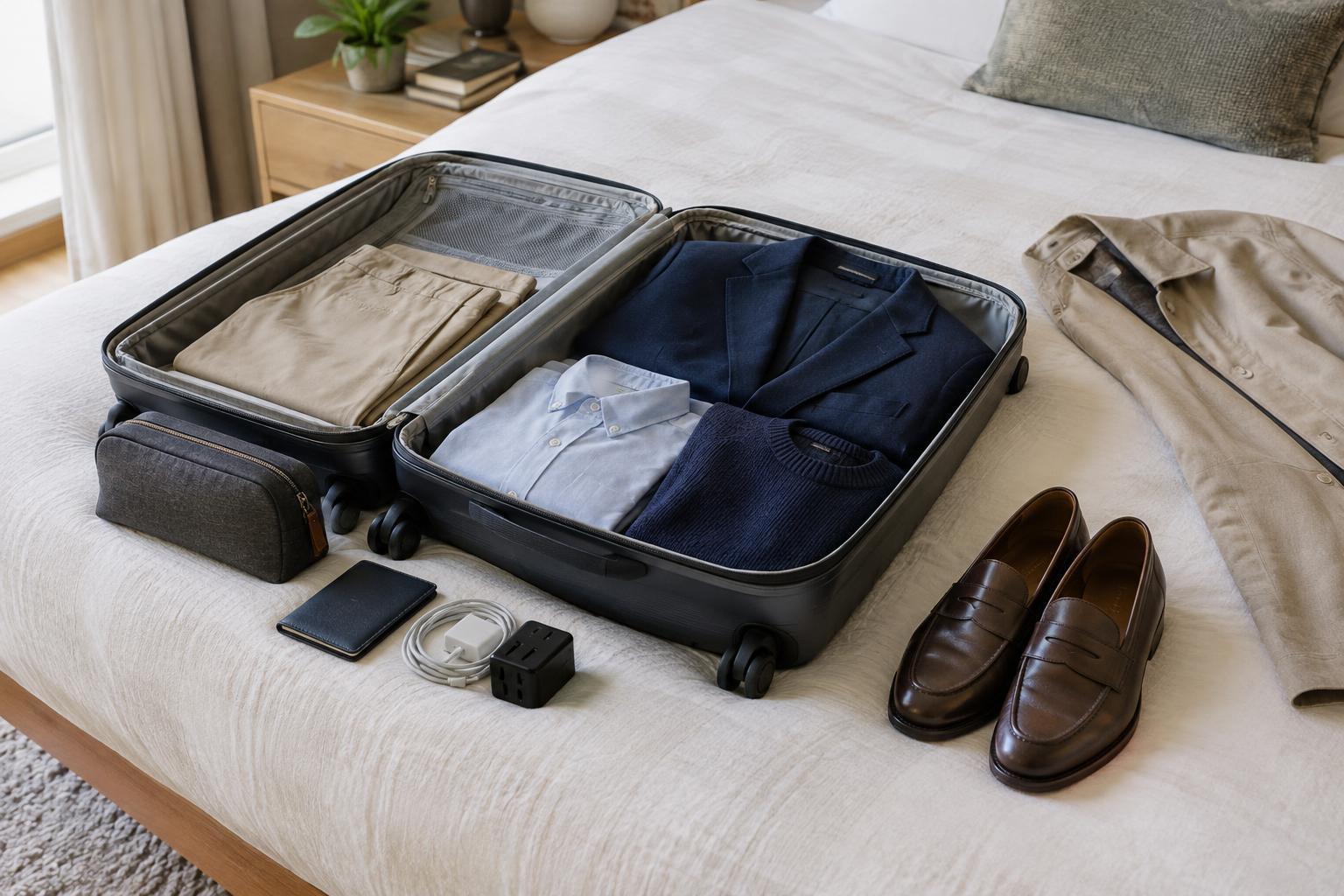
Choose one outfit that meets the dressiest requirement on your schedule, then build the rest of the wardrobe around it. For many trips, a useful starting point is two bottoms, two or three tops, one smart layer and one outer layer suited to the weather. Adjust the number of tops if you expect long days or have limited access to laundry. The aim is not to pack the fewest possible items; it is to bring enough clean, comfortable options without carrying clothes you have no plan to wear.
Choose pieces that work together
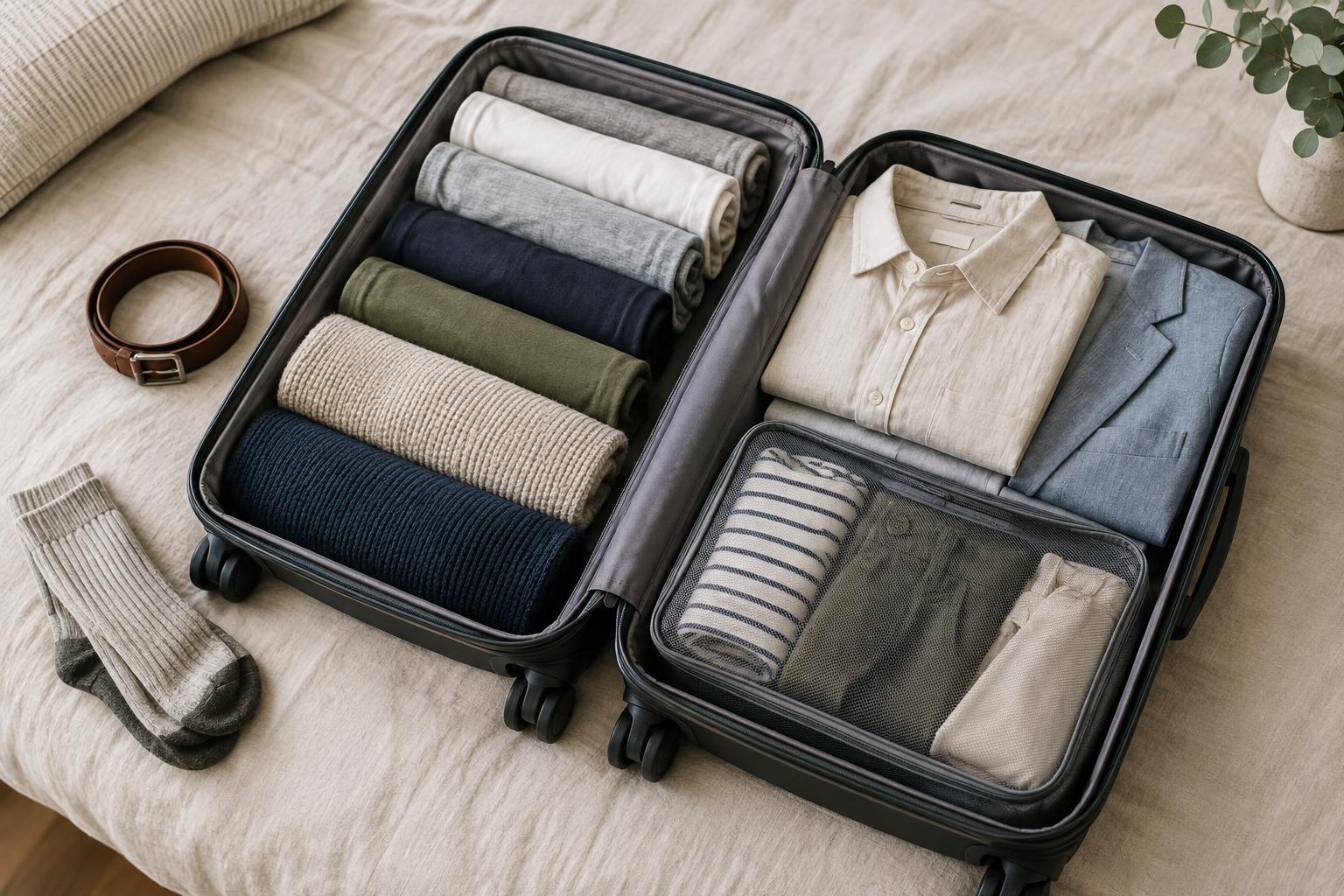
Keep the main garments within a small color palette. For example, navy trousers, a cream shirt and a gray knit can be worn in several combinations, while a patterned scarf or colorful top adds variety. Before packing an item, ask whether it works with at least two other pieces in the bag. This matters most for bulky garments, such as jackets and shoes, which take up space quickly.
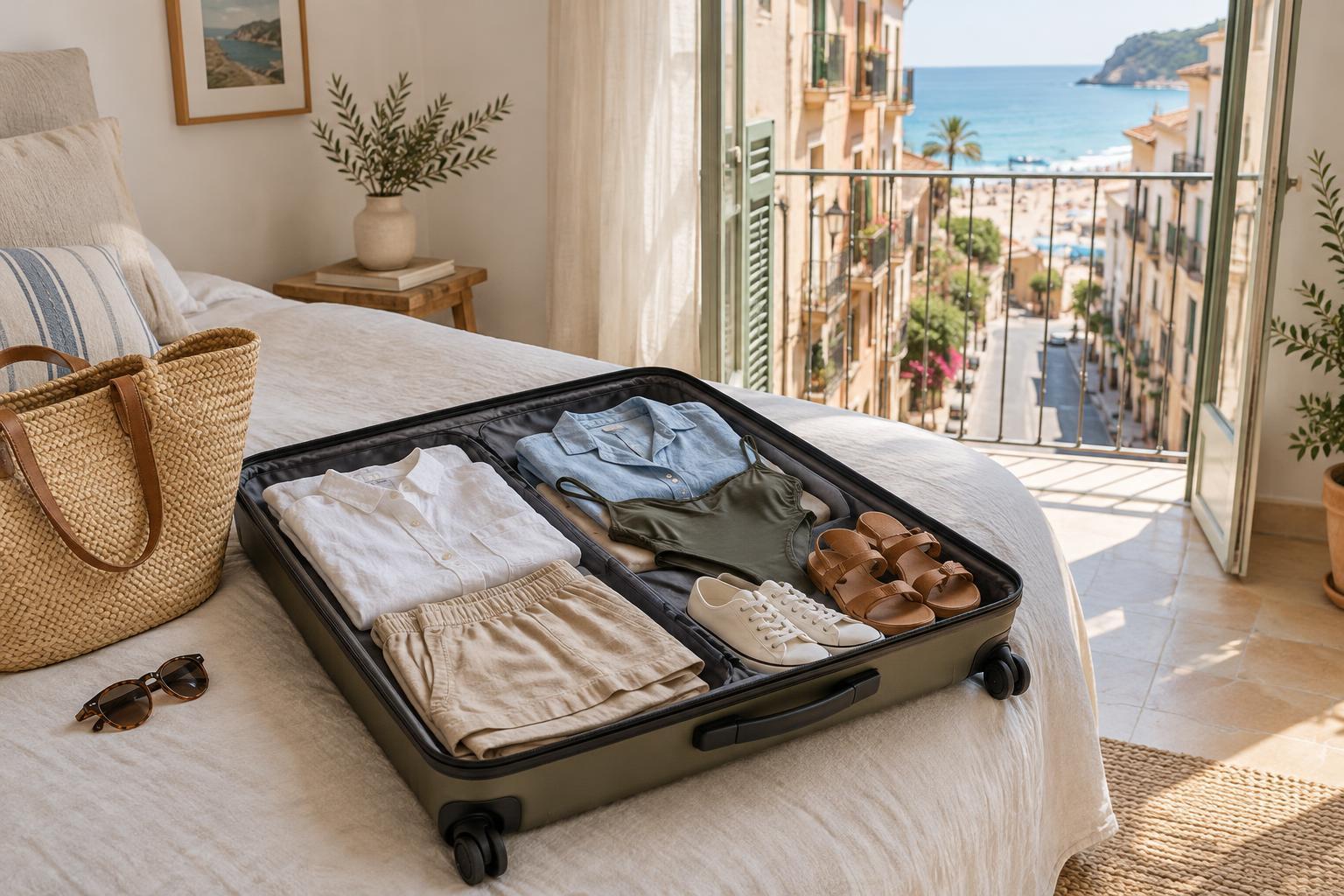
A practical clothing checklist for a short trip is: one travel outfit, one additional bottom, enough tops for your working days, a blazer or other meeting-appropriate layer, a light knit or cardigan, underwear and socks for each day, sleepwear and weather-appropriate outerwear. If an evening event calls for a different look, try changing the top or adding an accessory before adding an entirely separate outfit.
Fabric choice can make repeated wear easier. Items that hold their shape and do not crease heavily in your bag are convenient, but comfort and suitability for the setting matter just as much. Try on the proposed outfits before departure, including the layers. A jacket that looks good standing still may feel restrictive when you sit through a meeting or carry a bag.
Limit shoes, but test them first
Shoes can determine whether a compact wardrobe works. One comfortable pair that suits both travel and meetings may be enough; otherwise, wear the bulkier pair in transit and pack one alternative. Choose shoes you have already worn for a full day rather than relying on a new pair for important appointments. Consider the walking involved between stations, hotels and venues, not just the time spent indoors.
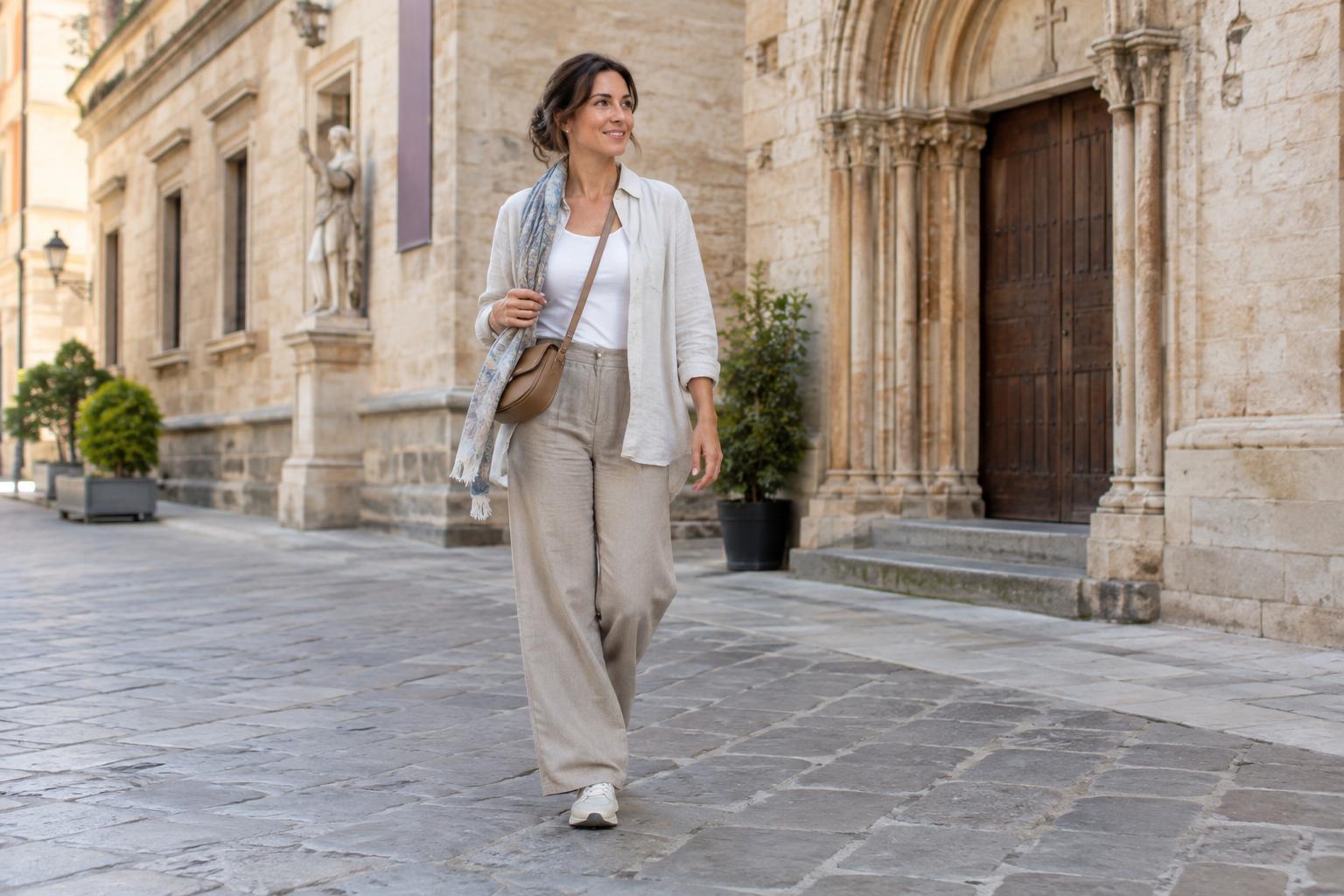
Pack the small accessories that make those shoes and outfits useful: suitable socks or hosiery, a belt if your trousers need one, and any simple jewelry or tie you intend to wear. Keep accessories selective. A single scarf, watch or pair of earrings may change the feel of an outfit without requiring much space. Put essentials such as glasses and any items needed on arrival where you can reach them without unpacking the whole bag.
Make the travel day part of the plan
Wear an outfit that can handle the journey and still look presentable when you arrive. A comfortable bottom, breathable top and removable layer give you more control over changing temperatures. If your first meeting follows soon after arrival, avoid relying on a garment that needs pressing after hours of sitting. Keep a fresh top accessible if changing before the meeting is more practical.
Pack garments by outfit or by type, whichever makes them easier for you to find. Fold structured pieces carefully, leave room so they are not tightly compressed, and separate shoes from clean clothing. A small bag for worn items helps prevent confusion on the return journey. If you plan to carry on your luggage, check your transport provider’s baggage rules before choosing a case and toiletries.
Do a final readiness check
The evening before departure, lay out each planned outfit and match it with shoes and any required accessories. Check for stains, loose buttons and items that need cleaning. Make sure every piece is comfortable and appropriate for the activities on your schedule. This quick review is more reliable than packing a collection of clothes and hoping they form outfits later.
Then check the non-clothing essentials that support your wardrobe: toiletries, a compact grooming kit, chargers, work materials and any items you need for the journey. Keep a little spare space for a removed layer or used clothing. With each item assigned a purpose, you can leave behind the extra “just in case” outfits and focus on the trip ahead.