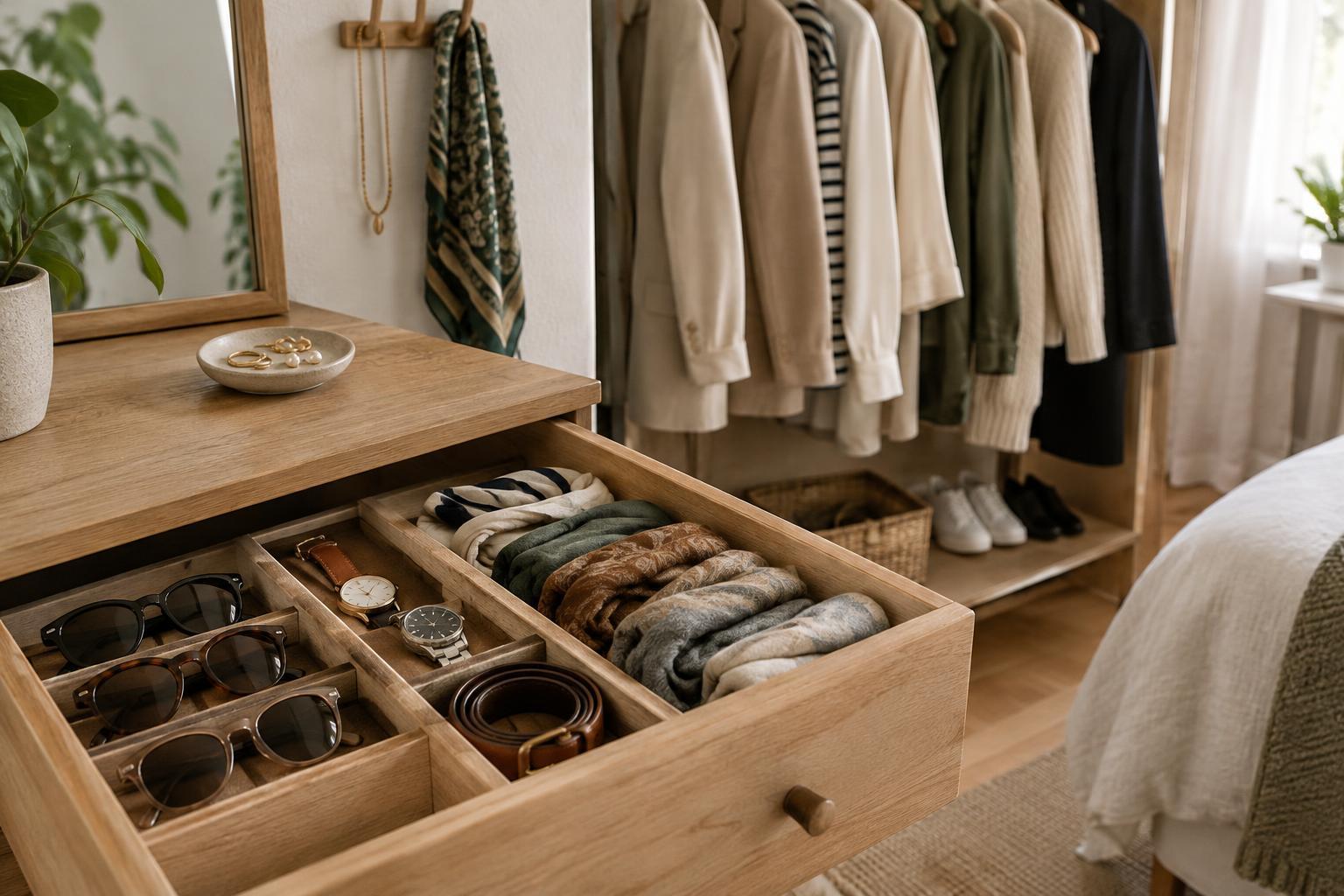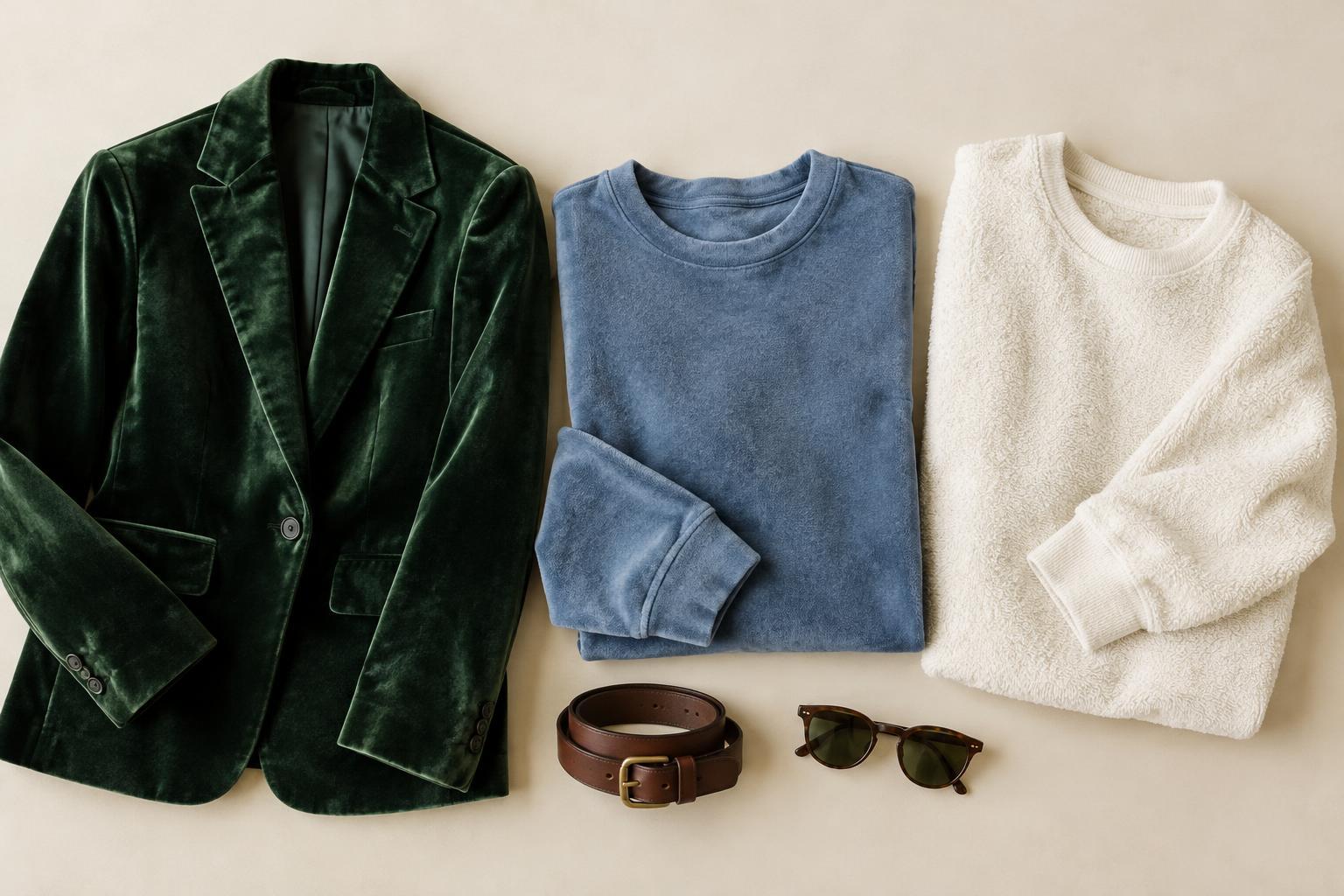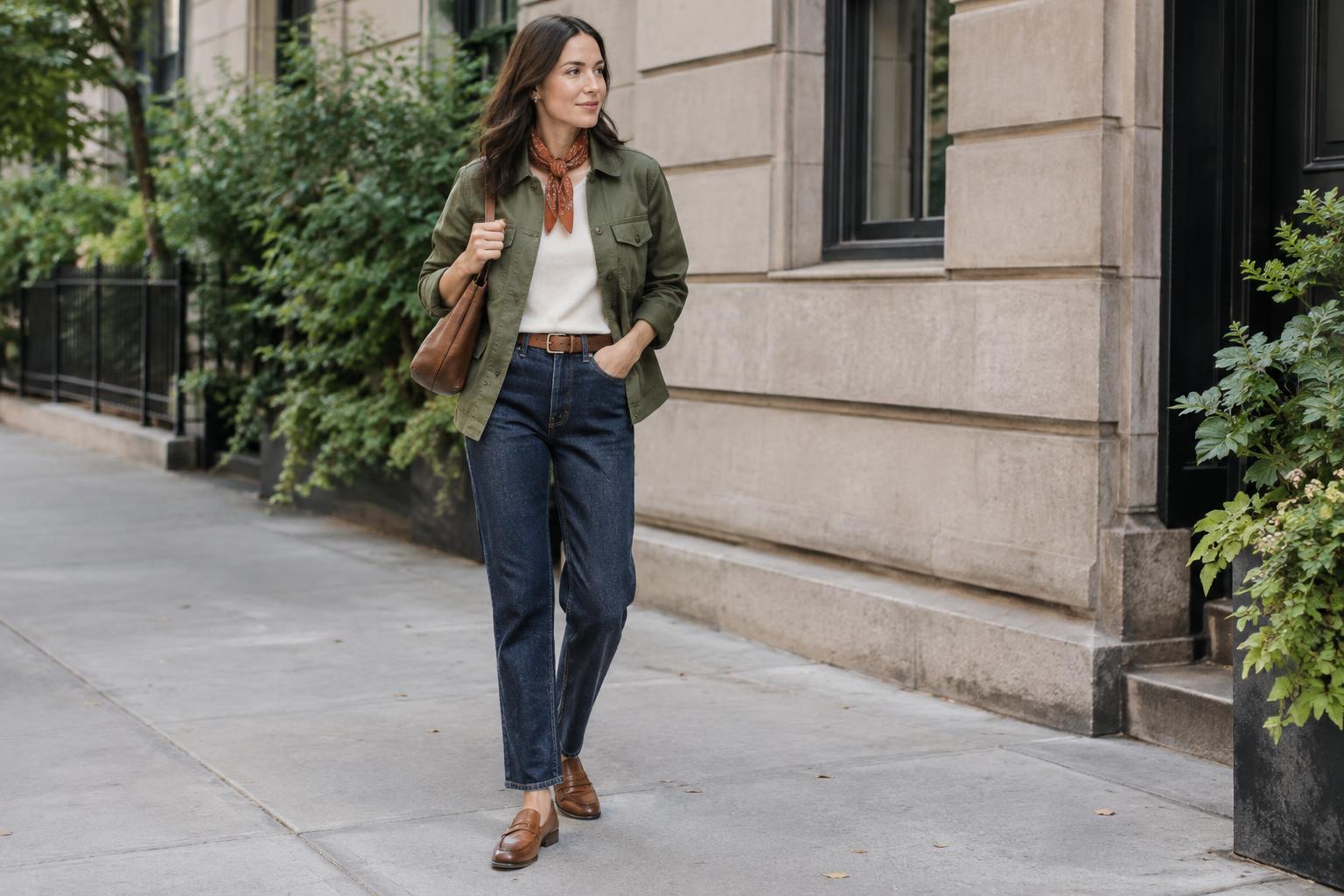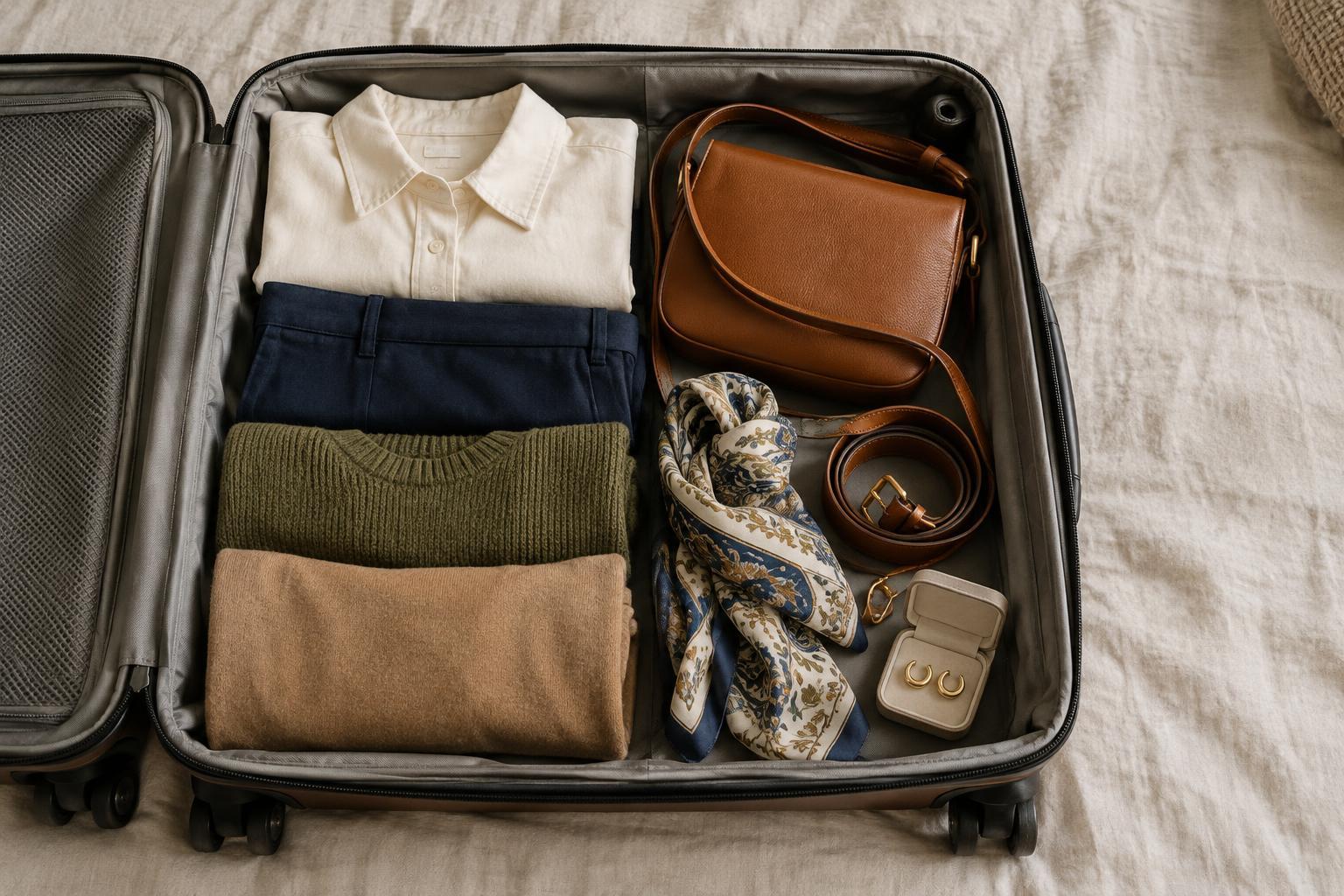
Start with outfits, not accessories
A scarf or necklace can seem like an easy way to add variety to a travel wardrobe. But if it only works with one top, it may spend the whole trip in your bag. Lay out the outfits you expect to wear before choosing extras. Include your transit clothes, daytime combinations and anything you plan to wear for a particular activity. Then look for accessories that improve several of those outfits.
Try a simple test: name two or three situations in which you would use each item. A compact scarf might add warmth on a cool morning and bring color to a plain dinner outfit. A belt might make loose trousers more comfortable and change the shape of a shirt dress. An accessory does not need multiple uses to be worth bringing, but a single-use item should have a clear place in your plans.
Give each piece a job
Useful accessories do more than decorate an outfit. A hat may provide shade, a small pouch can keep essentials together, and a lightweight wrap can add a layer when the temperature drops. Think about the conditions you expect to encounter and the clothes you have chosen. If you already have a warm layer, a bulky scarf may add little. If your trousers fit well without a belt, bringing one solely out of habit may not be worthwhile.
For bags, focus on what you will carry each day. Put your usual essentials inside a candidate day bag at home and see whether you can reach them comfortably. Check how the bag feels when full and whether its closure suits the places you expect to use it. If you want a second bag, give it a distinct purpose, such as carrying a book and water bottle during a long day out. Two bags that hold the same things in the same way may offer less flexibility than you expect.
Jewelry can be especially tempting because individual pieces are small. Still, several tangled chains or delicate items that need careful handling can create unnecessary fuss. Choose pieces you are comfortable wearing repeatedly, and pack them so they will not catch on clothing or each other.
Use color and texture to create variety
When most of your travel clothes mix easily, an accessory can provide contrast without requiring another garment. For example, a patterned scarf could add interest to a plain shirt and trousers, while a simple belt could give definition to an oversized layer. The aim is not to match every detail. It is to choose colors and textures that feel at home with more than one outfit.
Photograph a few combinations while you are still at home, or try them on if you are unsure. Pay attention to scale as well as color. A very large scarf may overwhelm a light outfit, while a tiny bag may look right but fail to hold what you need. If an accessory is awkward with the clothes you packed, its visual appeal alone may not justify the space.
You can also create variety by changing how you wear something you already planned to bring. A buttoned shirt worn open over a top changes an outfit more substantially than an extra piece of jewelry might. Consider those options before adding accessories to solve every styling problem.
Run a final space-and-comfort check
Place your chosen accessories beside the bag you intend to pack. Group together items that perform similar roles, then remove any duplicates you cannot explain. Try on wearable accessories for more than a moment: a headband that pinches or a belt that shifts while you walk is unlikely to become more useful away from home.
Finally, decide where each piece will go in your luggage. Soft items can often fit around garments, while structured pieces may need a protected spot. Keep anything you expect to use during transit accessible rather than buried beneath your clothes. You do not need to fill every available gap. Leaving a little room makes it easier to find what you brought and pack again before heading home.