What does “wale” mean in corduroy?
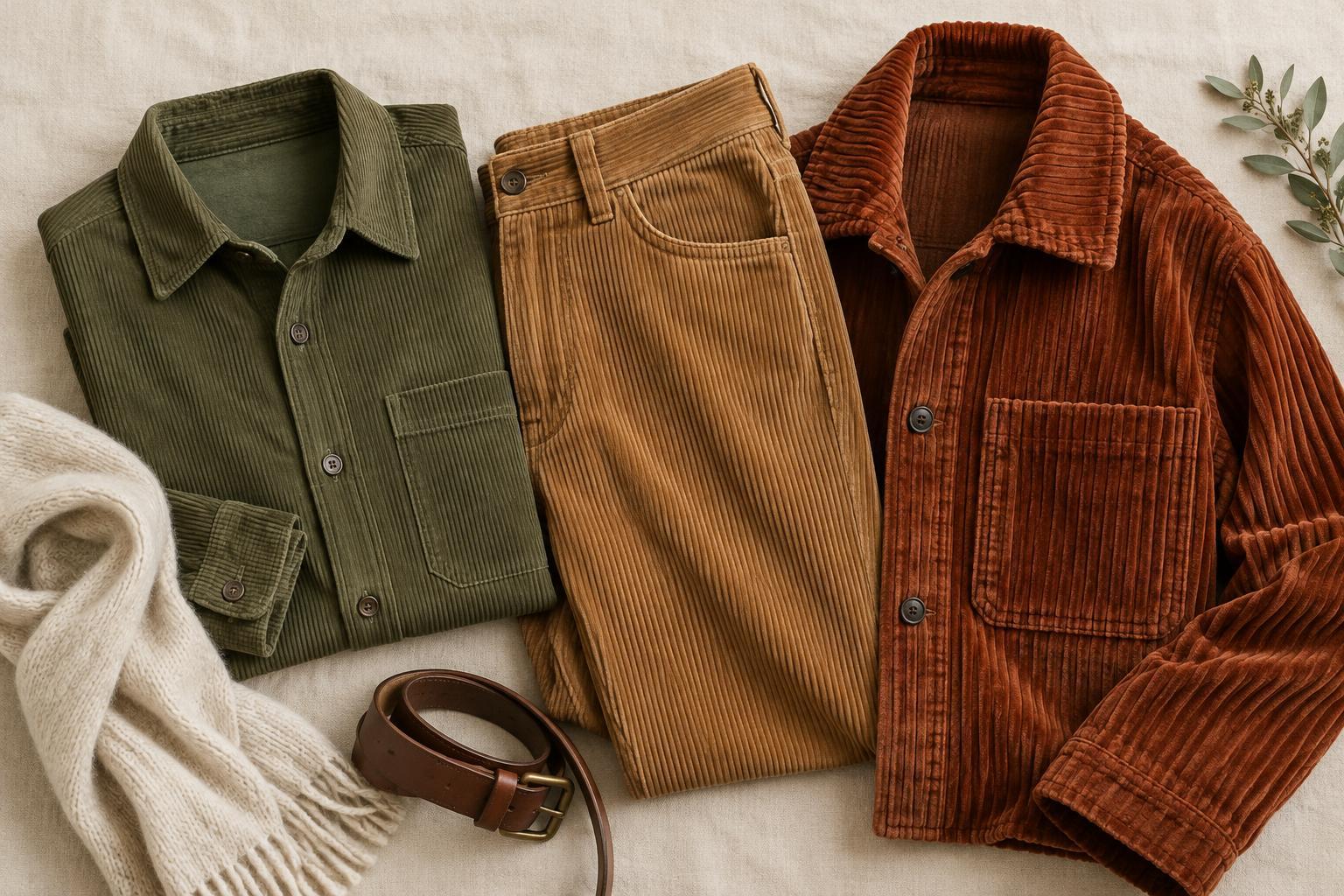
Corduroy is a woven fabric with raised, lengthwise ribs called wales. Those ribs come from its cut pile: short fibers that stand above the base cloth and give corduroy its soft surface. Wale width describes how closely the ribs sit together. A higher wale count means more ribs in a given width of fabric, so each rib is finer; a lower count means broader ribs.
You do not need to memorize counts to shop for corduroy. Labels such as fine, medium and wide are useful descriptions, but their boundaries are not always consistent between makers. Look at the fabric from a short distance, then run a hand across it. Notice whether the ribs read as a subtle surface, a clear stripe or a bold feature. Also consider the weight and drape of the cloth: rib width alone does not tell you whether a garment will feel light, stiff, warm or soft.
Fine wale: texture that stays in the background
Fine-wale corduroy has narrow, closely spaced ribs. From a distance, it may look almost smooth, while up close it adds depth that a flat cotton fabric would not have. That makes it a useful choice when you want texture without making it the focus of an outfit. A fine-wale shirt in olive, navy or cream, for example, can work much like an everyday overshirt.
Fine ribs are especially easy to pair with other visible textures. Try a fine-wale shirt under a chunky cardigan, or fine-wale trousers with a substantial wool sweater. The contrast lets both pieces register without competing. Fit and fabric weight still matter: a closely fitted fine-wale trouser will behave differently from a relaxed pair made in a heavier cloth, even if their ribs look similar.
Medium wale: an easy-to-see everyday texture
Medium-wale corduroy sits between understated and bold. Its ribs are visible enough to give a jacket or pair of trousers character, but they do not usually dominate the whole outfit. If you are unsure where to start, a medium wale can be a flexible choice for a piece you plan to wear often.
For a simple combination, wear medium-wale brown trousers with a smooth cotton shirt and a plain knit. The corduroy supplies texture, while the other pieces give the eye a place to rest. A medium-wale jacket can do the reverse: put it over a simple T-shirt and wear it with denim or smooth twill trousers. Repeating one of the jacket’s colors elsewhere in the outfit helps the different fabrics feel connected.
Wide wale: ribs that become part of the look
Wide-wale corduroy has broad, clearly separated ribs. They create a stronger visual rhythm, making the fabric noticeable even in a simple cut. On roomy trousers, an overshirt or a casual jacket, wide wale can make an otherwise basic piece feel distinctive. The raised surface may also catch light differently as the pile changes direction, so a color can appear lighter or darker from another angle.
Give wide wale some space in an outfit. Wide-wale trousers can look balanced with a smooth, close-knit sweater; a wide-wale jacket can work over a plain shirt with uncomplicated trousers. This is not a rule against mixing textures. If you enjoy a more layered look, pair wide corduroy with a different texture, such as denim or a soft knit, rather than another strongly ribbed piece. Try the combination on and judge the overall effect from a few steps away.
Choosing a wale width and keeping the ribs looking good
Start with the job you want the garment to do. For a subtle shirt or a piece you will layer among several textures, look at fine wale. For versatile trousers or a casual jacket, compare medium-wale options. For a piece intended to stand out, consider wide wale. Check the garment’s cut, color and hand feel alongside the ribs. Dark colors can make the texture appear quieter, while lighter colors may show the ridges and shadows more clearly.
Corduroy’s pile can flatten where it gets pressure or repeated rubbing, whatever the wale width. Give a garment room to hang between wears, and follow its care label before washing, drying or pressing it. When the fabric needs tidying, a gentle brush in the direction of the pile may help lift surface lint. If ironing is permitted, avoid pressing hard directly onto the ribs; working from the reverse side with a protective cloth can help preserve their shape. A little care keeps the texture that made you choose corduroy in the first place.