Start with the trip, not a packing rule
There is no ideal number of dresses, trousers or skirts for every trip. A city break with long walks calls for different clothes than a quiet stay with dinners out. Before choosing pieces, picture three ordinary days: where you will walk, sit, eat and spend time outdoors. Check whether you will need to dress for a particular venue or activity. The pieces that work across several of those situations deserve first consideration.
Think about how often you can comfortably rewear each item and whether you expect to do laundry. A garment may look versatile on a hanger but feel restrictive after a full day of sitting or walking. Try your likely outfits on before departure, including the shoes and outer layer you plan to bring. This is a simple way to spot a waistband that pinches, a hem that catches or a fabric you would rather not wear twice.
When dresses earn their space
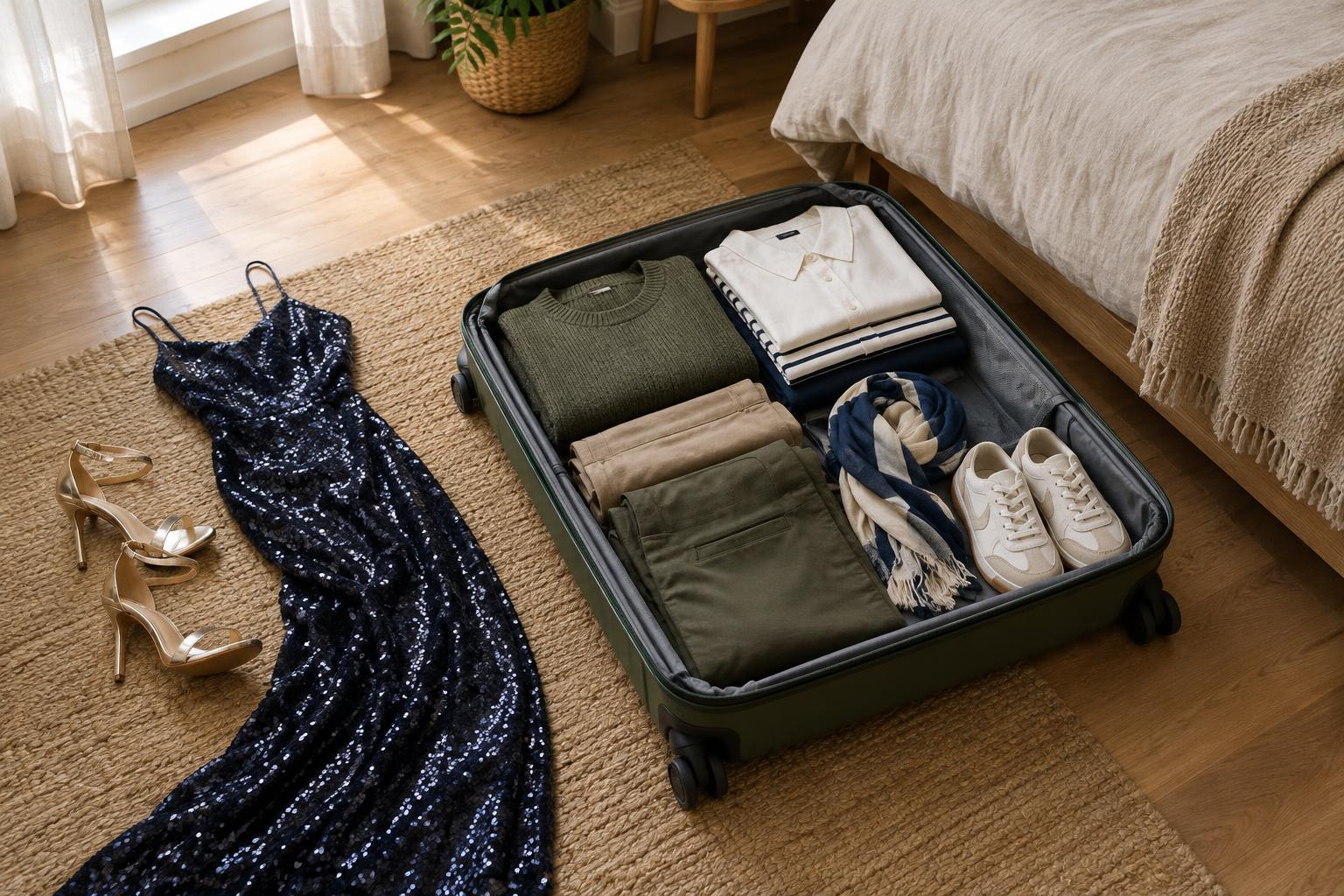
A dress is an easy complete outfit, which makes it useful when you want to get ready quickly. It can also change character with a layer: a relaxed dress with flat shoes and a light jacket may suit daytime, while different shoes or jewelry can make the same dress feel more polished. Choose a shape you can move in and a fabric that works with the temperature you expect. Pockets can be helpful, but check whether they pull the dress out of shape when filled.
A dress may be less flexible than separates if it only works at one level of formality or needs its own shoes and underlayers. Test it with the cardigan, jacket or shirt you are already packing. If those combinations feel awkward, the dress may be taking up space that a more adaptable piece could use. For a short trip, one dress you genuinely enjoy wearing can be more useful than several brought for imagined occasions.
What trousers and skirts do differently
Trousers are often a dependable starting point for travel days, cooler weather and activities that involve a lot of movement. A comfortable pair can work with several tops, from a simple T-shirt to a neat knit or button-up shirt. Look beyond color: consider the rise when you sit, the feel of the fabric against your skin and whether the legs work with your walking shoes. If you pack a second pair, give it a distinct job, such as a lighter option for warm afternoons.
A skirt offers some of the same mix-and-match benefits as trousers, with a different silhouette. A simple skirt can pair with casual tops and more dressed-up layers, but its usefulness depends on the cut and your plans. Walk, climb stairs and sit down in it before packing. Consider whether wind, temperature or the need for an extra underlayer will affect how often you wear it. If a skirt requires a special top and special shoes, count those items as part of its packing cost.
Build outfits around a small shared palette
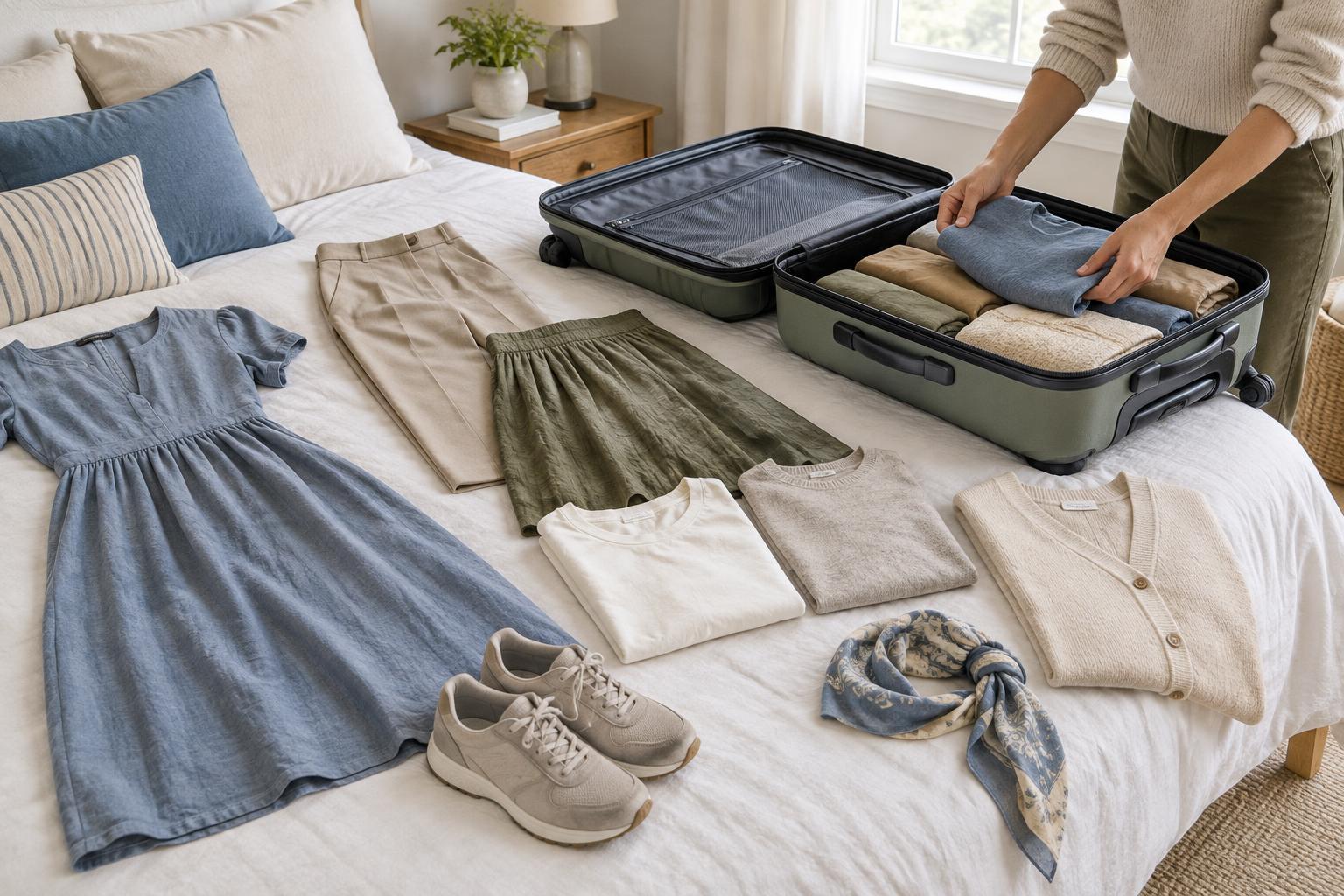
Choose a few colors that you already like wearing together rather than forcing every item to match everything else. For example, dark trousers and a patterned skirt might both work with a cream top, a blue shirt and the same light jacket. The pattern adds variety without requiring another layer. Shoes matter just as much: a piece becomes easier to pack when it works with footwear you need for the rest of the trip.
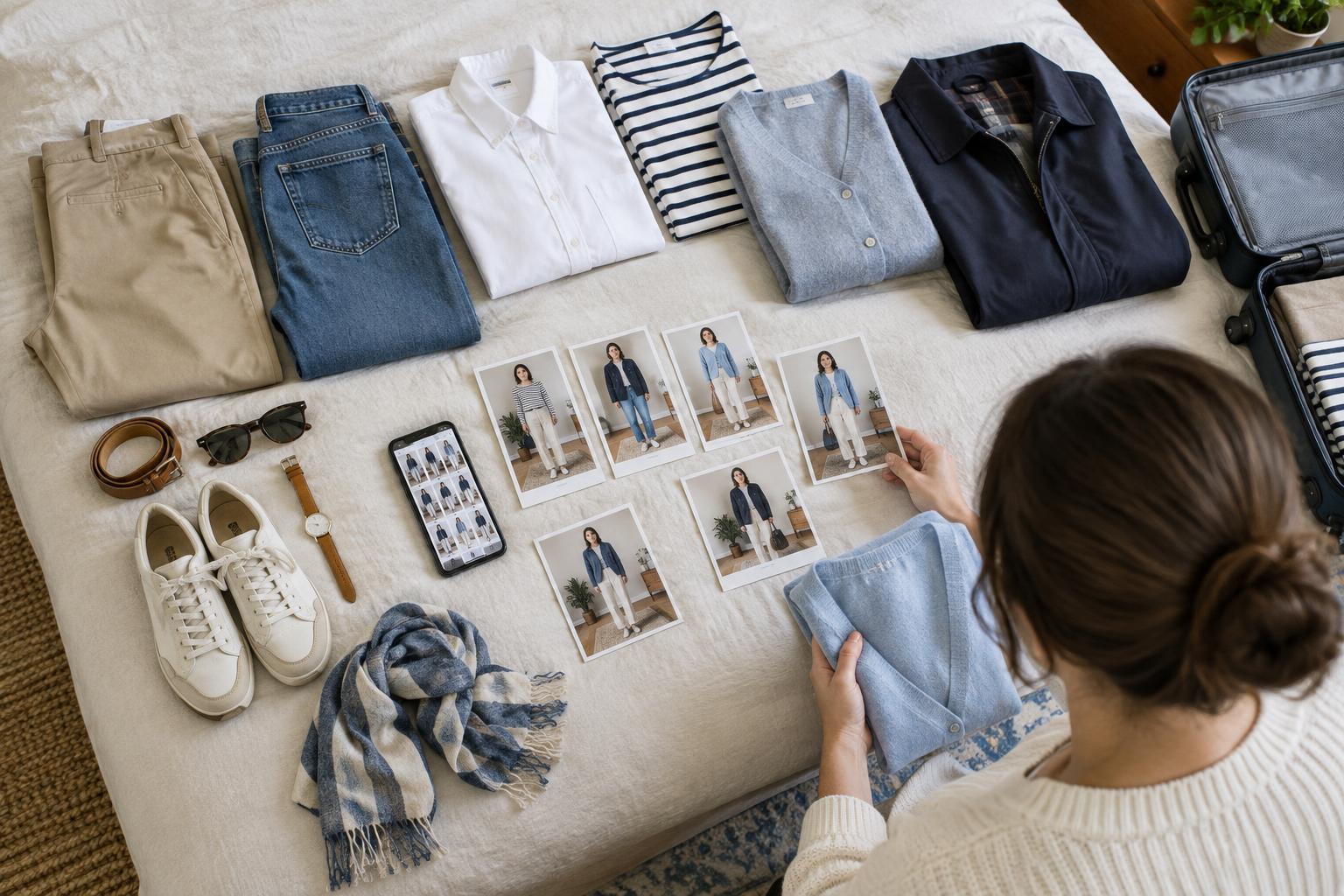
Lay out complete outfits, then swap the tops and outer layers between them. Aim for each dress, pair of trousers or skirt to have at least two combinations you would actually wear. Notice any piece that depends on an item you were not planning to bring. You do not have to remove it automatically, but it should offer enough value to justify the extra space. This approach makes room for personal style without filling a bag with duplicates.
Make the final choice with comfort and care in mind
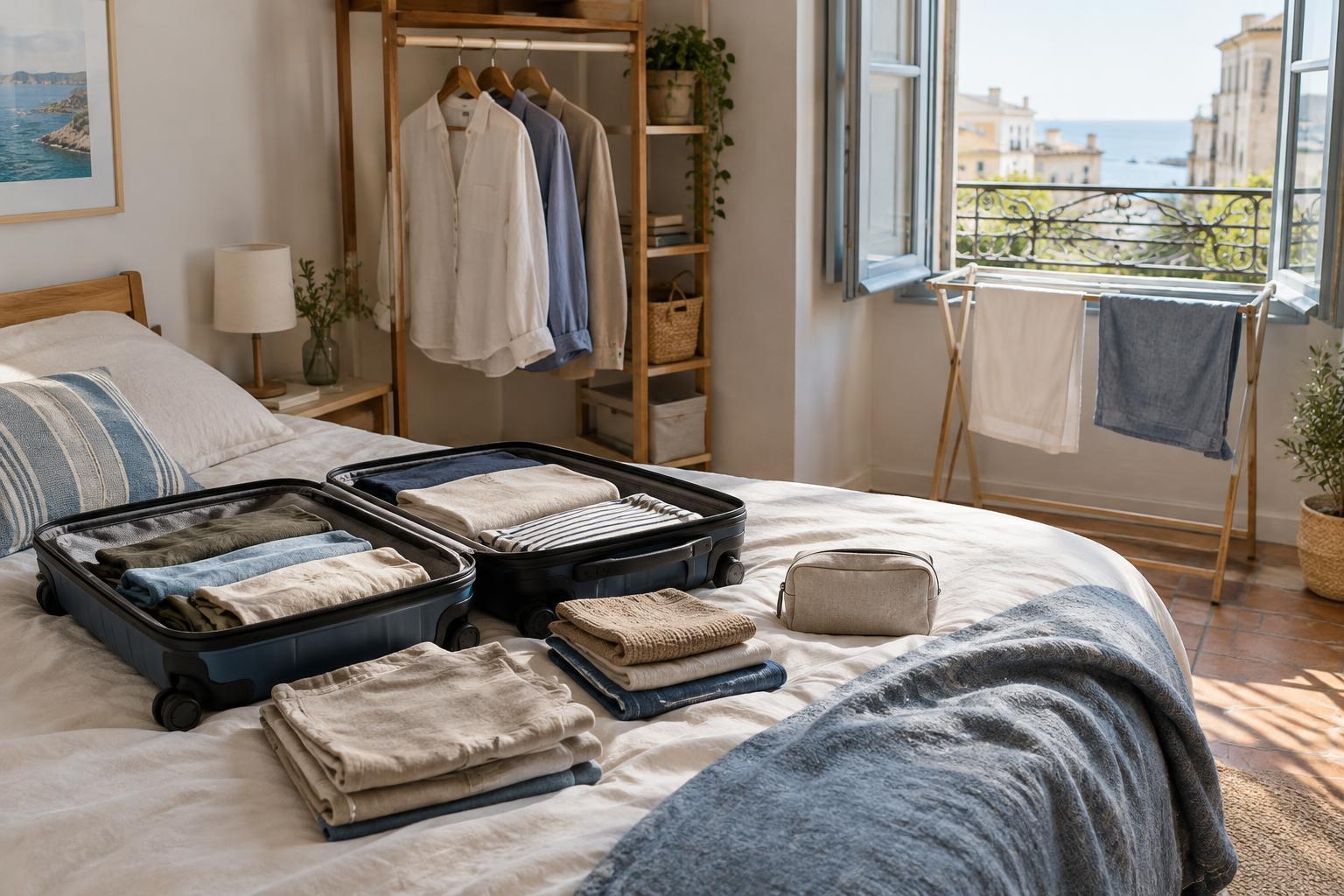
Fabric behavior can settle a close decision. Some pieces show creases readily, take a long time to dry or need careful handling; others are easier to fold and rewear. Check the garment’s care label, and consider how you will manage it on the trip. Packable does not have to mean wrinkle-free. It means that any creases, drying time or special care are manageable for you.
A balanced selection might include one comfortable pair of trousers for travel and walking, plus either a dress or a skirt that makes different outfits possible. Another traveler may prefer two pairs of trousers and no dress at all. Choose according to what you wear at home, adjusted for the trip ahead. The best travel wardrobe is not the one with the fewest pieces; it is the one in which every packed piece is likely to be worn.