Two measurements, two different questions
Fabric weight describes how much a given area of material weighs. It may be listed in grams per square meter (GSM) or ounces per square yard. Thickness describes the distance between the fabric’s two surfaces: how much space the material takes up from front to back. Weight answers “How much material am I carrying?” while thickness answers “How much bulk will this add?”
The two often rise together, but not always. A dense, tightly woven fabric can be fairly heavy yet remain slim. A lofty knit or lightly filled quilted fabric can look thick while feeling relatively light. The fiber, yarn, weave or knit, and finishing all affect the result. That is why “thick” and “heavy” are useful observations, but they should not be treated as synonyms.
What weight can tell you about wear
Weight is a helpful starting point for predicting how a garment might hang and move. A light fabric may float away from the body, gather easily, or fit under another layer without much bulk. A heavier one may fall in straighter lines or hold a shape more firmly. Picture a fine cotton shirt tucked into trousers beside a weighty cotton overshirt worn open: both could have a similar surface appearance, but they play different roles in an outfit.
Weight alone does not tell you whether a garment will feel warm or comfortable. A dense fabric may block some moving air, while a loose construction may let it pass through, even if the two weigh about the same. Linings, fit, and the layers worn underneath matter too. If a product page gives a fabric weight, use it as a comparison clue—especially between similar fabrics—rather than a promise about how the finished garment will perform.
What thickness changes in an outfit
Thickness is especially noticeable when you layer. A thick sweater may feel cozy on its own but bunch beneath a close-fitting jacket. A thinner knit may slip under that same jacket comfortably, even if its dense construction makes it feel substantial in your hands. At cuffs, collars, waistbands, and seams, several layers of fabric meet; a little extra thickness in each layer can make those areas look or feel crowded.
Thickness can also change a garment’s visual outline. A lofty scarf creates volume around the neck, while a thin, dense scarf may lie flatter when tied. Neither is inherently better. If you want a clean line under a coat, look for a scarf that folds without building too much bulk. If you want the scarf to be a visible part of the outfit, a thicker texture may provide that shape. The useful question is not simply “Is it thick?” but “Where will that thickness sit?”
Why texture and construction matter as well
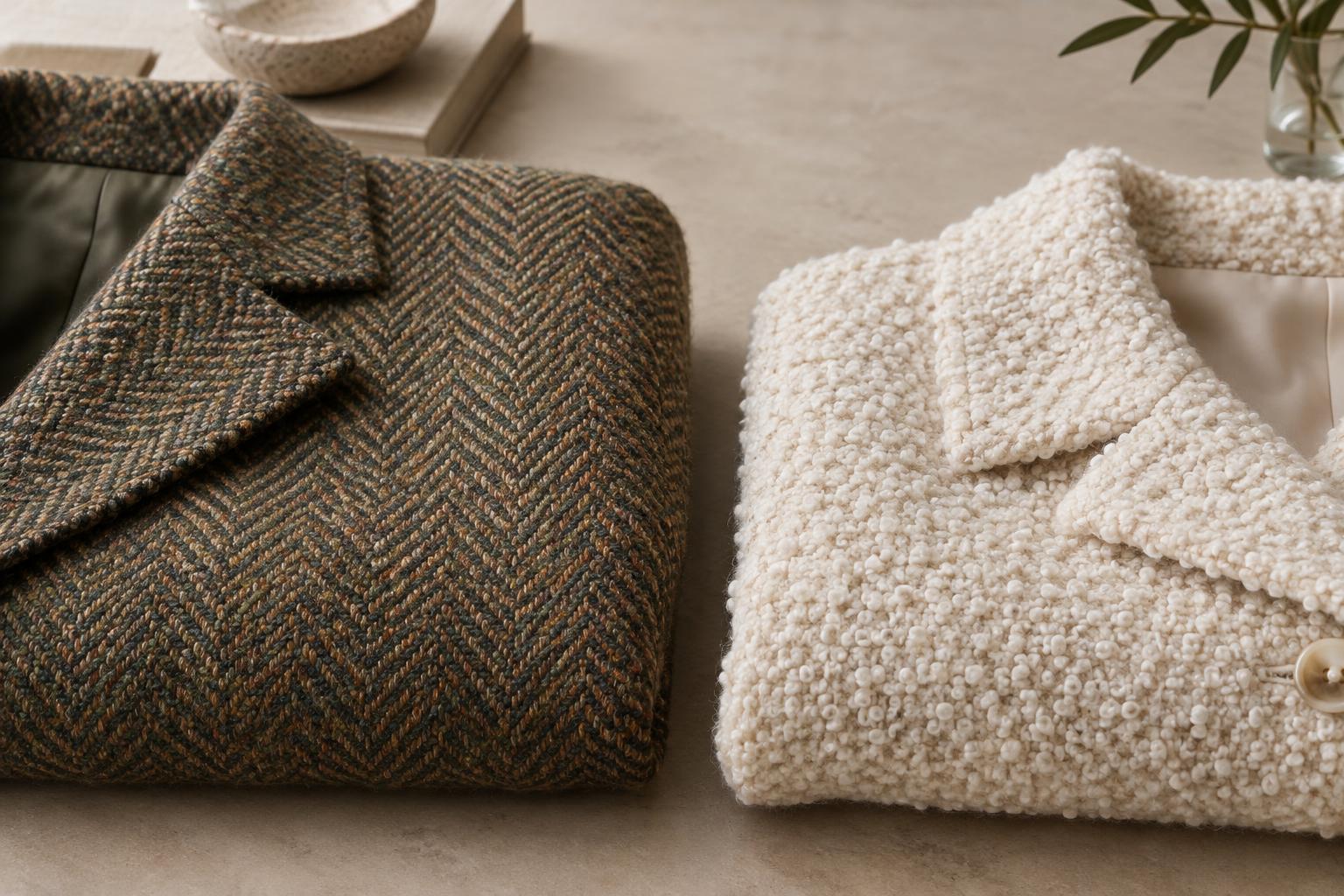
Imagine two jackets that feel equally thick between your fingers. One is made from a smooth, tightly woven cloth; the other has a soft, brushed surface. The brushed jacket may appear fuller because its raised fibers catch light and soften its edges. Likewise, a ribbed knit can feel thicker across its ridges than a smooth knit, even when both serve as comfortable midlayers. Surface texture changes the impression of thickness as well as how a piece looks beside other fabrics.
Stretch and recovery add another consideration. A fabric that compresses easily may fit under a coat better than its thickness first suggests, but it may also cling differently over a shirt. A structured fabric may resist compression and keep its silhouette. When choosing between garments, check how the whole piece behaves: does it fold softly, spring back, stand away from the body, or collapse? Those observations can tell you more about styling it than either measurement by itself.
How to assess a garment before you commit
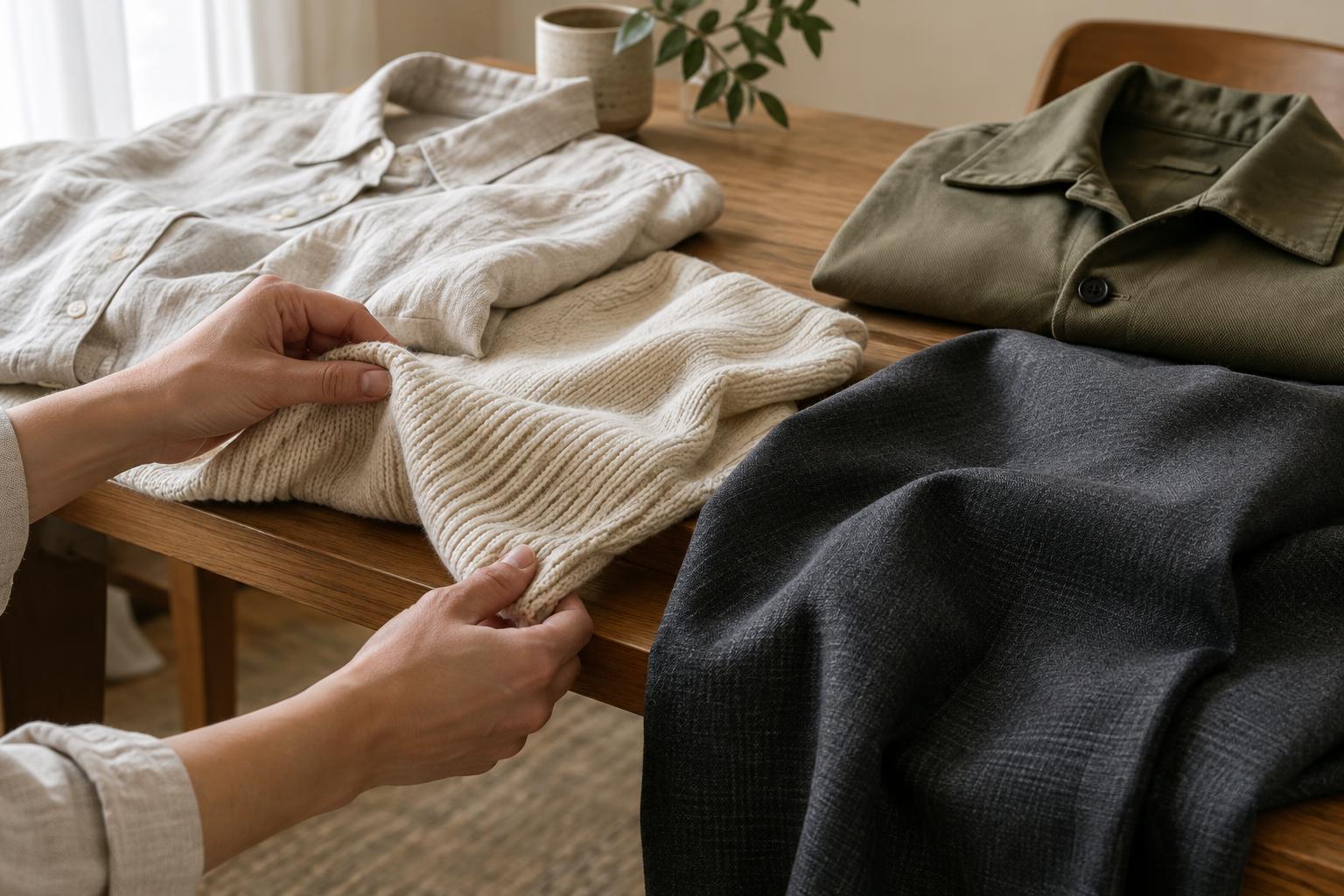
In a shop, lift the garment to gauge its overall heft, then pinch a single layer of fabric to feel its thickness. Let a sleeve or hem hang freely to see its drape. Fold a small section over itself and notice the resulting bulk—particularly useful for a shirt you plan to tuck or a knit you plan to wear under a jacket. If possible, try it with the layers and accessories you would actually wear.
Online, start with any listed fabric weight, composition, lining, and close-up photographs, but allow for uncertainty when details are missing. Look at how the garment hangs on the model and whether its cuffs or hems appear bulky. Compare pieces intended for the same job, rather than assuming one number works across all fabrics. For a versatile wardrobe, aim for complementary roles: a light base layer, a comfortable middle layer, and an outer layer with enough room for both. Weight helps you anticipate heft; thickness helps you plan space. Together, they make choosing and combining clothes more deliberate.