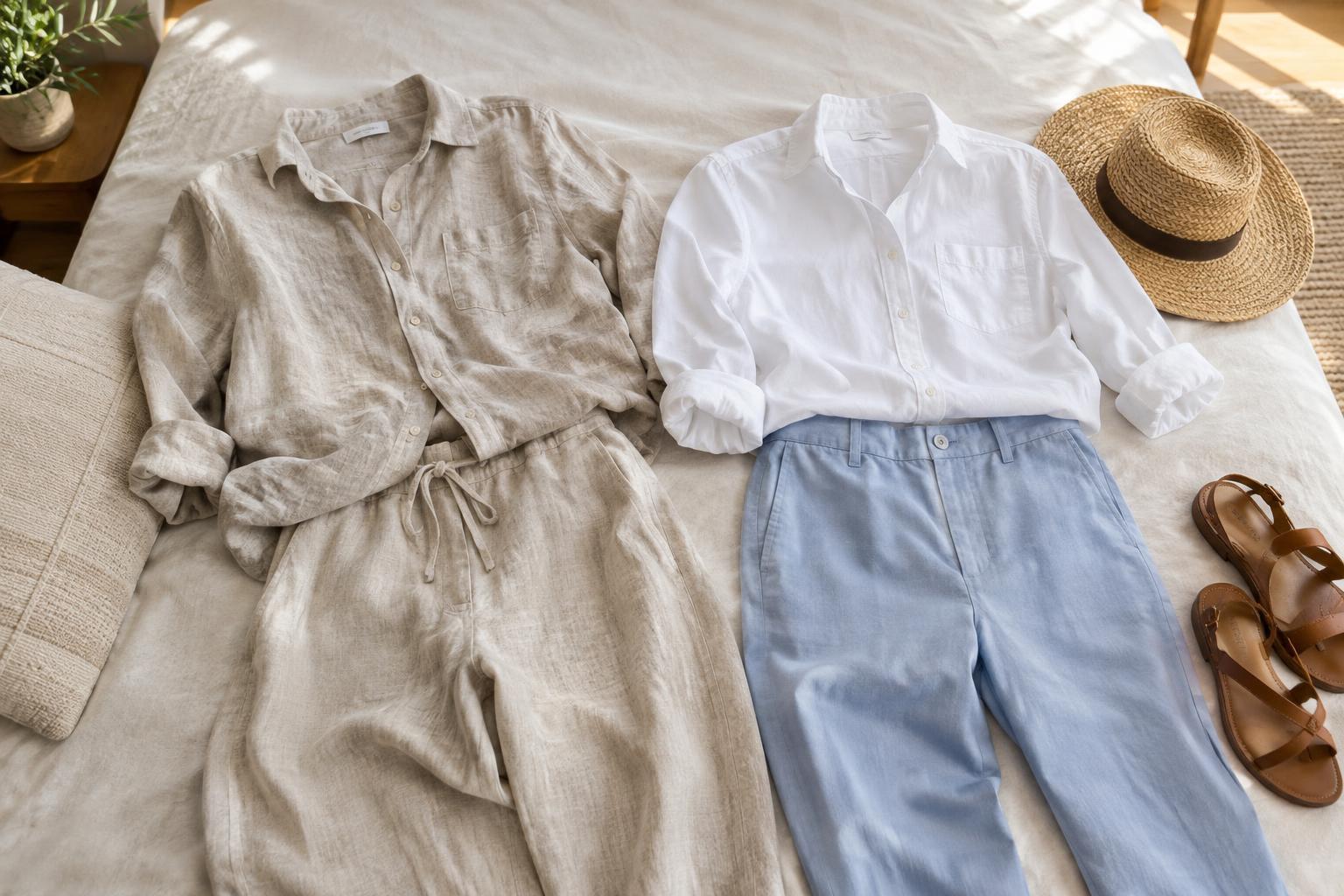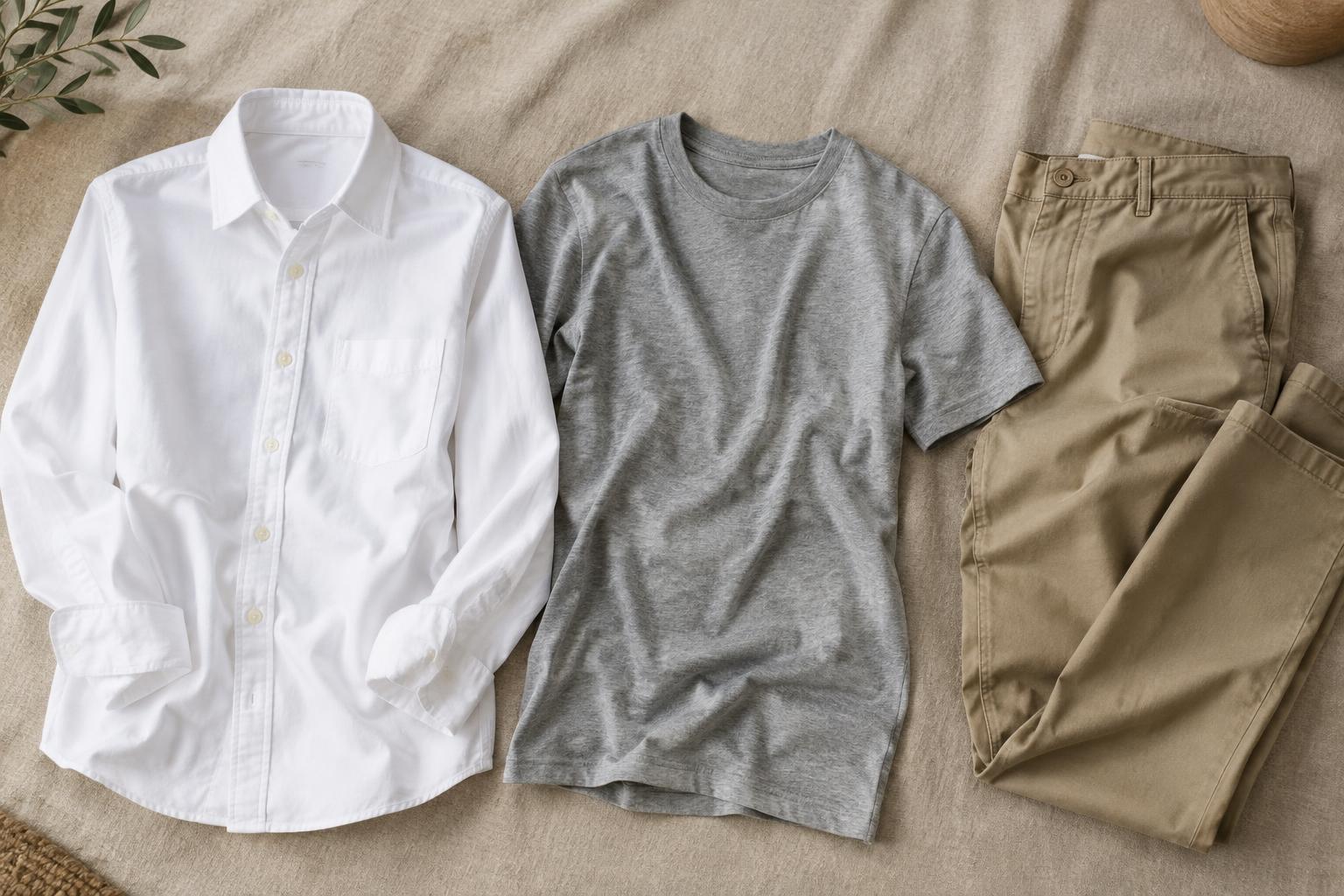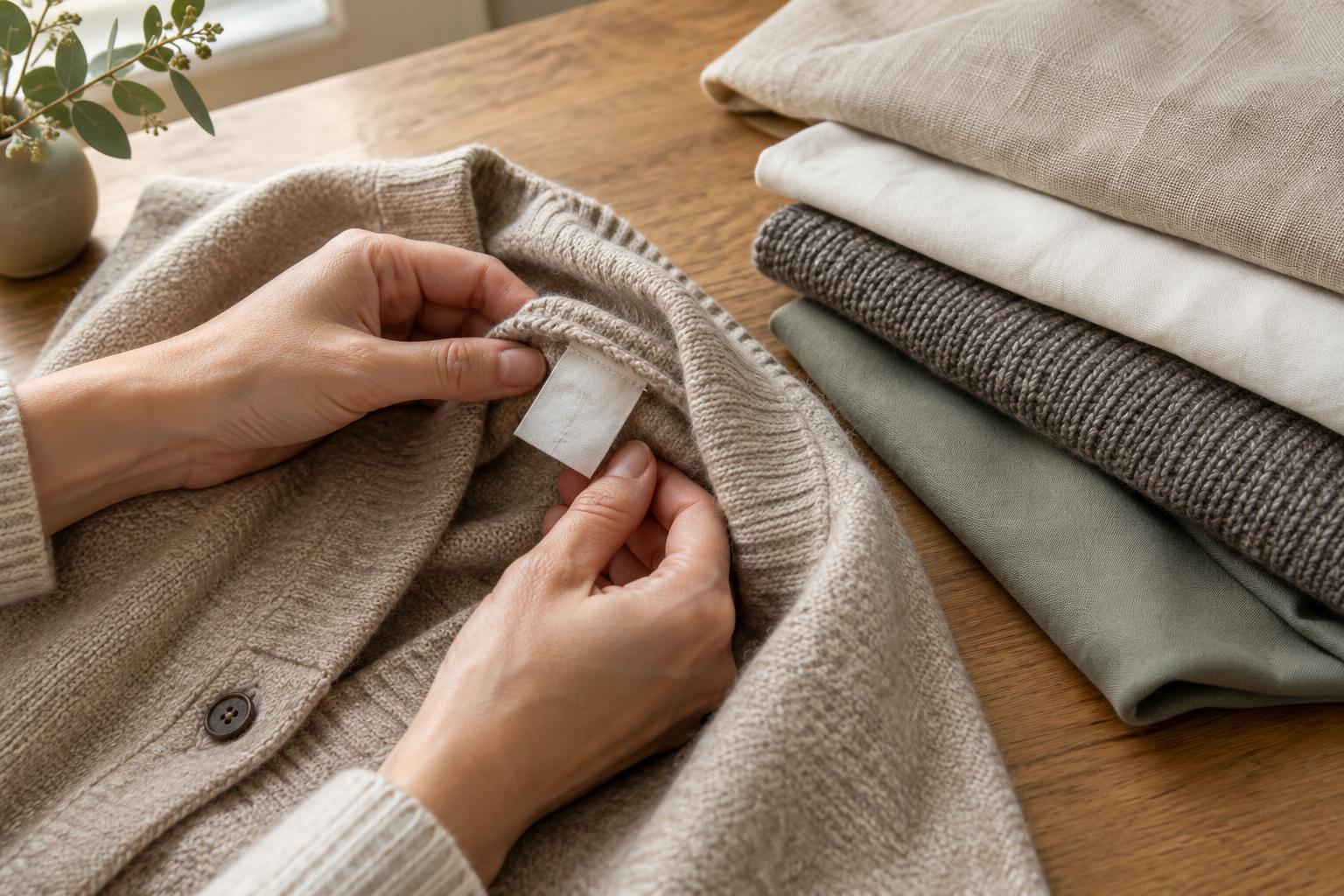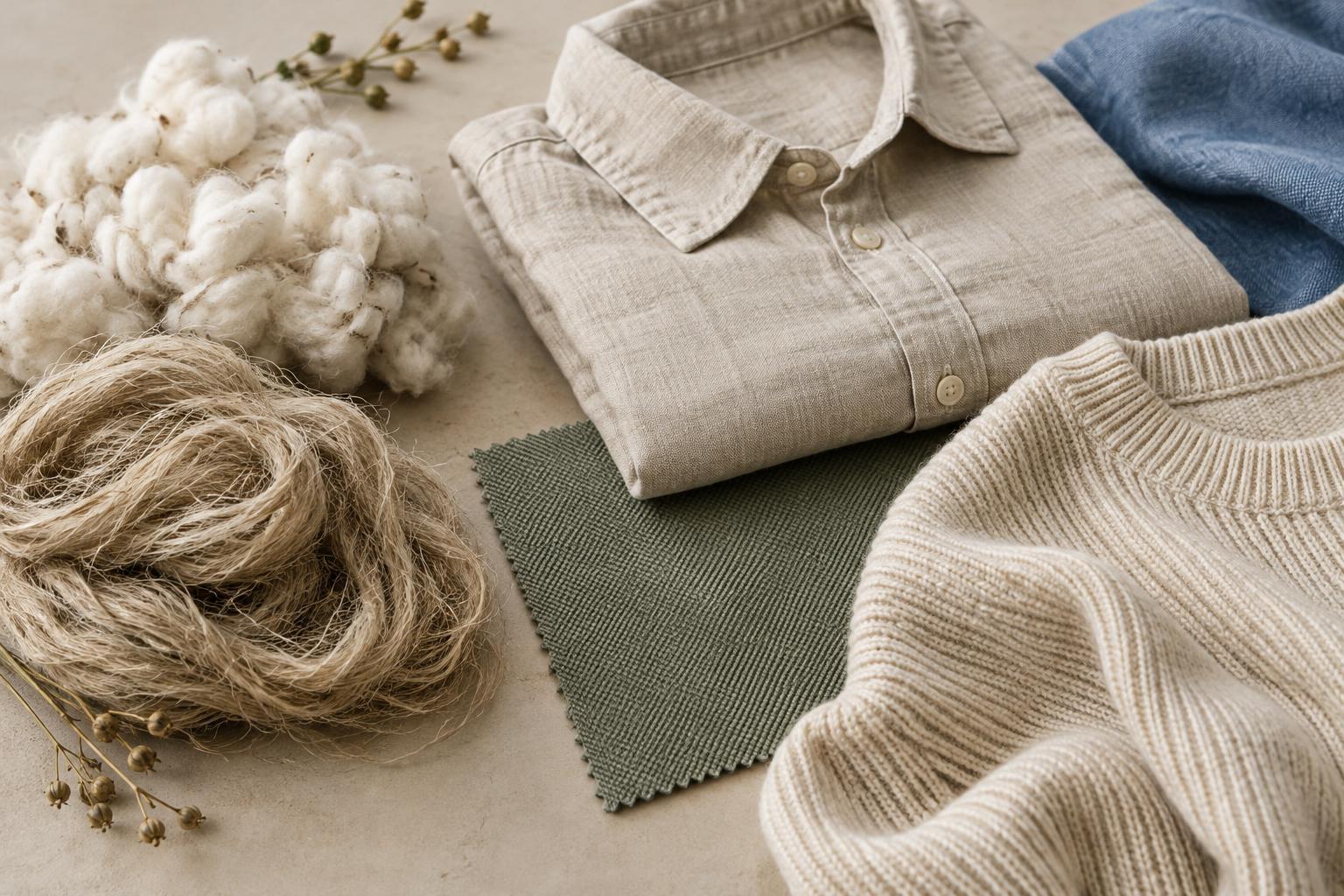
Start with the fiber
Fiber is the material used to make the yarns in a fabric. Cotton, linen and wool come from natural sources; polyester and nylon are manufactured fibers. A fiber label is a useful starting point because different fibers tend to behave differently. Linen often feels crisp and wrinkles readily, while wool can provide warmth without needing to be especially thick. Polyester may dry quickly and hold its shape well, though the feel of a finished garment depends on more than its fiber content.
Blends combine fibers to balance their qualities. A cotton-and-linen shirt, for example, may feel softer than one made entirely from linen while retaining some of linen’s textured appearance. Fiber percentages can help you compare garments, but they cannot tell you exactly how soft, substantial or breathable either one will feel. Yarn thickness, fabric construction and finishing all matter. Treat the label as a clue, then handle the garment if you can.
Understand what a weave does
In a woven fabric, yarns cross over and under one another in two directions. The way they cross helps determine the fabric’s surface, structure and drape. A plain weave often looks balanced and relatively flat; a twill weave creates a subtle diagonal pattern. Denim is a familiar example of twill, but twill can also be fine and smooth enough for tailored trousers. The name of a weave describes its construction, not one fixed weight or look.
Most woven fabrics have little give across their width unless they include stretch fibers or are made with a looser structure. That makes them useful when you want a clean outline: think of a crisp button-up shirt, a structured skirt or trousers with a defined crease. For comfort, check how a woven garment fits when you sit, reach forward and move your arms. A fabric can look beautifully sharp on a hanger yet feel restrictive if the cut leaves too little room.
See how knits behave differently
A knit is made from interlocking loops of yarn rather than two sets of crossing yarns. Those loops allow many knits to stretch and recover, making them common in T-shirts, sweaters and easy-fitting dresses. Jersey, often used for tees, usually has a smooth face and a different-looking back. Rib knits have raised vertical lines and are often used where a garment needs to fit closely, such as at a neckline or cuff.
Not every knit is soft and floppy. A dense knit can hold a neat shape, while a loose knit may drape, stretch out or catch on jewelry. When shopping, gently stretch a small area and see whether it returns to its original shape. Also consider where the garment carries weight: a long, heavy sweater may grow at the shoulders when hung up. Folding it for storage can help preserve its shape.
Put fiber and construction together
Fiber and construction answer different questions. Fiber tells you what the yarn is made from; weave or knit tells you how yarns become fabric. Cotton can be woven into a crisp poplin shirt or knitted into a soft jersey tee. Both may say “cotton” on the label, yet they create very different outfits. Likewise, wool can appear in a smooth woven coat or a flexible knitted cardigan.
This distinction is useful when building outfits with contrasting textures. Pair a fine-knit top with woven trousers for softness against structure, or wear a crisp cotton shirt beneath a chunky sweater to define the collar and cuffs. If an outfit feels too stiff, swap one structured piece for a knit. If it feels too relaxed, add a woven layer with a clearer shape. Thinking in terms of construction gives you another way to adjust an outfit without changing its colors.
Use a simple fabric check before buying
First, read the fiber label and care instructions. Ask whether the required washing, drying or pressing suits your routine. Next, look closely at the surface: is it smooth, fuzzy, open or tightly packed? Hold the fabric up to the light if opacity matters, and move it to see how it hangs. Then try the garment on and pay attention to stretch, weight and comfort rather than relying on the size tag alone.
Finally, imagine the piece alongside clothes you already wear. A lightweight woven shirt may be easy to layer under a jacket; a bulky knit may work better as the outer layer. There is no single best fiber or construction for every wardrobe. The useful choice is the one whose feel, shape and care needs match how you plan to wear it.