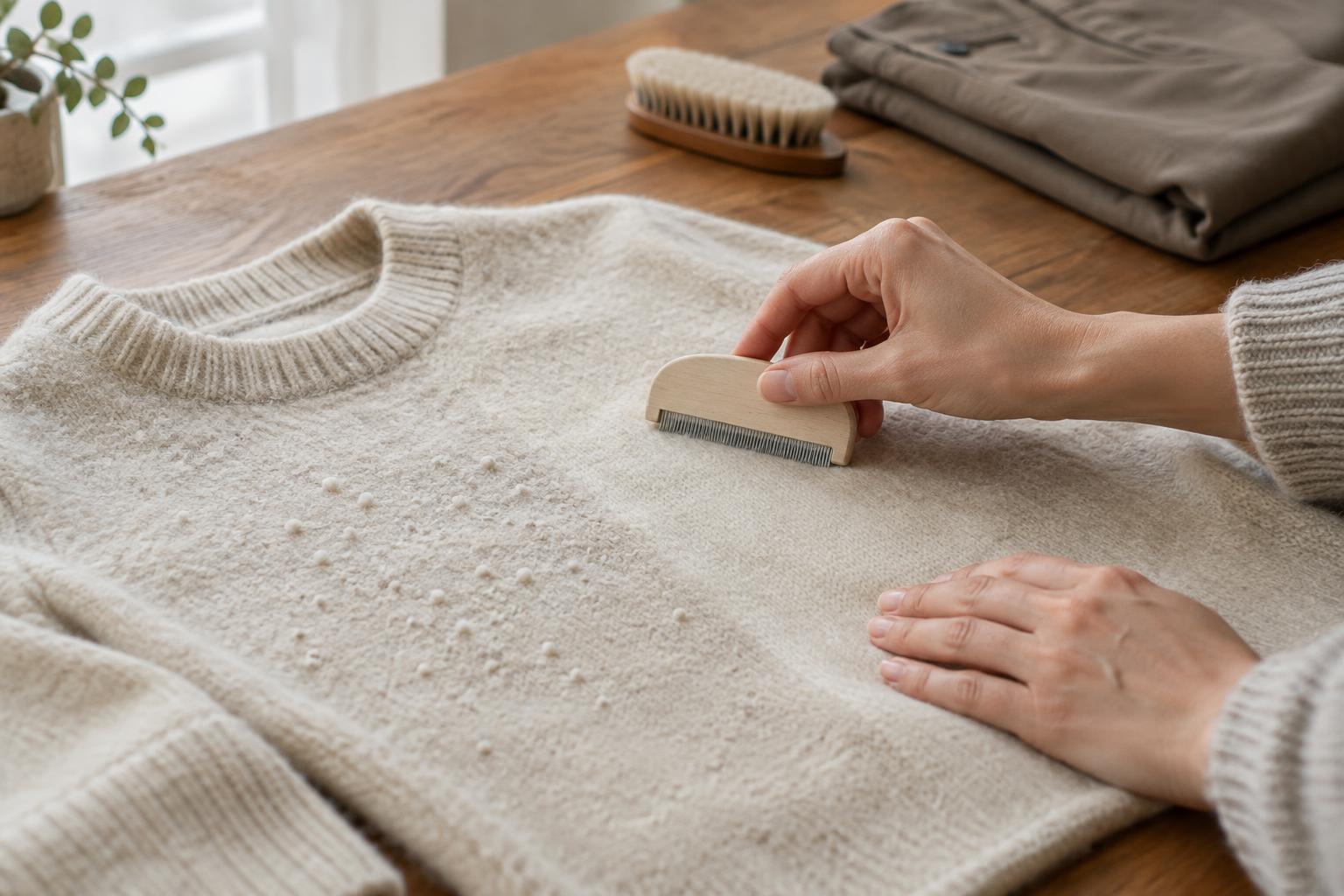
Start with weight, structure and fabric
The simplest storage rule is to fold garments that might stretch under their own weight and hang garments that benefit from keeping their shape. A thick knit sweater, for example, can develop bumps at the shoulders or grow longer on a hanger. A tailored jacket is built to hold a particular shape, so it usually does better on a hanger that supports its shoulders.
Fabric matters, but it is not the only consideration. A lightweight shirt and a heavy cardigan may both contain cotton, yet the shirt is less likely to pull out of shape when hung. Notice where a garment has structure, where its weight falls and whether it creases easily. If its care label gives storage guidance, follow that first.
Fold knits and most stretchy pieces
Fold sweaters, cardigans and knitted dresses, especially chunky or loose-knit styles. Lay each piece flat, fold the sleeves inward and make a loose fold through the body. Avoid pressing a sharp crease into delicate knits. In a drawer, stacks work if they remain easy to lift; a vertical arrangement can make it easier to see what you own without pulling apart a pile.
T-shirts, jersey tops and other stretchy basics are also good candidates for folding. They generally do not need a hanger to retain their shape, and folding frees hanging space for more structured clothing. Leave enough room in the drawer that you can take out one item without tugging on its neighbors. If a folded garment comes out with stubborn creases, try a looser fold or give it more space.
Hang shirts, tailoring and garments that crease
Button-down shirts and blouses often stay ready to wear when hung, particularly if they wrinkle readily. Fasten a top button or two to help the collar and front sit neatly. Choose a hanger wide enough to support the shoulders without extending into the sleeves. Thin wire hangers or oversized hangers can leave marks, so a consistent set of smooth, well-fitting hangers is a useful starting point.
Blazers, suit jackets and structured coats should usually be hung on sturdy, shaped hangers. Give them some breathing room rather than wedging them tightly between other garments. For a delicate blouse or a slippery fabric, check that the hanger does not snag the surface; a smooth hanger with gentle grip may help keep the piece in place.
A dress is not automatically a hanging item. Hang a woven dress if doing so helps preserve its drape or reduces creasing. Fold a heavy knitted dress so its shoulders do not carry the weight of the entire garment. For an embellished dress, consider whether hanging could strain the fabric around the decoration; a loose fold with protective tissue between layers may be more suitable.
Choose a method for trousers and skirts
Jeans and casual trousers are flexible: fold them if drawer or shelf space is plentiful, or hang them if that makes outfits easier to see. For tailored trousers, a trouser hanger can help preserve a pressed line. Drape them evenly over a smooth bar, or use a suitable clip hanger at the waistband. If clips leave impressions, place a small piece of clean fabric between the clip and garment.
Skirts also depend on their construction. A structured skirt may keep its shape best on a clip hanger, while a stretchy knit skirt can be folded. Pleated pieces need extra attention: store them in a way that does not crush the pleats, and avoid packing them tightly. Whatever method you choose, make sure hems do not rest on the floor or get caught beneath other clothes.
Give stored clothes room to breathe
Before putting clothes away, make sure they are dry and reasonably clean. Moisture trapped in a crowded wardrobe can encourage unwanted odors, while stains left for long periods may be harder to address later. Check care labels before washing, and let freshly laundered pieces dry fully before folding or hanging them.
For longer-term storage, fold heavy knits and use a clean, dry container that will not squash them. Keep structured outerwear on supportive hangers where space allows. Avoid treating storage as a permanent decision: if you notice stretched shoulders, deep fold lines or crushed details, change the method. The best system is one that protects each garment while still letting you find and wear it.