Start with the job, not the accessory
A clip that neatly holds back a few strands may not be able to support an entire twist. Before choosing an accessory, decide what it needs to do: keep hair out of your face, secure a section, hold an updo or simply add a finishing detail. Then consider how long you need it to stay in place. A quick trip out allows more room for adjustment than a full day of commuting, working and changing clothes.
Hair thickness is only part of the picture. Fine hair can slip through a wide clip, while dense hair may push a small clasp open. Smooth hair often needs a secure grip; textured or curly hair may stay in place more readily but can catch on rough edges. Length and layers matter too. Short pieces around the face may need their own pin even when the rest of your hair is firmly secured.
Choose clips by how much hair they need to hold
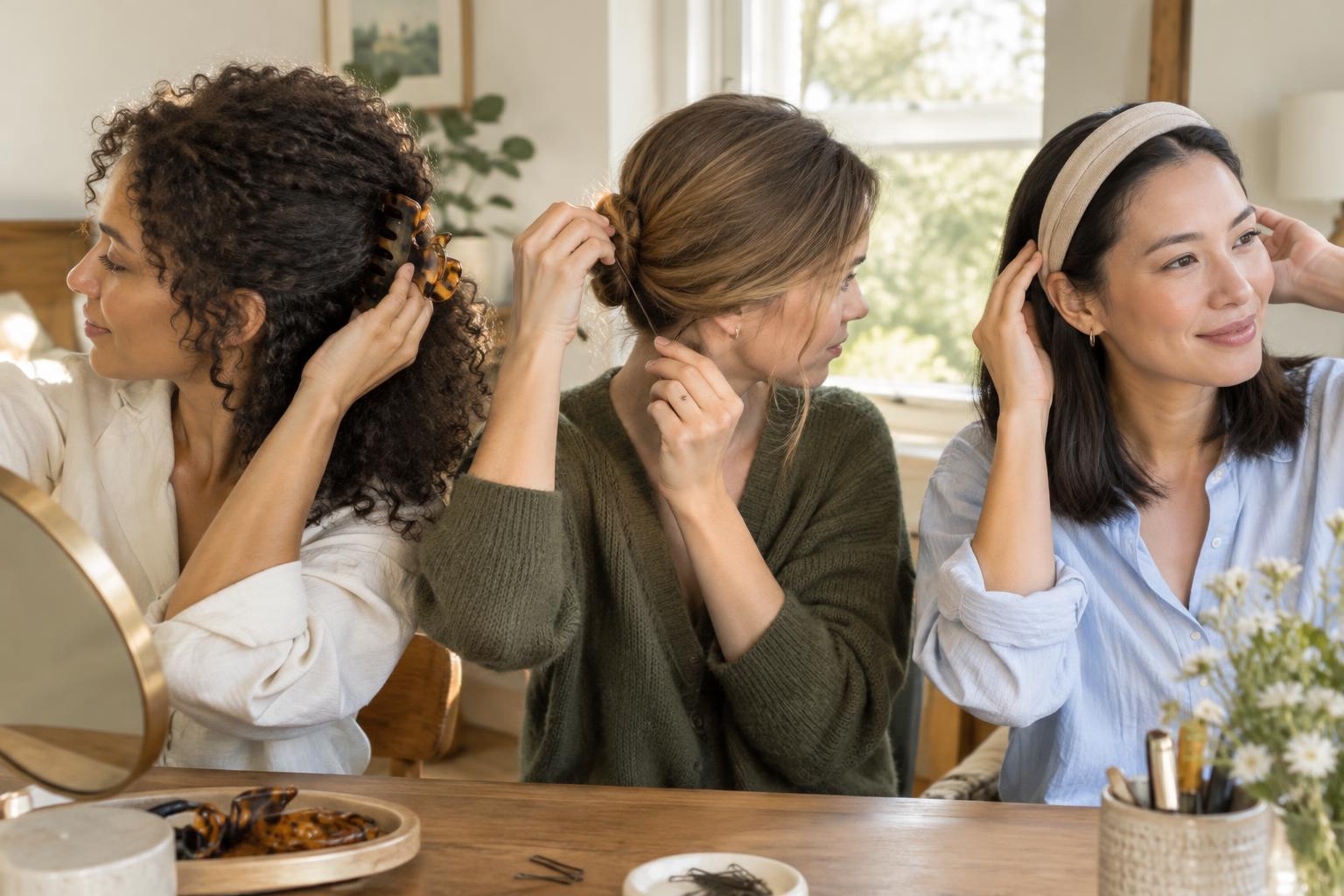
Small snap clips and barrettes work well for a side part, a fringe or a narrow section tucked behind an ear. For fine or slippery hair, look for a clasp that closes snugly and try fastening it over a modest amount of hair rather than a thick section it cannot grip. If a decorative barrette keeps sliding, use a discreet pin to secure the section first and place the barrette over it.
Claw clips are useful for twists and quick half-up styles because their teeth grip hair from both sides. Size is important: the clip should close around the twist without forcing the spring open or leaving much of the hair loose. If your hair is thick, divide it into sections or choose a larger clip with a comfortable opening. If it is fine, a smaller clip may hold more reliably than an oversized one. Check that the teeth and hinges feel smooth before wearing a clip for hours.
A simple half-up style is a good test of hold. Gather the top section, twist it once and fasten it with a clip. Turn your head and gently shake it. If the clip moves immediately, try a smaller section, a different clip size or a firmer twist. The goal is security without having to pull your hair tight.
Use pins for precise, adjustable support
Bobby pins are useful for loose layers, small twists and the edges of an updo. Slide a pin into the hair it needs to catch, rather than laying it flat across the surface. Two pins placed from different directions can help anchor a section that keeps escaping. Hairpins with open, U-shaped ends serve a different purpose: they can support a bun or twist by catching a little hair near the scalp and guiding it into the styled section.
Start with fewer pins than you think you need, then add support where the style loosens. Too many pins clustered in one spot can feel uncomfortable without improving the hold. If a pin scratches, snags or presses against your scalp, remove and reposition it. Pins with damaged coatings or bent tips are worth replacing, especially if they catch when you take them out.
Pick a headband that stays comfortable
A headband can hold back shorter layers without requiring a tightly secured style. Rigid bands offer a defined shape, while soft fabric bands can feel more flexible and cover a wider area. Neither type suits everyone: the fit depends on the band’s width, tension and where it sits on your head. A band that slides backward may need a different placement or a narrower shape; one that causes pressure is not a good choice for extended wear.
For an everyday outfit, try a headband in a color already present in your clothing, such as a shade from a patterned shirt or scarf. A slim, understated band can blend into a layered look, while a wider one becomes a more noticeable accessory. Comfort comes first: an accent is less useful if you keep taking it off.
Test the hold and care for the details
When trying a new accessory, wear it at home for a while before relying on it for a long day. Sit, walk and put on a coat or bag to see whether it shifts or catches. Keep a small pin or clip in your bag if your style has short layers that tend to work loose.
Remove accessories gently rather than pulling them through tangled hair. Wipe away product buildup when needed, let fabric bands dry thoroughly and store clips where their teeth and springs will not be crushed. A small collection of pieces that fit your hair and feel good to wear is often more useful than a drawer full of accessories that need constant adjusting.