Start with the line a belt creates
A belt creates a horizontal line across an outfit. Where that line sits influences how the upper and lower parts appear to relate to each other. A belt at the natural waist, often the narrower area between the ribs and hips, can make the legs look longer when worn with a high-waisted skirt or trousers. A belt worn lower, near the hips, usually gives the torso more visual length.
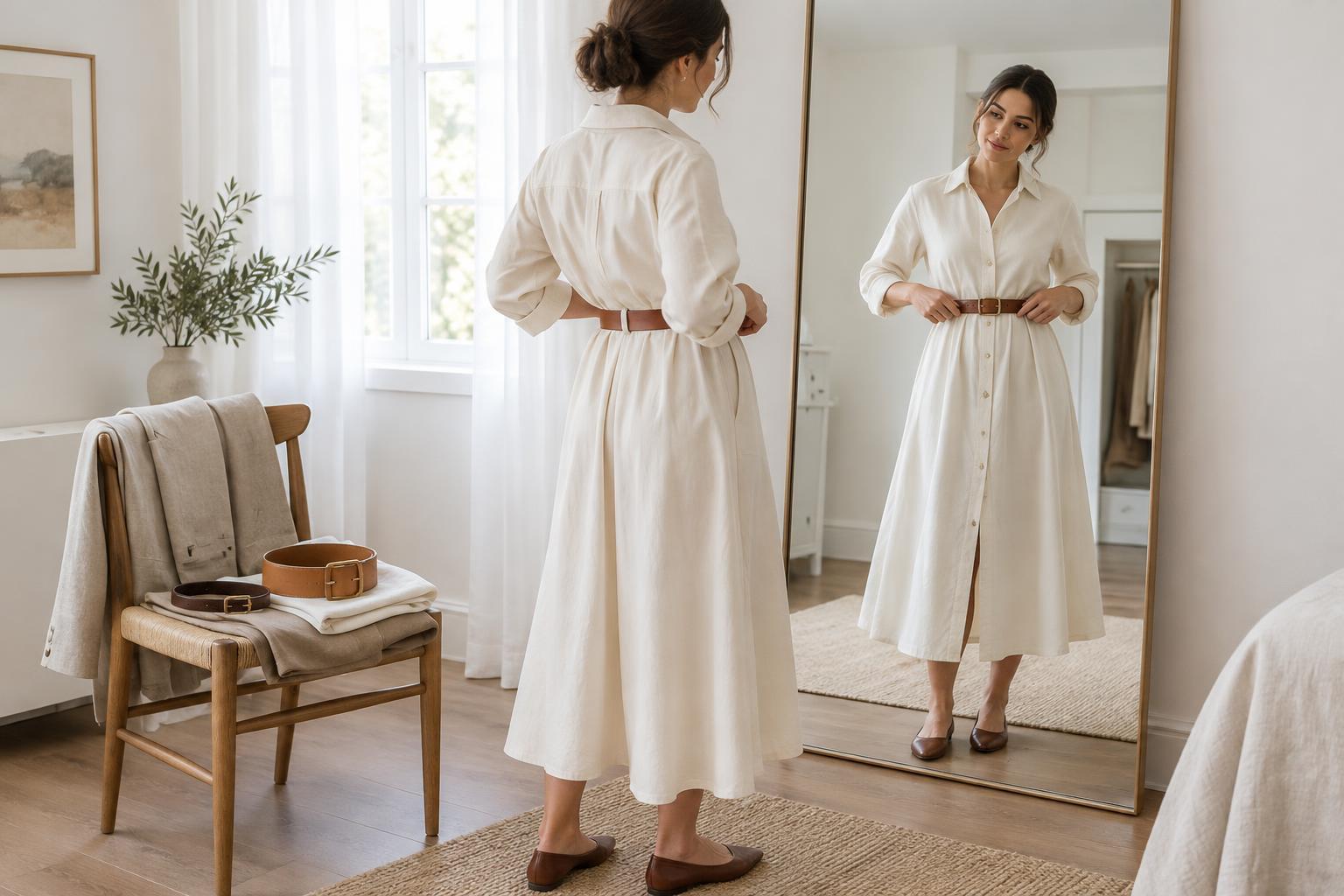
Neither placement is automatically better. Think about the shape you want to emphasize and the cut of the clothes underneath. On a dress, a belt can suggest a waist where the fabric hangs straight. On trousers, it often follows the waistband, so the rise of the trousers matters as much as the belt itself. Check the whole outfit in a mirror rather than judging the belt on its own.
Choose a width that works with the garment
A narrow belt adds a small, precise line. It suits trousers with slim belt loops, lightweight dresses and outfits where you want the fabric to remain the focus. Over a loose shirt dress, for example, a narrow belt can gather the material without making the middle of the outfit look heavily structured. A wider belt draws more attention and can give a soft garment a firmer outline.
Width also affects comfort and fit. A wide belt may cover much of a short torso or bunch up when you sit, while a very narrow belt may look slight against a bulky knit or substantial coat. For trousers, check the height of the belt loops before choosing a width: a belt that fills the loops without straining them usually looks more settled. If you are belting over clothing with no loops, test whether the belt stays in place as you move.
Use placement to balance volume
Belts are especially useful when an outfit has volume. With wide-leg trousers and a tucked-in top, a belt at the waistband can mark the point where the two pieces meet. With an oversized blazer or cardigan, a belt at the waist can give the layer a more defined shape. Leave enough ease to move comfortably; pulling a belt very tight may make fabric bunch above and below it.
On a dress, try the belt in more than one position. At the natural waist, it may create a distinct top and skirt. Slightly above that point, it can visually raise the dividing line, although it may also cause extra fabric to gather under the bust. At the hips, a belt can keep a relaxed, dropped shape. Look from the side as well as the front to see how the fabric falls.
Let color decide how prominent the line feels
A belt close in color to the clothing beneath it creates a quieter transition. A dark brown belt on brown trousers, for instance, may define the waistband without strongly dividing the outfit. A contrasting belt makes the line easier to notice. That can be useful when you want to draw attention to the waist, but it can also interrupt a continuous column of color.
The buckle plays a part too. A large or shiny buckle becomes a focal point even on a narrow strap; a simple buckle tends to blend in. If an outfit feels busy, try a belt that repeats a color already present in the shoes, bag or clothing. The pieces do not need to match exactly. A shared tone is often enough to make the belt feel intentional.
Make the final choice by wearing it
To compare belts, keep the outfit the same and change one detail at a time: first width, then placement, then color. Notice where your eye goes first and whether the proportions still appeal to you when you sit, walk and raise your arms. A belt that looks right while standing still may slide over a smooth dress or press uncomfortably against a waistband.
The most useful belt is one that works with the garment and the way you wear it. A narrow, low-contrast belt can provide gentle definition; a wider or contrasting belt can make a deliberate feature of the waist. Treat these as options, not rules, and choose the version that makes the entire outfit feel balanced to you.