What grain means in a woven fabric
Woven fabric is made from two sets of threads that cross each other. The lengthwise threads, called warp, run parallel to the finished edges of the fabric. The crosswise threads, called weft, run from edge to edge. These directions are the straight grains. A diagonal line across them is the bias; the true bias sits at roughly 45 degrees to both.
Grain direction matters because a woven cloth does not behave exactly the same way in every direction. Lengthwise grain is often relatively stable, while crosswise grain may have a little more give. On the bias, the threads can shift against one another, allowing even a fabric without stretch fibers to flex and fall into softer folds. The effect varies with the weave, fiber, weight, and finish, so grain is one part of drape rather than its only cause.
Why straight-grain pieces tend to look steadier
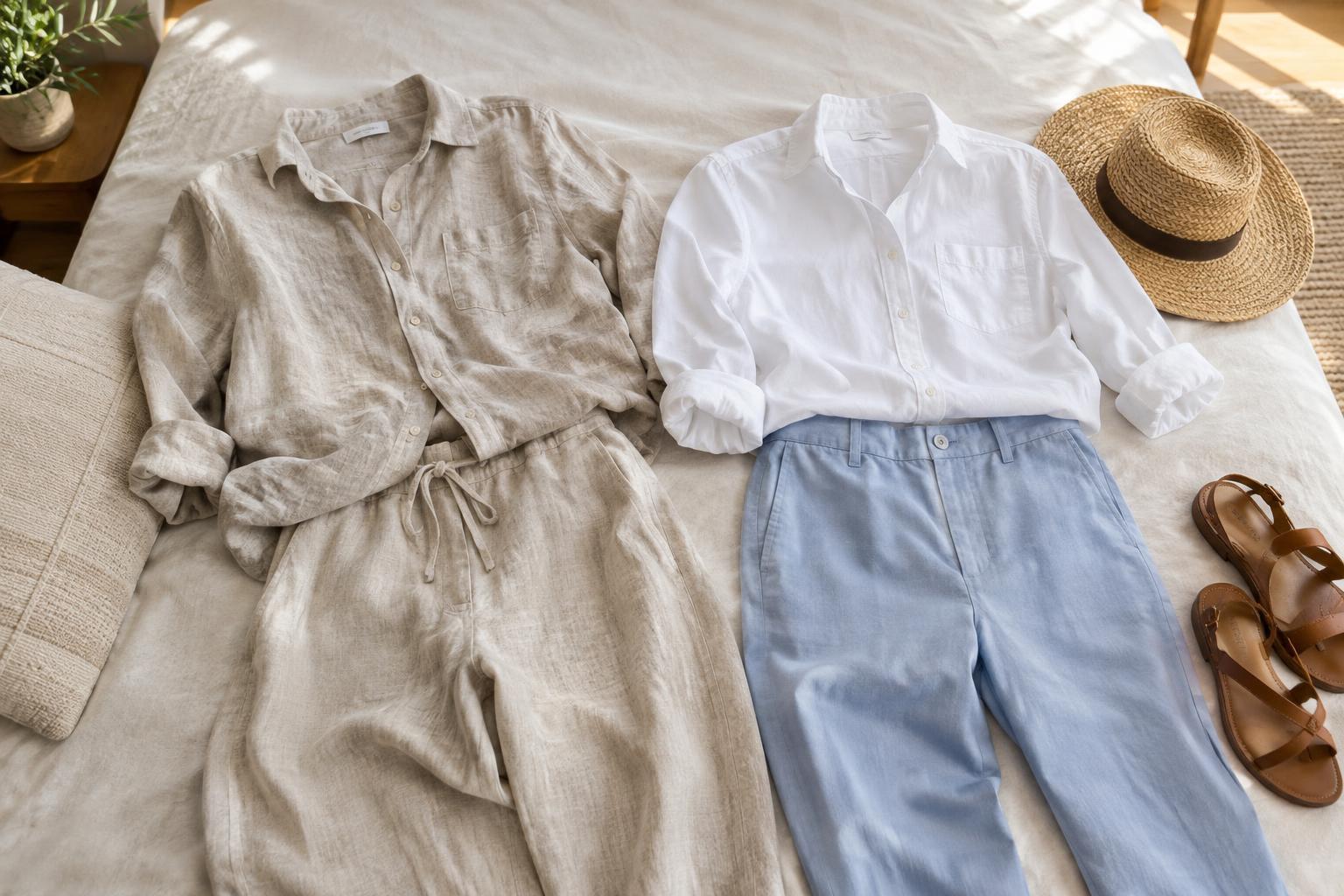
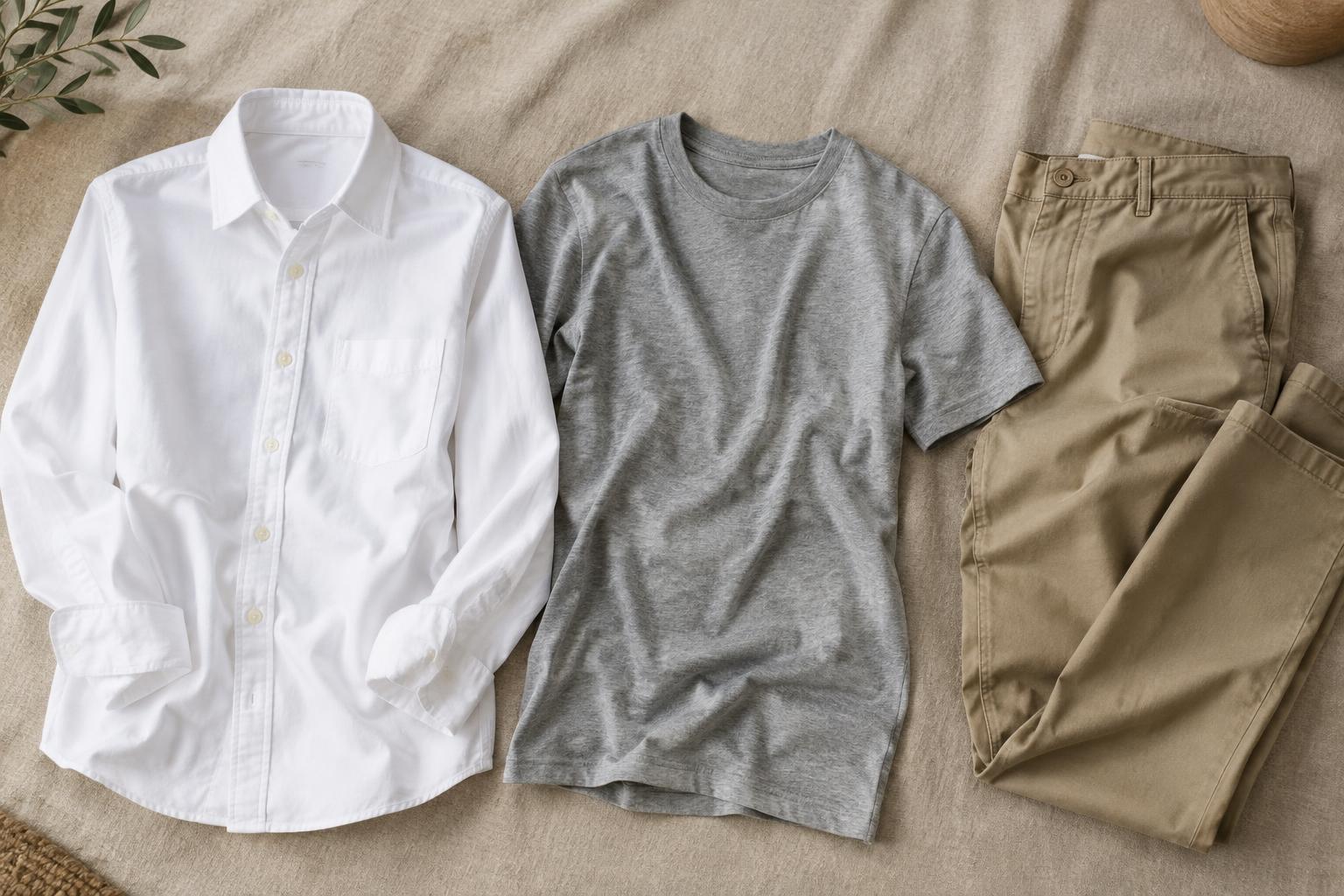
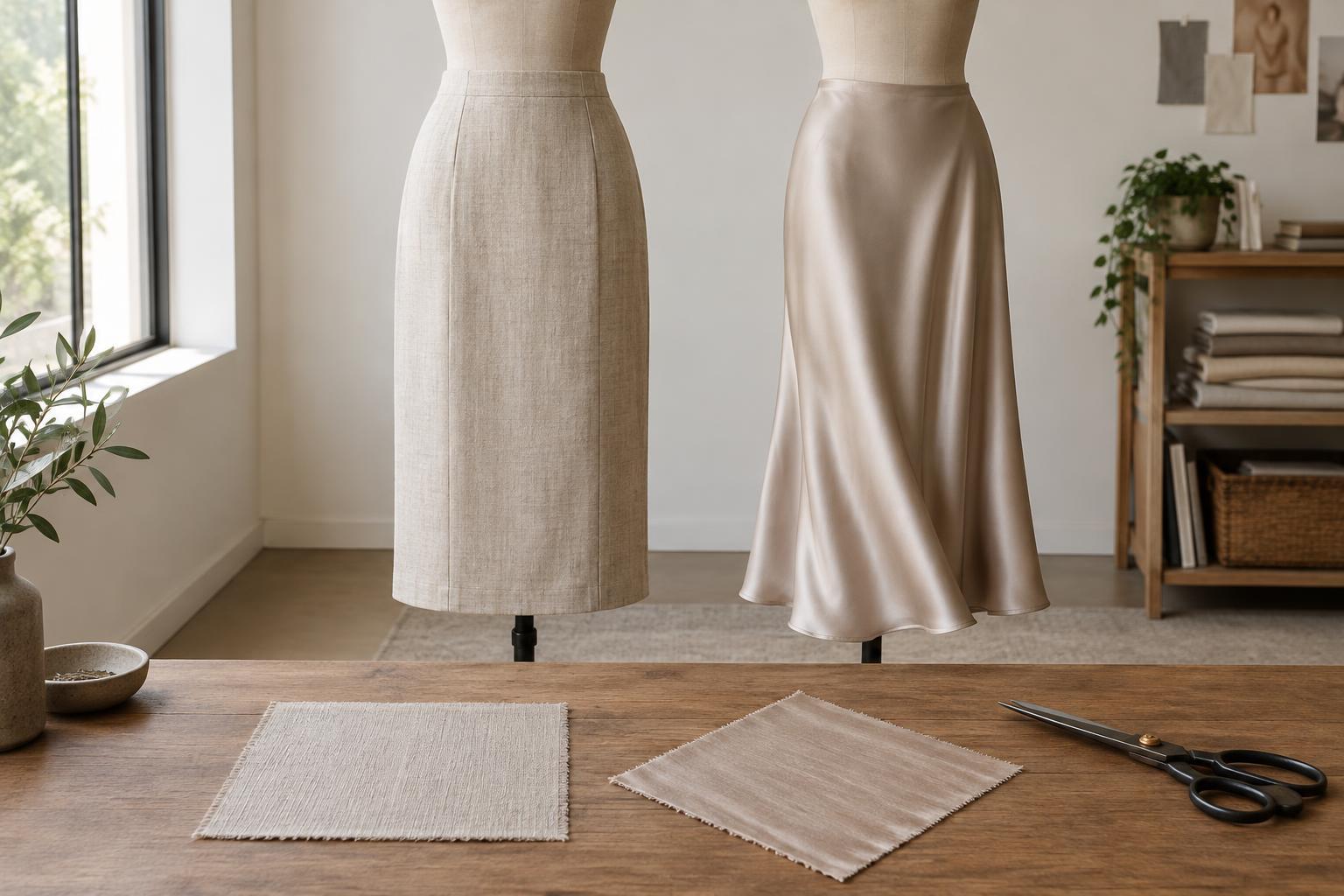
Many woven garments are cut with their main vertical lines on the lengthwise grain. Think of a shirt front, a trouser leg, or the center panel of a simple skirt. This orientation helps the piece hang in a predictable line instead of twisting around the body. It also helps a hem keep its intended shape when the garment is worn.
Crosswise grain has its own uses. A designer might cut a band, yoke, or stripe-accented panel across the fabric to change the look or use the available width. The result depends on the cloth: a firm cotton poplin may show little difference at a glance, while a loosely woven fabric may feel noticeably more flexible across its width. If a trouser seam seems to spiral or a shirt side seam pulls toward the front, off-grain cutting is one possible explanation, although fit and construction can cause similar problems.
What changes when a piece is cut on the bias
A bias-cut piece can curve around the body without relying on darts, elastic, or a very loose fit. That is why bias-cut skirts and slip dresses often look fluid rather than boxy. As the cloth gives diagonally, it can form narrow, shifting folds that move with the wearer. A bias-cut scarf or neckline facing may also bend smoothly around a curve.
Bias does not guarantee a particular silhouette. A heavy cloth may still feel substantial, and a sheer cloth may need a lining. Bias-cut garments can also grow in length as they hang, especially before their hems are finished. Their side seams may be more sensitive to uneven tension, and a close fit can make the fabric cling or reveal the outline of underlayers. When trying one on, walk, sit, and let it settle for a moment; the way it hangs while standing still is only part of the picture.
How to spot grain direction in clothes you own
Look closely at a plain-woven garment in good light. The threads usually form a small grid. On a straight-cut panel, one set of threads will generally run along the garment’s length and the other across it. On a bias-cut panel, that grid appears diagonal relative to the hem or center line. Stripes and checks can make this especially easy to see: diagonal stripes on a skirt panel may signal a bias cut, though the pattern could also have been woven or printed at an angle.
You can compare how two garments feel without pulling hard on either one. Hold a hem gently between your hands and notice whether it feels firm or yields a little as you move it diagonally. Then observe the garment on a hanger and on your body. Does it fall in straight planes, or does it settle into curved folds? These observations can help you connect what you see in the fabric to the shape you prefer wearing.
Choosing and caring for the drape you want
If you want a tidy outline for an overshirt or tailored trousers, look for fabric that feels stable and panels that hang without twisting. If you want a softer line for a skirt or dress, a bias cut may provide it, but check the fit at the hips and how the hem falls all the way around. Compare garments made from similar fabrics when possible; otherwise, differences in weight and weave can obscure what the cut is doing.
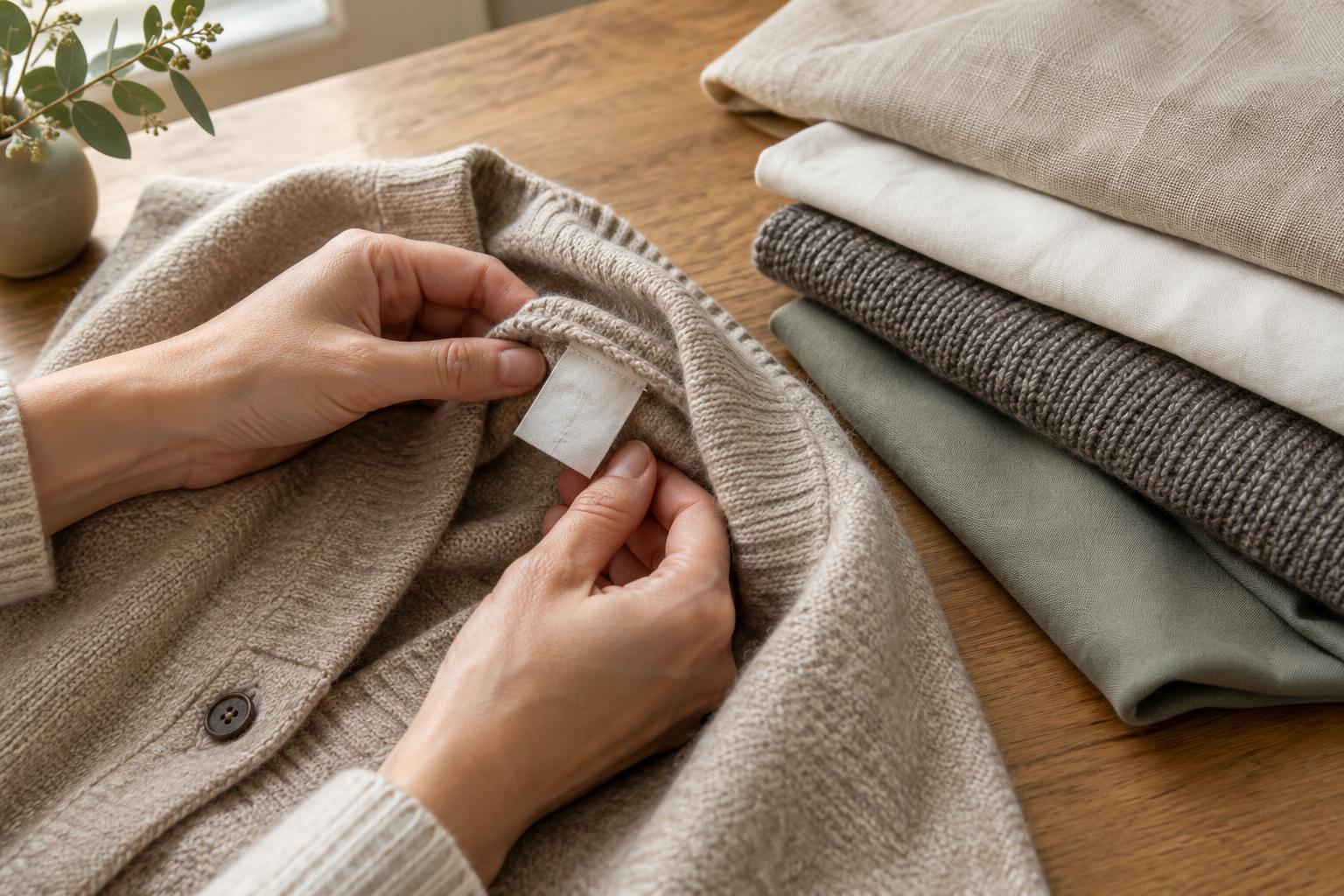
For care, follow the garment label and avoid stretching damp fabric out of shape. Supporting a bias-cut piece while handling it can help prevent a neckline or hem from being pulled unevenly. After washing, reshape it gently and let it dry as directed. Grain is easy to overlook, but paying attention to it makes shopping more useful: you are choosing not just a color or fabric, but the way that fabric will sit and move.