Start with where the bag rests
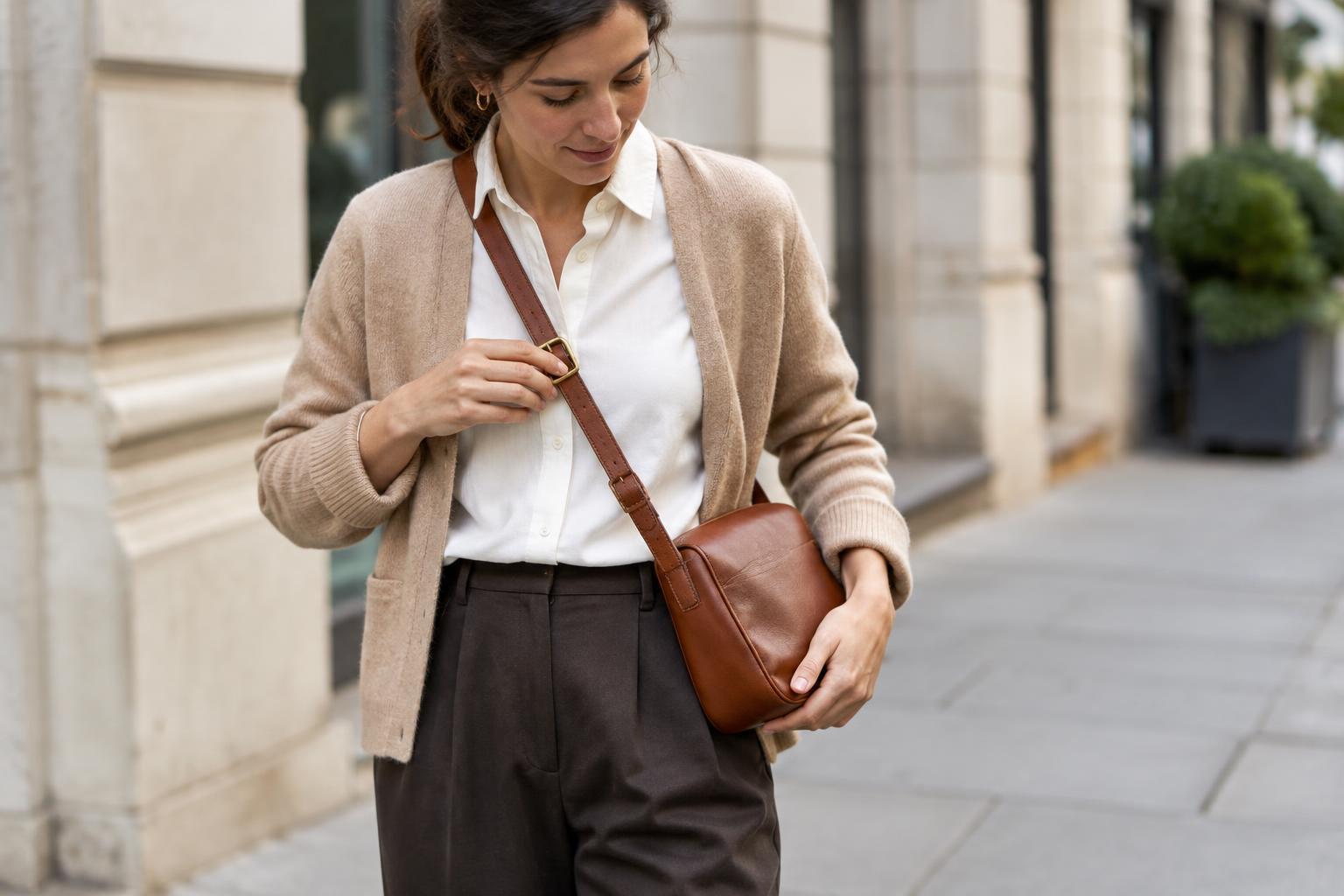
Put a few things you normally carry in the bag before adjusting it. An empty bag can hang differently from one holding a phone, keys and a small wallet. Place the strap over one shoulder so it crosses your torso, then shorten or lengthen it until the bag rests near your hip. This is a starting point, not a rule: the right position is one you can reach easily without the bag striking your arm or thigh as you walk.
Check the fit while standing and walking. If the bag swings far from your body, try a shorter strap. If it presses into your ribs or makes you lift your shoulder, give it a little more length. Adjust in small increments and move around between changes. A position that looks balanced in a mirror may feel different once you climb stairs or sit down.
Make comfort the first test
A crossbody strap should lie fairly flat across your shoulder and torso. Straighten any twists, and check that hardware or seams are not sitting against your neck. If the bag repeatedly pulls the strap toward your neck, shifting the bag slightly forward or back may help. You can also try wearing the strap on the opposite shoulder to see whether the weight settles more comfortably.
Strap width matters as well as length. A narrow strap may feel fine with a light bag but dig in when the bag is full. If your bag allows interchangeable straps, a wider option can spread the pressure over more of your shoulder. Otherwise, removing a few nonessential items may improve the fit more than another length adjustment. Comfort should take priority over keeping the bag at a particular height.
Use length to balance the outfit
The bag’s position changes how an outfit looks. A small bag worn a little higher can sit close to the waistline of trousers or a dress, giving the outfit a compact shape. A larger bag may look and feel more natural slightly lower, where it has room beside the hip. These are options to test rather than fixed guidelines; your proportions, the bag’s shape and the cut of your clothes all affect the result.
Look at the full outfit in a mirror, then check it from the side. If the bag covers a detail you want to show, such as a belt or pocket, move it a few centimeters up, down or around your body. With a loose top or coat, notice whether the strap pulls the fabric into bunches. Sometimes moving the bag to the opposite hip or letting it sit slightly toward the front creates a cleaner line without changing the strap length.
Readjust for layers and activity
A setting that works over a T-shirt may feel tight over a sweater or coat. When you add a layer, put the bag on again and check that you can move both arms freely. You may need to lengthen the strap to give a bulky coat room, while a smoother, lighter outfit might let you shorten it. If you carry the bag under an open jacket, make sure you can still reach its opening without tugging hard on the strap.
Consider what you will be doing, too. For walking through a crowded space, keeping the bag closer to your body can limit swinging and make it easier to keep track of. When you sit, bring the bag forward or take it off rather than leaving it trapped behind your hip. A comfortable setting does not have to stay identical all day; an adjustable strap is useful precisely because you can change it.
Keep the adjustment secure
After finding a length you like, check that the strap runs correctly through its buckle or slider and that both attachment points are secure. If the strap gradually slips longer, inspect the hardware and how the strap is threaded before relying on that setting. Avoid tying a knot close to a clasp or forcing thick material through hardware not made for it.
For a bag you use often, note which adjustment works with your usual clothes, then treat it as a baseline. Before heading out, take a short walk with the bag packed as you intend to carry it. If it stays close, remains easy to open and does not pull at your shoulder, you have found a practical fit. Small changes for a different coat or outfit can take care of the rest.