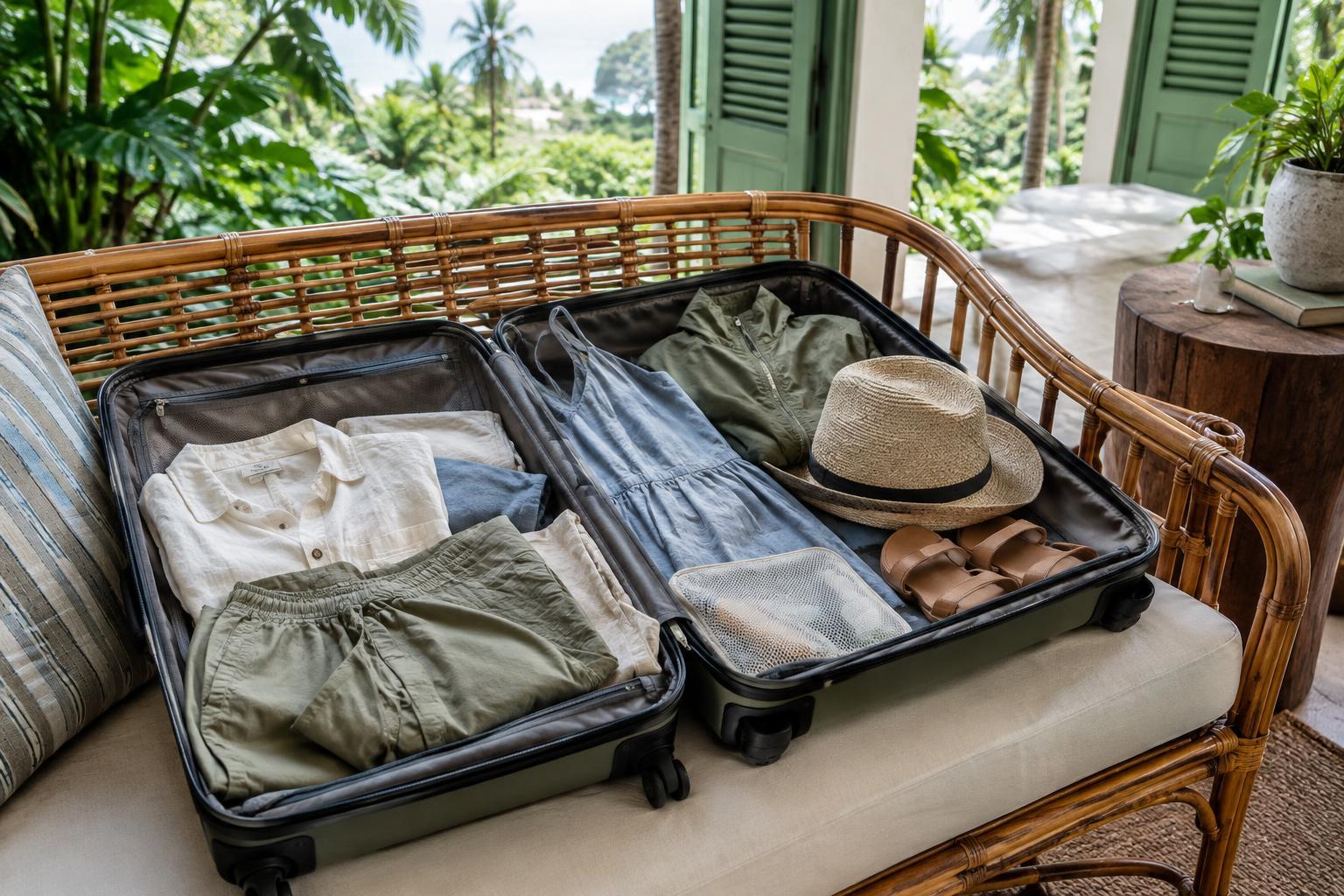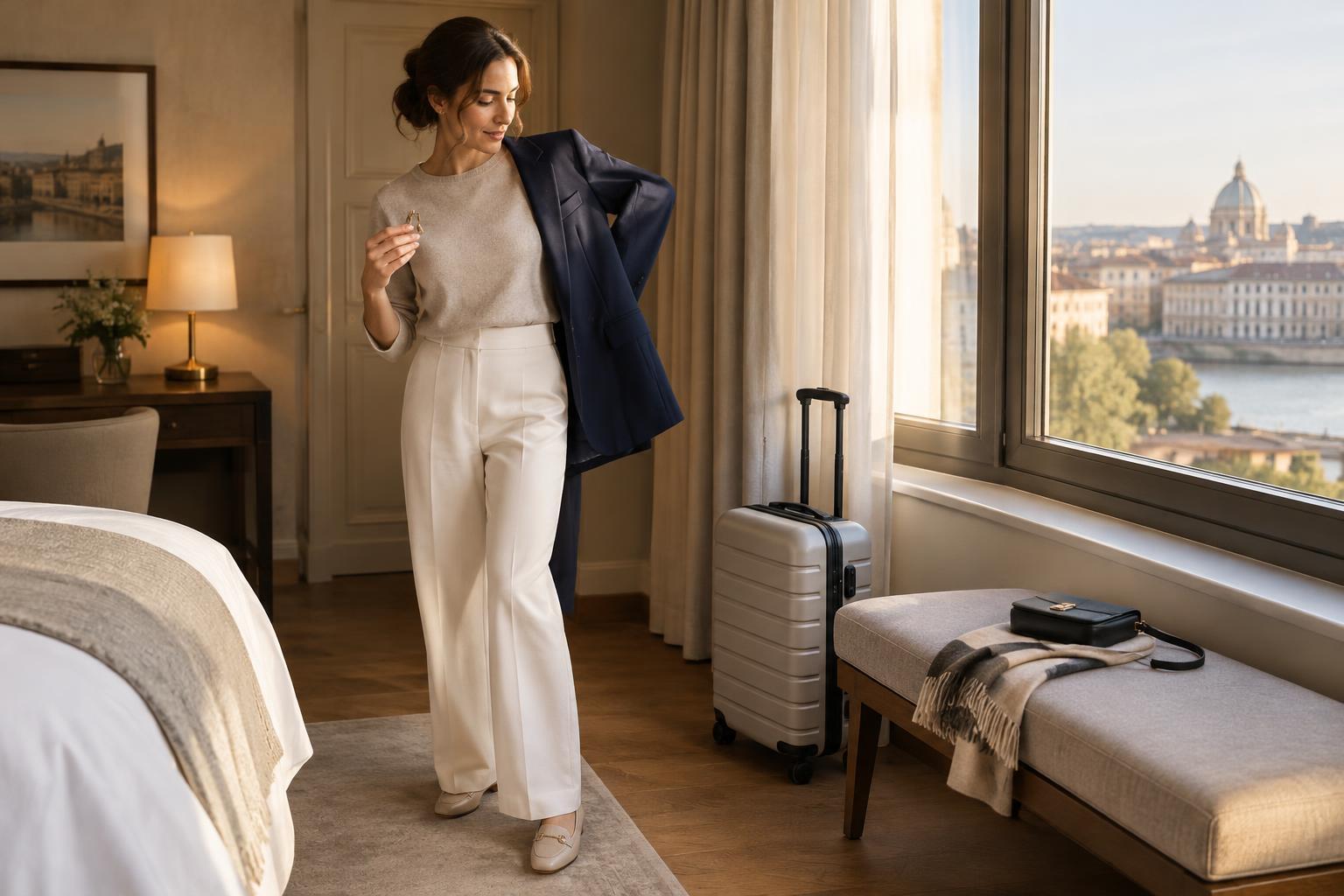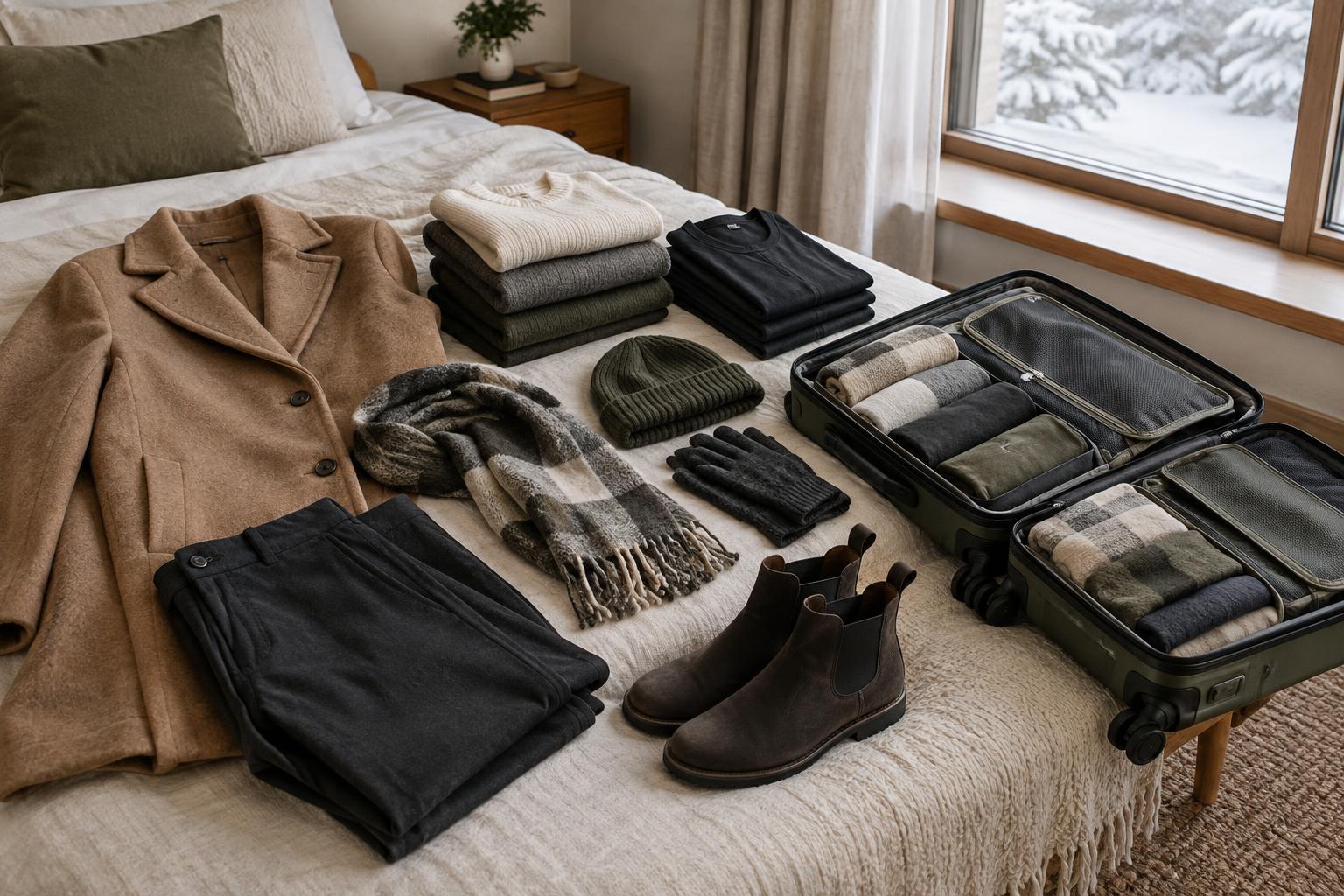
Plan outfits around the trip, not the forecast alone
Before choosing clothes, sketch out what you will actually do: travel days, long walks, indoor meals and any occasion that calls for a smarter outfit. A city visit with heated museums may need different layers from a trip spent mostly outdoors. Check the expected conditions near departure, but leave room for changes in temperature, wind and rain. The goal is to make several comfortable outfits from a small group of pieces, not to pack a separate look for every day.
For a five-day trip, start with two or three bottoms, three or four tops, one or two warm midlayers and one outer layer suited to the conditions. Treat these as a starting point rather than a rule. If you can wash or air out clothes, you may need fewer pieces; if you expect wet weather or limited laundry access, an extra base layer or pair of socks may be more useful than another bulky sweater.
Choose layers that work together
A compact cold-weather outfit works best when each layer has a job. A comfortable base layer sits close to the skin, a sweater or fleece adds warmth, and a coat blocks the conditions you expect outside. Try the full combination on before packing: sleeves should move easily, and the coat should close without squeezing the layers underneath. Being able to remove a layer also matters when you move from a cold street into a warm train or café.
Choose fabrics with your routine in mind. A fine knit often packs more easily under a coat than a thick, loose sweater. Wool or wool-blend pieces may be comfortable to wear more than once if they are aired between uses, while quick-drying synthetic layers can be convenient when you need to wash something during the trip. Whatever the fiber, follow its care label. Pack the pieces you already find comfortable rather than relying on an untested garment for long days away.
Keep the color palette simple, not dull
Pick a small group of colors so that tops, bottoms and outerwear can mix without much thought. For example, dark trousers, blue jeans, cream tops and a charcoal coat can form the base of several outfits. A patterned scarf or a sweater in a favorite color adds variety without requiring another complete look. If light colors are difficult to keep clean on your trip, use them in a top or accessory rather than in the trousers you plan to repeat.
Think in combinations before you pack. A knit worn with jeans during the day could work with tailored trousers for dinner; a button-front shirt might sit under that knit or over a thin base layer. Lay out each planned outfit, then remove pieces that work with only one item unless they serve a specific need. This quick check catches gaps, such as packing two warm sweaters but no comfortable top to wear indoors.
Give shoes and accessories their own plan
Shoes take up space, so choose the pair you will wear most often first. For cold, damp walking days, comfort, grip and weather suitability matter more than matching every outfit perfectly. Wear the bulkier pair in transit if that is comfortable, and pack a second pair only if it fills a clear gap, such as a lighter option for indoor plans. Break in footwear at home rather than discovering a poor fit halfway through a trip.
Small accessories can do substantial work. A hat, gloves and scarf add warmth without another coat, and they are easy to take off as conditions change. Pack enough suitable socks for your walking plans, including a spare pair if wet feet are a possibility. A compact bag or pouch can keep gloves and other small items together when you step indoors. Choose accessories in colors that complement your coat so they feel like part of your outfits.
Pack for repeat wear and easy adjustments
Wear your bulkiest practical layers while traveling, but keep a removable layer accessible in case the journey is warm. Roll or fold lighter pieces so you can see what you have, and separate clean clothing from worn items. If laundry is available, a small amount of suitable detergent may let you wash a base layer or socks; allow enough drying time before you need them again. Airing a garment overnight can also help you decide whether it is ready for another wear.
Finally, leave a little space in your bag. It makes repacking easier and gives you room to store a scarf or midlayer when you do not need it. A successful compact wardrobe is not the smallest possible collection of clothes. It is one that lets you stay comfortable, handle the activities on your itinerary and get dressed without having to solve a new packing problem every morning.