Choose where your color will live
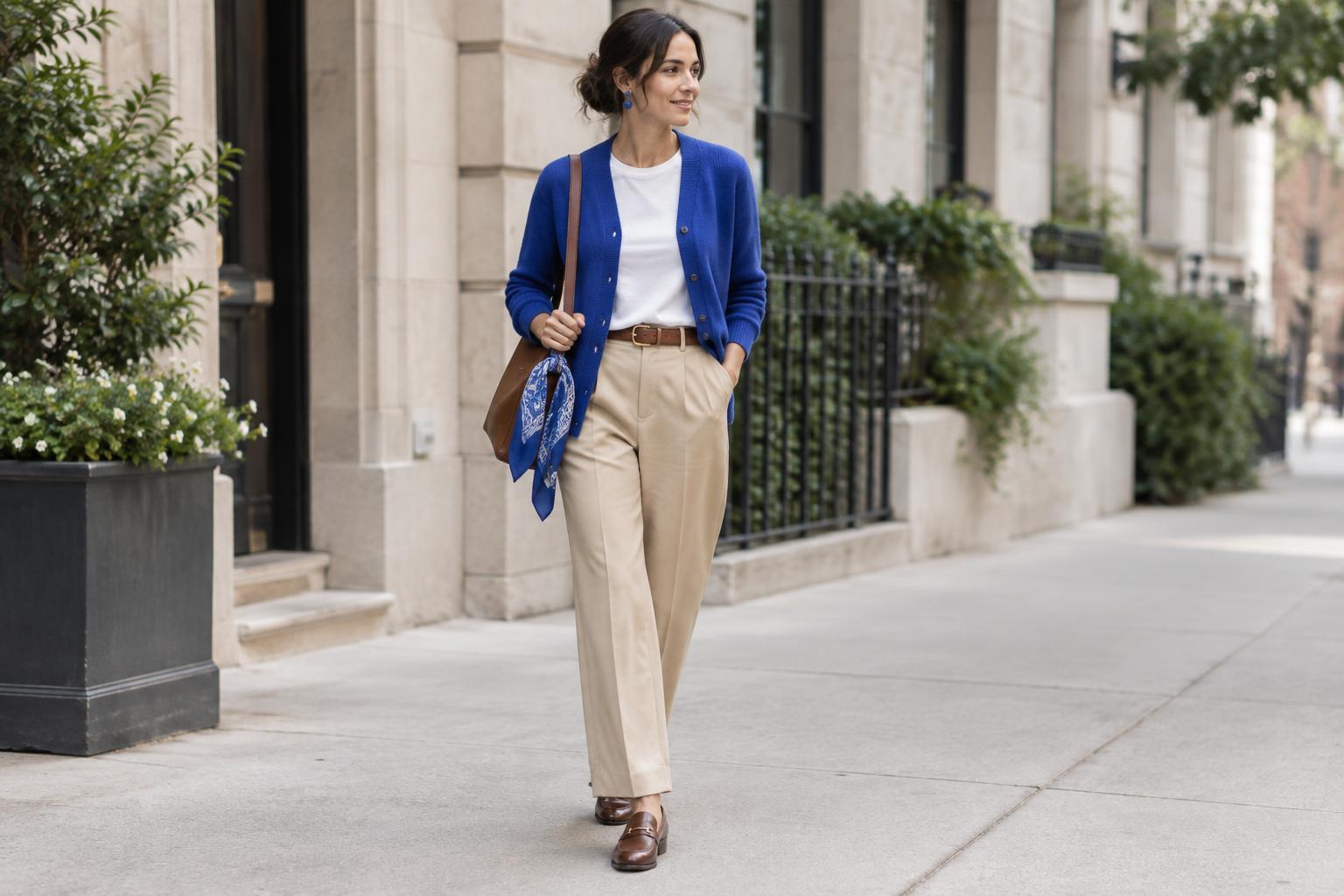
Building around one color does not mean wearing it from head to toe. Start by deciding how much attention you want it to draw. A cobalt sweater, rust skirt or green jacket can be the main feature of an outfit. If you prefer a quieter look, let the color appear in a scarf, bag, shoes or shirt collar instead. The piece you choose is your anchor: everything else has the job of helping it feel intentional.
Think about what you will actually do in the outfit. A colorful coat is useful when you will spend time outdoors, while a bright top remains visible after you sit down or remove a layer. You do not need to buy something new to try this. Pull out one piece you already enjoy wearing and build from there.
Give the anchor a simple foundation
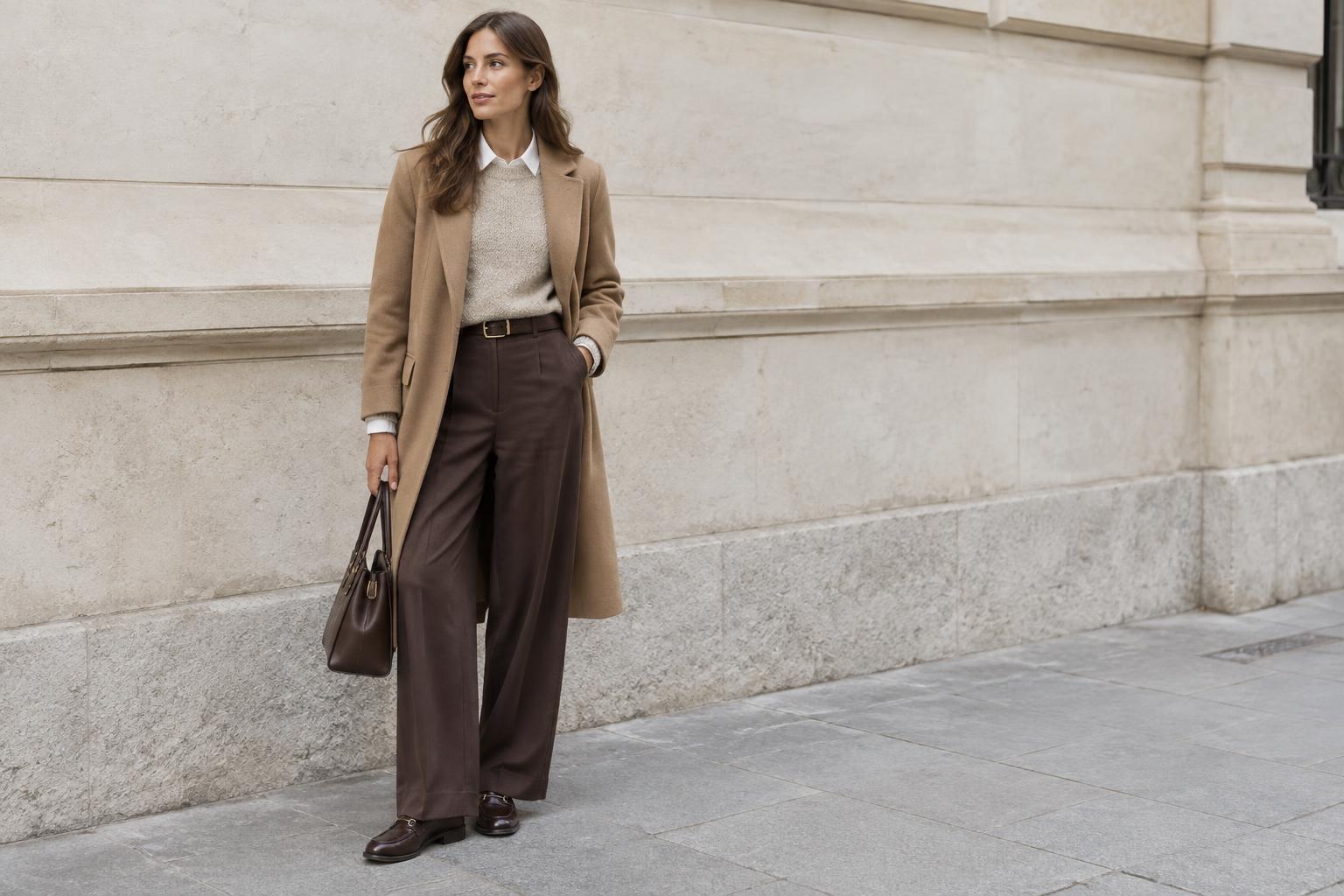
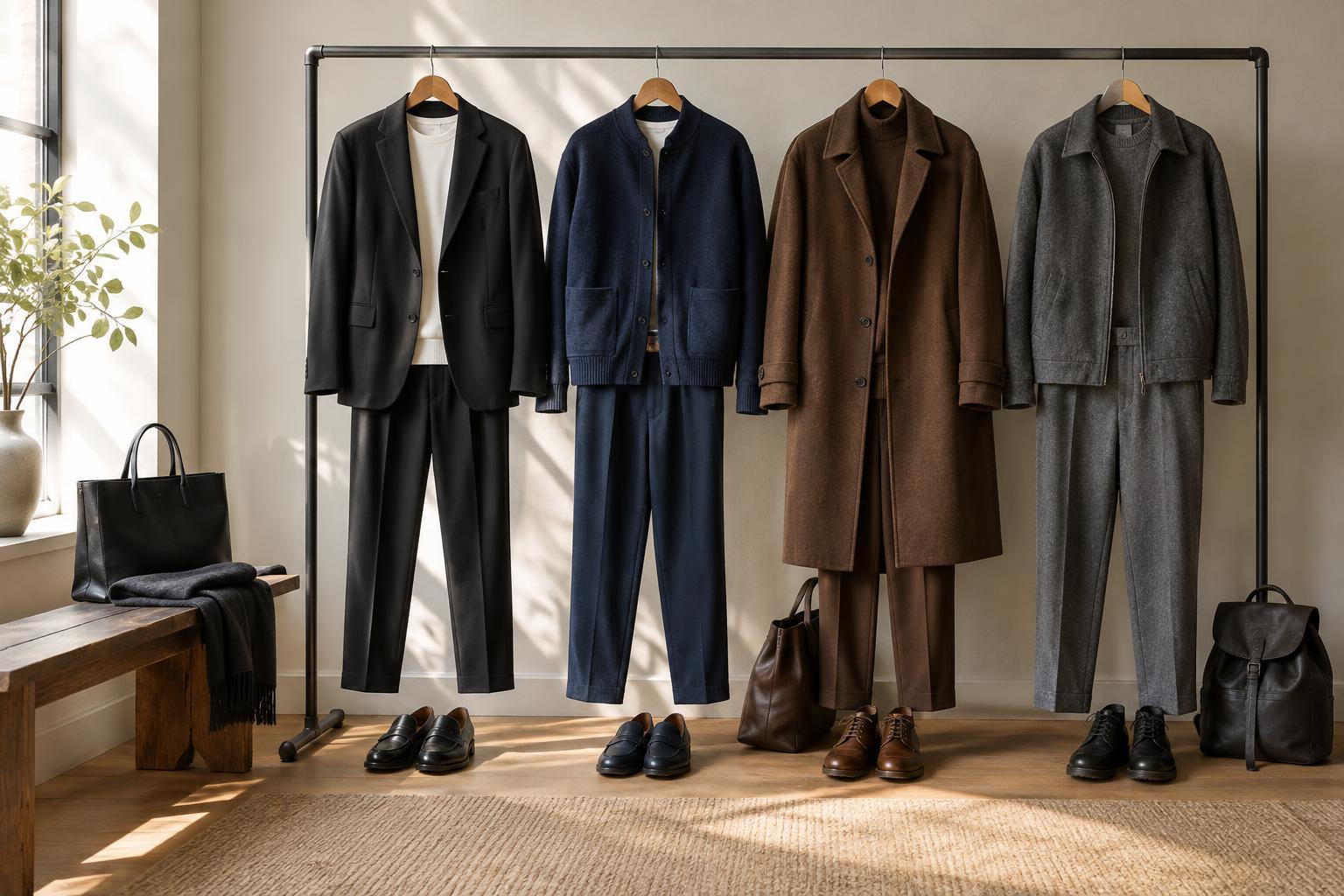
Once you have your anchor, add one or two familiar neutrals. Denim, cream, charcoal, navy, brown and black can all give a strong color room to stand out. For example, a tomato-red knit with dark jeans and brown boots has a different mood from the same knit with cream trousers and light shoes. Neither combination is automatically better; choose the one that suits the occasion and feels comfortable to wear.
If your favorite color is already quiet, such as olive or dusty blue, the foundation can be gentle too. Similar tones often create a calm outfit, while a much lighter or darker neutral adds clearer definition. Lay the pieces side by side before getting dressed. This quick check makes it easier to see whether one item supports the color or competes with it.
Adjust contrast rather than searching for a perfect match
Colors do not have to match exactly to work together. A deep forest-green shirt and a faded green cap, for instance, can look more relaxed than two identical shades. What matters is whether their differences seem deliberate. If two greens are almost the same but not quite, separate them with a neutral layer or place them farther apart in the outfit.
Look at lightness as well as hue. A pale lavender blouse against dark trousers creates a sharper contrast than the same blouse against light gray. You can also keep the overall contrast low by pairing a rich color with similarly deep neutrals. If a combination feels too busy, remove one competing color before replacing every piece. Often a simpler shoe or bag is enough to bring the focus back to your anchor.
Use texture and accessories to add depth
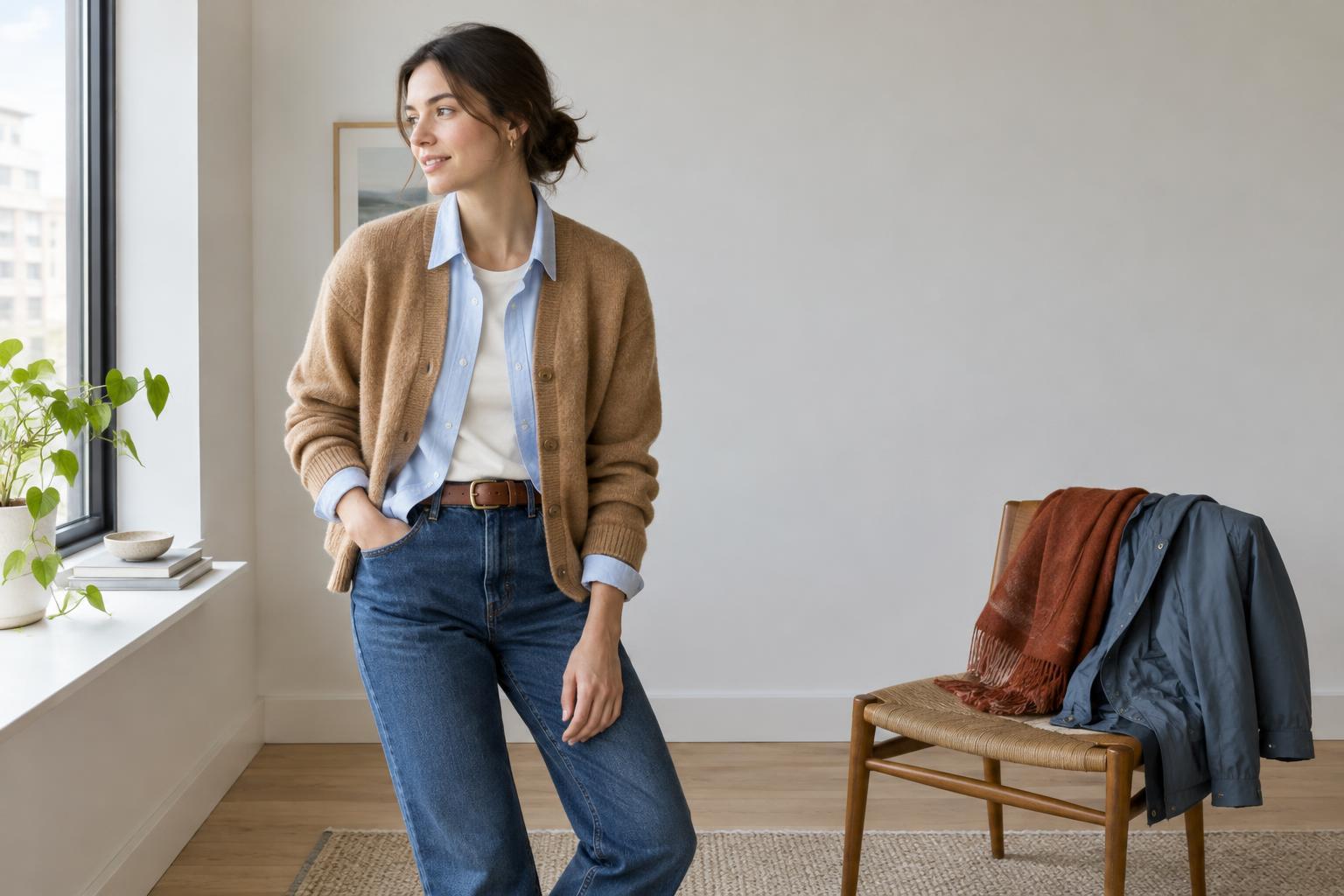
An outfit built around one color can still have variety. Matte cotton, soft knitwear, crisp poplin and smooth leather reflect light differently, so they keep a limited palette from looking flat. Imagine a blue shirt under a navy cardigan with worn-in jeans: the pieces share a color family, but their textures give each one a distinct role. Mixing textures is especially helpful when you want a mostly tonal look.
Accessories can either repeat your chosen color or provide a pause. A small echo, such as earrings that pick up the blue in a shirt, can make the outfit feel connected. A neutral belt or bag may be more useful when the main garment is already vivid. You only need one or two such details; repeating the color everywhere can make the outfit feel more coordinated than you intended.
Make the formula your own
Try your outfit on and view it as a whole, including the shoes and outer layer. Notice where your eye goes first. If it lands on your favorite color, the anchor is doing its job. If another item takes over, decide whether you like that effect or want to simplify. Check the outfit in the kind of light where you will wear it when possible, since colors can appear different indoors and outside.
Keep a note of combinations you enjoy: perhaps your green jacket works with cream and dark denim, or your pink scarf lifts a gray coat. These small observations are more useful than a rigid list of colors you are supposed to wear. Over time, your favorite color becomes a flexible starting point for outfits that fit your clothes, your routine and your taste.