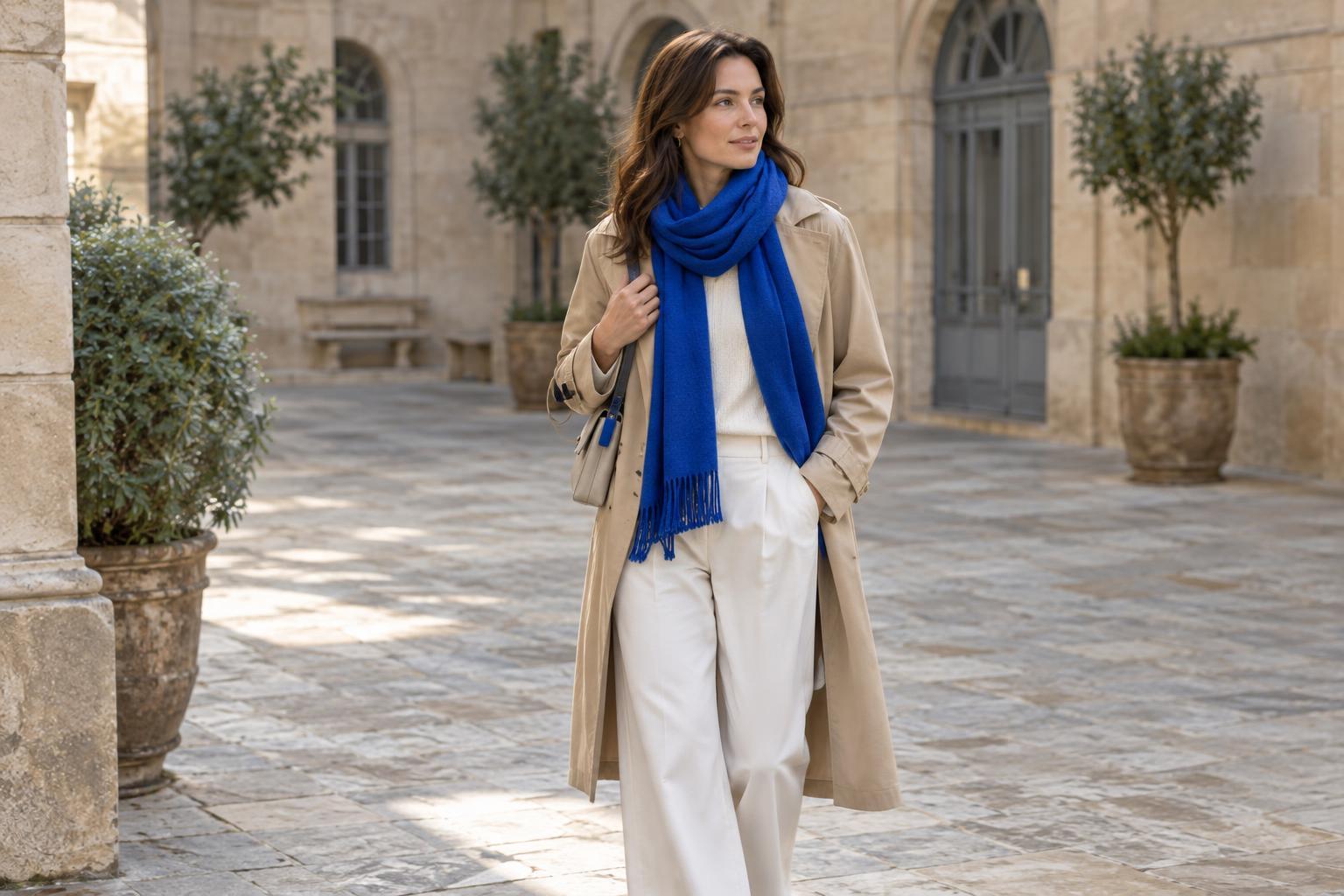
What makes a color combination analogous?
Analogous colors are neighbors on the color wheel, such as blue, blue-green and green, or red, red-orange and orange. Because they share some of the same color character, they can look connected without requiring every piece to match. In an outfit, that connection gives you room to combine garments you might otherwise wear separately.
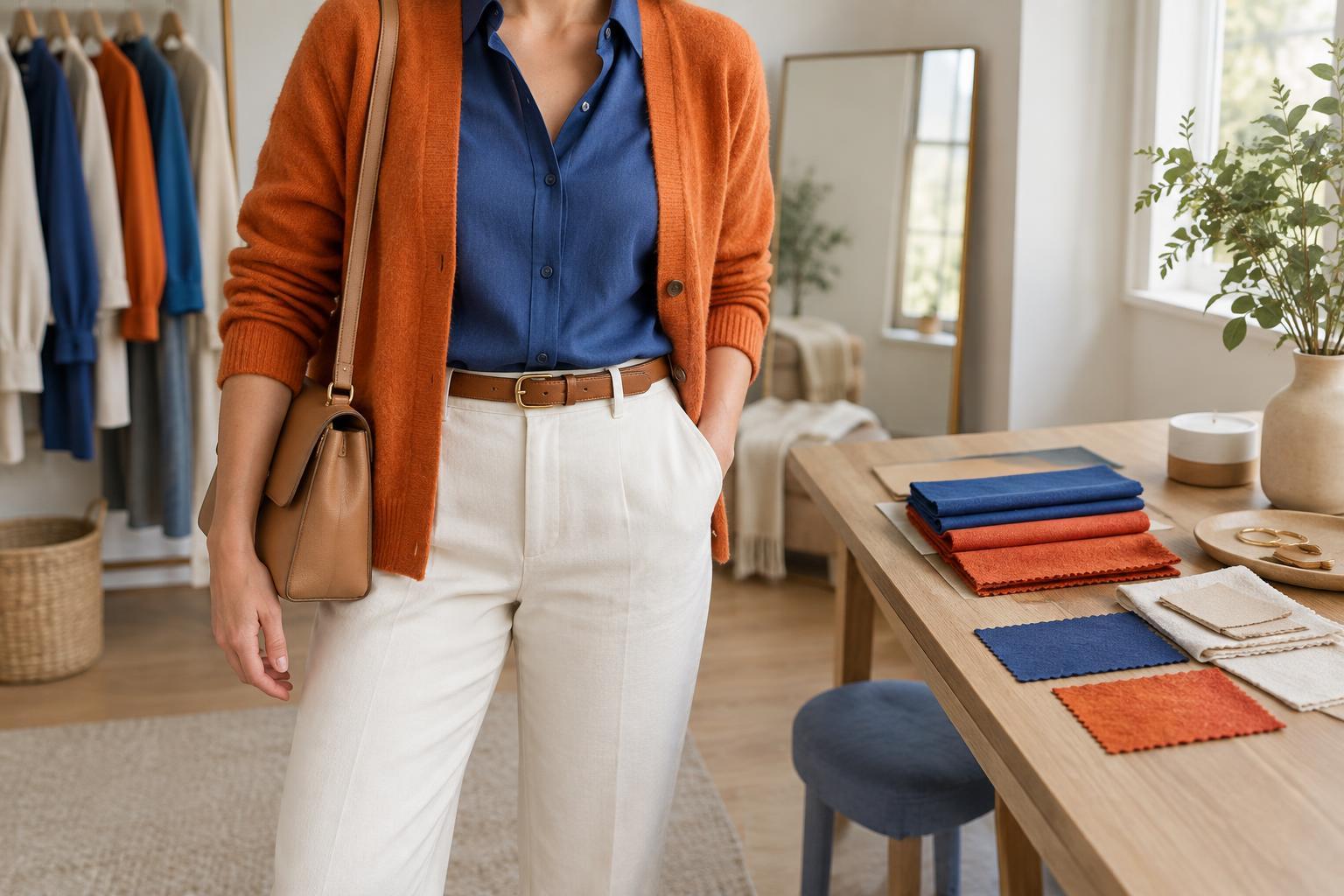
You do not need three distinct colors to use the idea. A navy shirt with teal trousers draws on neighboring hues, as does a rust sweater with a muted orange scarf. Start with two colors if three feels busy. Your clothes also do not need to match a color-wheel diagram precisely: fabric, lighting and dye can make the boundaries between hues look less clear.
Choose one color to lead
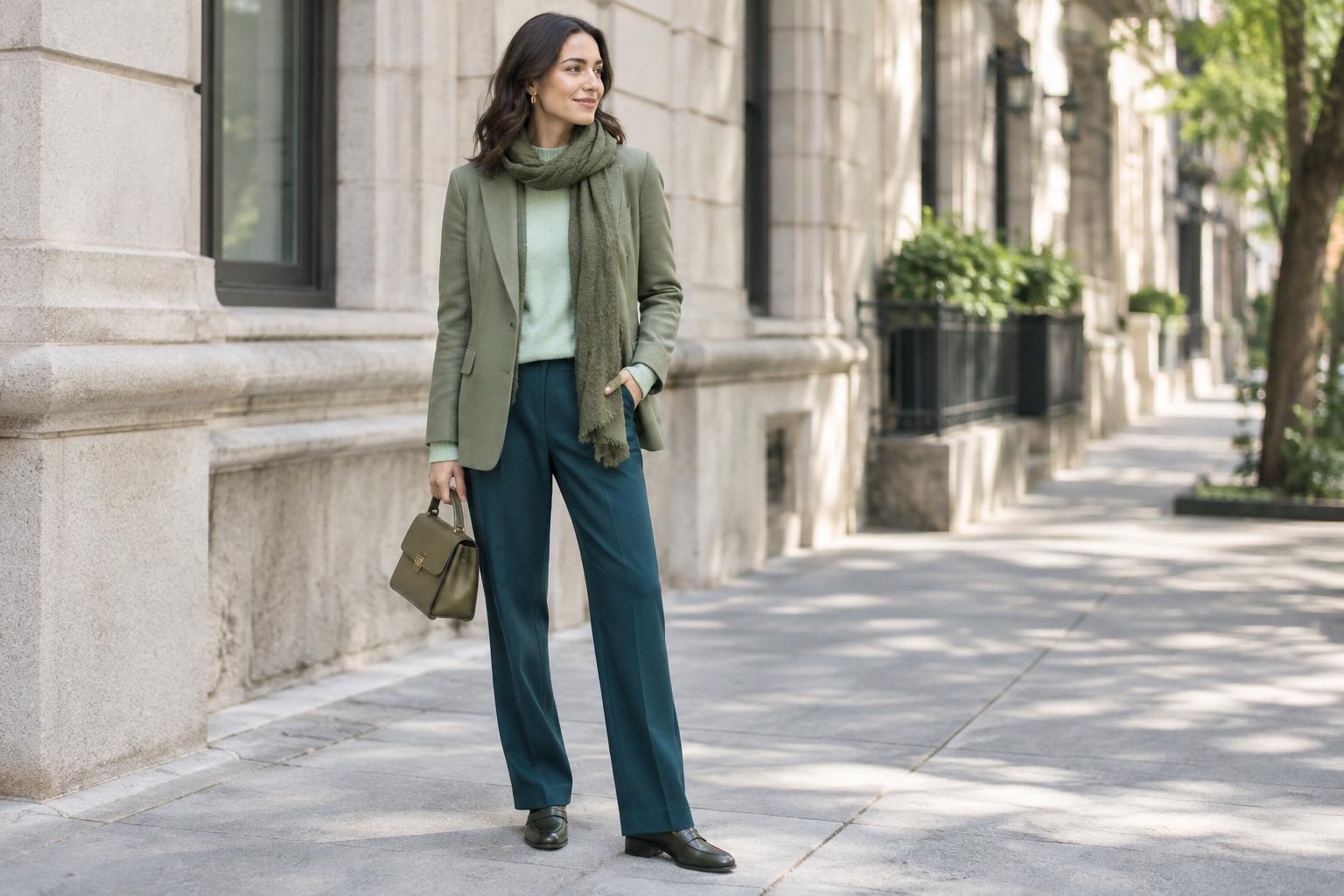
A straightforward way to build an analogous outfit is to give one hue most of the space. Try olive trousers and an olive jacket with a smaller touch of yellow-green in a top. Alternatively, wear a blue dress and add a blue-violet cardigan. When one color leads, the neighboring hue adds interest without making the outfit feel divided into competing blocks.
Begin with the piece you most want to wear, then look at what sits next to its color. A burgundy skirt might lead toward red and red-violet; a turquoise shirt might lead toward blue or green. If a possible pairing looks too bright for your taste, choose a softer or darker version of the neighboring hue rather than abandoning the combination. A muted coral beside brick red, for example, may feel easier to wear than two vivid shades.
Vary lightness as well as hue
Neighboring colors can blend together when they are equally dark or equally bright. Varying their lightness helps each garment keep its shape. Picture a pale blue shirt under a mid-tone teal knit, worn with deep green trousers. The colors remain related, but the shift from light to dark makes the layers easier to distinguish.
You can use a similar approach with warm colors: a cream-colored base, a soft peach shirt and a terracotta overshirt. Cream is a neutral rather than an analogous hue, but it gives the eye a resting point. Neutrals such as cream, charcoal, denim blue or brown can help connect an analogous pair to the rest of a practical wardrobe. Keep them in a supporting role if you want the neighboring colors to remain the focus.
Let texture give close colors definition
Color is only one part of what you see. A smooth cotton shirt, ribbed knit and wool coat will reflect light differently, even when their shades are close. That makes texture especially useful in a nearly tonal outfit. For instance, try a soft green T-shirt, an olive corduroy shirt and a dark green jacket. The surfaces provide contrast while the palette stays compact.
Pattern can play the same supporting role. A scarf with small blue and violet details can link a blue coat to a violet sweater. For an easy starting point, keep the largest garments solid and use one patterned item to bring the neighboring hues together. You can repeat one of its colors in a bag, belt or pair of socks, but repetition is an option, not a requirement.
Finish the outfit for the day ahead
Shoes and bags do not have to continue the color-wheel sequence. Brown boots can ground a rust-and-orange outfit, while black shoes can give a blue-and-violet look a crisp finish. If you do want an accessory in the analogous palette, choose a smaller piece in a lighter or darker shade than the clothes around it. A teal bag beside a navy coat is noticeable without taking over the outfit.
Before leaving, look at the outfit as a whole rather than judging each color pairing in isolation. Ask whether there is a clear leading color, whether the layers are distinct enough, and whether the combination suits the setting. If it feels crowded, remove one colored accessory or swap a garment for a neutral. Analogous dressing works best as a flexible guide: neighboring hues give you a starting point, and your own comfort determines how boldly to use them.