Start with the trip, not a packing number
A travel capsule wardrobe is a small group of clothes that work together in several combinations. It does not need to meet a fixed item count. For a first attempt, start by listing what you expect to do: walk around a city, sit through a long journey, eat out, spend time outdoors, or attend a specific event. Note any clothing requirements and check the expected weather close to departure. These details are more useful than copying someone else’s packing list.
Next, sketch an outfit for each type of day. If most days involve walking and casual meals, those outfits should form the core of your bag. Pack for a special occasion only if it is actually on your itinerary. Leave a little room for a change in temperature, but resist adding a separate outfit for every possibility. The aim is to bring clothes you can reach for repeatedly, not to predict every moment of the trip.
Choose a palette that makes combinations easy
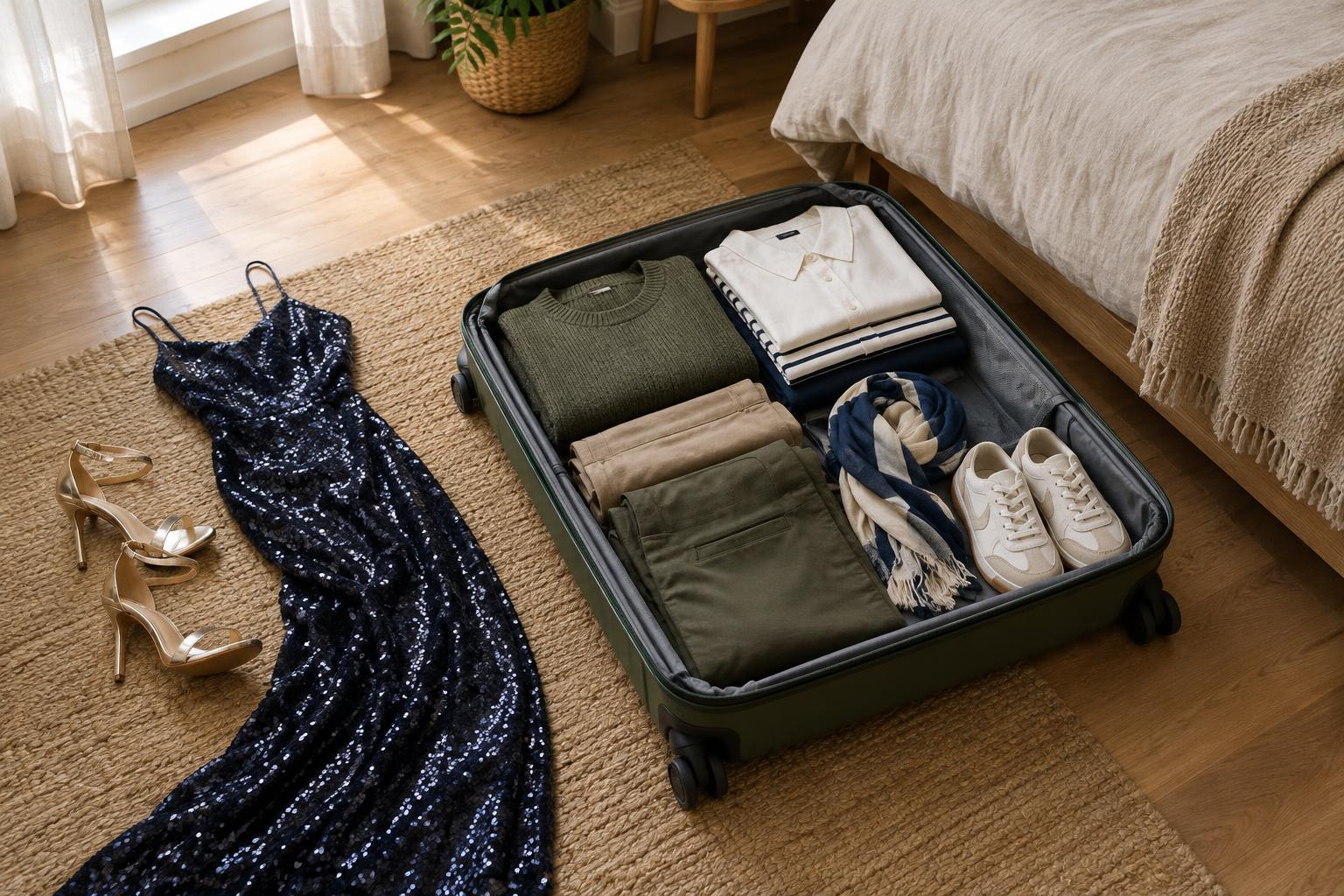
Pick two or three base colors you already like wearing, then add one or two accent colors if you want variety. For example, dark trousers and a light shirt can work with a navy knit, while a patterned scarf adds color without requiring a new outfit. A coordinated palette does not mean every item must be neutral. It means your main tops and bottoms can be paired without much thought.
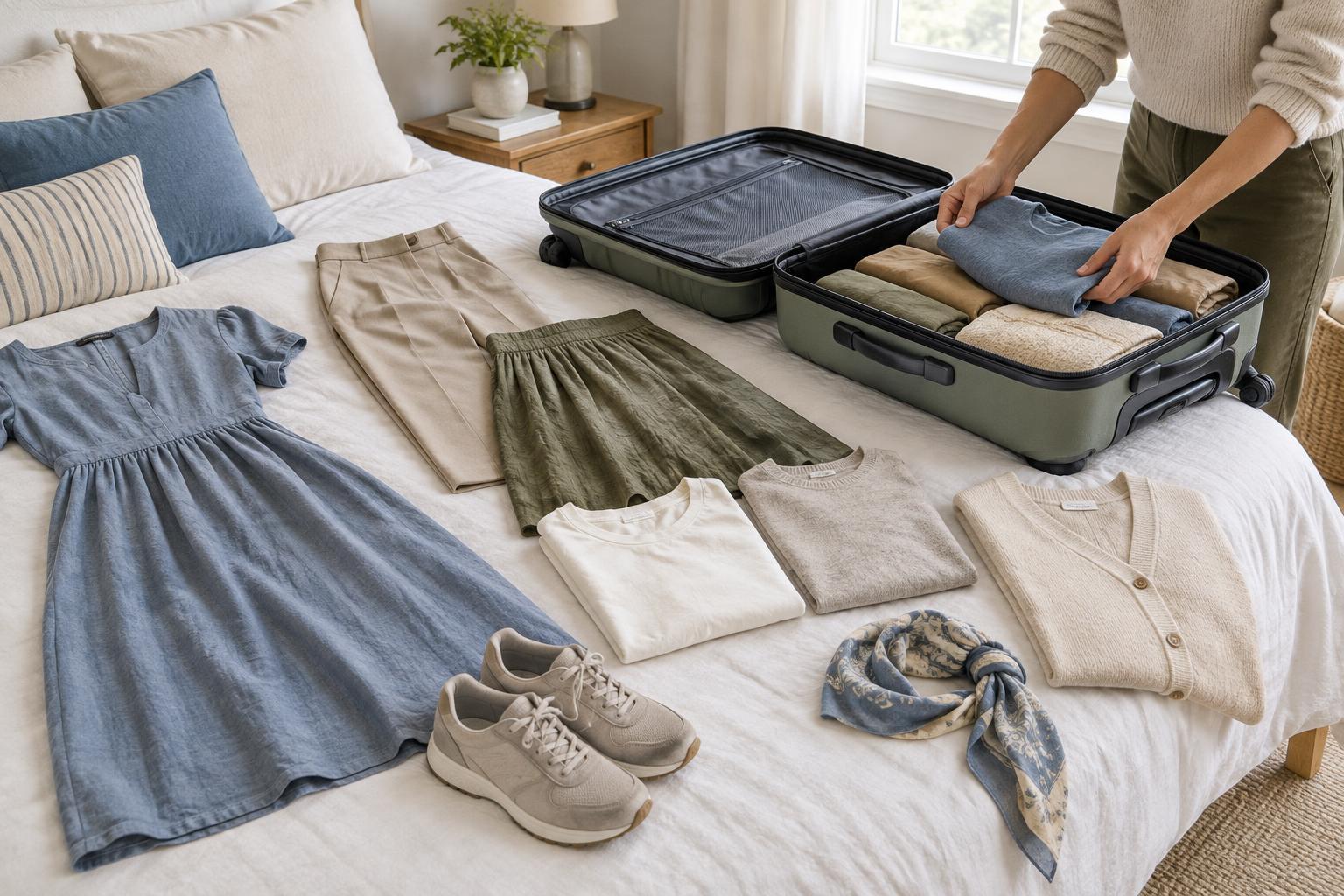
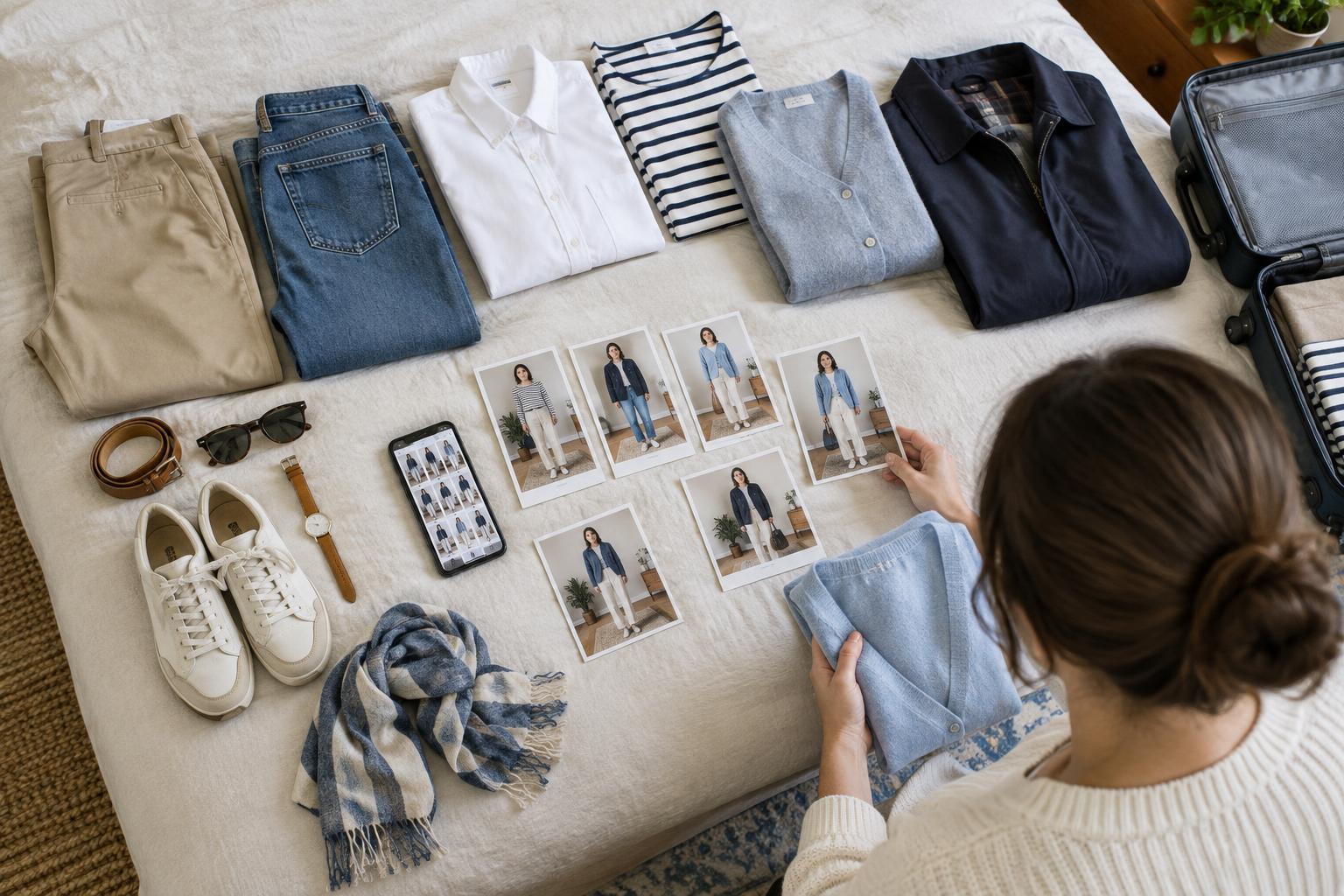
Before packing, lay your clothes out and test actual combinations. A useful question for each piece is: “Can I wear this with at least two other things I’m bringing?” One pair of comfortable trousers might work with a T-shirt for a travel day, a button-front shirt for sightseeing, and a knit top for dinner. If a garment only works with one other item, decide whether that single-use outfit earns its space.
Build around repeatable layers
For a moderate-weather trip, a starting point might be a few tops, two bottoms, one warm layer, and an outer layer suited to the conditions. This is a framework, not a rule: a hot-weather trip may need more lightweight tops, while a cold-weather trip calls for warmer layers and weather-appropriate protection. A dress or skirt can replace a bottom and top if it fits your plans and works with the shoes you are taking.
Choose layers you can add or remove without changing the whole outfit. A shirt worn open over a T-shirt gives you another look and a little coverage; a sweater can go over either one. Pay attention to how pieces feel together. A fitted jacket may look versatile on its own but be uncomfortable over a thick knit. Trying on layered outfits before you leave can reveal problems that are easy to miss when everything is folded.
Plan for wear, washing, and comfort
Wearing something more than once does not mean wearing it continuously. Trousers, overshirts, and sweaters may be suitable for several wears if they remain clean and comfortable; items worn close to the skin often need changing sooner. Your activity level, the climate, and the fabric all affect that decision. If laundry will be available, consider when you could realistically do it and how long your clothes may take to dry. If it will not be available, pack enough clean basics for the length of the trip.
Fabric matters as much as color. Lightweight pieces can be convenient, but check whether they are opaque enough and comfortable in the expected conditions. Some garments wrinkle when tightly packed; others need care you may not want to manage away from home. Familiar clothes are usually a safer choice than unworn purchases because you already know how they fit after a full day. Leave anything that pinches, slips, or requires constant adjustment at home.
Keep shoes and accessories purposeful
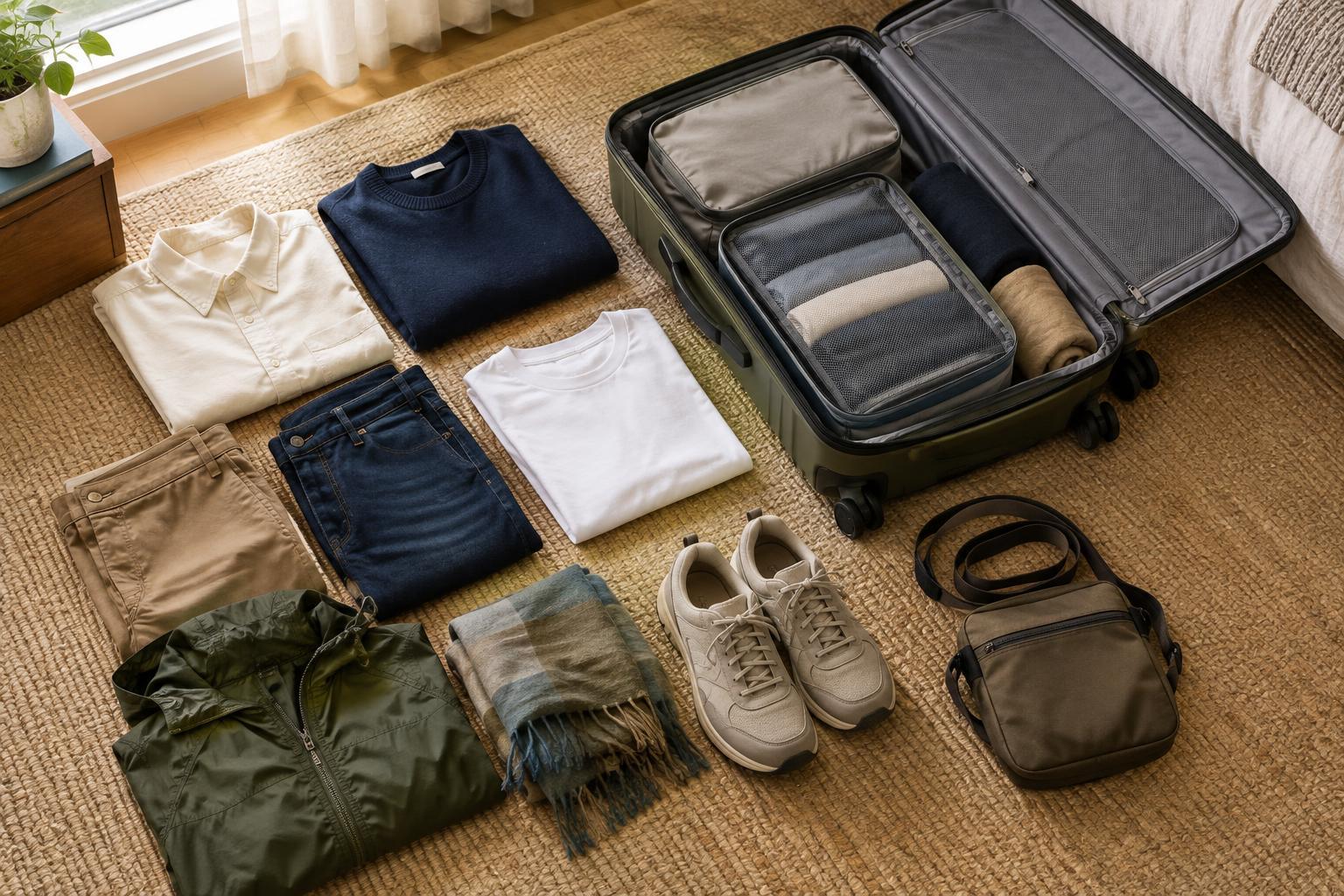
Shoes can take up substantial bag space, so choose them around your activities. Start with a pair you can comfortably wear for your longest planned walking day. Add another pair only if it serves a clear need, such as a dressier setting or wet conditions. Both pairs should work with several outfits. The same test applies to accessories: a belt, scarf, or compact bag is useful when it improves multiple looks or solves a practical problem.
Do one final outfit check before closing your bag. Make sure you have a complete travel-day outfit, options for your main activities, suitable outerwear, and the basics you need between laundry days. Then remove pieces you added only because there was space. After the trip, note what you wore often and what stayed untouched. That simple review makes your next travel capsule more personal and easier to pack.