What a neutral base does for your wardrobe
A neutral base is the color you rely on for repeat pieces such as trousers, jackets, shoes or a daily bag. When several of those pieces work together, getting dressed takes less coordination. Your base does not need to be your favorite color or the only neutral you wear. It simply provides a starting point for outfits, leaving room for accent colors, prints and texture.
Before choosing one, look at the clothes you already wear rather than the wardrobe you imagine owning. Set out two or three favorite tops, a pair of everyday shoes and any outerwear you use often. Which of the four neutrals would connect the most pieces? A base is useful when it supports your actual routines, whether that means dressing for an office, walking around town or packing a small travel bag.
Black: crisp contrast and simple repetition
Black is an easy base if you like clear outlines and high-contrast combinations. Black trousers and a black jacket can frame a white shirt, a bright knit or a patterned scarf without much planning. Repeating black in shoes and a bag can also make separate pieces feel connected. If many of your existing clothes already contain black, building around it may require the fewest changes.
Black is not automatically the most flexible choice for everyone. Next to soft beige, faded denim or muted colors, it may feel sharper than you want. Fabric also matters: a black cotton T-shirt and black tailored trousers can look noticeably different in daylight. If an all-black outfit feels flat, vary the surfaces instead of adding another color. Try a textured knit with smooth trousers, or a matte coat over a slightly lustrous top.
Navy: dark without feeling stark
Navy offers the depth of a dark neutral with a softer effect than black in many outfits. It pairs naturally with white, cream, light blue, gray and denim, making it a useful choice if you often wear shirts, jeans or casual tailoring. For example, navy trousers, a pale blue shirt and tan shoes look coordinated without every piece matching exactly.
The main practical challenge is variation: one navy can appear almost black while another looks distinctly blue. If you want a matching navy set, compare the pieces together in natural light before relying on them as a pair. Otherwise, let the difference be deliberate. A dark navy coat over mid-blue denim has enough contrast to read as a combination rather than a near match. Navy can also sit alongside black; a visible change in texture or shade helps the pairing look intentional.
Brown and gray: two different kinds of flexibility
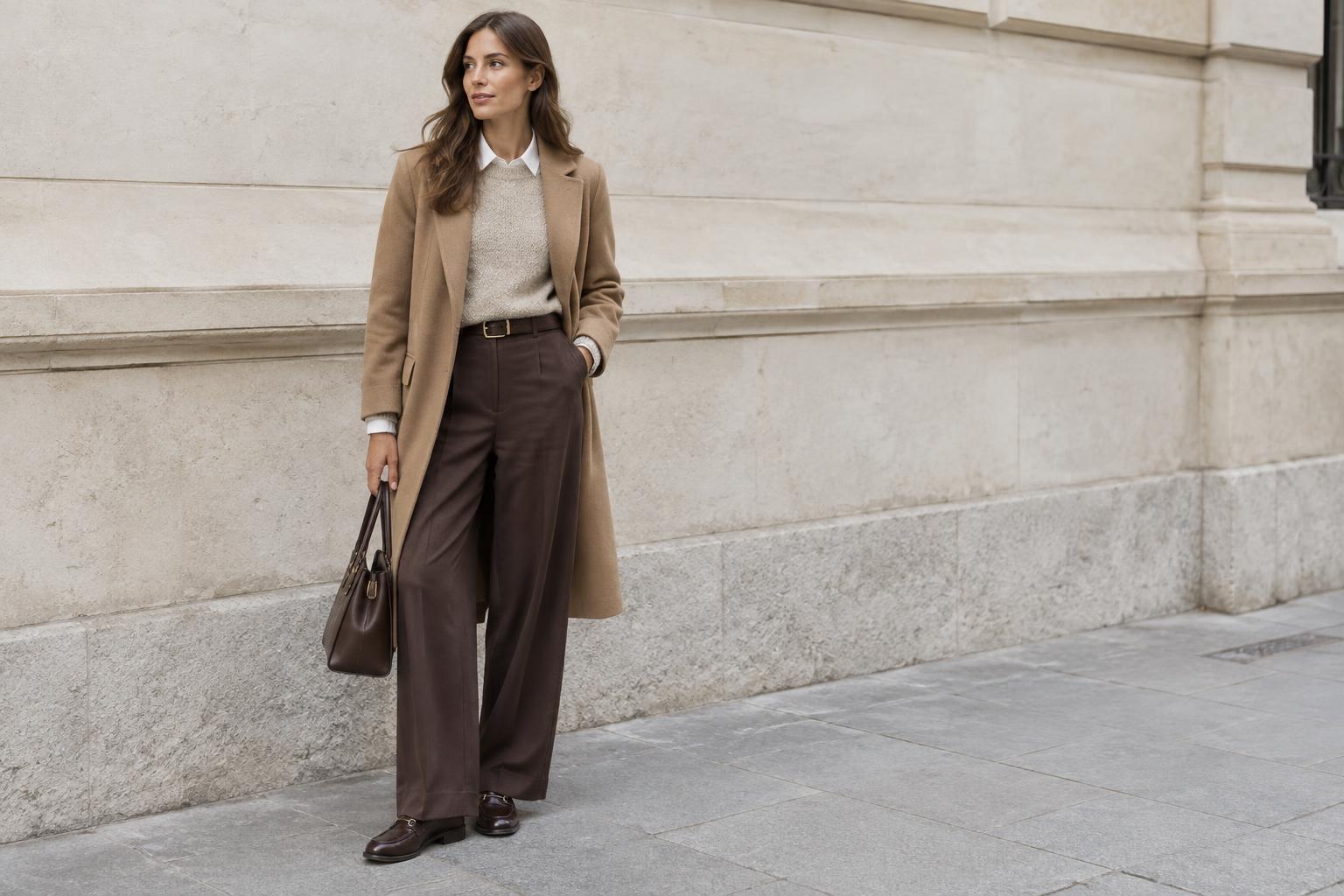
Brown is a useful base for wardrobes built around cream, olive, rust, denim or other earthy colors. Its range is broad, from light tan to deep chocolate, so you can choose the depth that suits your clothes. Dark brown trousers with a cream sweater and brown leather shoes create a quiet, connected outfit. A tan jacket over blue jeans gives a lighter, more casual version. You do not need every brown to match; enough difference between shades often makes layering easier.
Gray works particularly well when you prefer cool or muted combinations. Charcoal can take the place of a dark base in tailored outfits, while medium gray is an easy partner for navy, white, soft pink or burgundy. A gray knit with charcoal trousers may need a change in shade or texture to avoid looking like an imperfect set. Try a pale gray sweater with darker trousers, or pair a smooth gray jacket with a more textured top.
Choose with a small outfit test
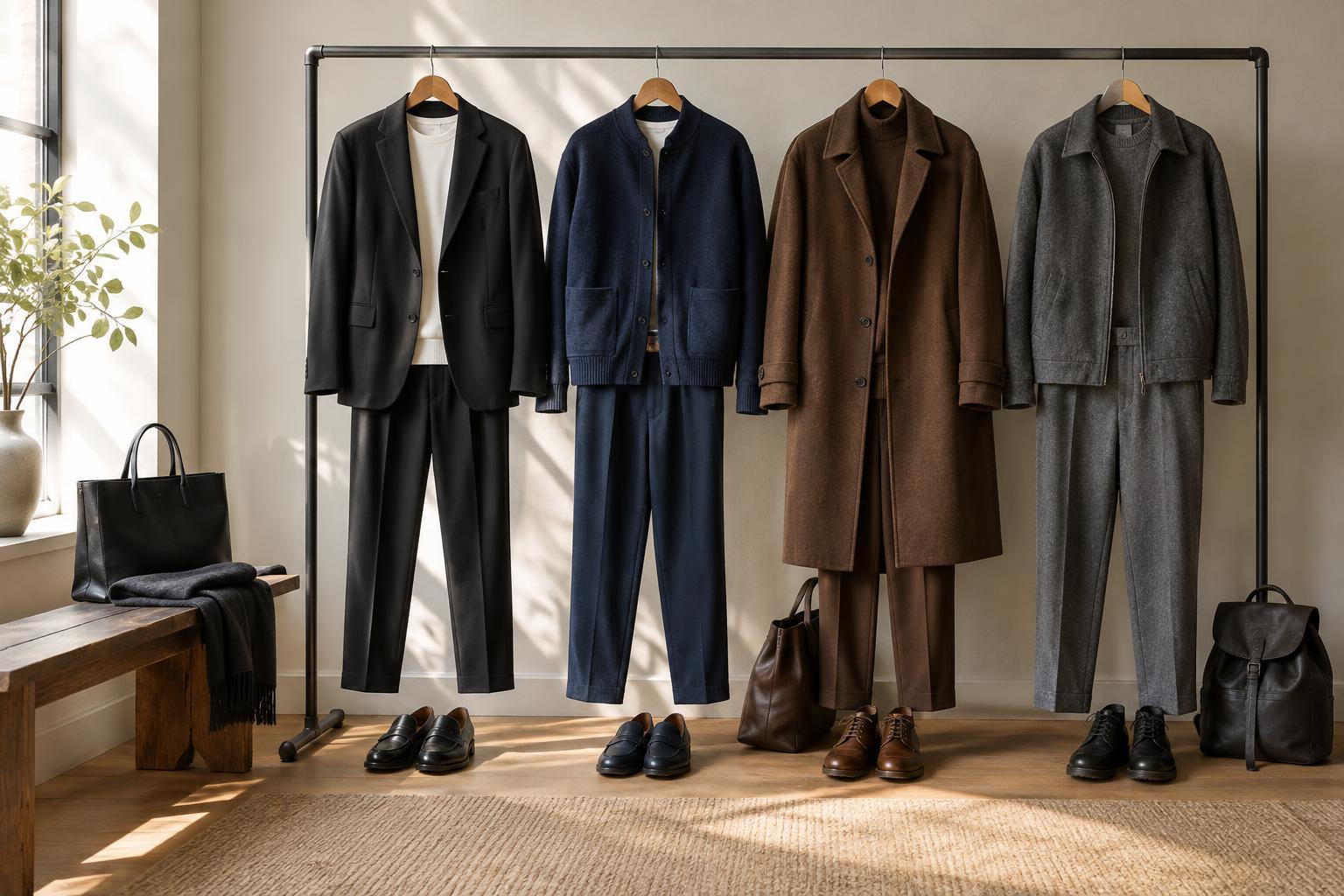
You do not need to decide from a color chart. Put together four versions of a familiar outfit, changing only the neutral anchor if you have suitable pieces available. For instance, compare black, navy, brown and gray bottoms with the same favorite top and shoes. Notice which version feels most like you, which makes your existing layers easier to use and which you would happily wear again next week.
If one color wins for clothing but another wins for accessories, that is fine. You might use navy for trousers and jackets, then keep black shoes you already love. Or brown may be your main clothing neutral while charcoal works better for an occasional coat. Start by repeating your chosen base in two useful pieces, not by replacing everything at once. A good neutral base should give you more ways to wear what you own, rather than create a new rule to follow.