Start with the clothes and the care labels
A reliable laundry routine begins with the clothes you wash most often. Cotton T-shirts, denim and many everyday synthetics can usually be washed with a general-purpose detergent, provided you follow each garment’s care label. Wool, silk and other delicate pieces may call for a detergent made for those fibers and a gentler wash cycle. If a label specifies dry cleaning or another special treatment, detergent choice is only one part of the decision.
Think about the stains you encounter, too. A household that regularly washes food-stained aprons may want a different formula from someone whose laundry is mostly lightly worn office clothes. Detergents containing enzymes can help with some common stains, but check the product directions before using one on delicate fibers. If fragrance bothers you or lingers on your clothes, an unscented option may be more comfortable. A strong scent is not a measure of how clean a garment is.
Choose a form that fits your routine
Liquid detergent is easy to measure in different amounts and can be convenient for treating a small spot before washing, if its label allows that use. Powder also lets you adjust the dose and may suit a routine built around sturdy everyday clothes. Whichever you choose, follow the packaging directions for your machine and wash temperature; powder that does not dissolve fully can leave visible residue.
Pods or packs offer a preset dose, which makes them simple to use but less flexible for a small load. They must be handled with dry hands and stored securely away from children and pets. If you use a high-efficiency washing machine, choose a detergent marked as suitable for it. These machines are designed to work with low-sudsing products, and extra foam can make rinsing more difficult.
You do not need a separate detergent for every outfit. A general-purpose option for routine loads and, if needed, a suitable product for delicates is a manageable starting point. It also makes it easier to notice how a detergent performs on the fabrics you actually own.
Measure for the load, not the size of the cap
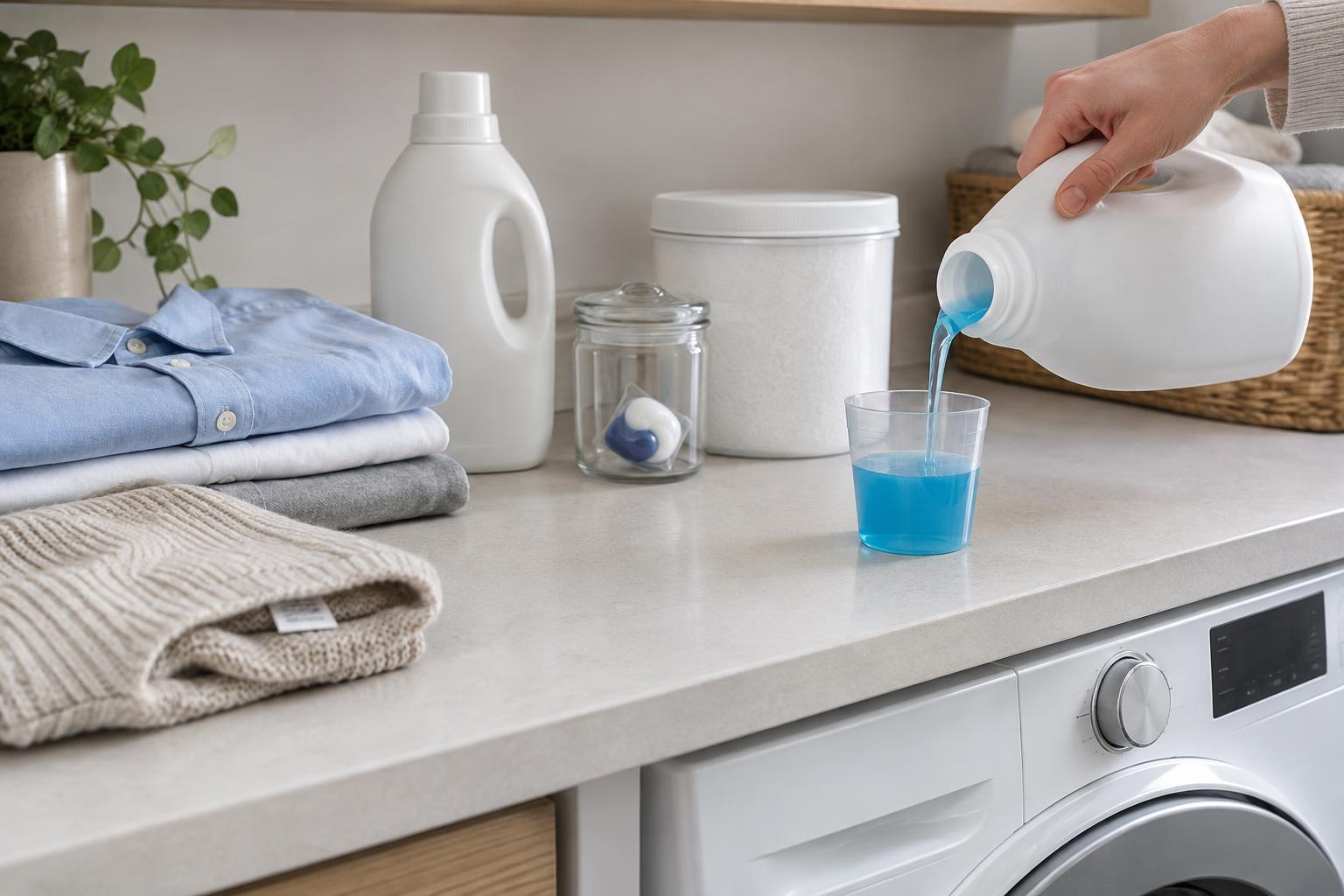
Begin with the dosing instructions on your detergent’s package, using the markings on its cap or the measuring tool provided. Concentrated formulas can require much less product than others, so an old cap or a familiar-looking pour is not a dependable guide. Check the recommended amount for your machine type and a normal load before making adjustments.
Then consider how much laundry is in the drum and how dirty it is. A few lightly worn shirts generally need less detergent than a full load of muddy clothes. Leave enough room for items to move according to your machine’s guidance; packing in more clothing and adding more detergent is not a substitute for an effective wash. If your water is hard, the package may recommend a different dose. Your water provider or washing-machine guidance may help if you are unsure about local water hardness.
More detergent is not automatically better. Too much may be harder to rinse away and can leave clothes feeling coated or looking dull. Too little may struggle with a heavily soiled load. Treat the package dose as a starting point, change one thing at a time, and observe the results over a few washes.
Match placement and pretreatment to the product
Put detergent where your washing machine and the product instructions direct. Some products go in a dispenser; a pod may need to go into the empty drum before the clothes. Placing a product in the wrong compartment, or where water cannot reach it promptly, can affect how well it dissolves and disperses.
For a visible stain, address it before the item goes into the wash rather than increasing the dose for every garment in the load. Check the care label, test any treatment on an inconspicuous area when appropriate, and follow the stain product’s directions. Avoid putting a stained item in the dryer until you have checked it: heat can make some marks more difficult to remove. Keep cleaning products in their original containers and do not mix them unless their labels explicitly direct you to.
Use the results to fine-tune your routine
After washing, look and feel for clues. Visible powder, slippery-feeling fabric or persistent suds may suggest a dosing, dissolving or rinsing problem. Check that the machine is not overloaded, confirm that you used the right compartment, and try measuring more carefully next time. If clothes still smell or look dirty, consider whether the load was too large, the cycle was suitable or a stain needed pretreatment before adding more detergent.
The goal is a repeatable routine, not a perfect number for every wash. Keep the package handy, measure rather than pour freely, and make modest adjustments for unusually small, large or dirty loads. That approach helps everyday pieces come out ready to wear while giving favorite garments the care their labels recommend.