Start with the shape of the whole outfit
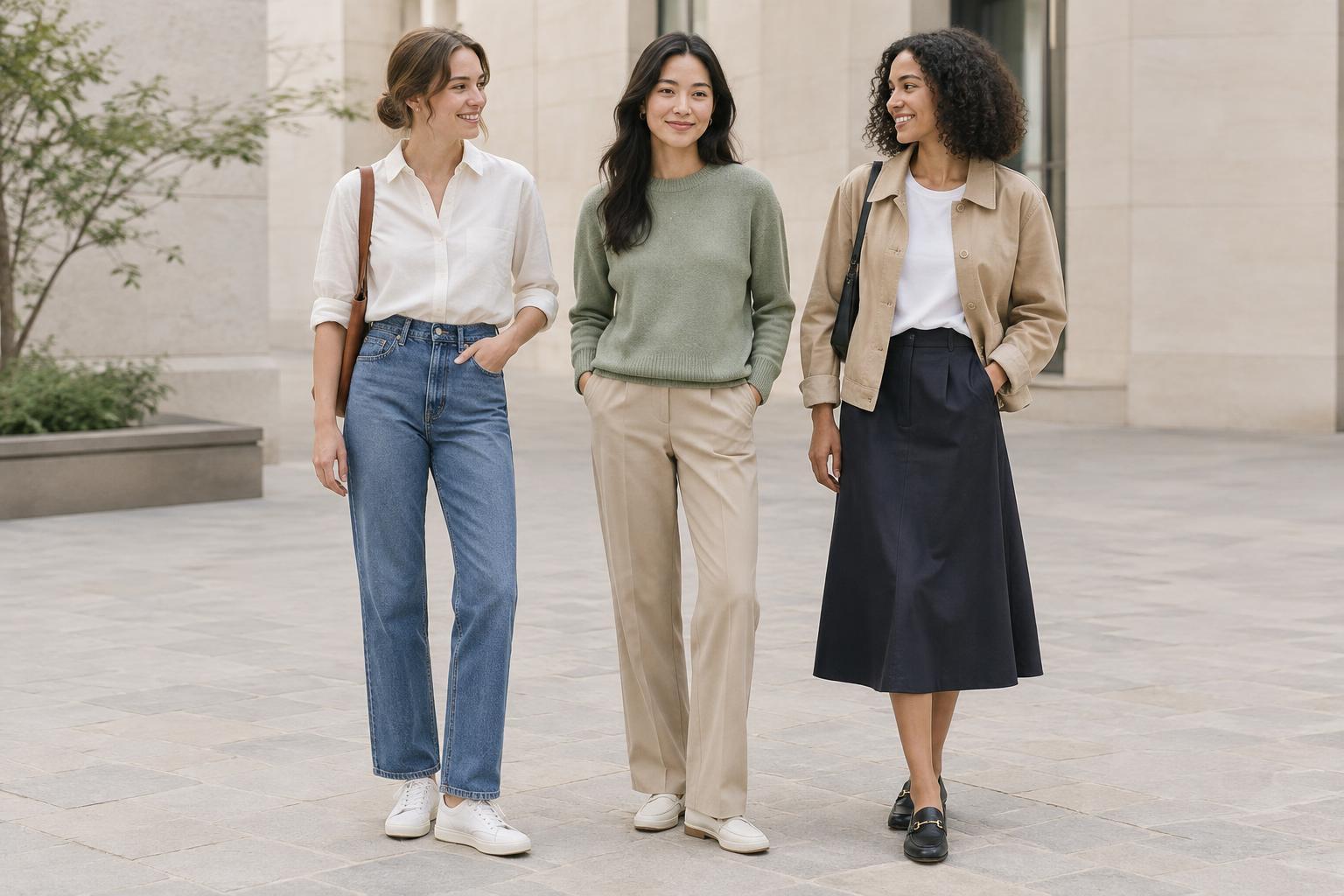
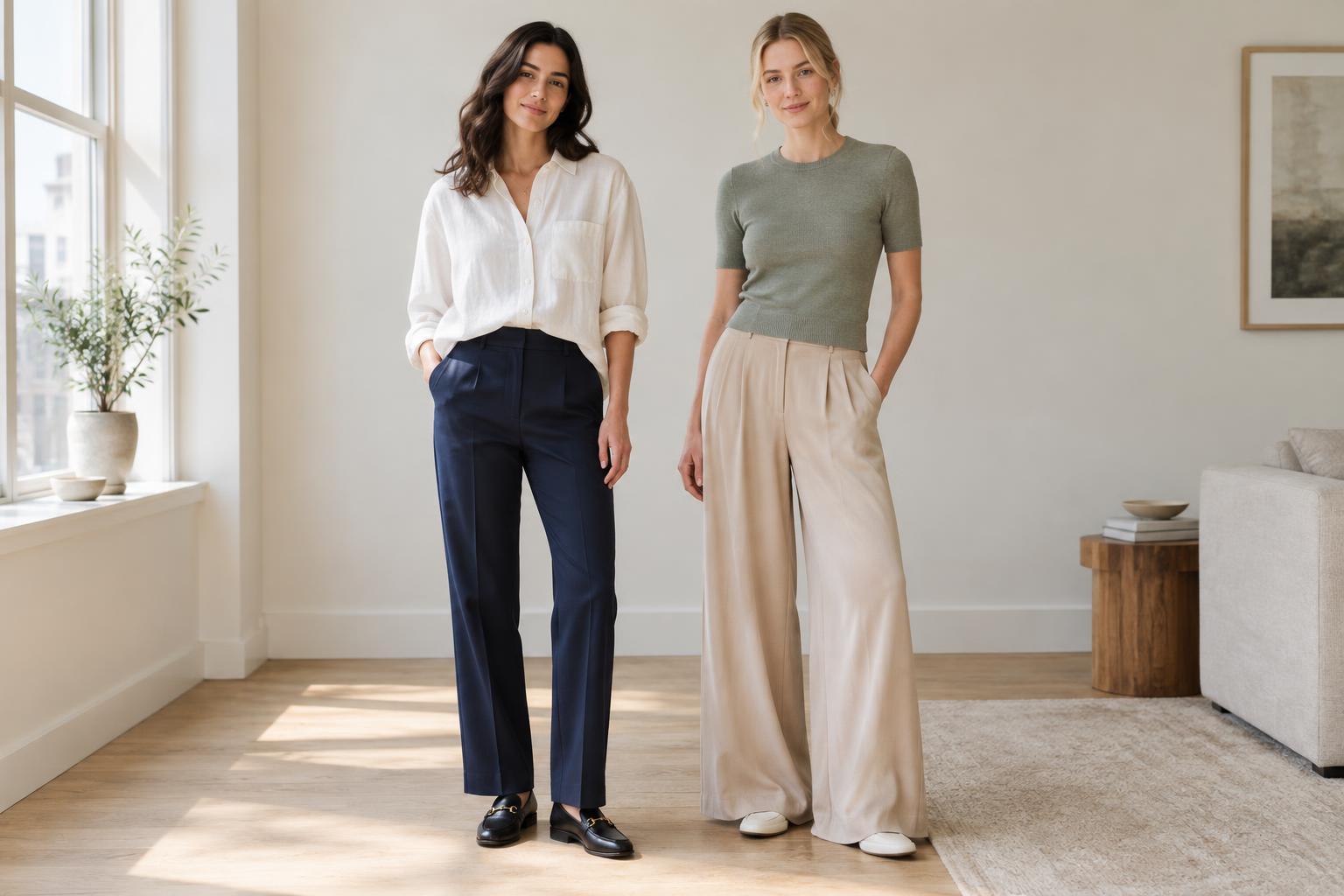
A trouser silhouette is the outline the trousers create from waist to hem. Straight-leg trousers keep a fairly consistent width, wide-leg trousers create more volume, tapered trousers narrow toward the ankle, and slim trousers follow the leg more closely. None is automatically the best match for a particular top. The useful question is where you want the outfit to feel spacious and where you want its shape to look more defined.
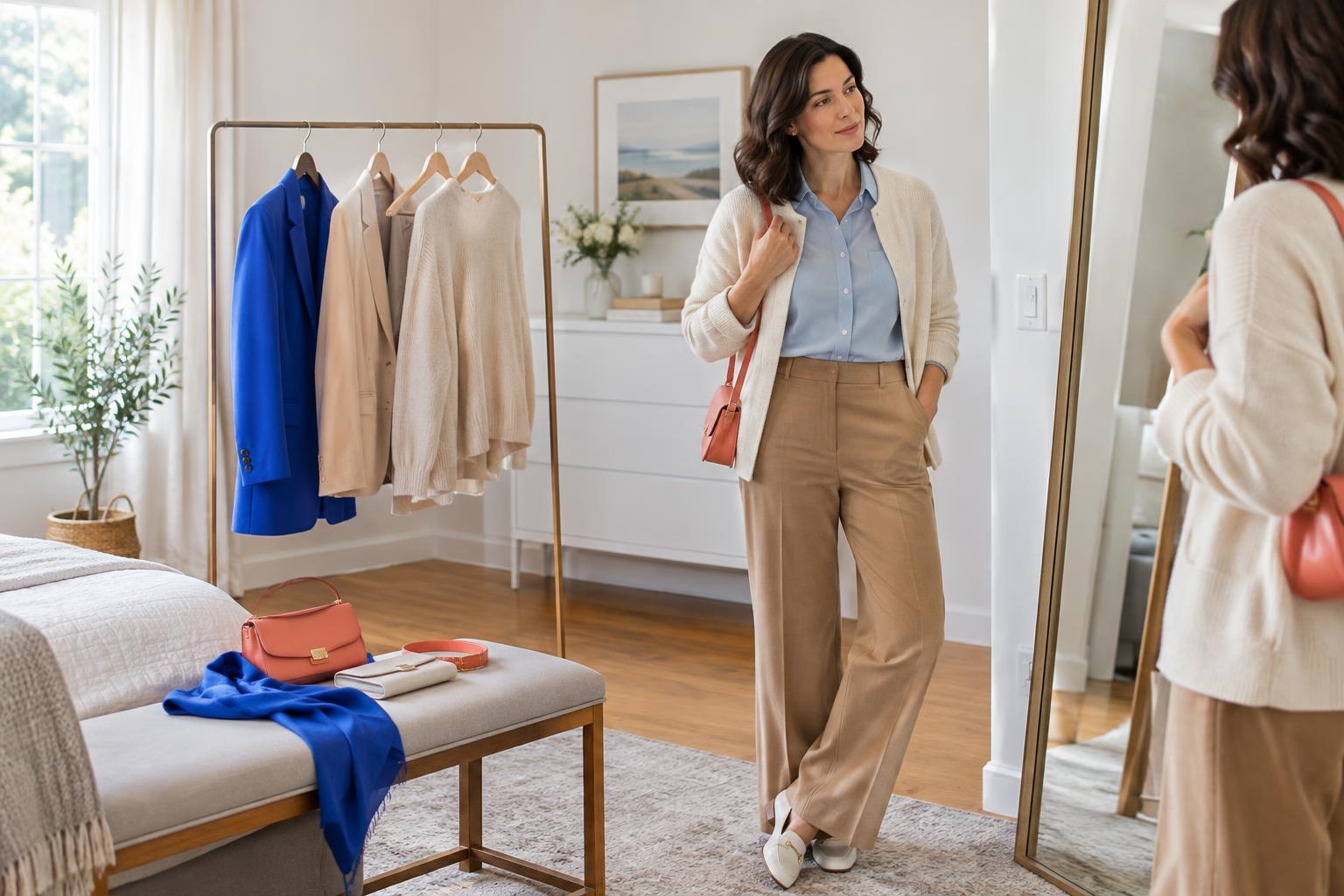
Try judging an outfit from a few steps back rather than looking at each garment separately. Notice the width of the shoulders, waist and hems, as well as the length of the top. A loose top that ends at the hip makes a different shape from one that stops at the waist. Shoes matter too: a substantial shoe can visually anchor a wide hem, while a lighter shoe may keep a tapered outfit feeling relaxed.
Pair a loose top with a clear trouser line
Straight or gently tapered trousers are an easy starting point for an oversized shirt, roomy knit or relaxed T-shirt. They leave space around the legs without repeating all the volume above. For example, a boxy cotton shirt with straight-leg trousers and simple loafers has a relaxed outline that still feels deliberate. If the shirt covers most of the waistband, a partial tuck or a rolled sleeve can reveal a little shape without making the top fitted.
Slim trousers can create a stronger contrast with a loose top, especially when the top is long or thick. That contrast is an option, not a requirement: choose a pair that lets you sit and move comfortably. If you prefer more room below the waist, a softly tapered leg can provide some of the same definition at the ankle.
Loose tops can also work with wide-leg trousers. The key is to give the eye a point of structure. A shorter knit, an open shirt worn over a tucked-in layer, or a visible waistband can separate the two volumes. With a long, untucked top and wide trousers, consider lighter fabrics so the layers fall rather than bunch.
Use a fitted top to explore more volume
A close-fitting T-shirt, fine-gauge knit or neatly cut blouse makes room for a fuller trouser leg. Wide-leg trousers with a fitted top create a clear change in shape at the waist; a high-rise pair can make that transition especially visible. For an everyday outfit, try a fitted crewneck with fluid wide-leg trousers and low-profile trainers. A belt is optional if the waistband already gives the outfit enough definition.
Straight-leg trousers offer a quieter version of the same idea. They suit a fitted top when you want an outfit that does not emphasize either half. Slim trousers can work as well, creating one continuous narrow line. To add visual variety, introduce a textured shirt worn open, a jacket with some structure, or footwear with a different shape.
Check where the fitted top ends. If it bunches around the waistband, it may be easier to tuck it in or choose a shorter length. If you would rather leave it untucked, a hem that sits smoothly over the trousers keeps the outline clear.
Let fabric and length do some of the balancing
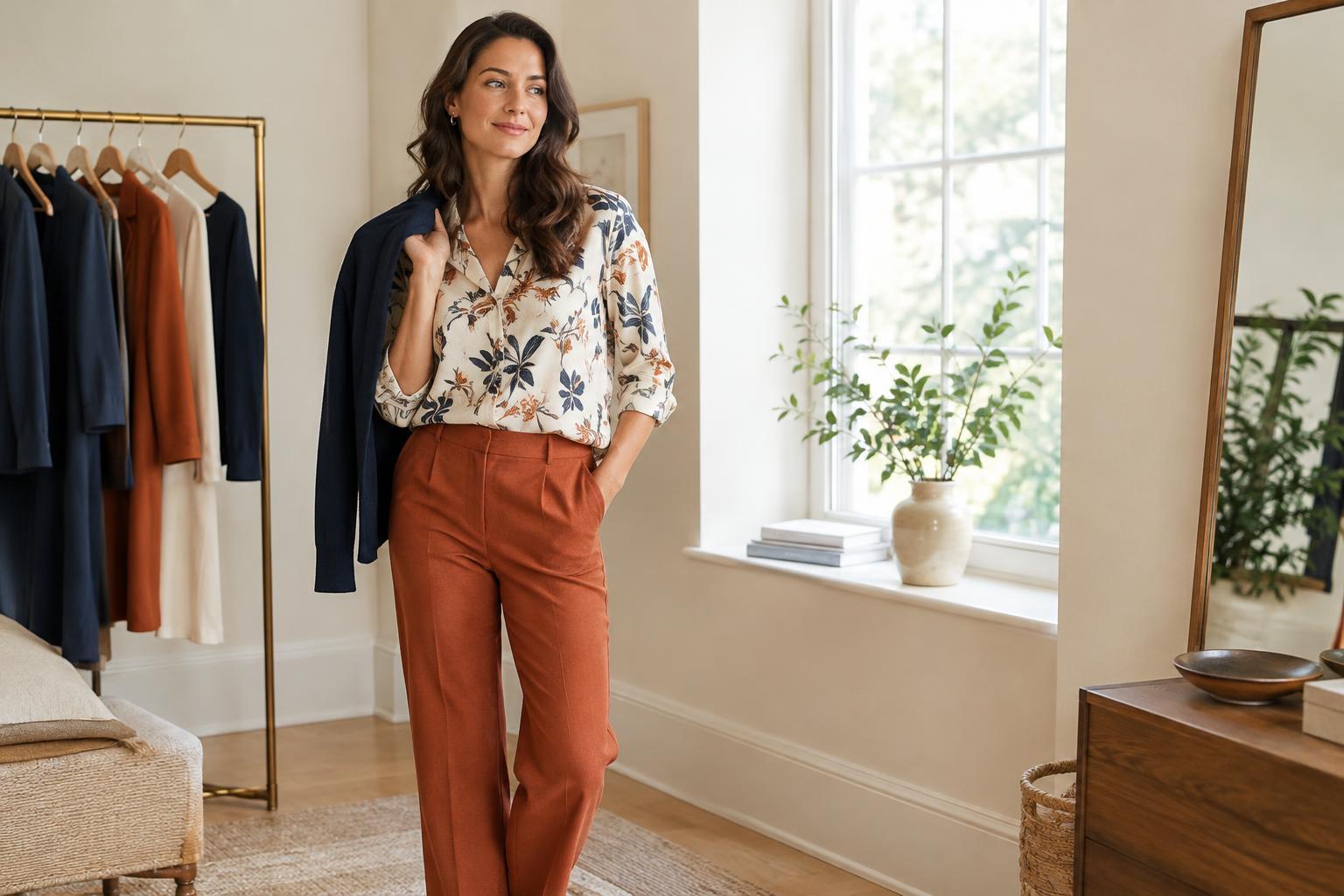
Two garments with the same cut can behave differently because of their fabrics. Crisp cotton holds a boxy top away from the body, while a soft jersey tends to follow it. Heavy denim gives a wide leg a more pronounced outline; a drapey woven fabric makes it move closer to the leg. If an outfit feels too bulky, changing one fabric may help more than changing the silhouette.
Length affects proportion just as much. Cropped trousers expose a little ankle and can make a roomy outfit feel lighter. Full-length trousers create an uninterrupted line, particularly when they skim rather than pool over the shoe. Before altering a hem, try the trousers with the shoes you expect to wear most often. The difference may be enough to change your choice.
Make the choice by testing, not by following a rule
When deciding between two pairs, put on the top you actually plan to wear and try each pair with the same shoes. Look at the outfit while standing, walking and sitting. Ask whether the waistband stays comfortable, whether the fabric catches on the top, and whether you like the amount of volume from shoulder to hem. These checks are more useful than a rule that says loose tops must always go with narrow trousers.
Small adjustments can finish the pairing: tuck just the front of a shirt, turn up a trouser hem, leave a jacket open or swap a bulky shoe for a sleeker one. Aim for a silhouette that suits your day and feels like you. A balanced outfit need not be symmetrical; it simply needs enough clarity that each piece looks like an intentional choice.