Start with a quiet outfit
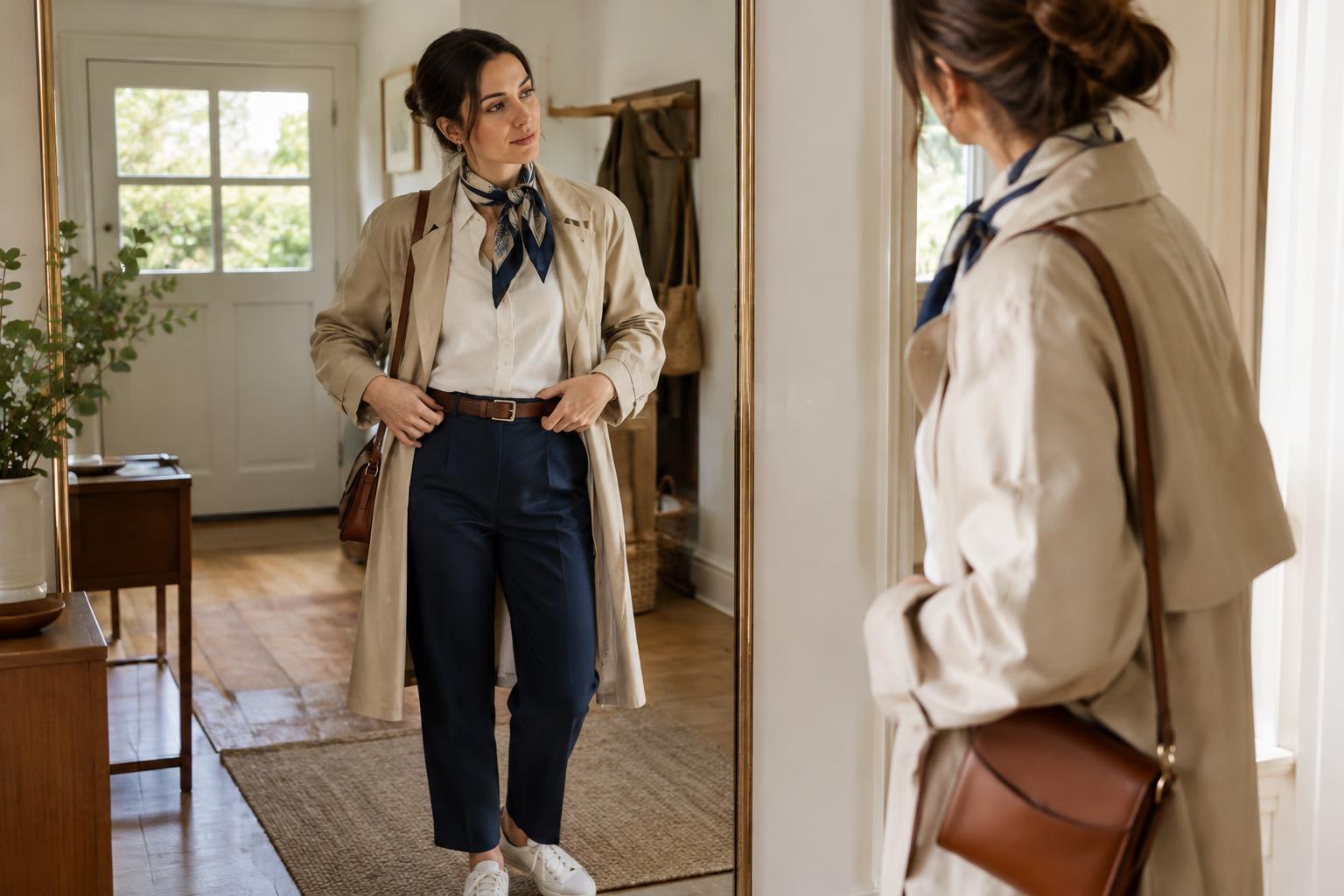
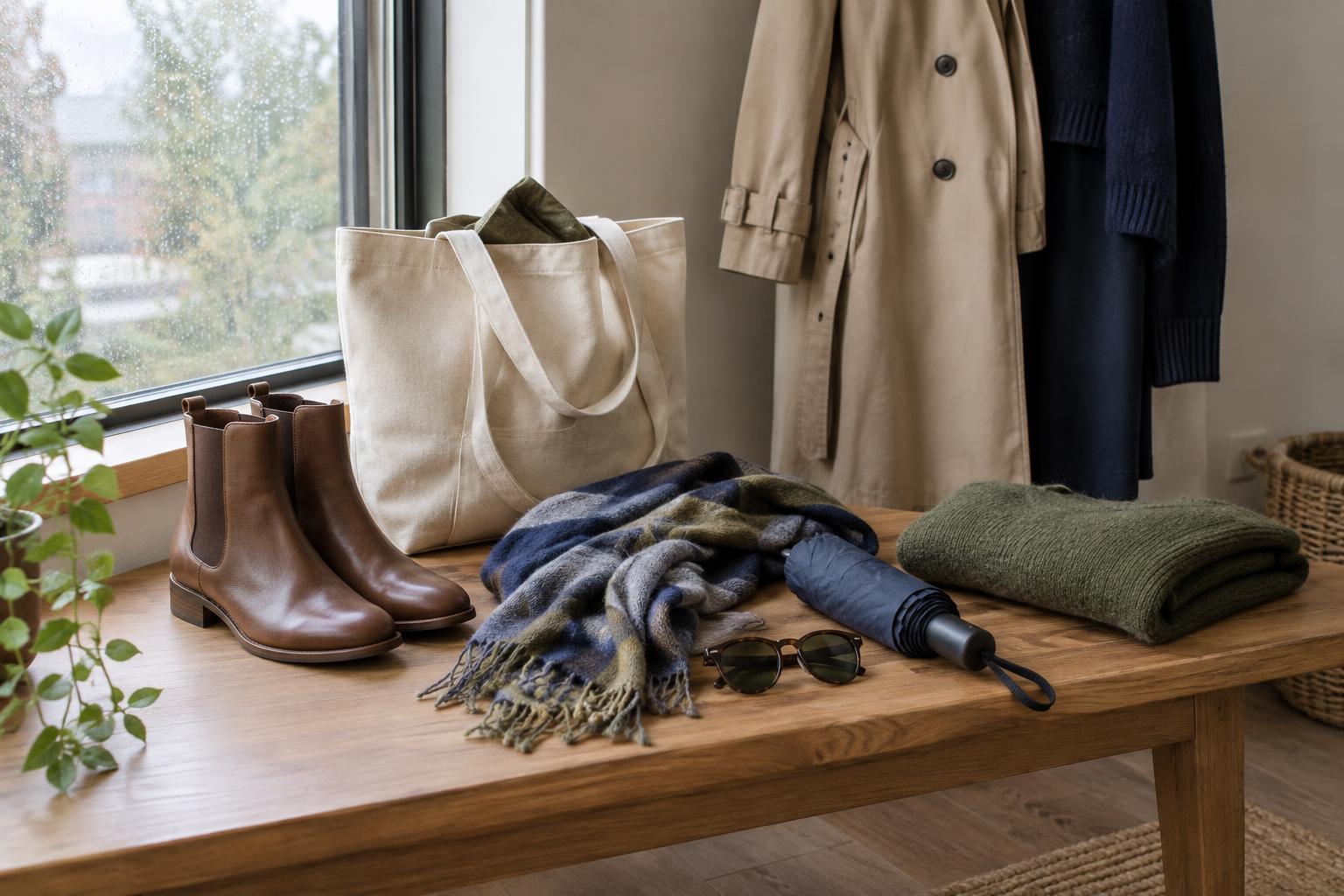
Patterned accessories are easier to combine when the clothes beneath them provide a calm backdrop. A solid sweater and trousers, a plain dress, or a shirt with dark jeans leaves room for a printed scarf and patterned bag. The foundation does not have to be colorless: olive, navy, brown, and muted blue can work as well as black or cream. What matters is that the clothing does not compete for attention.
Before adding a second patterned piece, look at the outfit as a whole. If the first accessory already stands out against your clothes, the next one can be smaller, softer in color, or farther away from it. A bold scarf near the face might pair more easily with subtly patterned shoes than with an equally bold hat. Starting simple makes it easier to tell which combination you enjoy, rather than trying to solve several competing elements at once.
Give the patterns a color in common
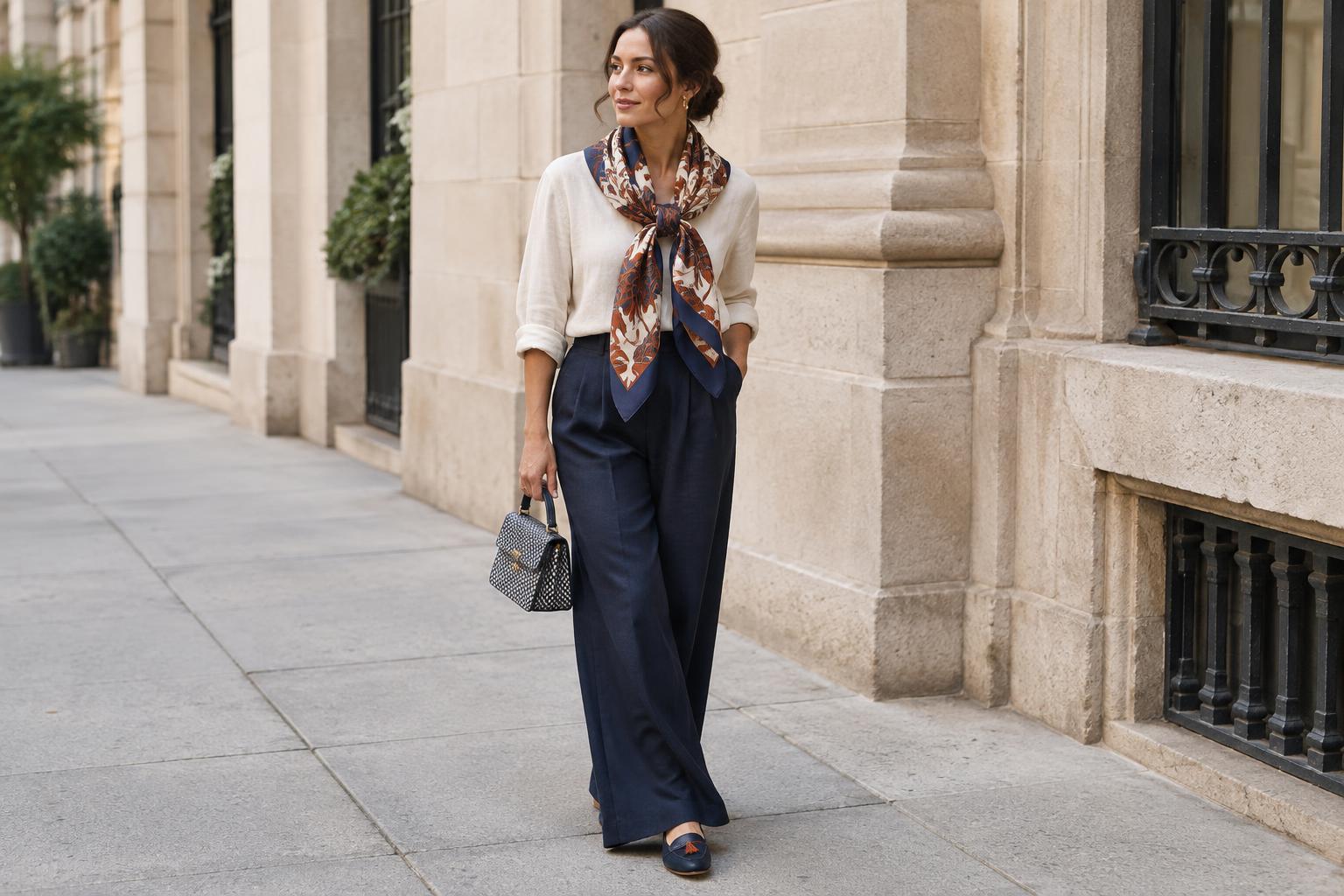
A shared color is one of the simplest ways to connect two different prints. Suppose a scarf has a cream background with rust and blue details. A striped bag that includes cream or blue can relate to it even if the patterns themselves are unrelated. The colors do not need to match perfectly; they just need to look comfortable together when you hold the accessories side by side.
Another approach is to keep one accessory mostly neutral. A black-and-white checked tote can sit beside a colorful floral scarf because its limited palette gives the eye a place to rest. If both accessories are vivid, try repeating one color in a solid item, such as a top or belt. That repetition can help the mix feel connected without requiring every piece to match.
Vary the size and strength of the prints
Two patterns are less likely to compete when they operate at different scales. Wide stripes on a scarf can work with tiny dots on a hair accessory; a large floral print on a tote can sit alongside a fine check on shoes. From a few steps away, the smaller print may read almost like a texture, leaving the larger one as the main feature.
Think about contrast as well as size. A pattern with sharp black-and-white edges usually draws more attention than a low-contrast print in neighboring shades. Let one accessory be the focal point and give the other a supporting role. For example, with a bright geometric scarf, choose a bag whose pattern is small and close in color to its background. If you want two strong prints, limit them to a related palette and keep the rest of the outfit especially straightforward.
Use placement and texture to create breathing room
Where accessories sit on the body changes how they interact. A printed neck scarf and patterned earrings appear close together, so their colors and shapes may feel crowded. The same scarf with patterned shoes has more visual space between the prints. A plain coat, shirt, or dress can also separate accessories and keep each one distinct.
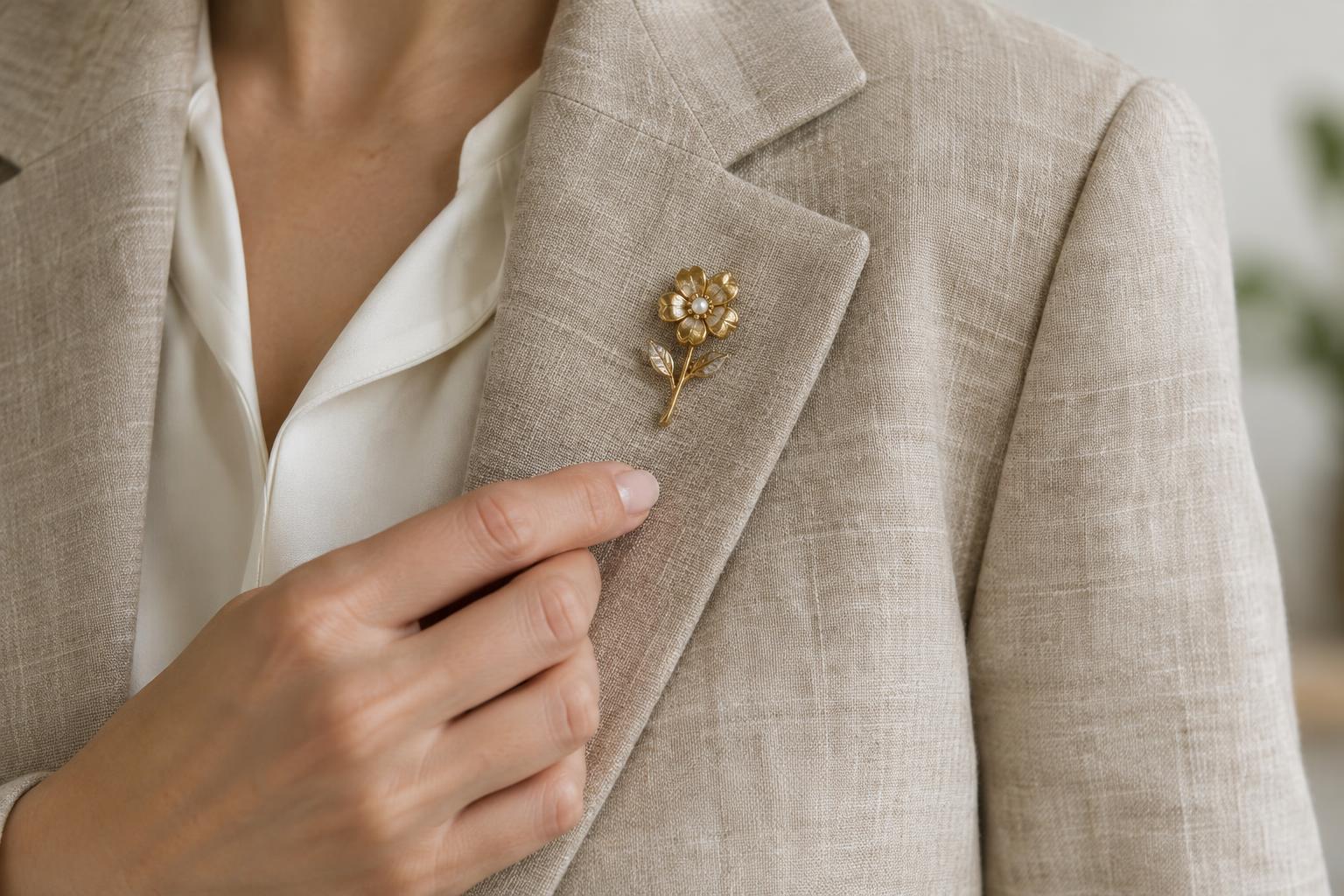
Texture offers a gentler way to add interest. A woven belt, ribbed socks, or pebbled bag brings variation without introducing another obvious motif. This is useful when an outfit already includes a striking print. If you do mix a patterned scarf with a patterned bag, a smooth, solid garment between them can help both pieces remain visible. Consider the accessories you will actually carry or wear all day, not just how the outfit looks before you pick up your bag.
Test combinations with pieces you already own
Lay two accessories next to a familiar outfit and ask three questions: Is there a color linking them? Is one pattern noticeably quieter? Does the outfit still have an area of visual rest? These are guides, not rules. A combination that breaks one of them may still feel right because of its colors, proportions, or your own taste.
For an easy starting point, try a fine-striped scarf with a small floral bag in a shared color, or checked shoes with a scarf that has a sparse, simple print. Wear the combination for a day before deciding whether to add more. If it feels too busy, swap one accessory for a solid version rather than changing the entire outfit. Repeating this small experiment helps you discover which patterns feel natural in your wardrobe and which ones you prefer to wear alone.