Start with the contrast you can see
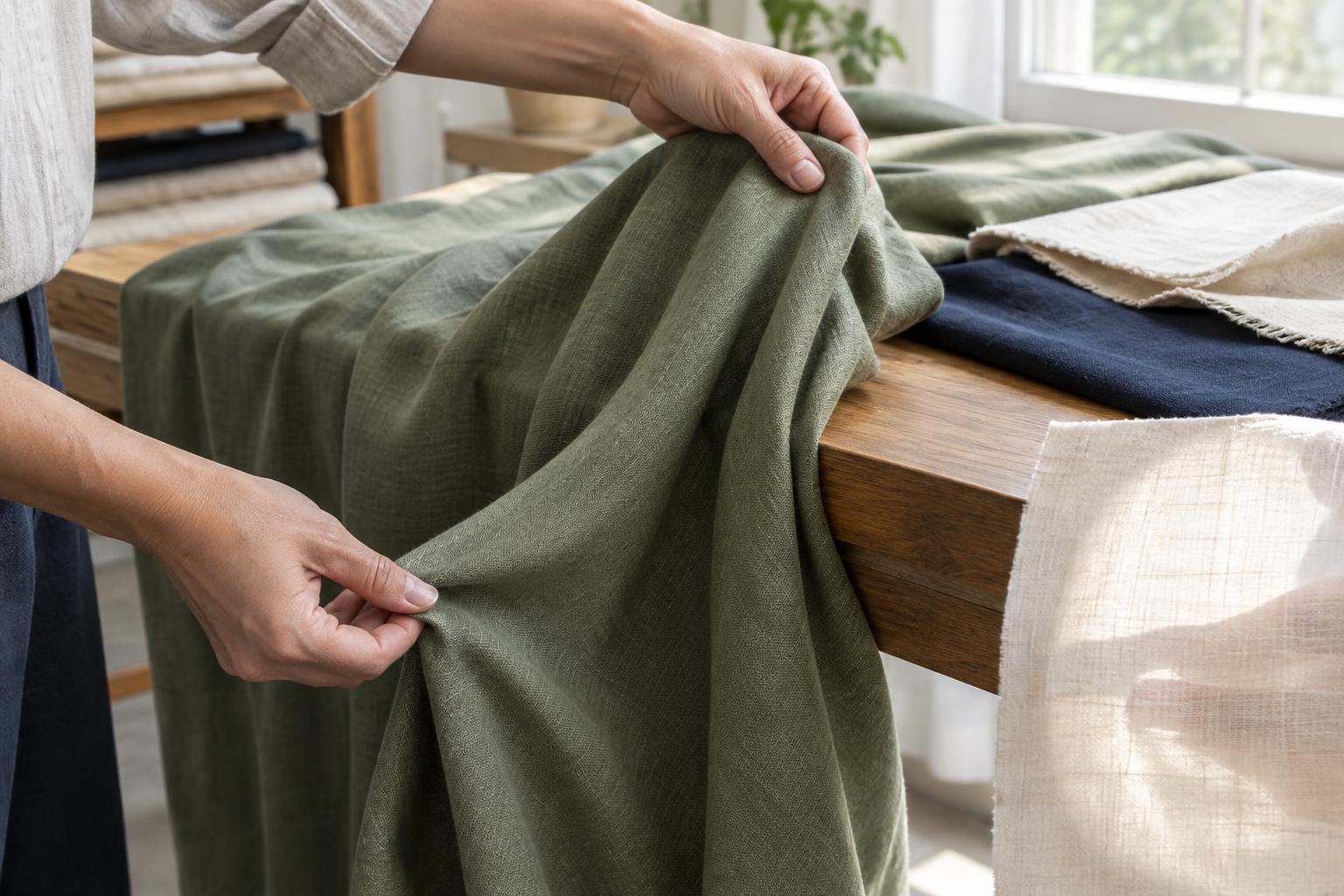
A smooth fabric has a relatively even surface: think of a crisp cotton shirt, a fine-knit top or a sleek pair of trousers. A textured fabric shows more variation, such as ribbing, a chunky knit, linen slubs or the raised weave of corduroy. Putting the two together gives the eye something to notice, even when the outfit uses only one or two colors.
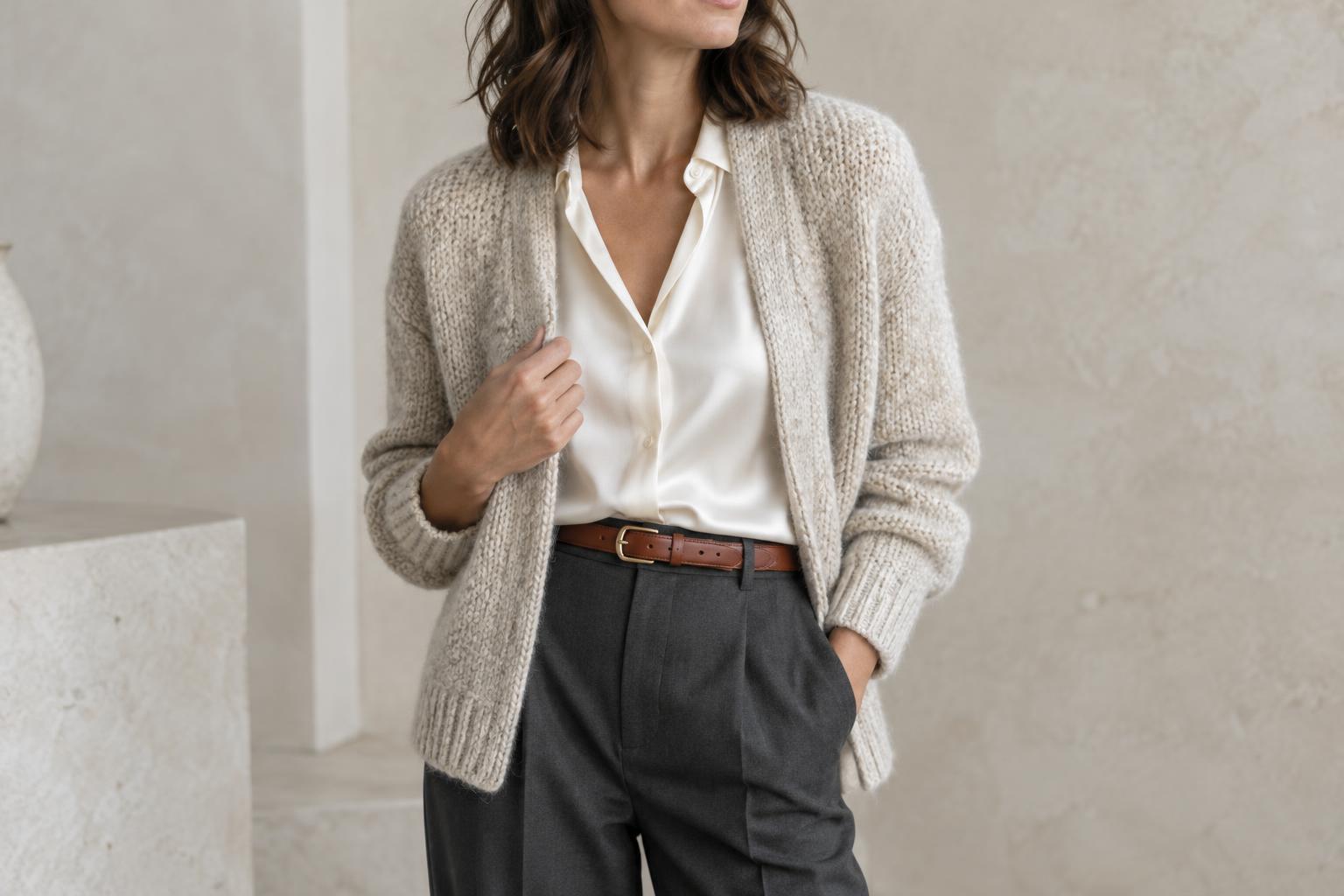
Begin with a simple pairing. Wear a ribbed sweater with smooth, straight-leg trousers, or put a plain cotton shirt under a nubby cardigan. One surface provides detail while the other gives it room to stand out. If an outfit feels too busy, you do not need to replace everything: swapping one textured piece for a smoother version may be enough.
Choose a lead texture
When several pieces have strong texture, decide which one should be the focus. A cable-knit sweater, for example, can take the lead over smooth denim and a plain coat. A tweed jacket can do the same over a fine-gauge knit and simple trousers. This approach makes it easier to combine fabrics without asking every item to compete for attention.
You can still wear more than one texture. Try giving them different roles: a softly brushed jacket as the main feature and a small ribbed cuff or suede belt as a quieter detail. Look at the outfit from a few steps away. If the textures blend into an indistinct patch, a smoother layer between them can create separation.
Pay attention to weight and drape
Surface is only part of the combination. Fabric weight and drape affect the outfit’s shape. A heavy, chunky sweater often sits comfortably over sturdy jeans or structured trousers. A fluid satin skirt may pair more easily with a lightweight knit that follows its movement than with a very stiff, boxy top. These are starting points, not fixed rules; proportions and fit matter as much as the fabric names.
For layering, notice where materials meet. A bulky shirt beneath a close-fitting jacket can bunch at the sleeves, while a thin, smooth base layer may slide underneath more comfortably. If you want to wear two substantial pieces together, leave enough ease for both: an open jacket over a textured sweater usually gives the fabrics more space than a tightly buttoned one.
Use color and shine to keep the mix intentional
Similar colors let differences in surface become the main point. An ivory knit with off-white cotton trousers, or a charcoal wool jacket with dark gray smooth trousers, can look varied without relying on a sharp color contrast. The shades do not have to match exactly. Small differences can make each fabric easier to see.
Shine adds another layer of contrast. A satin blouse beside matte wool trousers draws attention both to its smoothness and to the way it catches light. If that feels too prominent for the occasion, use shine in a smaller area, such as a smooth belt or a scarf. You can also balance a glossy piece with a relaxed, matte fabric rather than adding more reflective items.
Build outfits from what you already wear
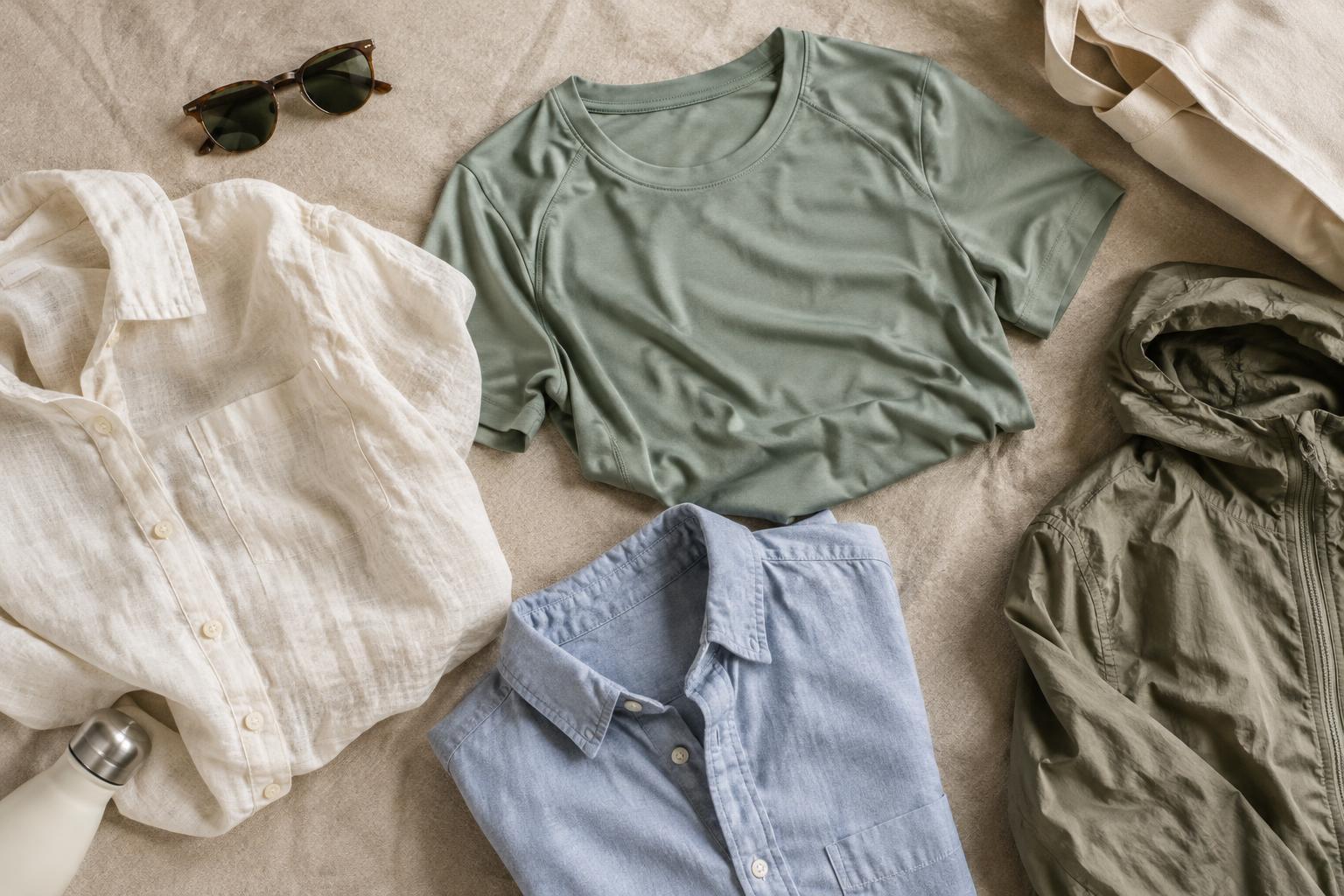
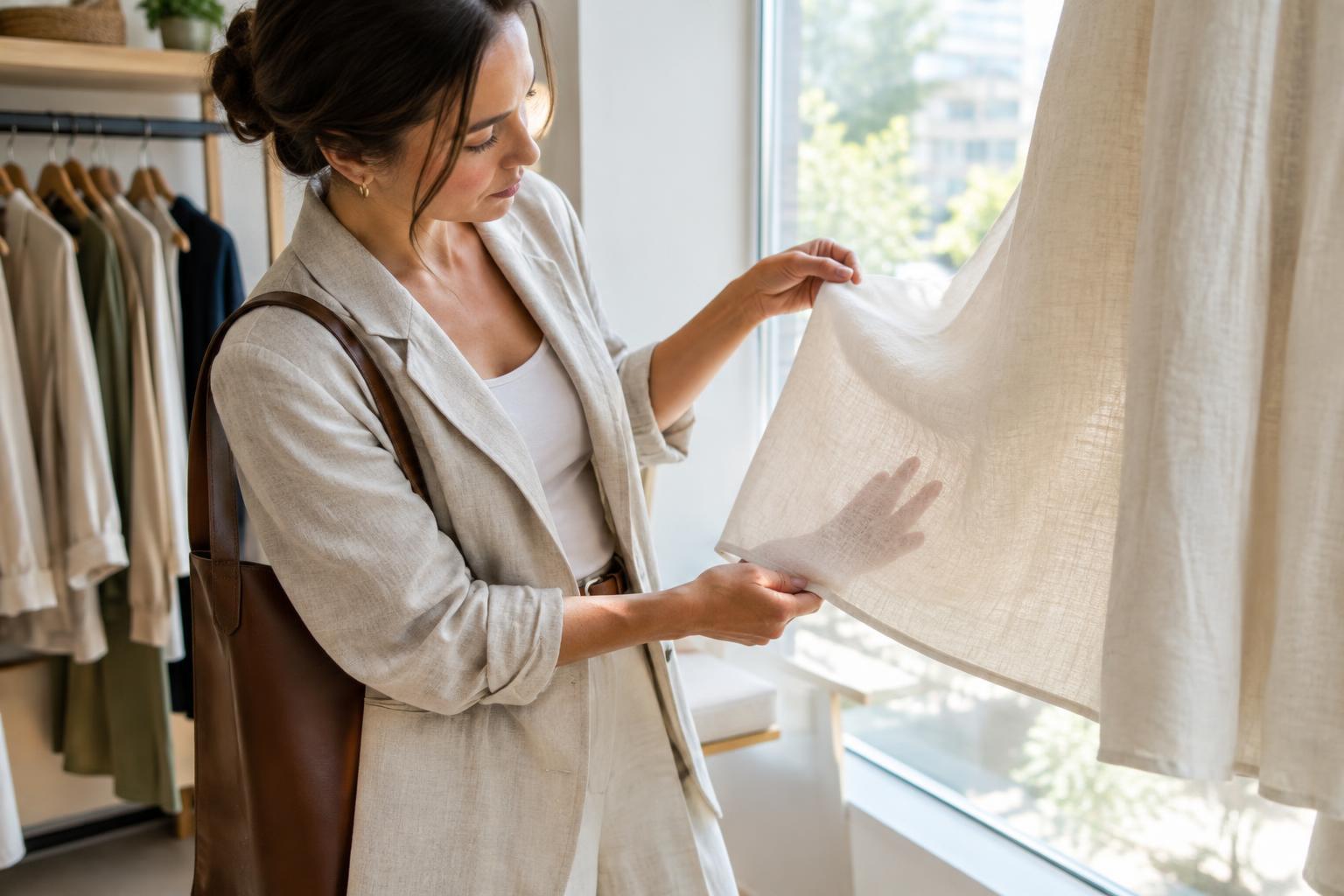
For an everyday outfit, start with familiar pieces: a smooth T-shirt, corduroy trousers and a plain overshirt. The corduroy adds texture, while the other layers keep the combination straightforward. In cooler weather, try a fine-knit top, a textured wool coat and smooth trousers. In warmer weather, a slub-linen shirt over a smooth tank offers contrast without heavy layering.
Accessories can help you test a fabric mix before committing to a larger piece. A woven bag can bring texture to a crisp shirt and tailored trousers; a smooth leather belt can break up a sweater-and-denim combination. Consider care as you plan, too. Fabrics in one outfit may need different washing, drying or brushing methods, so check each garment’s label rather than treating the whole combination alike. The most useful mix is one you enjoy wearing and can comfortably maintain.