Start with the sleeve, not the jewelry
A bracelet combination can look effortless when your arms are bare, then disappear or bunch up as soon as you add a long-sleeved top. Before choosing jewelry, look at where the cuff naturally sits. A close-fitting knit sleeve may cover most of your wrist, while a shirt cuff may stop just above a watch. A loose sleeve might slide over everything when you move. Those differences determine how much room you have and which pieces will actually be seen.
If the cuff is snug, try a watch with a low-profile case and one slim bracelet on the opposite wrist. This leaves the fabric room to move instead of forcing it over a stack. With a relaxed shirt or sweater, you can show more: push the sleeve back slightly, fold a shirt cuff once, or let a single bracelet peek out as your hand moves. You do not need to keep both wrists equally visible.
Give the watch a clear role
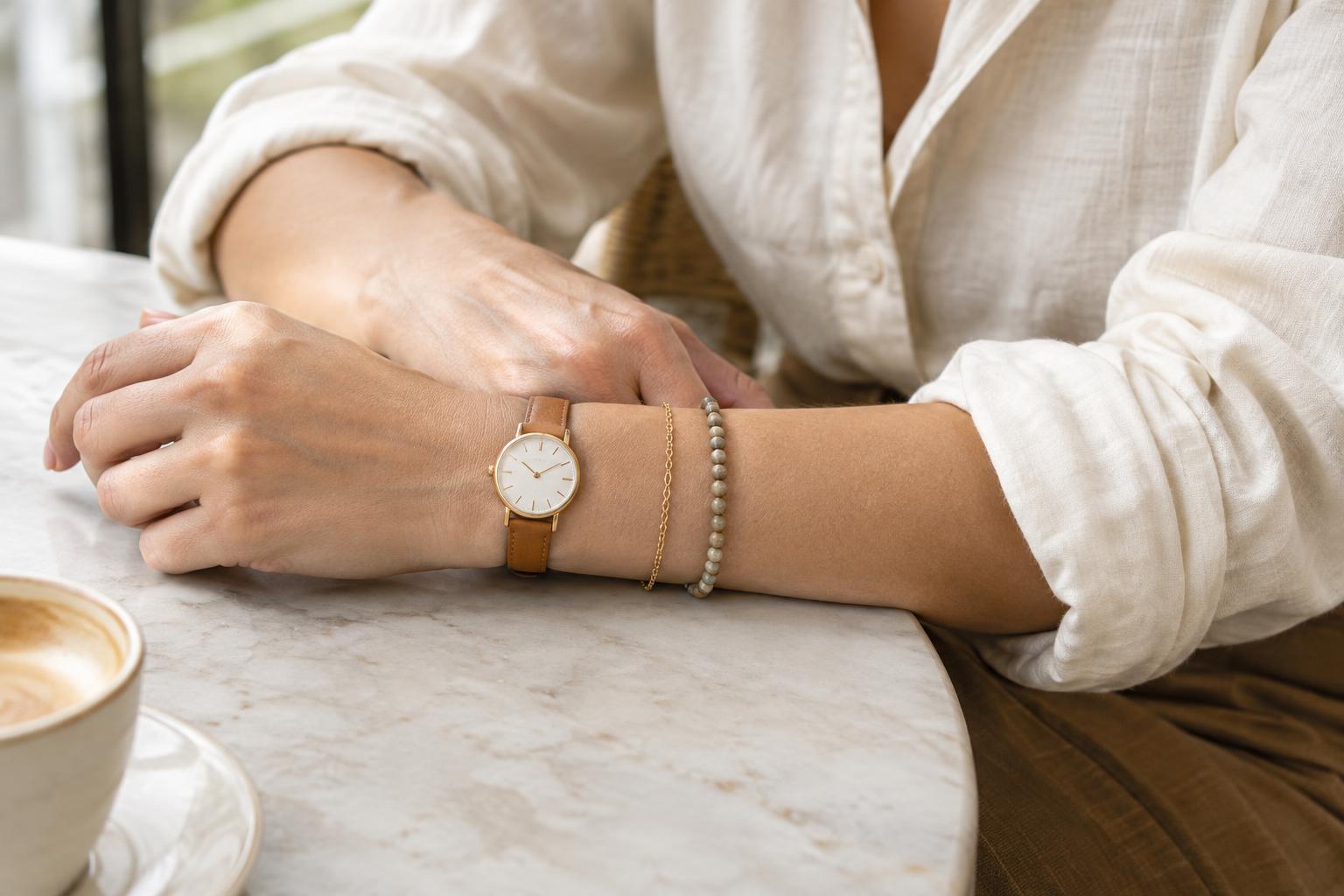
The watch is usually the largest piece at the wrist, so let it set the scale. A chunky watch often needs only one narrow bracelet beside it. A small, simple watch can sit comfortably with two delicate pieces, provided they do not catch on its crown or clasp. Leave a little space between pieces if they knock together or make checking the time awkward.
Placement is a matter of comfort rather than a fixed rule. Some people prefer a bracelet between the watch and the hand; others find it more comfortable above the watch, closer to the sleeve. Wear the combination around the house for a few minutes and notice what happens when you type, carry a bag or pull on a coat. If you keep adjusting the stack, remove or move one piece. The best arrangement is one you can forget about while wearing it.
Mix textures with one point of connection
Bracelets do not have to match a watch exactly. A leather strap can work with a fine metal chain because the smooth surfaces feel related. A metal watch can pair with a woven cord for contrast, especially alongside casual denim or cotton. When several textures are present, repeat just one detail, such as a metal tone, a dark color or a rounded shape. That small connection makes the mix look considered without turning it into a matching set.
Think about the sleeve fabric, too. A crisp poplin cuff gives soft beads or a narrow leather band a clean backdrop. A textured sweater may already provide plenty of visual interest, so a plain bangle or chain can be enough. If a bracelet has sharp edges, dangling charms or a rough finish, check that it does not snag an open weave or rub against the cuff. A piece can be attractive on its own and still be inconvenient with a particular top.
Use color to connect the wrist to the outfit
For an easy everyday combination, choose one bracelet color already present in your clothes or accessories. A brown leather bracelet can echo a belt or bag; a navy cord can pick up a stripe in a shirt. The repeat need not be exact. Similar depth or warmth is often enough to make the wrist feel connected to the rest of the outfit.
You can also use the wrist as a small accent. Against a neutral sleeve, a single colored bracelet may stand out more clearly than several competing pieces. If you wear mixed metals, try keeping their shapes or finishes similar, such as two slim polished pieces, rather than worrying about a perfect match. Step back and look at the whole outfit: the goal is balance, not making every item at the wrist the main attraction.
Build a combination you can wear all day
A useful starting formula is one watch, one bracelet and a sleeve that allows both to move freely. Add a second bracelet only if it brings something distinct, such as a softer texture or a small color accent. You might wear the watch and one slim chain on one wrist, then leave the other bare. Alternatively, place the bracelet on the opposite wrist if your watch hand feels crowded.
Before leaving, pull your sleeves down and up as you normally would. Check that you can fasten a coat, wash your hands and read your watch without rearranging everything. Long sleeves change position throughout the day, and your layers can still look intentional when they are only partly visible. A glimpse of metal at a cuff or a colored cord beside a watch is often all the detail an outfit needs.