Start with the days, not the clothes
Before you pull anything from the wardrobe, sketch out the kinds of days ahead. You do not need a detailed itinerary. A short list such as “travel day, two days of walking, dinner out, relaxed morning” is enough to show what your clothes need to handle. Add likely conditions: warm afternoons, cool evenings, rain, or a change between indoor and outdoor settings. If the forecast is uncertain, plan a layer you can carry rather than building every outfit around one predicted temperature.
Next, note any outfit requirements that genuinely differ. Comfortable shoes may be essential for sightseeing, while one dinner might call for a neater top. This prevents the familiar packing mistake of bringing several attractive pieces that suit the same occasion but nothing for another. Think in outfit roles, not a rigid outfit for every hour.
Build a small set of repeatable pieces
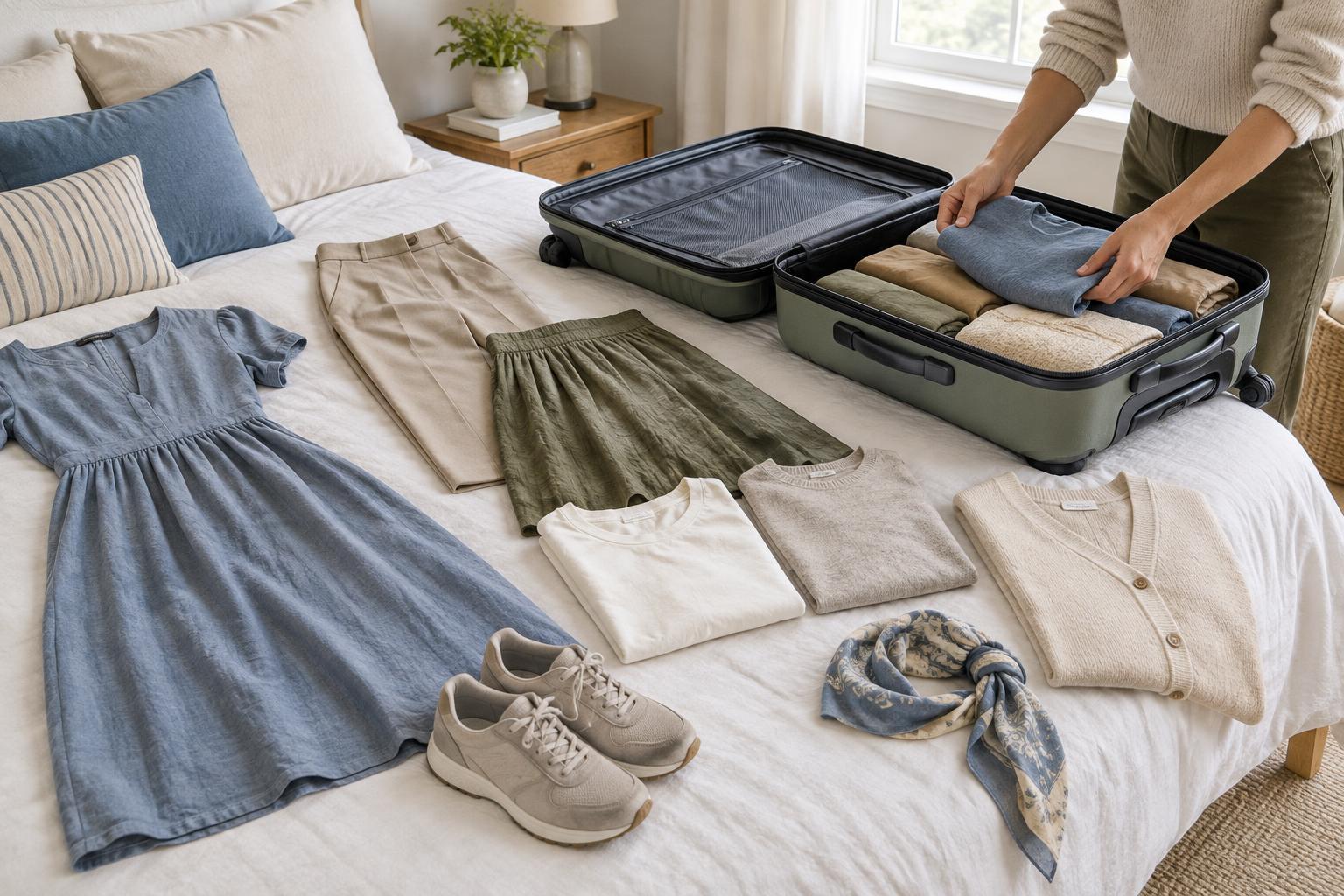
Choose a few items you already enjoy wearing and put them where you can see them together. Start with bottoms, then add tops and an outer layer. A pair of dark trousers, for example, might work with a striped shirt for daytime and a plain knit for dinner. If a piece only works with one other item, ask whether that combination is important enough to earn space in your bag.
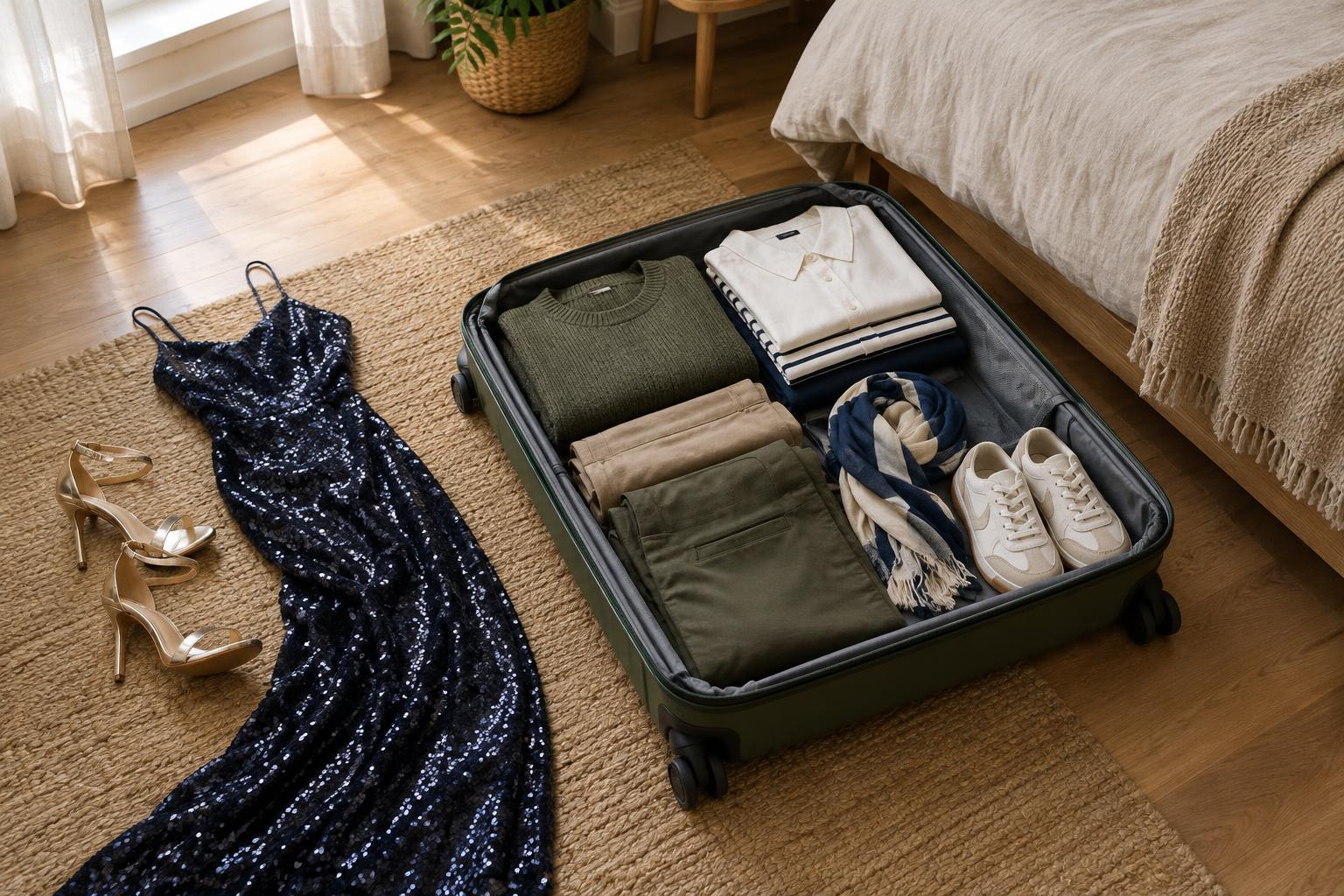
A loose color plan can make the choices easier to see. Two or three colors that work together are often more useful than a strict rule about matching everything. Texture adds variety, too: a cotton shirt worn open over a smooth T-shirt can feel different from the same shirt buttoned up. Include shoes and accessories at this stage. An outfit that looks complete on the bed may be less convincing once you realize the only suitable shoes are still at home.
Make the plan visible
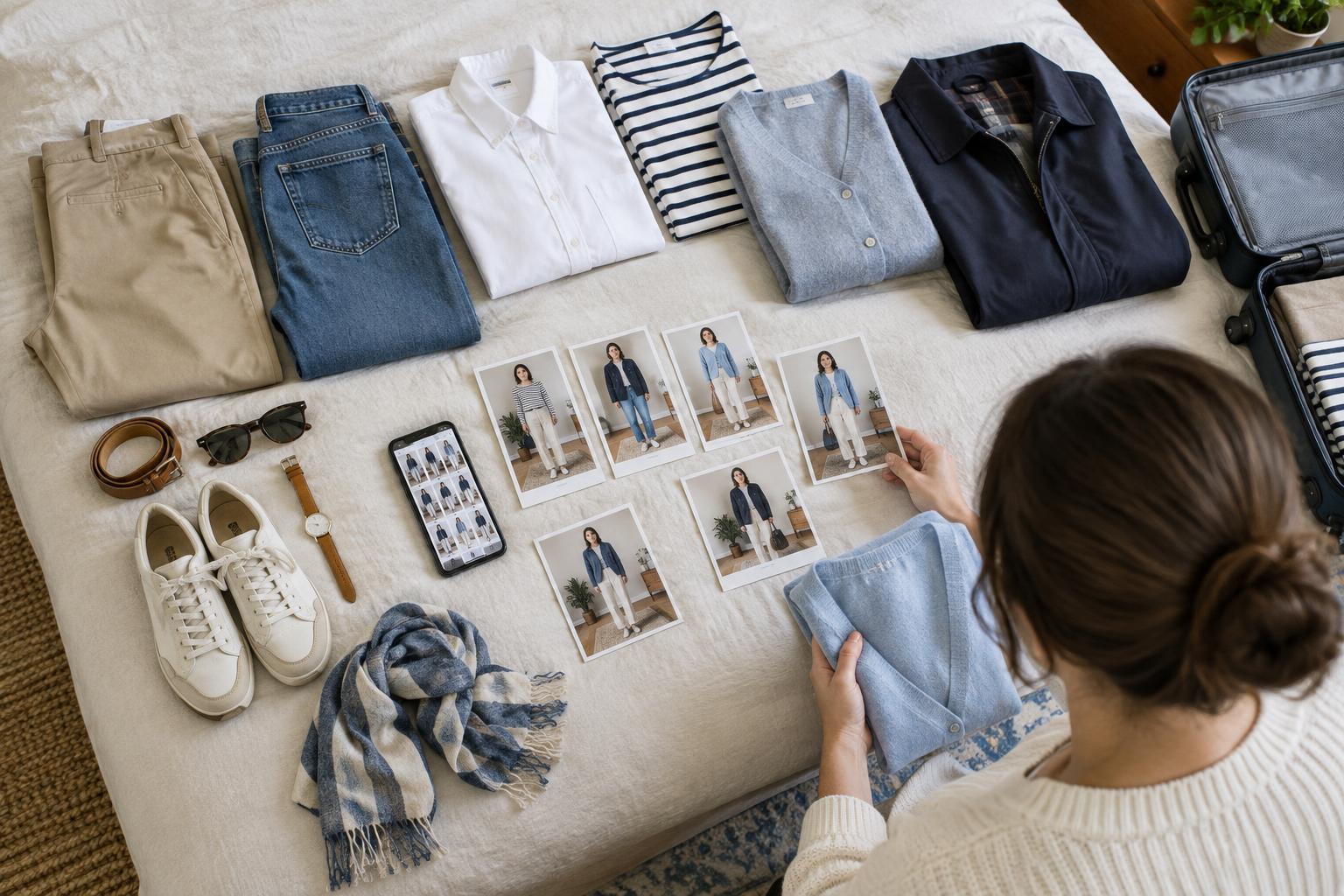
Lay each proposed outfit on a clear surface or hang its pieces side by side. Place the shoes, bag and any important layer nearby, then take a quick phone photo. The pictures are for your own reference, not a polished lookbook. Seeing complete combinations can reveal that two tops fill the same role, that a jacket clashes with your preferred shoes, or that you have planned too many outfits for one kind of day.
Name or group the photos by purpose, such as “walking day” or “cool evening.” If you prefer paper, draw simple outfit columns or write each combination on a card. The useful part is being able to compare outfits at a glance. Try to include a few swaps: the same trousers with a second top, or one shirt worn under your jacket as well as on its own. Those alternatives give you flexibility without requiring a separate set of clothes for every day.
Test the combinations you are unsure about
A flat-lay photo cannot tell you how something feels after you put it on. Try on any combination involving unfamiliar proportions, a new layer or shoes you have not worn with that hemline. Sit down, walk around and check whether you can move comfortably. Look at the outfit with the outer layer on, not just with it draped beside the clothes. A bulky knit may fit under one coat but feel cramped under another.
Give special attention to the travel-day outfit. It may need to work through a long journey and a temperature change, so check that its layers are easy to remove and carry. Also consider whether a light-colored item needs more careful handling than the trip allows. A visual plan is most helpful when it reflects how you will actually wear the clothes, not just how neatly they photograph.
Edit the plan, then pack from it
Compare your photos with your original list of days. Is each likely activity covered? Can a layer or pair of shoes serve more than one outfit? Set aside pieces that never appear in a combination, then decide whether they have a clear purpose as a spare. If you want an extra top, choose one that works with bottoms already in the plan rather than introducing a new pairing you have not checked.
Pack from the finished lineup instead of returning to the wardrobe for last-minute additions. Keep the photos on your phone so you can find an easy combination when you arrive, especially if you change your plans. You do not have to follow the images exactly. Their job is to show that the pieces in your suitcase work together, leaving you room to dress for the day in front of you.