Start with one piece that sets the direction
Mixing gold- and silver-tone jewelry does not require equal amounts of each. It helps to begin with a piece you already want to wear, such as a gold-tone watch or a silver-tone pendant, and let it lead the rest of the accessories. This gives you a starting point rather than a rule to follow.
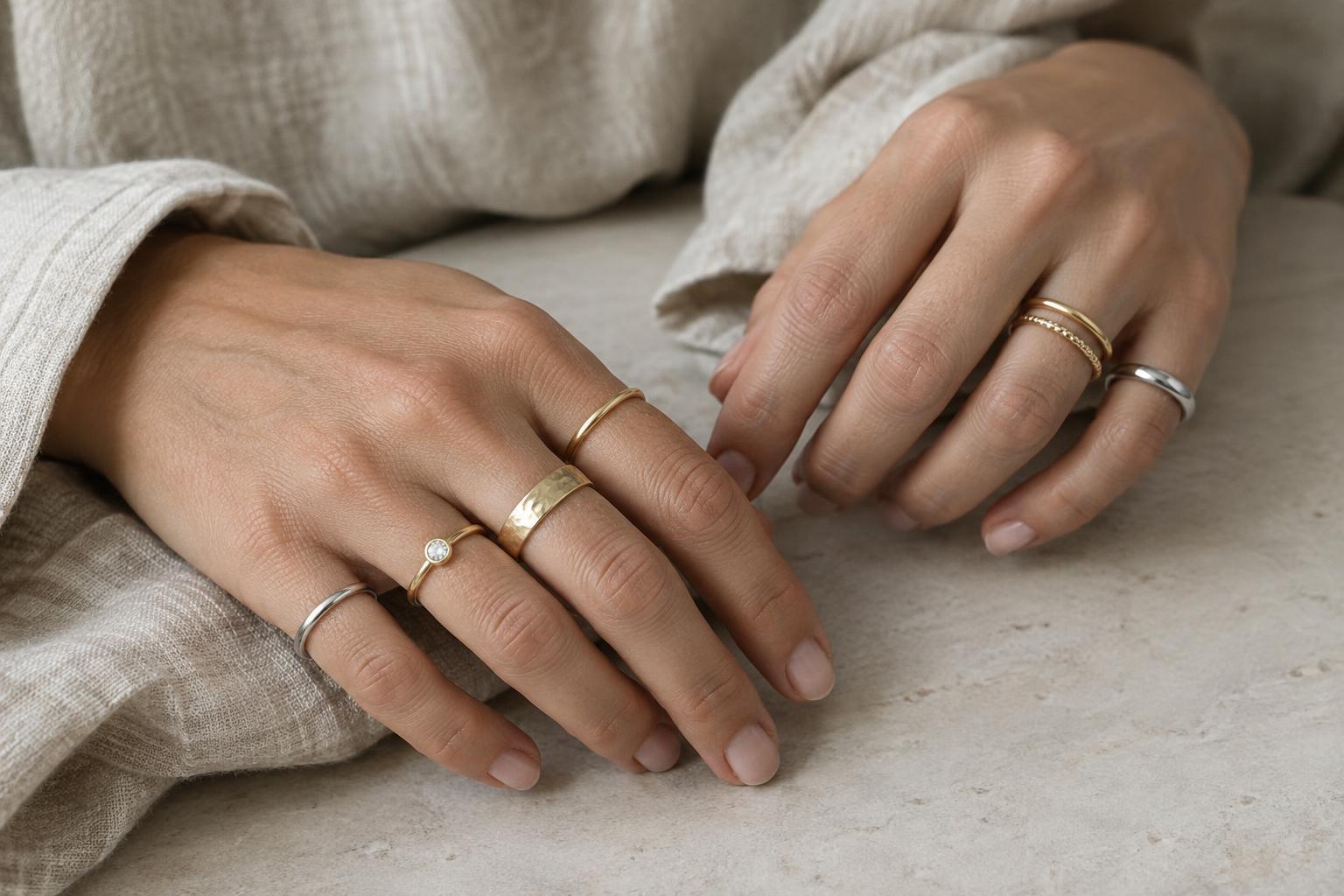
If your watch is the most noticeable item, try adding a slim ring in its tone and one small piece in the other. The result still has a dominant tone, but the contrast looks deliberate. If you prefer a more even mix, a two-tone piece can serve as a bridge. A ring, watch or chain that contains both tones makes the combination easy to repeat elsewhere without matching every item exactly.
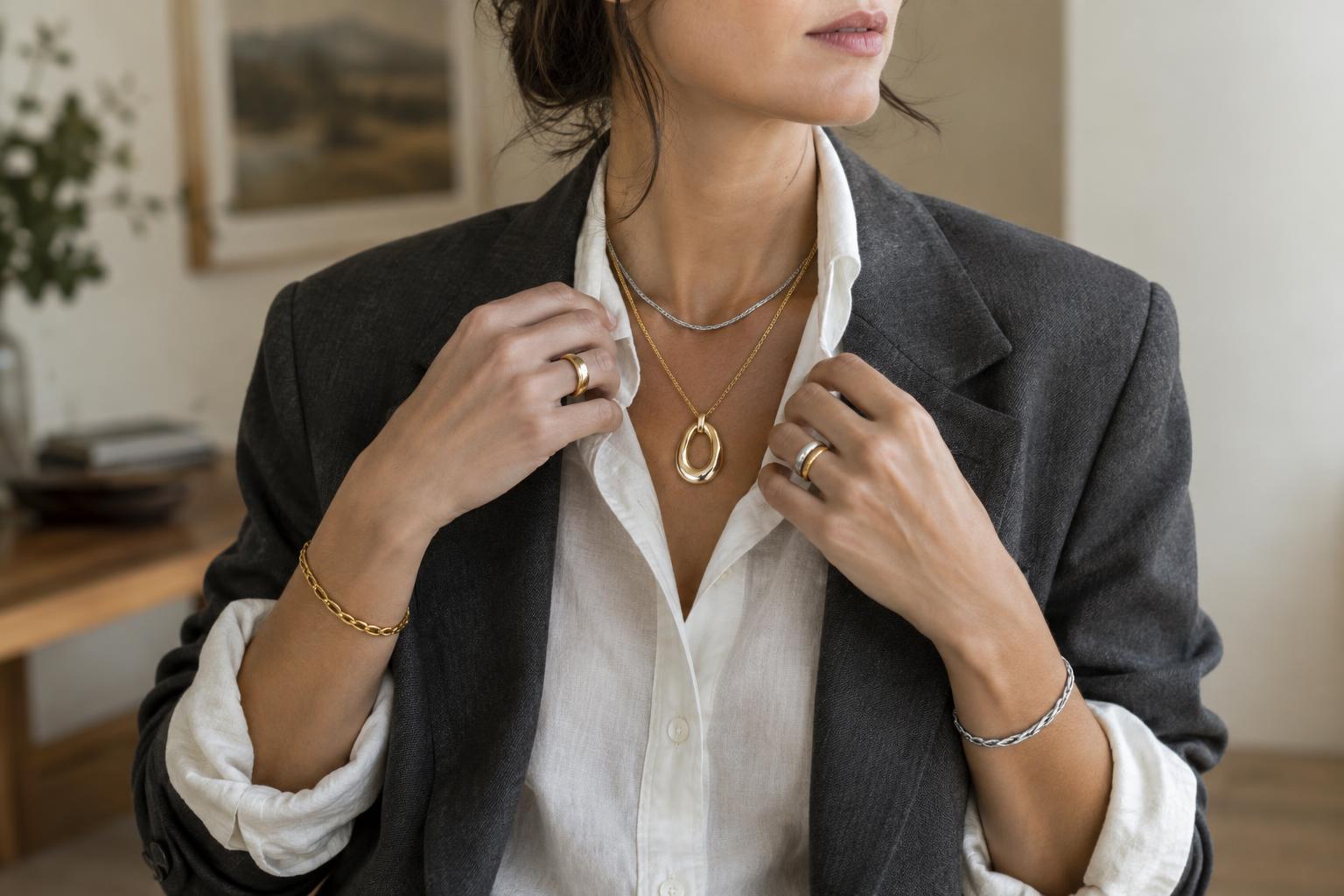
Consider where the jewelry sits, too. Pieces worn close together, such as stacked rings or layered necklaces, make the mix obvious. That can be appealing when jewelry is the focus of a simple outfit. For a quieter effect, place the tones farther apart: silver-tone earrings with a gold-tone bracelet, for example.
Repeat a tone to create a visual rhythm
A single piece in a contrasting tone can sometimes look like an afterthought. Repeating that tone once gives the eye another place to find it. If you wear gold-tone hoop earrings with a silver-tone necklace, a narrow gold-tone ring can echo the earrings. The pieces do not need identical shapes or finishes; their shared color is enough to connect them.
Repetition can be subtle. Small earrings may balance a substantial bracelet, especially if the rest of the outfit is understated. You can also repeat a tone through functional accessories, such as a watch or a belt buckle, without treating every zipper and button as part of the jewelry plan. Aim for a connection you can notice at a glance, not a perfect count of gold and silver items.
Balance scale and finish
Color is only one part of how jewelry works together. A wide, polished cuff has more visual weight than a fine chain, whatever its tone. If one piece is bold, give it room by pairing it with smaller accessories. For instance, a chunky silver-tone chain can sit comfortably beside delicate gold-tone earrings and a simple ring. Several large pieces in both tones can also work, but they create a more expressive look.
Finish changes the mood as well. Bright, reflective gold and silver tend to feel crisp together; brushed or softly aged surfaces can feel more relaxed. When a combination seems busy, try keeping the finishes similar while varying the tones. Or let one textured piece be the focus and choose smoother companions. These are options, not restrictions: a contrast in both color and texture may be exactly what a pared-back outfit needs.
Let your clothes support the mix
Mixed-metal jewelry is often easiest to style against a straightforward base. A white shirt and dark trousers, a navy dress, or a knit with jeans leaves space for both tones to register. Neither your clothing nor your jewelry needs to be neutral, however. A warm-colored top can make gold feel prominent while silver adds a cooler edge; a cool gray outfit can do the reverse.
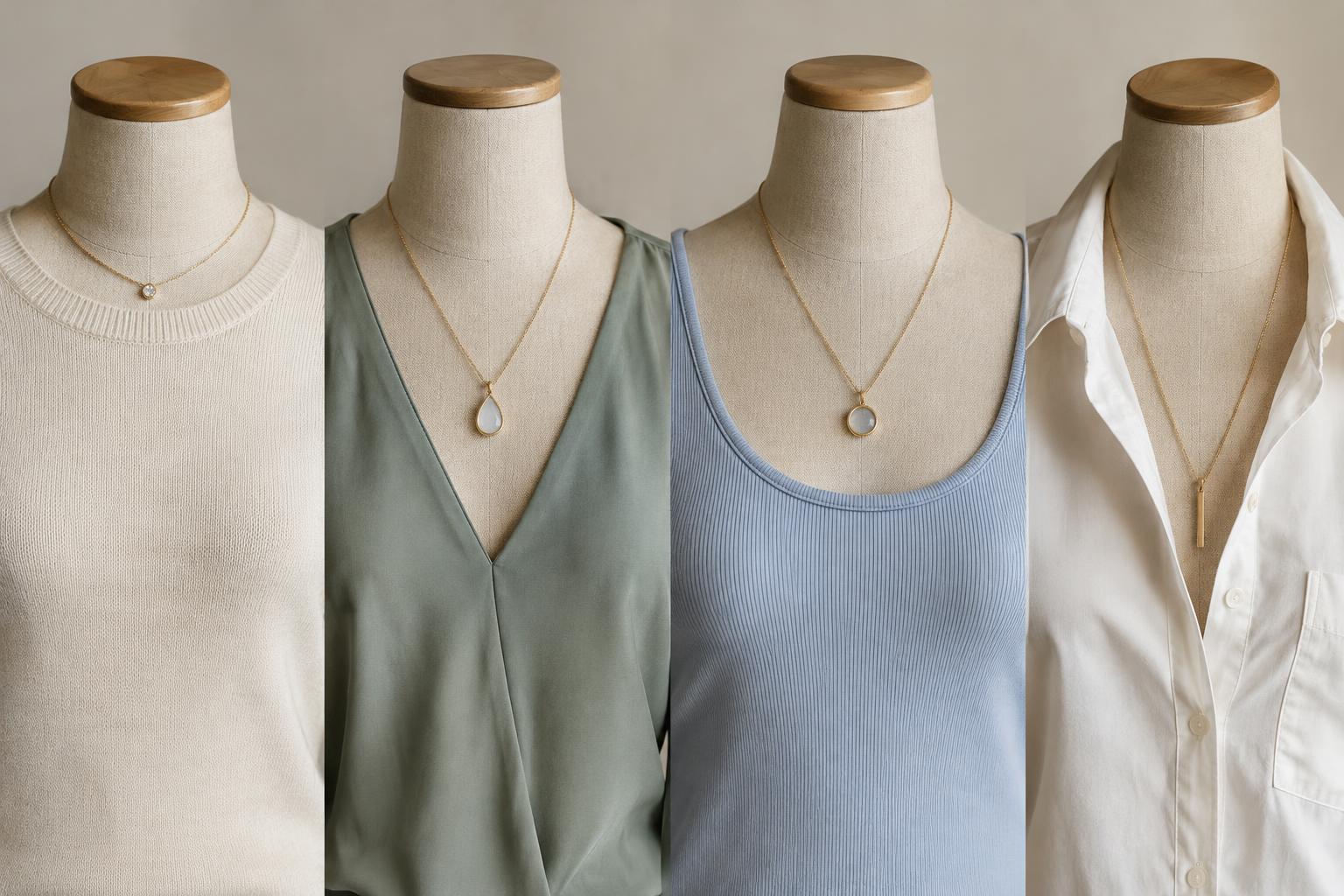
Pay attention to necklines and layers before adding more jewelry. An open collar gives layered chains space, while a high neckline may call for earrings and rings instead. If a printed scarf, embellished bag or detailed top already draws attention, fewer pieces can make the metal mix clearer. Try putting on the outfit first, then adding jewelry until it feels complete. Taking one piece off is sometimes more useful than searching for another that “matches.”
Build combinations you will actually wear
A small set of reliable pairings can make everyday styling simpler. You might keep a fine silver-tone chain with gold-tone hoops for casual days, then swap in a larger gold-tone necklace when you want the jewelry to lead. Photographing combinations you like can help you remember how the pieces worked with particular necklines or sleeve lengths.
Before wearing several pieces together, check that they sit comfortably and do not catch on one another. Chains of different lengths are less likely to tangle than chains that fall at the same point. When storing or cleaning jewelry, follow the care guidance for each piece: tone does not tell you whether an item is solid metal, plated or coated. The most useful mixed-metal combination is one that suits your outfit, holds up to your routine and feels like your style.