Start with a clear color balance
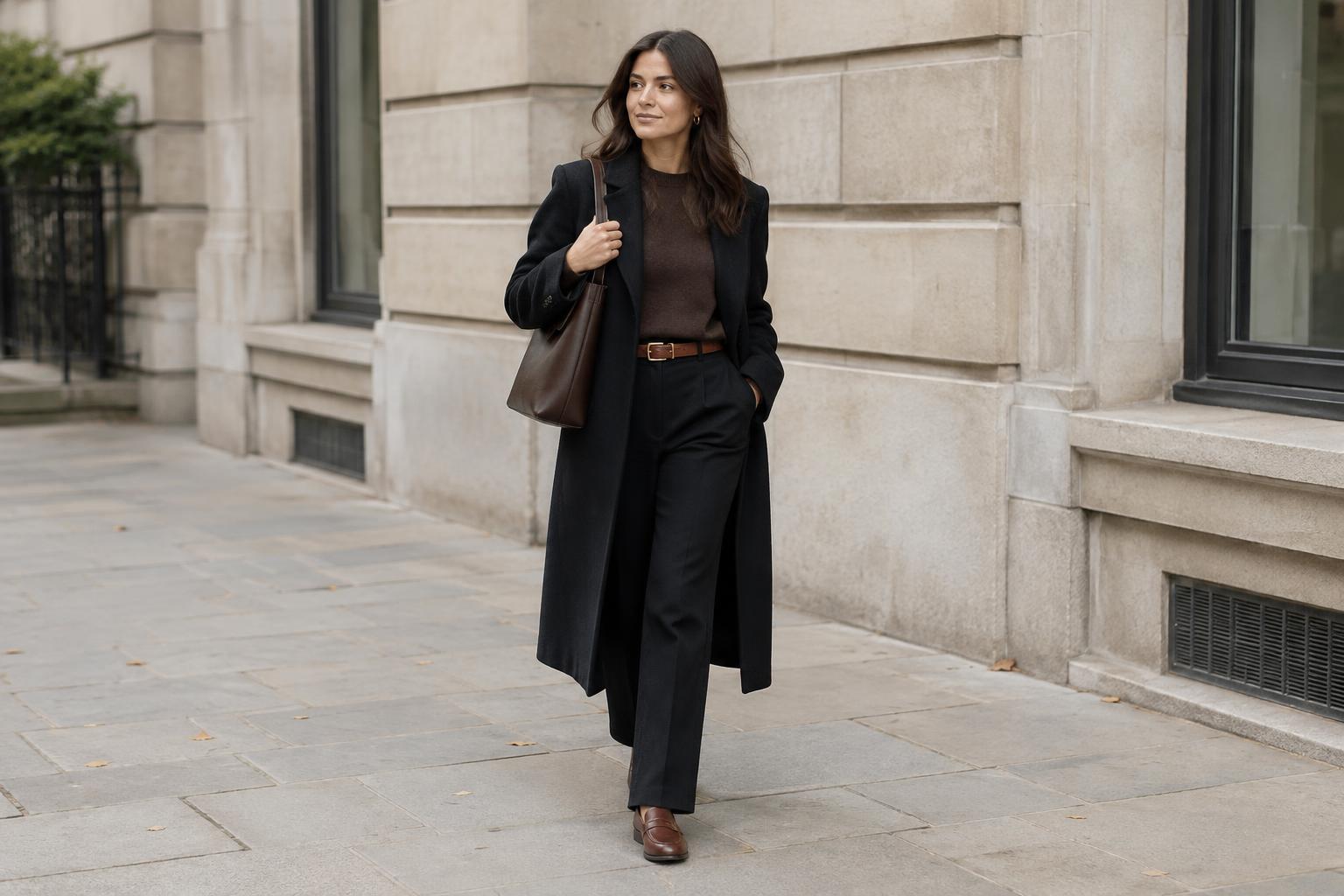
Black and brown are sometimes treated as colors that should stay apart, but they can work well together when the pairing looks deliberate. The easiest approach is to let one color lead. Try black trousers, a black top, and a brown jacket, or build around a brown sweater and trousers with a black coat and shoes. Giving one color more space creates a clear foundation; the other becomes a considered contrast rather than a stray detail.
You can also divide the outfit more evenly. A black knit with brown trousers is a straightforward example because each piece has a distinct role. If the transition feels abrupt, add a small element that connects them, such as a belt, bag, or patterned scarf containing both colors. The goal is not to match every item. It is to make the combination feel repeated or balanced enough to look intentional.
Choose the brown that suits the effect you want
Brown covers a wide range of shades, and each creates a different mood beside black. Deep espresso gives a quiet, low-contrast look. Chocolate brown is still subtle but easier to distinguish. Cognac, camel, and tan create a sharper contrast that can make an outfit feel lighter. If you are new to the pairing, start with a brown that is visibly different from your black pieces; it is often easier to see how the colors relate.
Pay attention to the other colors already in the outfit. A warm camel coat can sit comfortably over black jeans and a cream top, with cream providing a gentle bridge. Dark brown and black can form a nearly monochromatic base, leaving room for a white shirt or a muted accent color. You do not need to match every brown exactly. If several brown items appear together, keeping them within a similar light or dark range can help the outfit feel cohesive.
Use texture to give dark colors definition
When black and brown pieces are both dark, their surfaces can matter as much as their colors. A smooth black cotton shirt under a chunky brown cardigan has contrast even when the shades are close. So does a black wool coat worn with brown leather boots. Mixing matte, soft, structured, and slightly glossy finishes gives the eye something to notice without requiring another color.
Texture can also keep a simple outfit from feeling flat. Consider black denim, a brown suede-look jacket, and a plain knit. Each item has a different visual weight, so the combination feels layered rather than uniform. For an understated version, pair a fine black knit with tailored brown trousers and let the difference in fabric do most of the work. Choose textures that suit the setting and weather, rather than adding them solely for contrast.
Make shoes and accessories part of the plan
Accessories are useful when you want to try black and brown without rebuilding an outfit. Brown shoes with black clothing can look purposeful when another brown element appears nearby, such as a bag, belt, or jacket. That second element does not have to be an exact color match; its job is simply to show that brown belongs in the outfit. Black shoes work just as well with brown clothing, particularly when echoed by a black top, coat, or bag.
You can keep the combination relaxed by avoiding too many competing details. For example, wear a black T-shirt and trousers with a tan overshirt, then choose simple black sneakers or brown boots. In a dressier outfit, black loafers, brown trousers, and a black belt create a tidy line. Use the accessories you already own to test different balances before deciding whether anything is missing.
Build a few reliable outfit formulas
A repeatable formula makes color pairing easier on busy mornings. For a casual outfit, try black jeans, a black tee, and a mid-brown cardigan or overshirt. For a more polished look, pair brown tailored trousers with a black knit and black shoes. On cooler days, a camel coat over an otherwise black outfit makes the brown piece the focal point. These combinations leave room to adjust proportions and fabrics to your own style.
Before heading out, look at the outfit as a whole rather than judging each piece separately. Ask which color leads, whether a small item feels disconnected, and whether the fabrics offer enough distinction. If something seems off, changing one element is usually enough: swap the shoes, add a lighter layer, or remove an accessory. Black and brown do not need a rigid rule. They simply benefit from the same attention to balance you would give any other color combination.