Plan for activities, not a separate outfit for every day
A rainy forecast can make it tempting to pack a backup for every item. That usually creates a crowded bag without solving the main problem: what you will wear while something is damp. Instead, list the situations your trip includes, such as walking outdoors, sitting in a café, visiting a museum or going to dinner. Look for clothes that can move between those situations with a change of layer or accessory.
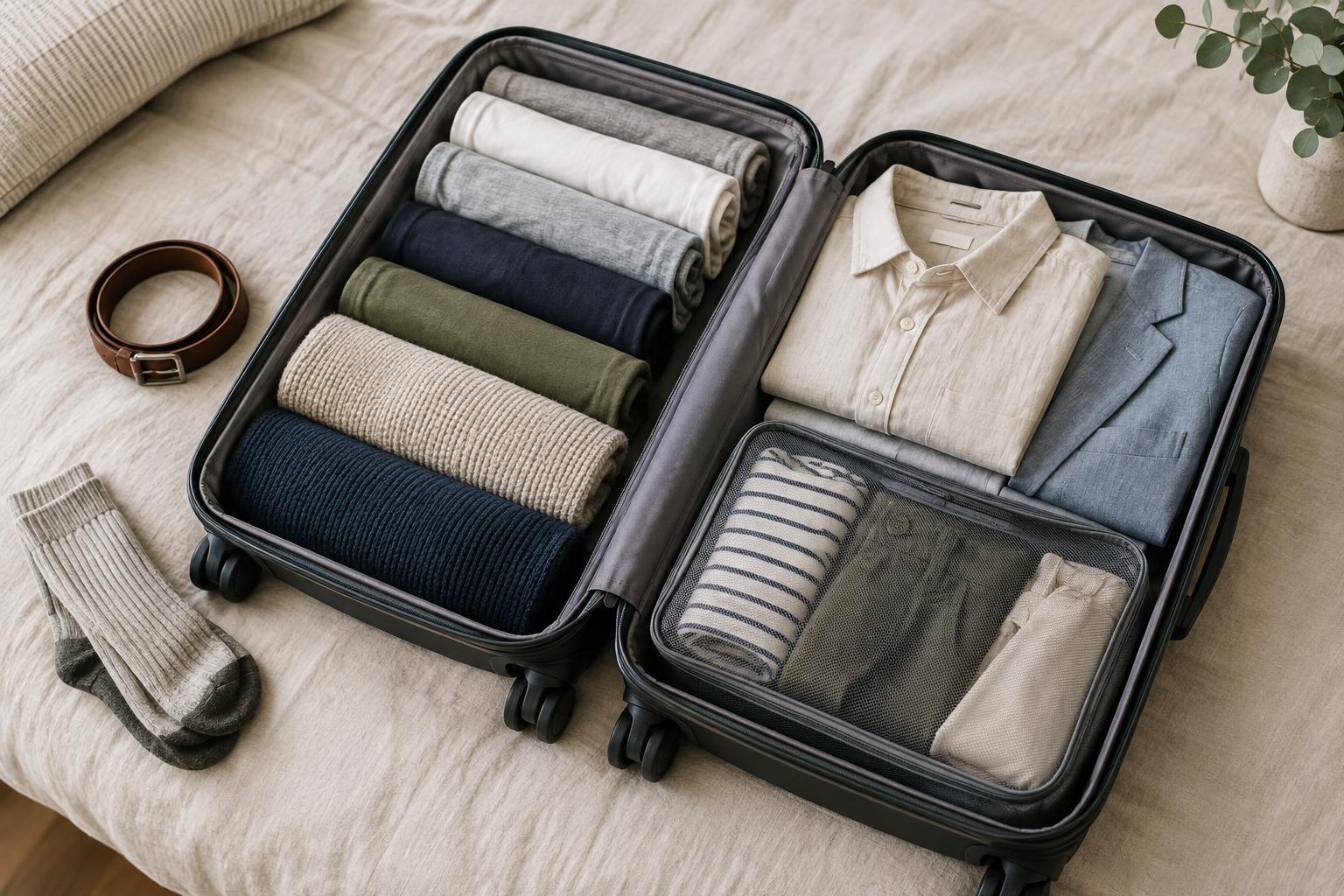
Choose a compact color palette before selecting individual pieces. For example, navy trousers, dark jeans, a cream knit and two tops in colors you enjoy can form several outfits without requiring matching sets. Check each piece against at least two others. If a shirt only works with one pair of trousers, consider whether it earns its space in the bag. This approach leaves room for rain gear without making every outfit look the same.
Build each outfit from the inside out
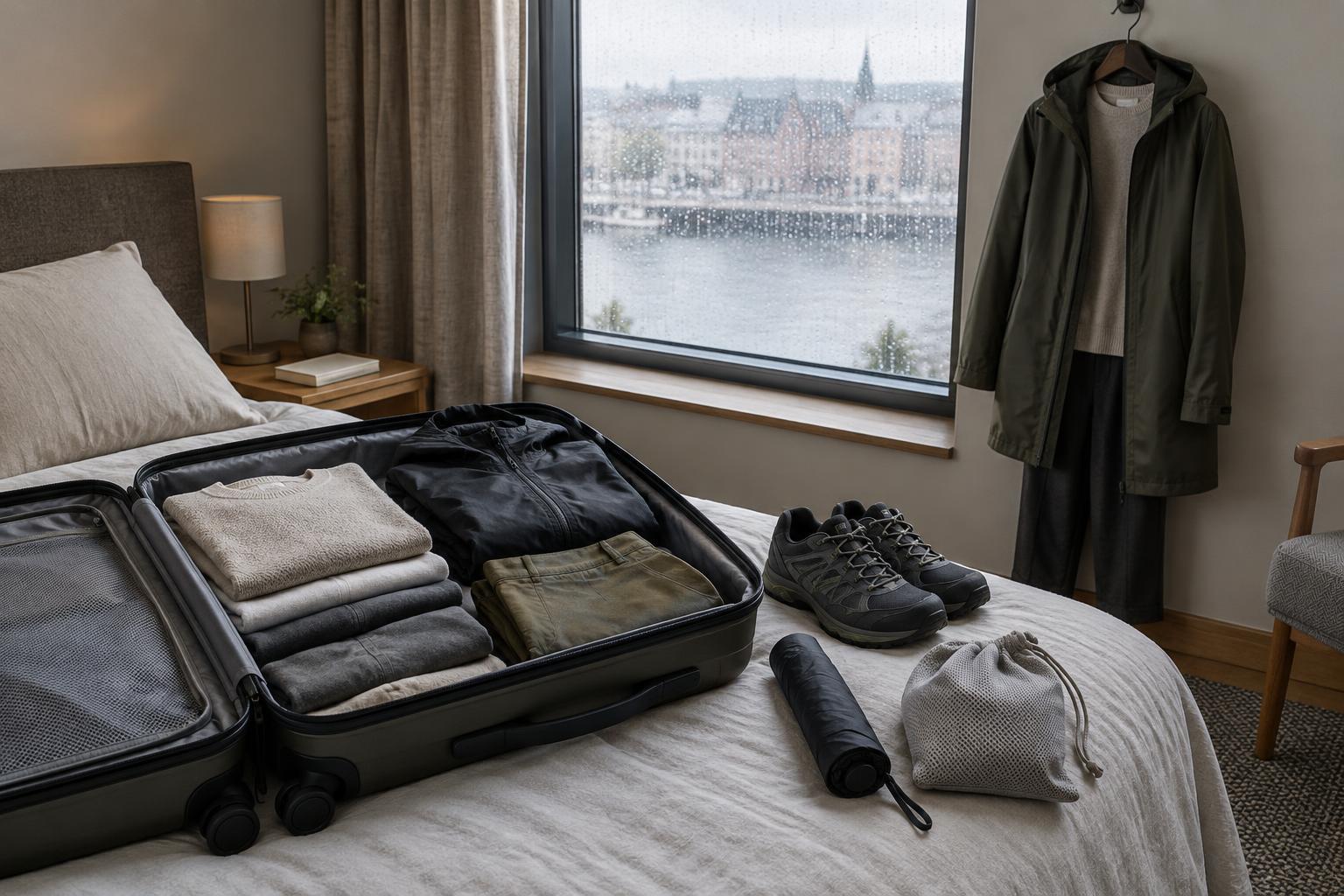
A useful rainy-day outfit has three jobs: feel comfortable indoors, adapt to changing temperatures and keep the outer layer from doing all the work. Start with a top you would happily wear on its own. Add a light knit, cardigan or overshirt that works over more than one top. Finish with a rain-resistant outer layer suited to your plans. A hood can be particularly convenient when you need your hands free, though an umbrella may be enough for shorter walks.
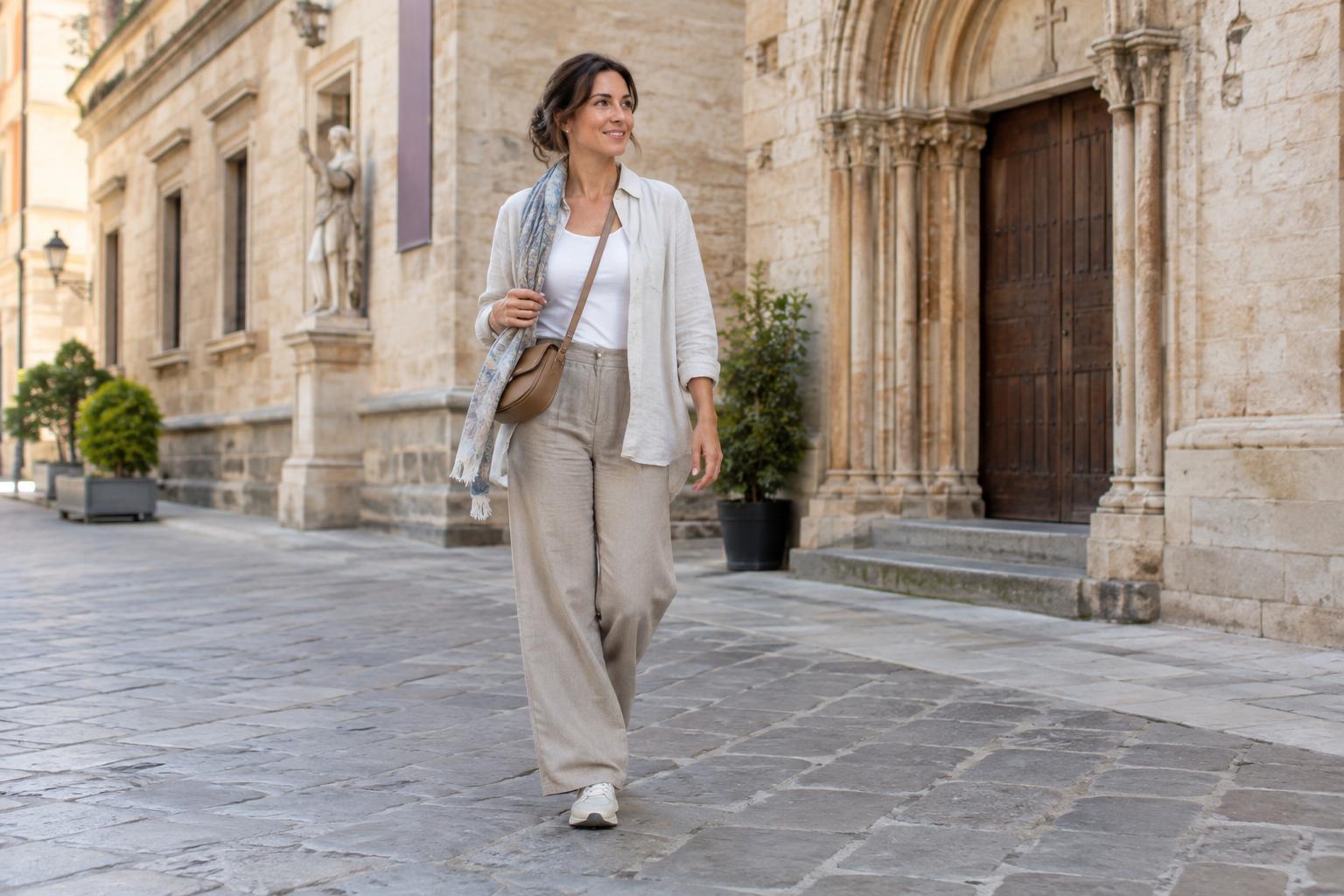
Make a few combinations before you pack. One day could be dark jeans, a striped top, a cardigan and the rain layer. The next could be the same cardigan over a plain top with trousers. For dinner, remove the cardigan and add a scarf or simple jewelry. The clothes repeat, but their proportions and details change. If you prefer dresses, one that works with both a knit layer and your chosen shoes can play the same versatile role.
Give shoes distinct roles
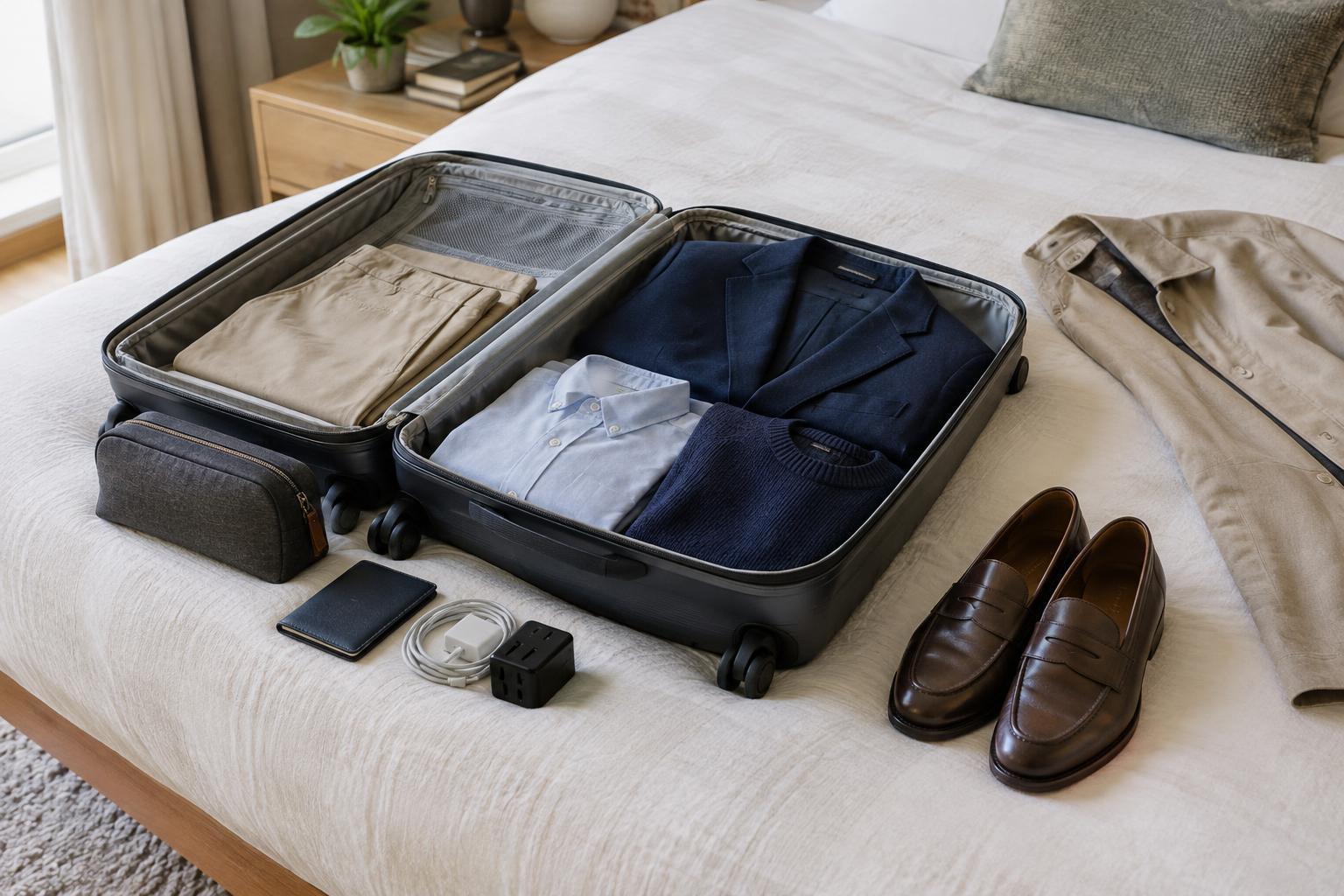
Shoes take up space and can be slow to dry, so avoid packing multiple pairs for the same purpose. Wear a comfortable pair that you trust on wet pavement, and bring a second pair only if it serves a different part of the trip, such as indoor plans or a dressier evening. Check the soles and fit before you leave; a shoe that looks weather-ready but rubs during a long walk is not a useful travel choice.
Think about socks as part of the shoe plan. A few pairs that dry reasonably well are often more useful than another bulky pair of shoes. If your feet get wet, changing into dry socks can make the rest of the day more comfortable. Keep a small bag for damp socks or shoes so they do not touch clean clothing, but take items out to air as soon as you can.
Choose fabrics with drying and comfort in mind
No fabric choice makes a whole outfit rainproof. Still, the way a garment feels when damp and how easily it dries can affect how often you can rewear it. Light layers are often easier to air out than one thick garment. A tightly packed heavy knit, for example, may remain damp longer after a wet walk than a lighter layer worn beneath a protective jacket. Check care labels and choose fabrics you are comfortable looking after while away.
Avoid treating every possible splash as a reason to pack a replacement. A top worn under an outer layer may stay clean and dry enough to wear again. Trousers are more likely to get wet at the hems, so consider a length that stays clear of puddles and works with your walking shoes. Darker or patterned bottoms may also make minor marks less noticeable between washes.
Leave room for a simple drying routine
A small amount of organization can replace several backup garments. Keep a lightweight bag for wet items during transit, and unpack them promptly when you reach your accommodation. Hang damp clothes separately with space for air to circulate rather than leaving them folded in a suitcase. If washing a small item is practical, allow enough time for it to dry before you need it again; drying conditions can vary from place to place.
Before closing your bag, lay out every planned outfit, including outerwear and shoes. If a piece has no clear role, leave it behind. If one item is essential for nearly every outfit, think through what you would wear while it dries. The goal is not to pack as little as possible. It is to give each garment a useful role and make a rainy day feel like part of the trip, not a packing emergency.