Start with the days you expect to have
A travel wardrobe works best when it answers a simple question: what will you actually do in these clothes? Before choosing pieces, sketch out your trip by type of day rather than by every hour. You might have a long transit day, two days of walking and sightseeing, an outdoor excursion, and one dinner that calls for a slightly neater outfit. This gives you a more useful packing guide than trying to imagine every possible invitation or change of plan.
Look for activities that share clothing needs. The trousers you wear on a train may also work for a museum day; a comfortable dress or button-up shirt might suit both lunch and dinner. Note any genuine exceptions, such as shoes needed for a planned hike or clothing required by a venue. Pack for those specific needs, then let versatile pieces cover the spaces between them.
Build outfits from repeatable pieces
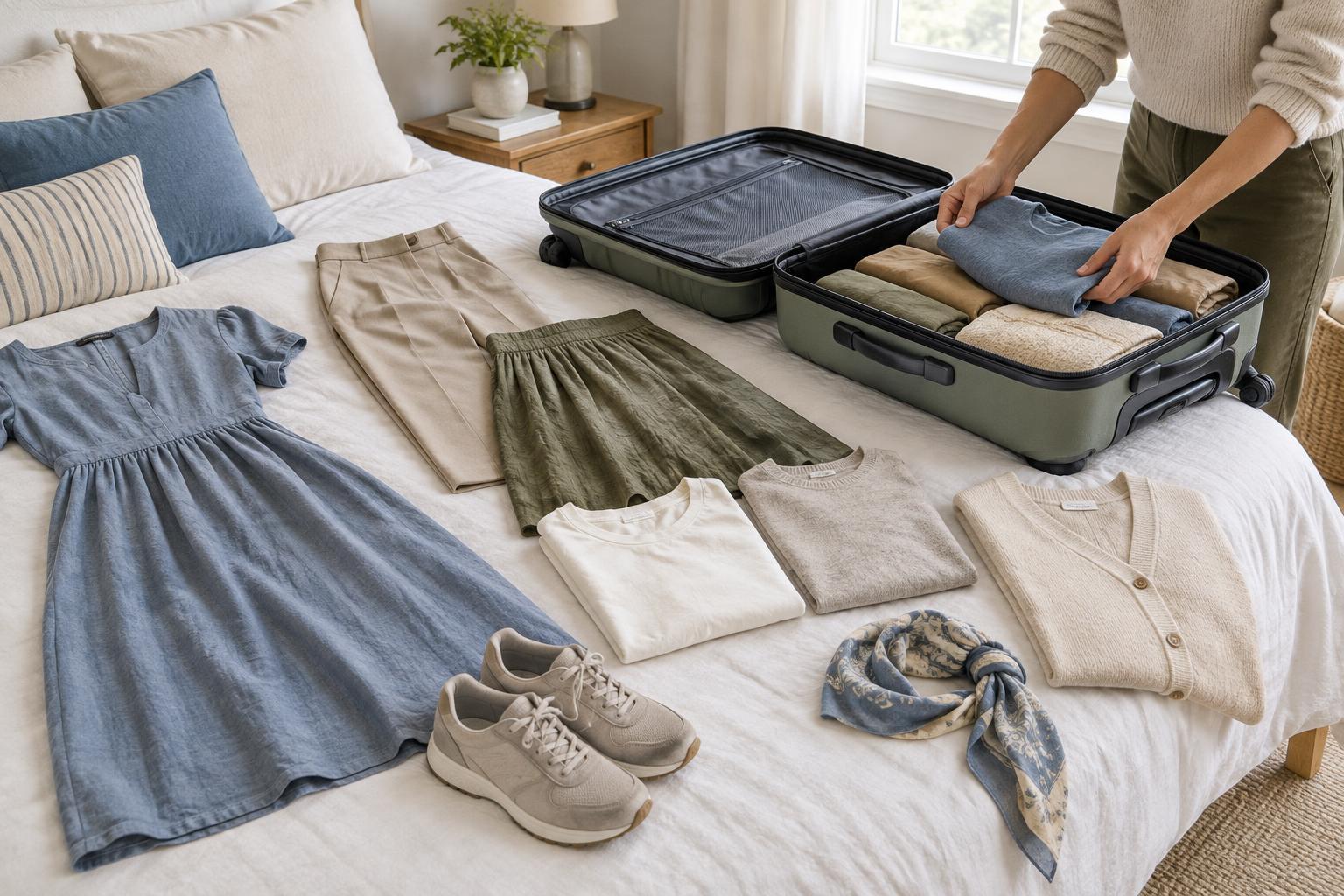
Choose a small group of clothes that can be worn in more than one combination. A simple starting point is two or three bottoms, several tops, and a layer that works over most of them. The exact number depends on trip length and whether you can do laundry. What matters is that each item has a role. If a top only works with one pair of trousers, consider whether that complete outfit earns its space in your bag.
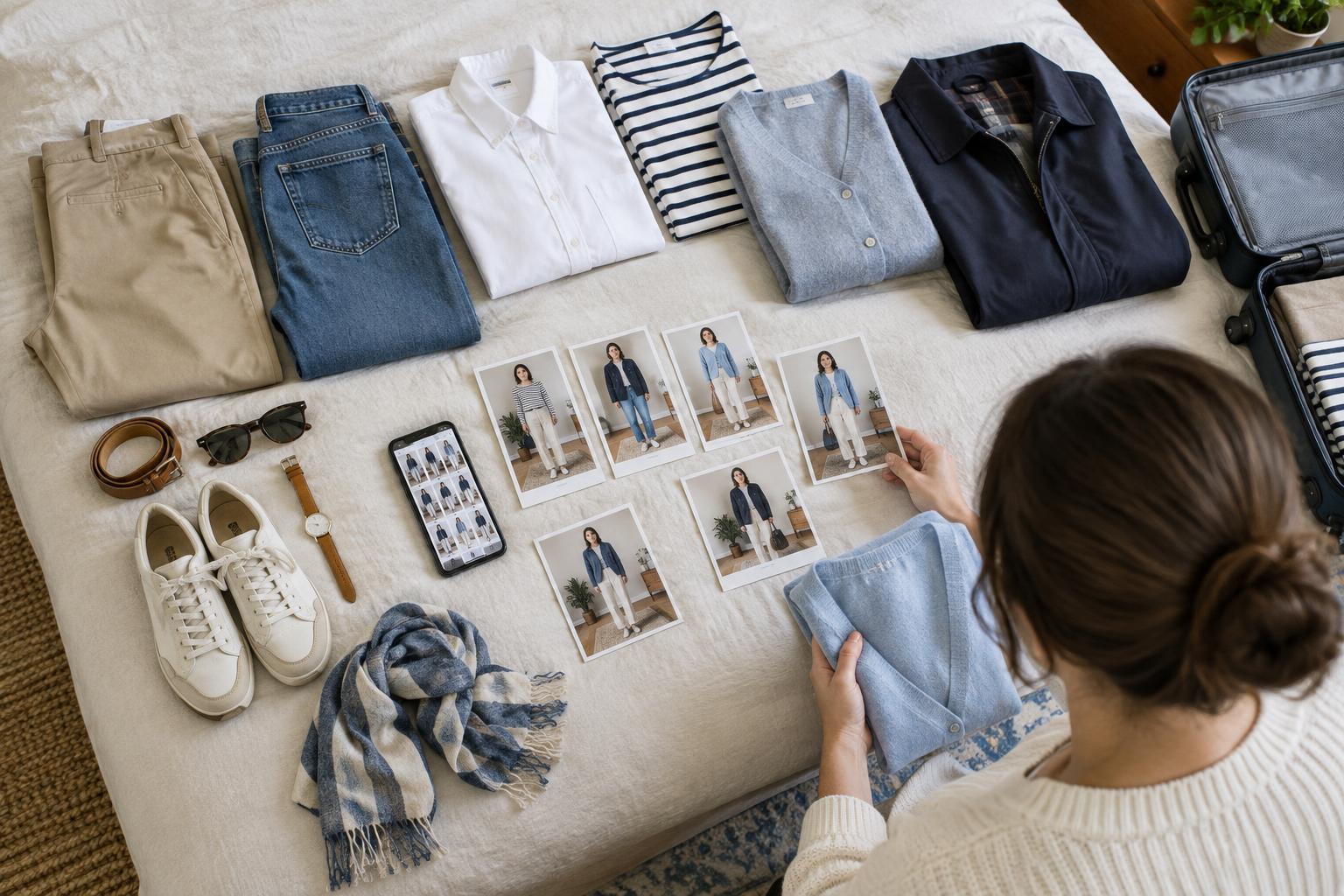
A limited color palette makes this easier without requiring every item to be neutral. For example, navy trousers, light jeans, cream and striped tops, and a rust-colored overshirt can create several distinct looks. Try on the combinations before leaving, including the shoes and outer layer. An outfit that looks good laid on a bed may feel awkward once you are walking, sitting, or carrying a bag.
Plan for conditions, not every forecast
Weather deserves attention, but it does not require a separate outfit for every possible temperature. Think in layers you can add or remove: a breathable base, a light sweater or overshirt, and outerwear suited to the conditions you reasonably expect. If rain is plausible, a packable rain layer may be more useful than an extra complete outfit. Check the forecast close to departure and adjust the outer layer or footwear if needed.
Fabric choice can also help an outfit handle a varied day. A comfortable knit may be pleasant in transit, while a woven shirt can look a little more polished at dinner. Consider how easily each piece wrinkles, dries after washing, and feels against your skin. There is no need to choose only so-called travel fabrics; familiar clothes that you already wear and care for are often the safer choice.
Let shoes and accessories do more work
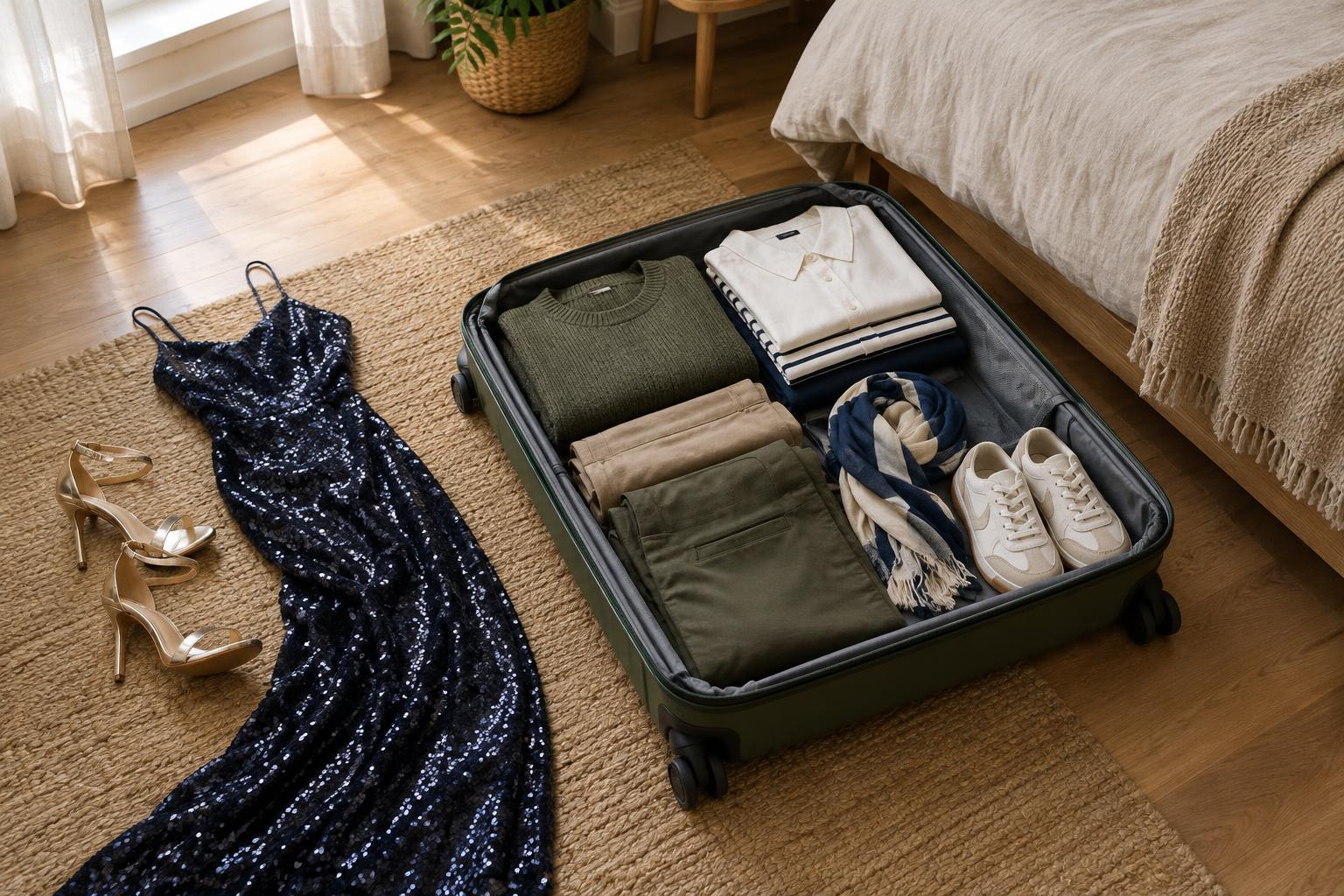
Shoes often take the most room, so match them to your actual activities first. If walking is central to the trip, start with a comfortable pair you have worn before. Add another pair only if it meets a distinct need, such as a planned formal occasion or a particular outdoor activity. Packing an uncomfortable pair for a hypothetical evening can cost more bag space than it adds flexibility.
Small accessories can change the feel of repeated outfits. A scarf, belt, or pair of earrings may help the same shirt move from daytime exploring to dinner without requiring another full look. Choose accessories you will genuinely use and keep any venue rules or practical demands in mind. A secure everyday bag, for instance, may be more valuable across the trip than several bags matched to individual outfits.
Leave a little space for change
An itinerary is a guide, not a promise. Build in flexibility by choosing pieces that can swap roles if a day runs long or plans move indoors. One spare top or a way to wash essentials may solve more problems than several backup outfits. For a longer trip, decide in advance when you could do laundry and pack enough to reach that point comfortably.
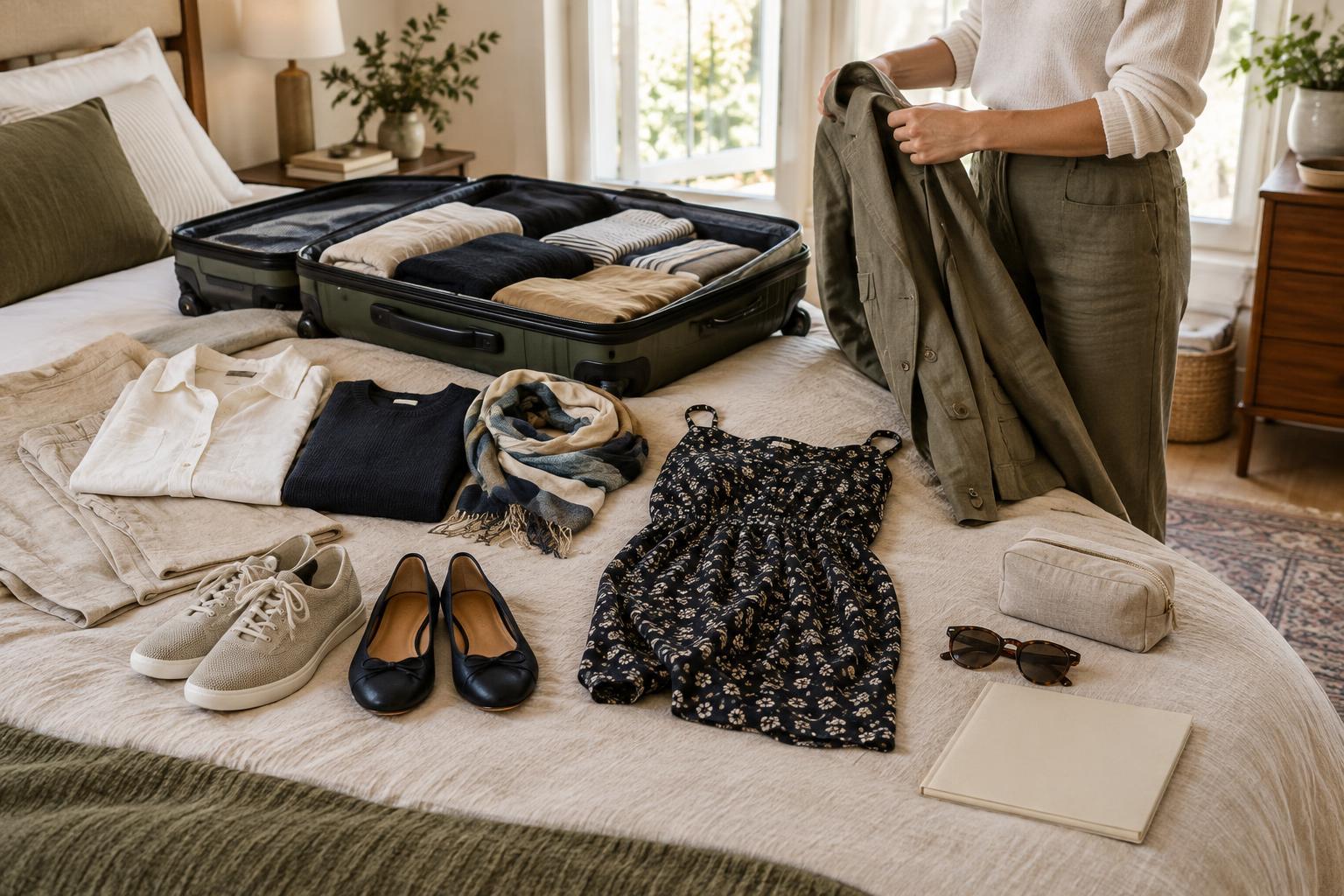
Before closing your bag, lay out a complete outfit for each type of day, allowing pieces to repeat. Then review anything left over. Ask whether it serves a planned activity, works with several outfits, or solves a likely comfort problem. If not, leave it behind. You are not trying to predict every moment of the trip; you are giving yourself a reliable set of clothes for the days most likely to happen.