Start with the fabric, not the stain
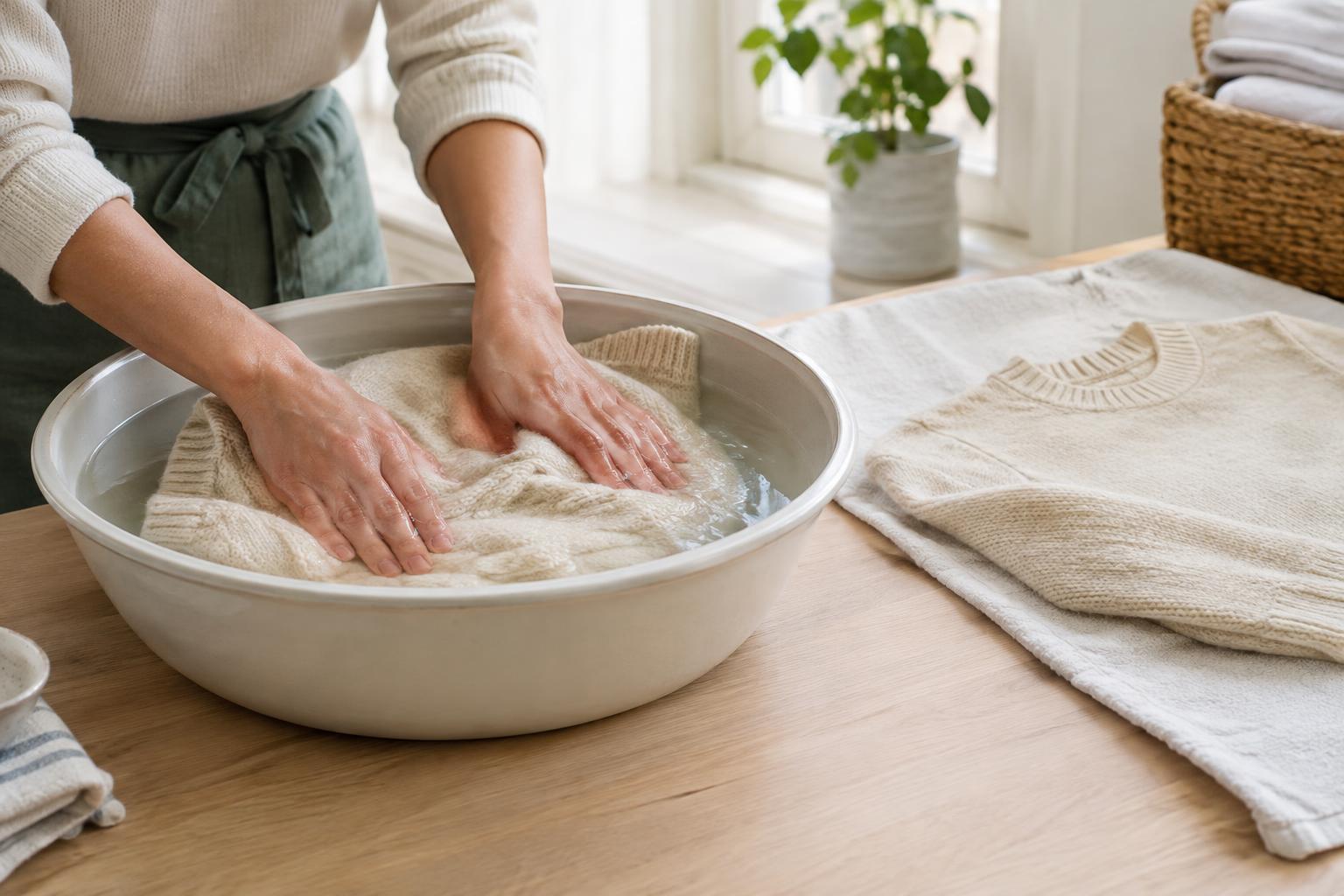
Before reaching for a cleaner, read the garment’s care label. A washable cotton T-shirt gives you more options than a silk blouse, a wool sweater or an item marked dry-clean only. Check whether the fabric is colorfast by testing your chosen product on an inconspicuous area. If the color transfers or the fabric changes texture, stop and choose a gentler approach. For a delicate or dry-clean-only piece, blot away what you can and consider taking it to a professional cleaner.
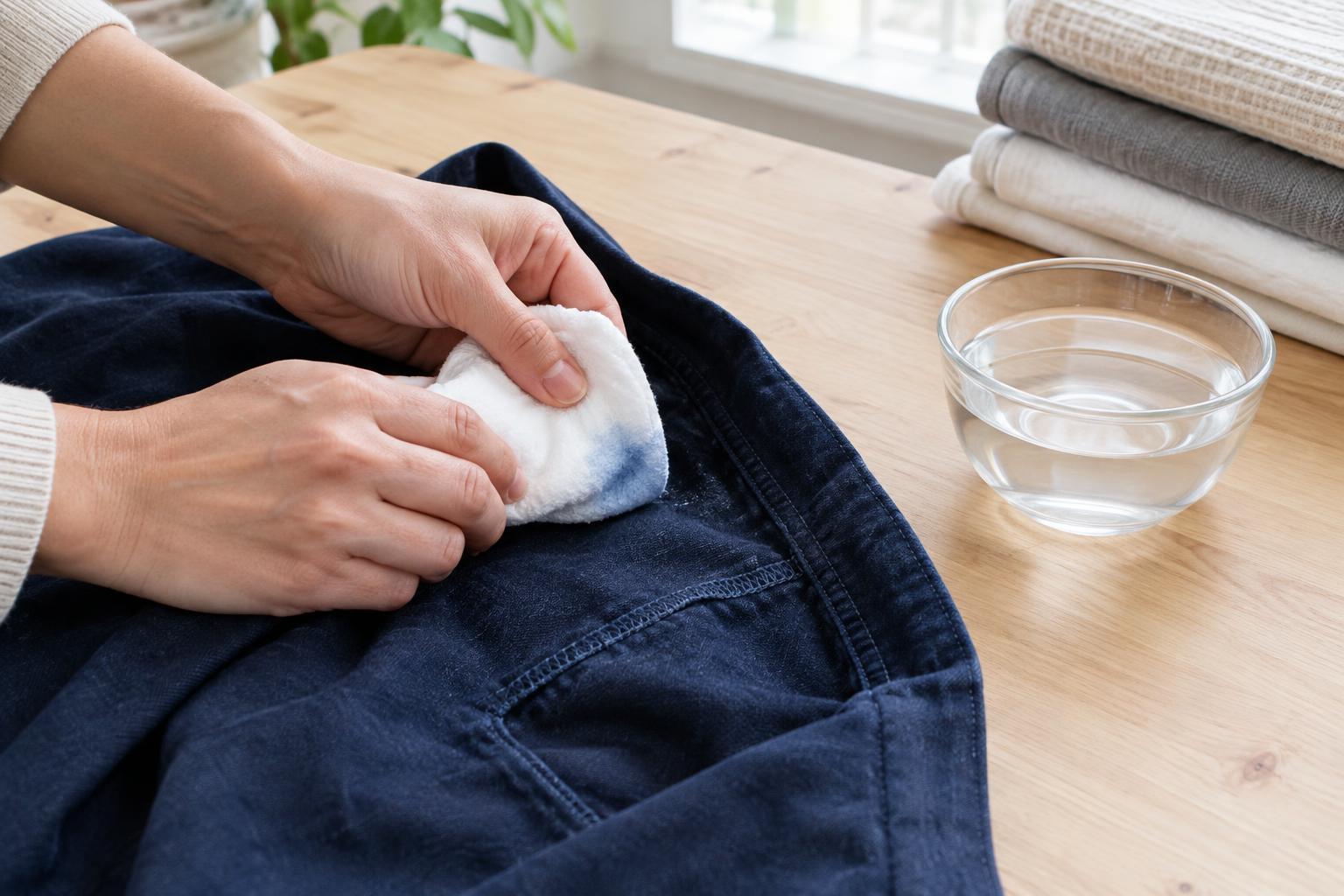
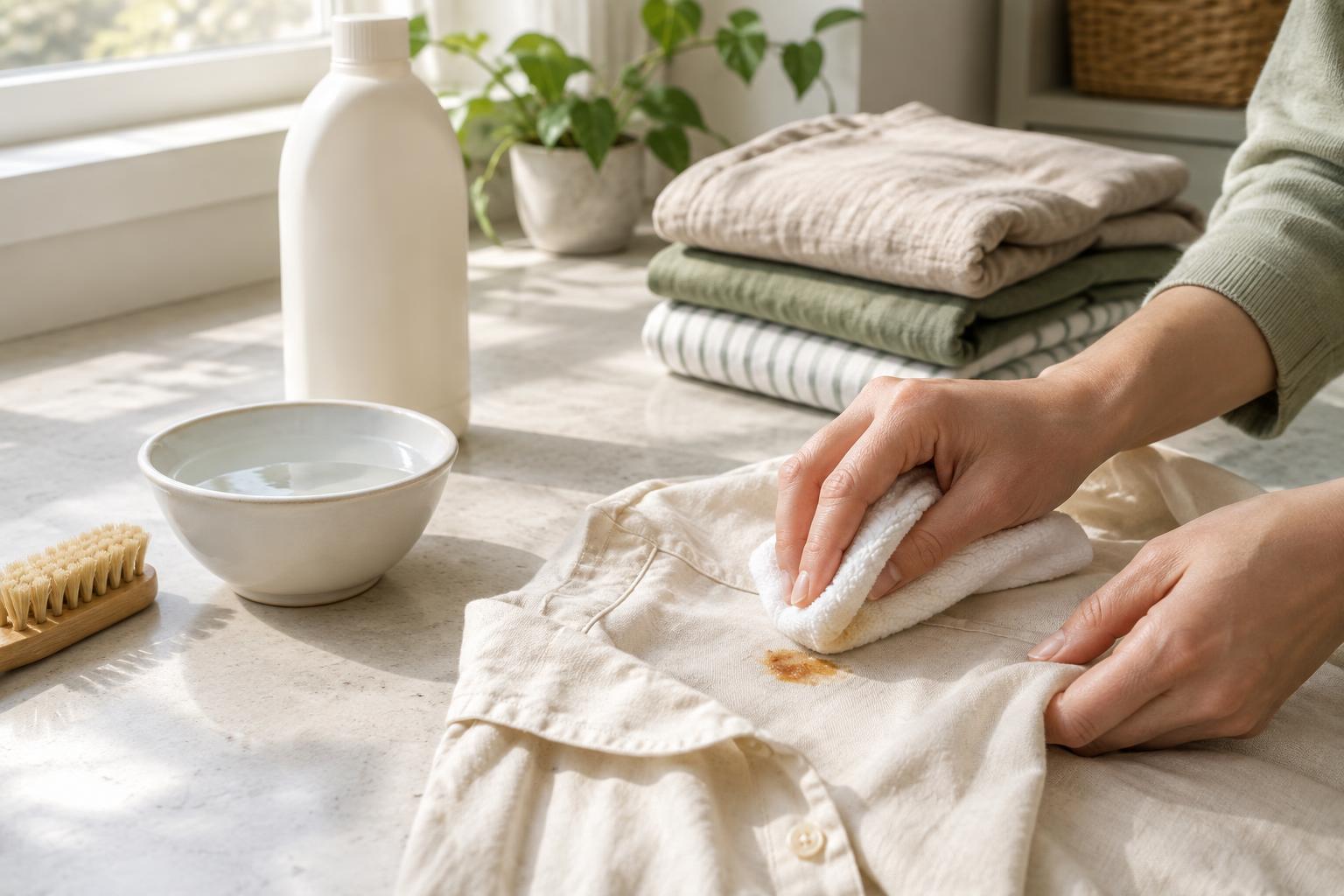
Remove any solids gently with a spoon or the edge of a dull card. Then blot liquid with a clean cloth or paper towel, working from the outside of the mark toward the center. Rubbing can spread the stain and push it deeper into the fibers. If the fabric can be rinsed, hold the back of the stained area under cool running water so the water carries residue out the way it entered. Treat the mark as soon as practical, but do not put the garment in a dryer until you have checked the result: heat can make some remaining stains much harder to remove.
Food and drink: clear away residue first
For a fresh coffee, tea, juice or sauce spill on a washable garment, blot and rinse with cool water. Apply a small amount of liquid laundry detergent to the mark and gently work it in with your fingers. Let it sit for the time recommended on the detergent label, then wash according to the garment’s care label. A tomato-based sauce may leave both colored residue and an oily patch, so inspect the fabric after rinsing and repeat the detergent step if needed.
For milk, egg or other protein-containing spills, begin with cool water rather than hot water. Hot water can make protein stains more difficult to lift. An enzyme-containing laundry detergent may help on fabrics whose labels permit it; follow the product directions, including any limits for delicate fibers. Never assume that one treatment will remove every part of a mixed stain. If a mark remains after washing, pretreat and wash again before air-drying.
Oil, grease and makeup: use a little detergent
Cooking oil, salad dressing and greasy food often leave a darker patch even after the colored part of a spill disappears. Blot excess oil without pressing it across the fabric. For a washable item, apply a small amount of liquid laundry detergent directly to the patch and allow it to sit as directed on the label. Wash at a temperature allowed by the garment’s care instructions. Avoid adding so much product that it is difficult to rinse out.
Many makeup marks contain oils, pigments or both. Lift loose powder with a soft brush instead of rubbing it in; blot liquid foundation or lipstick before treating the area with laundry detergent. Work carefully around prints, trims and coatings, and test first if you are unsure how the fabric will react. After washing, check the spot in good light while the garment is still damp. A faint oily outline can be easy to miss until the item dries.
Sweat and ink call for different tactics
For a washable shirt with deodorant buildup or a perspiration mark, dampen the area and gently work in liquid laundry detergent. Give it time to act according to the product label before washing. Repeated marks around the underarms may need more than one wash. Avoid aggressive scrubbing, which can wear down fabric in an area that already experiences friction.
Ink is less predictable because pens use different formulas. Place a clean cloth beneath the mark to catch transfer, then test a small amount of rubbing alcohol on a hidden area if the fabric’s care instructions allow it. Blot the ink with an alcohol-dampened cloth, switching to a clean part of the cloth as color lifts; do not flood the fabric or rub widely. Rinse and wash afterward. If the ink spreads, the dye runs or the garment is delicate, stop rather than continuing to experiment.
Finish the wash without setting the stain
Wash pretreated items according to their care labels, using the detergent amount recommended for the load. Keep heavily stained pieces separate if there is a risk that loose dye or residue could transfer. Never mix stain-removal chemicals or combine bleach with other cleaning products. If you use a packaged stain remover, follow its directions and check that it is suitable for the fabric and color.
Inspect the garment before machine-drying or ironing it. If the stain is still visible, another careful pretreatment may help; repeated harsh treatment can damage the garment even when the mark does not budge. Air-drying gives you a chance to reassess without adding dryer heat. A simple routine—identify the fabric, blot, choose a suitable treatment, wash and inspect—makes stain care easier to fit into everyday laundry.