Start with the label, not the laundry basket
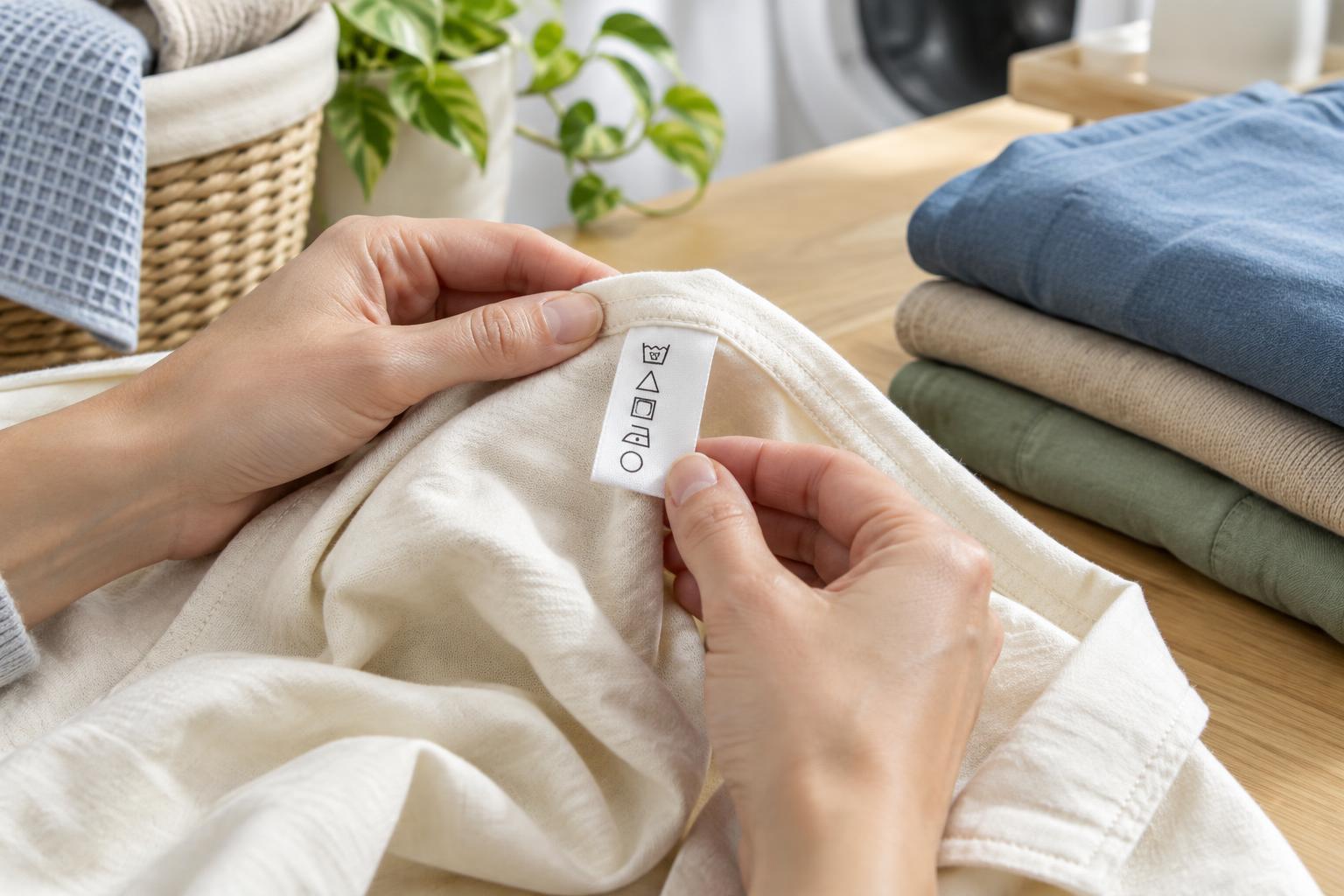
Before washing a new garment, find its care label. It is often sewn into a side seam or near the neckline, though its location varies. Read any written instructions as well as the symbols: a note such as “wash separately” or “reshape while damp” may answer a question the icons do not. If the garment has a removable lining or belt, check those pieces too.
Care symbols usually appear in a familiar sequence: washing, bleaching, drying, ironing and professional cleaning. Not every label includes every symbol, and conventions can vary by country or labeling system. When a symbol is unfamiliar, avoid guessing based on a similar-looking icon. Keep the label attached if possible, or save a clear photo of it before removal.
Read the wash tub first
A tub of water describes washing. A number inside the tub generally gives the maximum wash temperature in degrees Celsius, not a target you must reach. A hand in the tub means hand wash; a crossed-out tub means do not wash. Dots may be used instead of numbers to indicate temperature, depending on the label system.
Look beneath the tub as well. One line typically calls for a gentler wash cycle, while two lines indicate an even milder one. These lines refer to reduced mechanical action, not an extra rinse. For example, a lightweight blouse labeled for a gentle wash may benefit from a suitable delicate cycle and less crowding in the drum. Check the fabric and construction before deciding whether to machine-wash an item marked for hand washing.
Separate bleaching instructions from drying instructions
A triangle concerns bleach. An empty triangle generally permits bleaching, while a crossed-out triangle means do not bleach. A triangle with interior markings may indicate that only non-chlorine bleach is allowed; the precise marking can differ between labeling systems. Bleach instructions matter even when you do not plan to use a separate bleach product, because some stain removers and laundry additives contain bleaching agents. Check the product label before treating a mark.
A square concerns drying. A circle inside the square refers to tumble drying: dots inside it indicate the permitted heat level, and a cross over the symbol means do not tumble dry. Other markings inside the square describe natural drying. Vertical lines commonly indicate line or drip drying, a horizontal line means dry flat, and diagonal marks indicate drying in the shade. These details can help a garment keep its shape. A knit top marked “dry flat,” for instance, may stretch if hung while wet.
Check heat and professional-cleaning symbols
An iron-shaped symbol covers ironing. Dots indicate the allowed heat setting: more dots mean more heat. A crossed-out iron means do not iron. Some labels also prohibit steam, which is worth checking before using a garment steamer or the steam function on an iron. If you are uncertain about a fabric’s response to heat, start with a lower setting and test an inconspicuous area rather than pressing directly at high heat.
A circle on its own refers to professional textile care, not tumble drying. Letters inside the circle give a cleaner more specific instructions about the process. A crossed-out circle means do not dry clean. These symbols are especially useful on structured jackets, lined garments and pieces with trims, where the outer fabric is only one part of the care decision. Tell the cleaner about stains or delicate details instead of trying to interpret the letter as a home-cleaning method.
Turn the symbols into a simple laundry routine
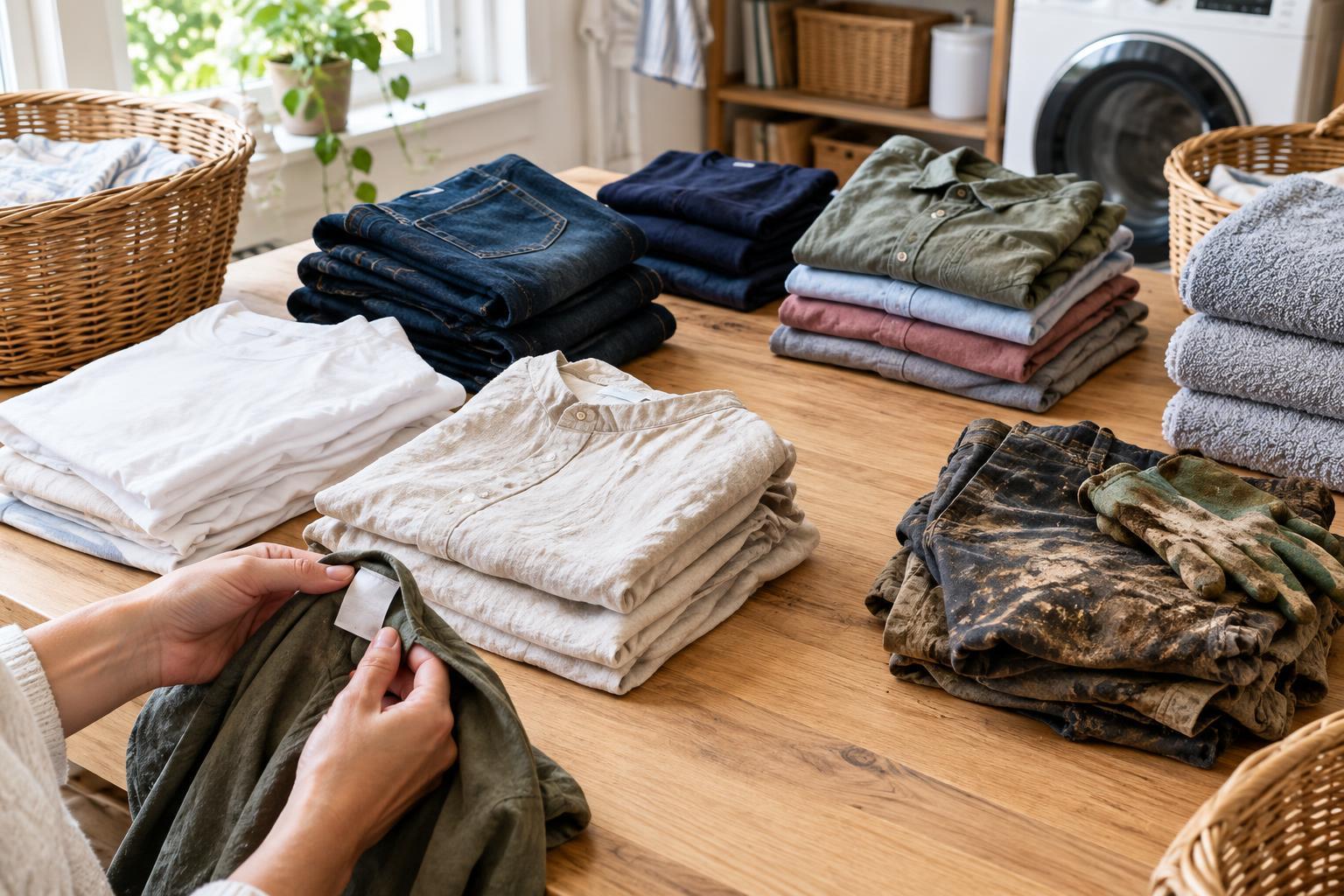
Sort garments by the instructions they can comfortably share, rather than by color alone. A sturdy cotton T-shirt and a delicate dark blouse may both be dark, but they may need different cycles, temperatures and drying methods. Check pockets, fasten closures that could snag, and turn items inside out when that helps protect a printed or textured surface. Follow the most restrictive relevant instruction when washing several compatible pieces together.
If a label is faded or missing, pause before using heat or strong stain treatments. Consider the fabric, lining, trims and how the garment is constructed; a washable fiber does not automatically make the whole item machine-washable. A gentle approach may reduce risk, but it cannot replace a missing instruction. With a little practice, the label becomes a quick checklist: how to wash, whether to bleach, how to dry, whether to iron and when to seek professional care.