Start with one color you already want to wear
A cohesive outfit does not need every piece to match. Often, repeating one color in two places is enough to make the combination feel intentional. The repeated color might appear in a sweater and a bag, a pair of trousers and a scarf, or a patterned shirt and a pair of shoes. The pieces remain distinct, but the shared color gives your eye a connection to follow.
Begin with an item you have already chosen, rather than building the entire outfit around a color rule. If you want to wear olive trousers, for example, try an olive detail elsewhere: a stripe in a shirt, a hair accessory or the trim on a jacket. If that feels too coordinated, let the second appearance be smaller or less prominent. The aim is to create a link, not a uniform.
Use a large piece and a small echo
One easy approach is to repeat the color of a main garment in a smaller accessory. A blue shirt with blue socks is a quiet combination; a burgundy dress with a burgundy bag makes the connection more visible. The second piece does not need to be the same size as the first. In fact, varying their scale can keep the outfit from feeling too carefully matched.
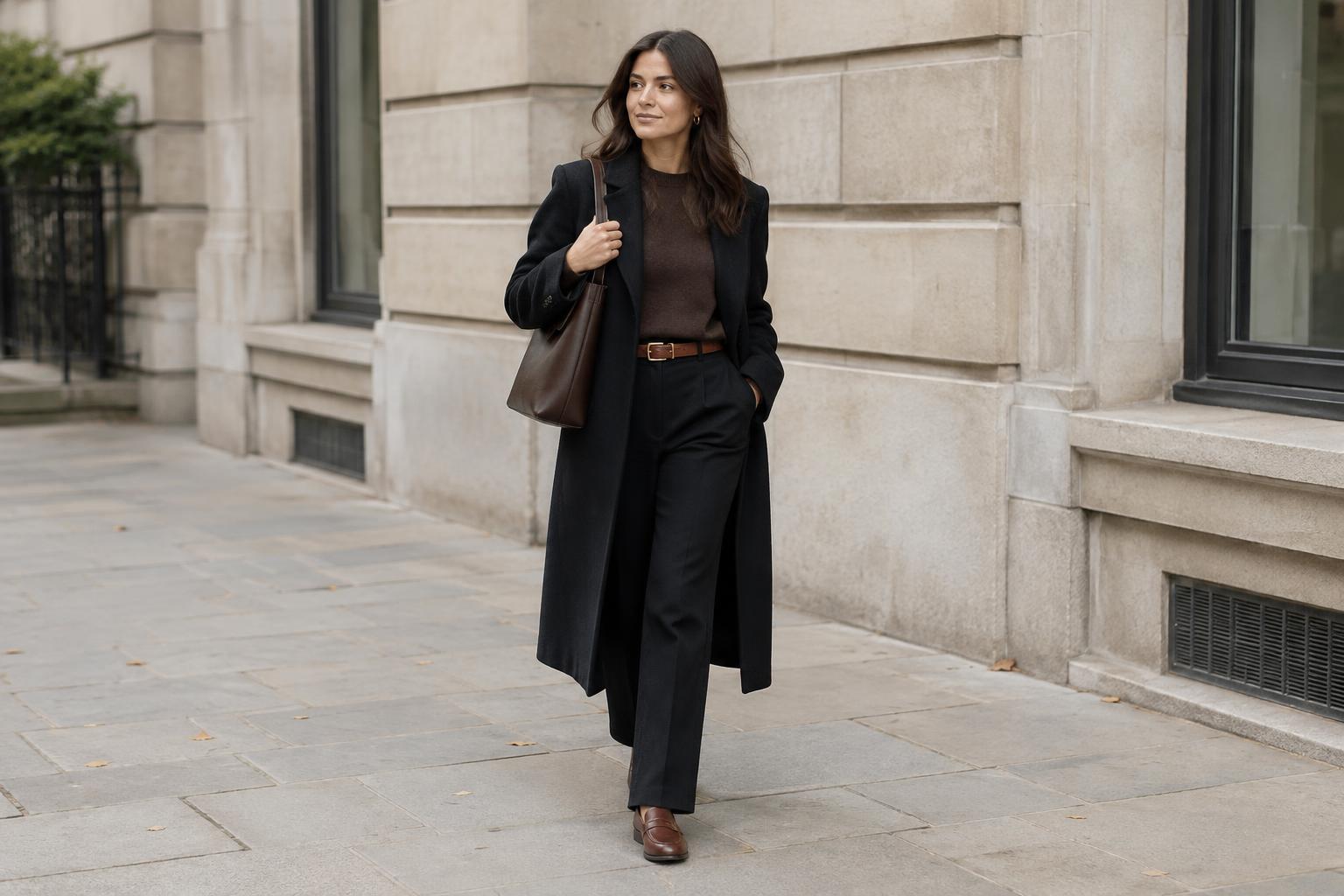
Consider where each color sits, too. Repeating a color near your face and farther down the outfit can help connect the top and bottom: think of a rust scarf with rust-colored shoes, worn alongside a cream shirt and dark jeans. If your accessories are the starting point, reverse the process. A green bag could pick up a green line in a knit top or a green layer worn under a neutral coat.
Let prints do some of the work
A print gives you several possible colors to repeat. Choose one that is visible but not necessarily dominant, then use it in a solid piece. A skirt with a small navy detail can work with a navy cardigan, while a patterned shirt containing tan can connect with tan trousers or a belt. This makes the solid item feel related to the print without requiring another pattern.
You can also use a print as a gentle bridge between colors that might otherwise feel separate. Suppose a scarf contains both blue and warm brown. Wearing it with a blue shirt and brown boots gives those pieces a shared reference point. Step back and look at the whole outfit before adding more echoes; the print may already provide enough repetition.
Match the color family, not every exact shade
Exact matches can be hard to find, and they are rarely necessary. A pale blue shirt and deeper blue cap can still read as a deliberate repeat. What matters is whether the shades look comfortable together in the context of the outfit. If one blue looks slightly green and the other slightly purple, a neutral piece between them may help, or you may prefer to repeat a different color.
Fabric also changes how a color appears. Navy denim, navy wool and navy cotton can look different even when their labels use the same word. Rather than judging two pieces side by side alone, try them on with the rest of the outfit and view them in ordinary light. Differences in texture can add interest, especially when the repeated color is close enough to create a connection.
Keep the rest of the outfit flexible
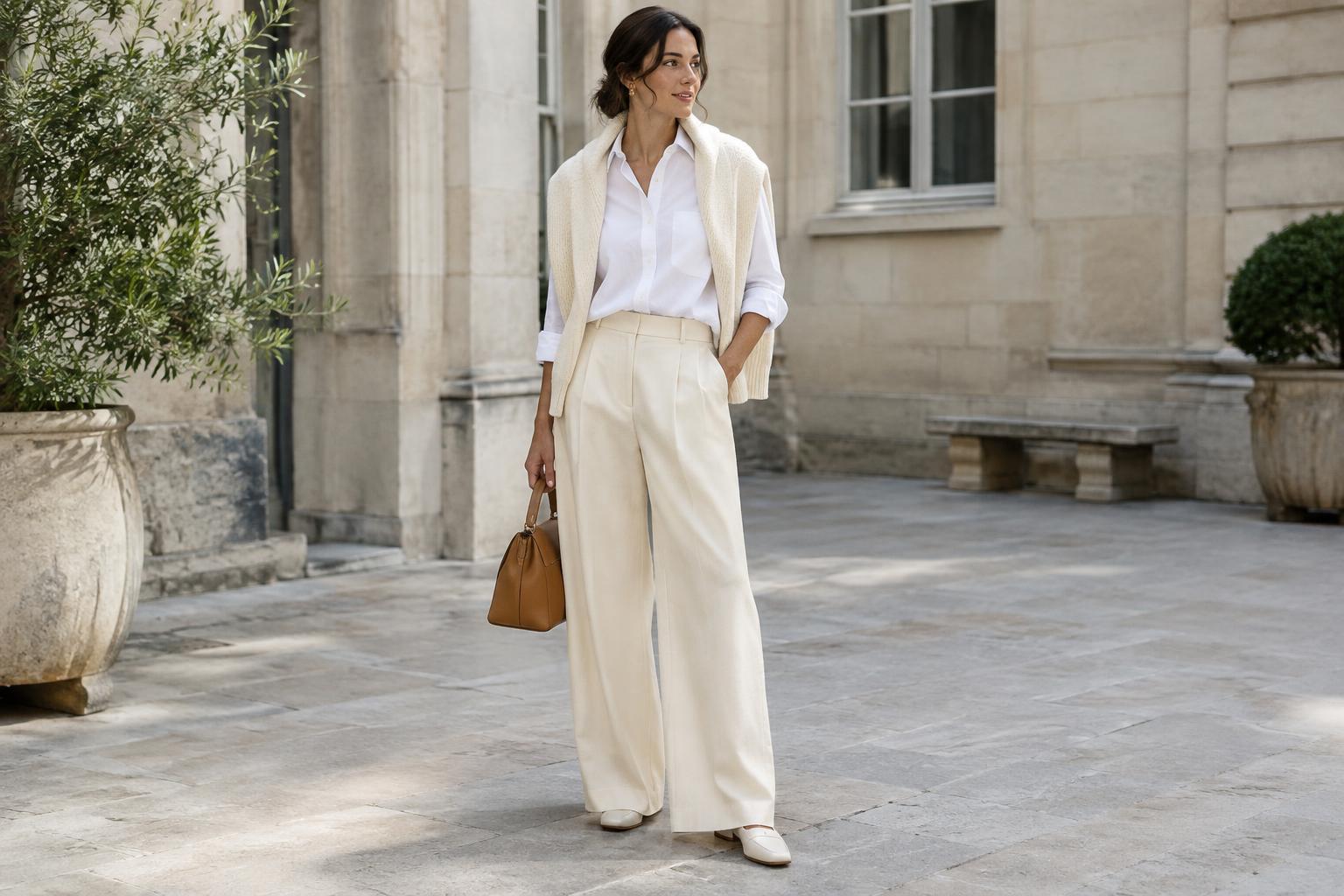
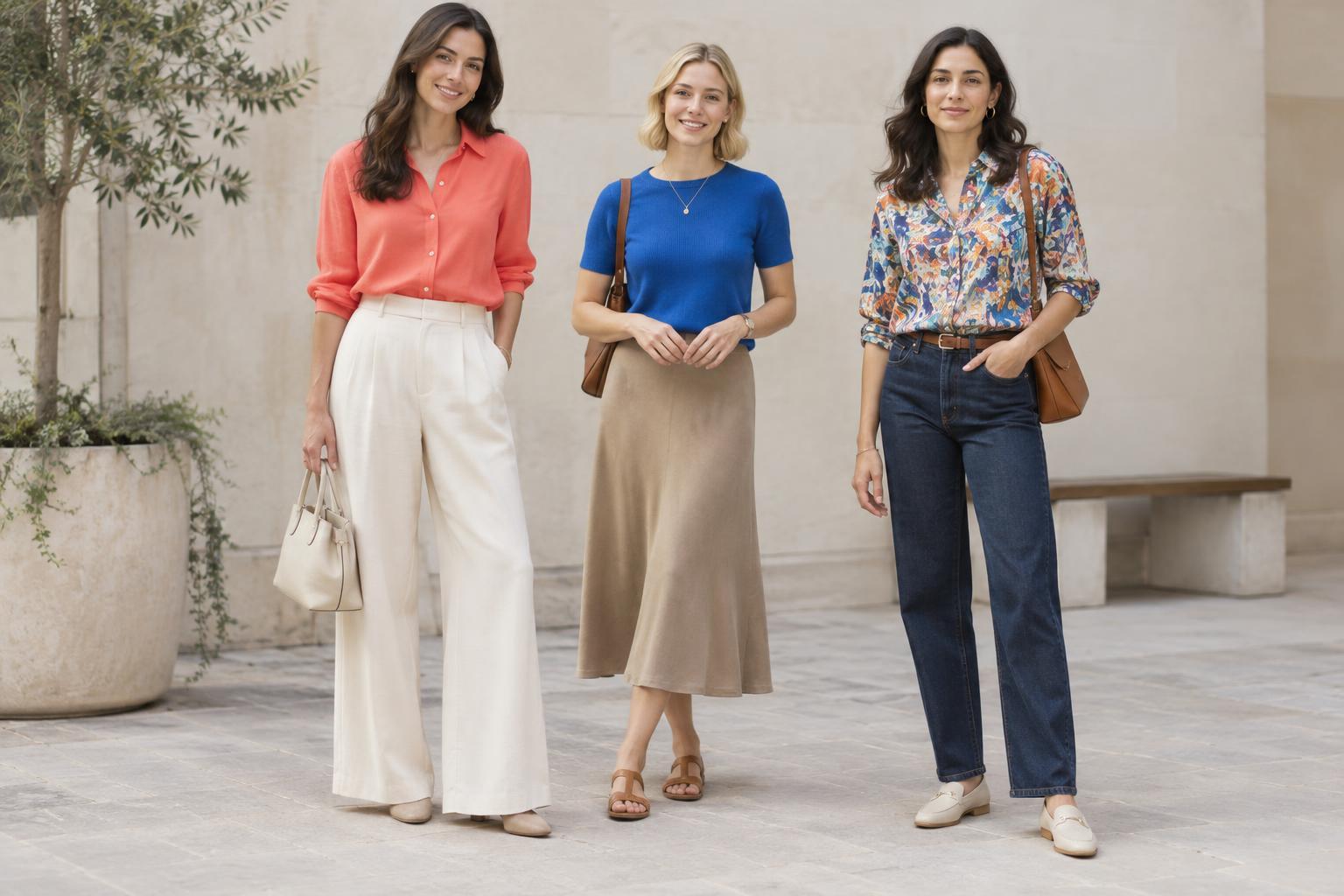
Color repetition is a tool, not a requirement for every accessory. If you repeat red in a top and shoes, your bag can be black, tan or another color that works with the outfit. Neutrals such as cream, gray and denim often give a repeated color room to stand out. You can also repeat a neutral itself: a cream knit and cream sneakers can bring together trousers and a jacket in different colors.
When an outfit feels busy, remove one color echo or make it subtler. When it feels disconnected, look for a color already present that you could bring back once. A sock, scarf, visible undershirt or small accessory may be all you need. With practice, repeating color becomes less about following a formula and more about noticing which pieces make sense together in the clothes you actually wear.