Start with the care label
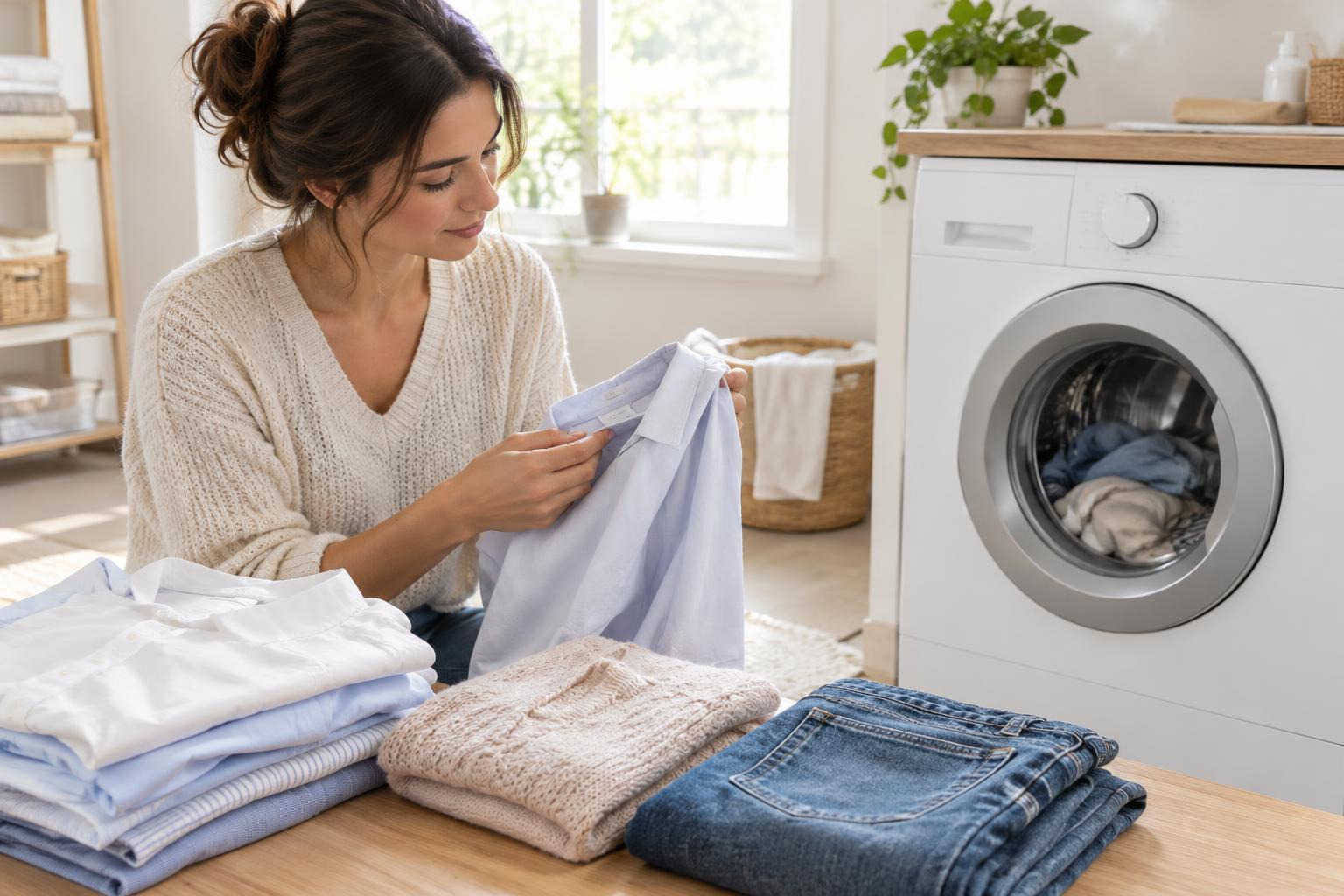
Before sorting by color, check each garment’s care label. It may call for hand washing, a gentle cycle, a temperature limit or no tumble drying. Set aside anything with instructions that do not fit your usual wash. A white silk blouse, for example, does not belong with sturdy white cotton towels simply because the colors match.
Empty pockets, close zippers and fasten hooks that could catch on other clothes. Turn dark garments and items with prints inside out to reduce surface rubbing. A quick check at this stage can also reveal a stain that needs attention before it goes into the machine.
Group colors by how likely they are to transfer dye
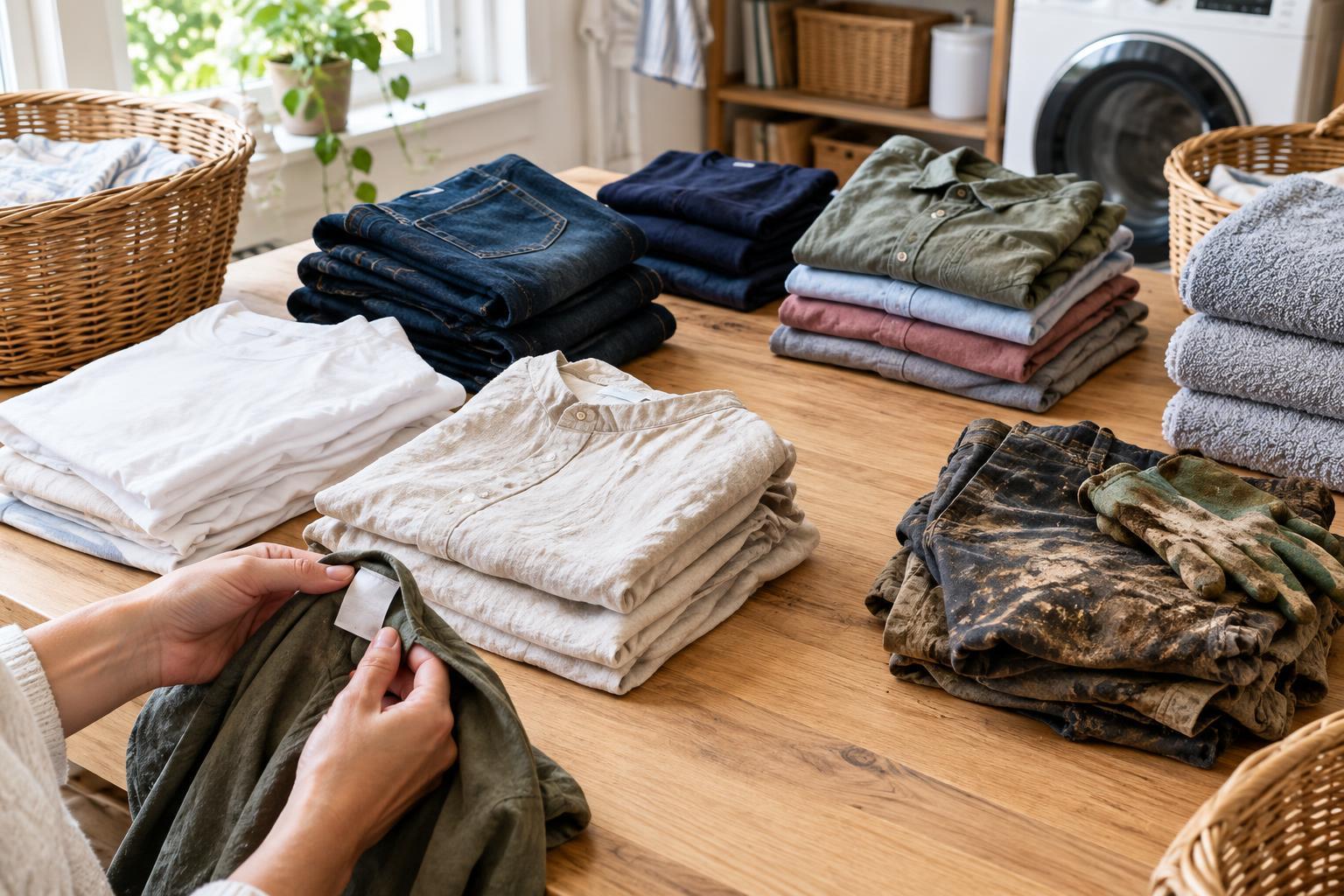
A reliable starting point is three color groups: whites, light colors and dark colors. Whites include plain white items you want to keep bright. Lights can include pale gray, beige, soft blue and other pastels. Darks include black, navy, deep green and similarly saturated shades. Bright reds and strongly colored new garments are worth separating until you have washed them a few times and feel confident their dye is stable.
Color transfer is more likely to matter when a dark or vivid item sits against a much lighter one, especially in a warm or long wash. If you are unsure about a garment, dampen an inconspicuous area and press it with a clean white cloth. Dye on the cloth is a reason to wash it separately. A color-catching sheet may offer a little extra reassurance in a mixed load, but it is not a substitute for separating an item that visibly bleeds.
Match fabrics by weight and wash needs
Within each color group, consider how the fabrics will behave together. Heavy jeans, thick sweatshirts and towels can rub against lighter shirts, fine knits or delicate trims. Towels may also leave lint on smooth dark clothes. Keep sturdy, lint-producing pieces together when possible, and give lightweight or easily snagged garments a gentler group. A mesh laundry bag can protect small delicate items, though it will not make an unsuitable wash cycle safe for them.
Look for compatible care needs rather than trying to make a separate load for every fabric. Cotton T-shirts and casual shirts may wash well together if their labels permit the same temperature and cycle. A loose knit that needs a gentle cycle should not be added to a vigorous load just to fill the drum. Leave enough room for clothes to move; packing the machine tightly can make washing and rinsing less effective.
Separate heavily soiled items from everyday wear
Soil level is the third part of the sort. Clothes worn briefly with little visible dirt usually need less intensive washing than muddy trousers, sweaty workout gear or kitchen cloths. Mixing them can mean choosing a longer or stronger cycle than the lightly worn clothes need. It may also leave heavily soiled pieces insufficiently cleaned if you choose a short cycle for the whole load.
Keep very dirty items apart from lightly worn garments, even when their colors match. Shake or brush off loose dirt before washing, and treat visible stains according to the garment’s care instructions. Avoid rubbing a stain aggressively into delicate fabric. If an item has grease, dye or another stubborn mark, check that it is gone before tumble drying: heat can make some stains harder to remove.
Build a realistic sorting routine
You do not need a basket for every possible combination. For many wardrobes, separate hampers or bags for lights, darks and items needing special attention are enough. On laundry day, divide those groups further only when fabric weight or soil level calls for it. For instance, a dark load might become one wash of jeans and sweatshirts and another of dark shirts and lighter trousers.
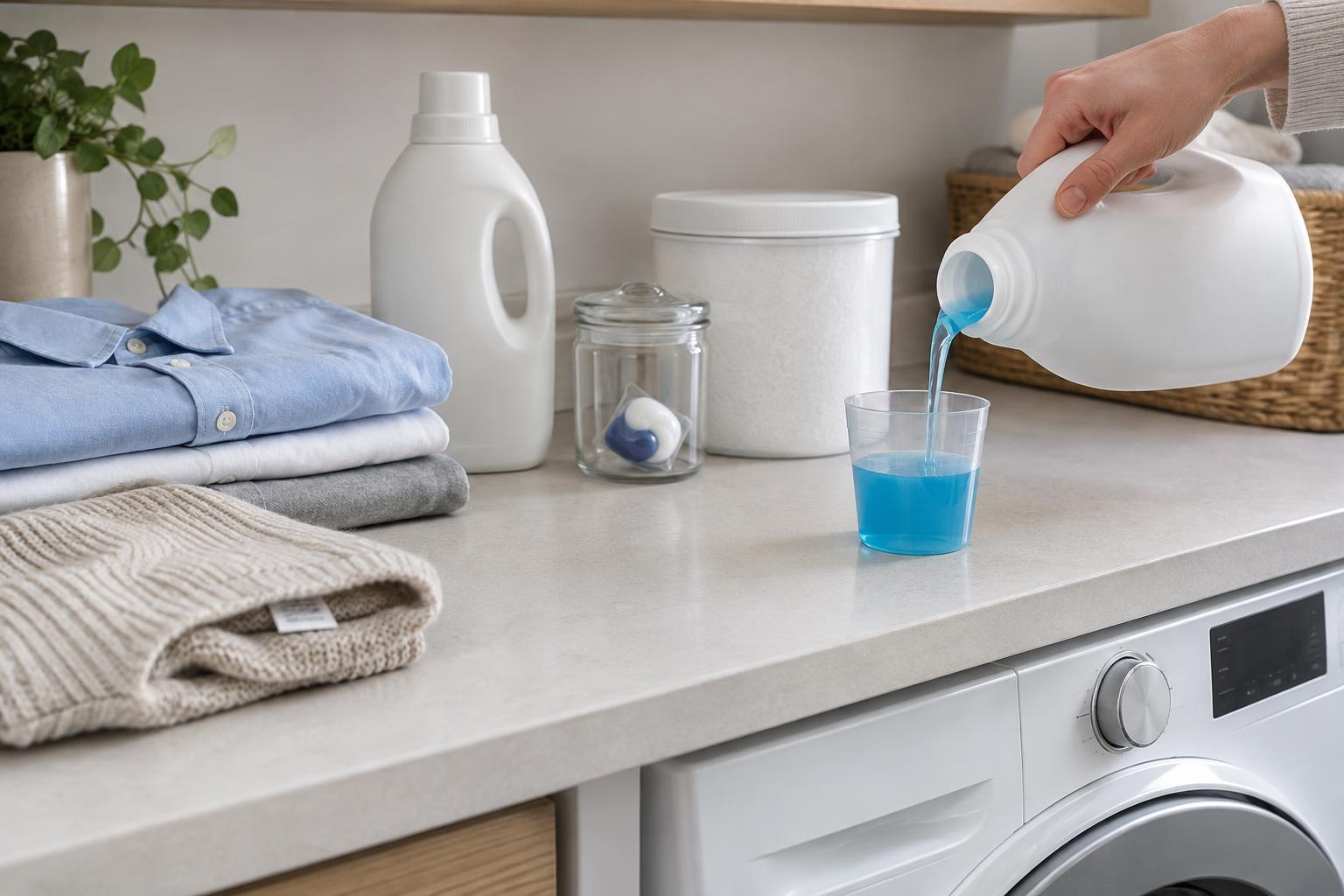
When you have too few pieces for a full load, prioritize the biggest risk. A lightly worn beige cotton top may fit with other pale, label-compatible clothes; a new red top or delicate sweater is less suitable for compromise. Choose the cycle and temperature that suit the most sensitive item in a compatible group, and use an appropriate amount of detergent for the load and machine. Sorting should protect your clothes while still fitting the way you actually dress and do laundry.