Start with fit, not the final look
A comfortable ring stack begins with rings that fit individually. Try each one on its intended finger before arranging a full set. It should pass over the knuckle without a struggle and sit securely without pinching. Then bend your fingers and make a loose fist. A ring that feels fine while your hand is still may press against its neighbors once you start moving.
Finger size can vary during the day, so test a new combination at more than one time if you can. If a stack leaves deep marks, feels difficult to remove or becomes uncomfortable, take it off and reconsider the fit. Stacking should not depend on putting up with pressure.
Give each finger some space
The easiest way to make a stack feel lighter is to avoid filling every available spot. Begin with one ring you enjoy wearing, then add a slim band above or below it. Notice whether the rings sit together naturally or rub when you move. Two rings with flat, smooth sides often nest more comfortably than two pieces with raised details that catch against each other.
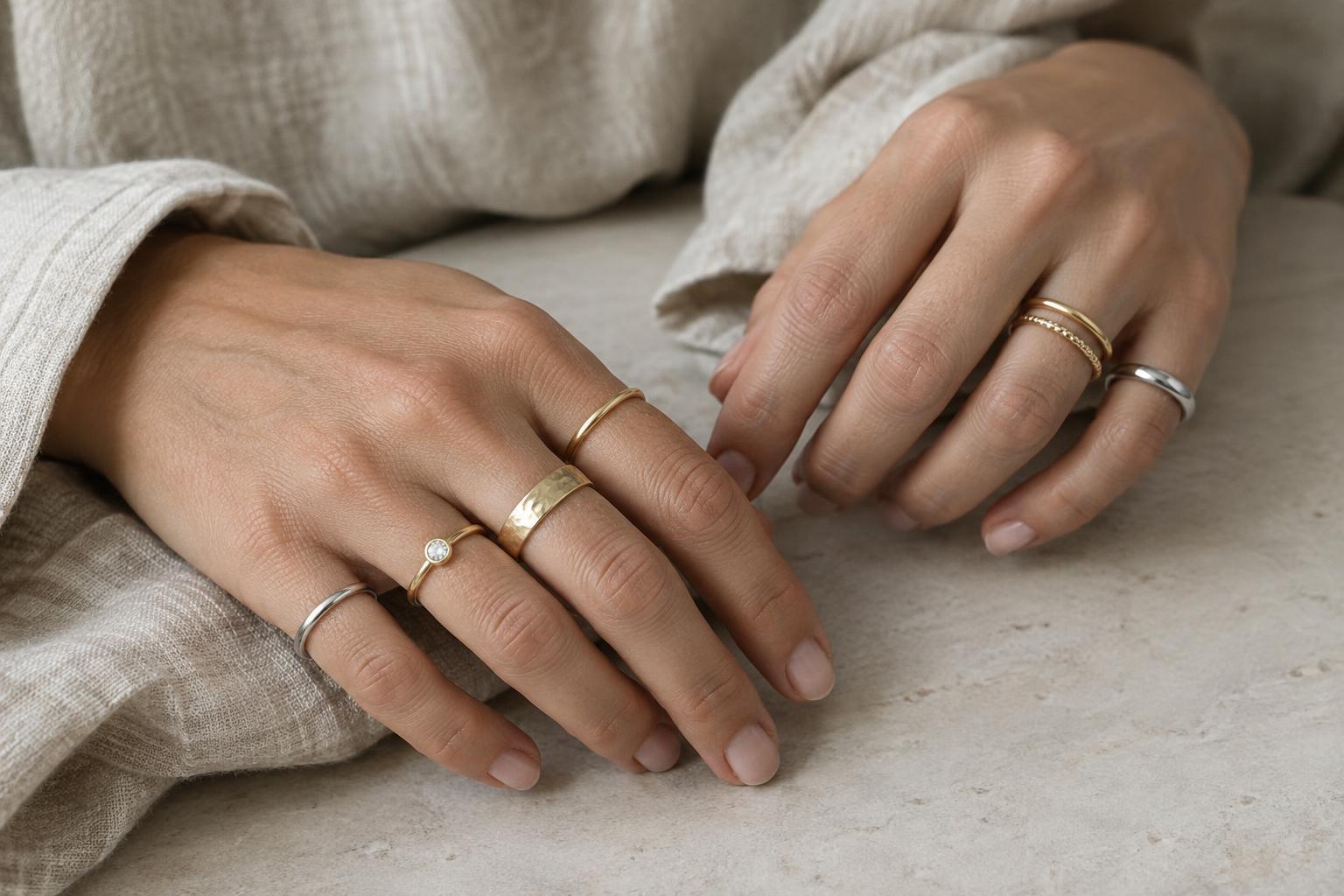
You can also spread a stack across your hand rather than building height on one finger. For example, pair two narrow bands on your middle finger with a single ring on your index finger. This creates a layered look while allowing the fingers to close without bulky rings pressing together. Leave a little visual space, too: an uncovered finger can make the arrangement look intentional rather than unfinished.
Balance widths, shapes and settings
Ring width matters as much as ring size. Several wide bands worn together cover more of the finger, which may make bending less comfortable. If you like a substantial ring, let it be the main piece and surround it with thinner bands. If you prefer a taller stack, choose slim rings and check that the combined width still leaves room for natural movement.
Pay attention to edges and settings. Rounded bands usually feel different from sharply squared ones, even when they are the same width. Stones, sculptural details and open-ended designs can add character, but they may also snag on clothing or touch an adjacent finger. Place a detailed ring where it has room, and use simpler bands beside it. A slight gap between mismatched shapes can look deliberate and feel better than forcing them tightly together.
Make the combination look cohesive
Comfort sets the limits; color and texture bring the stack together. You do not need every ring to match. One straightforward approach is to repeat a detail, such as a smooth finish, a similar band width or the same metal tone, in at least two places. A polished silver band, a textured silver ring and one small gold accent can feel connected without looking uniform.
Try building around the ring you wear most often. If it has a bold shape, add quieter pieces that do not compete with it. If it is a plain band, introduce interest through a different texture or a modest change in height. Look at your hand from a little distance, not only up close. The goal is a stack that works with your everyday outfits and still feels like your own style.
Adjust your stack to the day
A ring arrangement that suits a dinner out may be distracting while you type, carry bags or work with your hands. Keep a simpler version of your stack in mind: perhaps one favorite ring and one slim companion. Test your usual tasks with the rings on. If you repeatedly rotate a ring, pull it away from another or worry about catching it, that is useful feedback rather than something to ignore.
Remove rings when an activity could damage them or make them uncomfortable, and store them somewhere secure. Wiping rings after wear can help keep surfaces clean, while occasional checks for rough edges or loose decorative details help you decide whether a piece still belongs in regular rotation. The best stack is not the one with the most rings. It is the combination you can wear, move in and enjoy without thinking about it all day.