Why test before the first wash?
A new garment can release some of its dye when it gets wet. If you wash it with lighter clothes, that color may transfer to them. A small test cannot guarantee that an entire wash will be trouble-free, but it can reveal an obvious risk before you put a dark shirt beside a pale one.
Testing is especially useful when you are unsure about a strongly colored item, a garment with contrasting light panels, or a piece you plan to hand-wash with other clothes. It takes only a few minutes and lets you make a more deliberate choice about the first wash.
Check the care label and choose a discreet spot
Start with the care label. Its instructions for water temperature and washing method should guide your test. If a garment is labeled dry-clean only, do not wet a spot just to check its dye: water itself may mark or change the fabric. For a washable item, use cool water unless its label calls for a different approach.
Choose a hidden area of the colored fabric, such as an inside seam allowance, the underside of a hem, or the inner edge of a waistband. Avoid testing across a print or a contrasting trim unless that is the part you specifically want to check. The aim is to learn about the dye without leaving a visible patch if the fabric reacts to moisture.
Do a simple white-cloth test
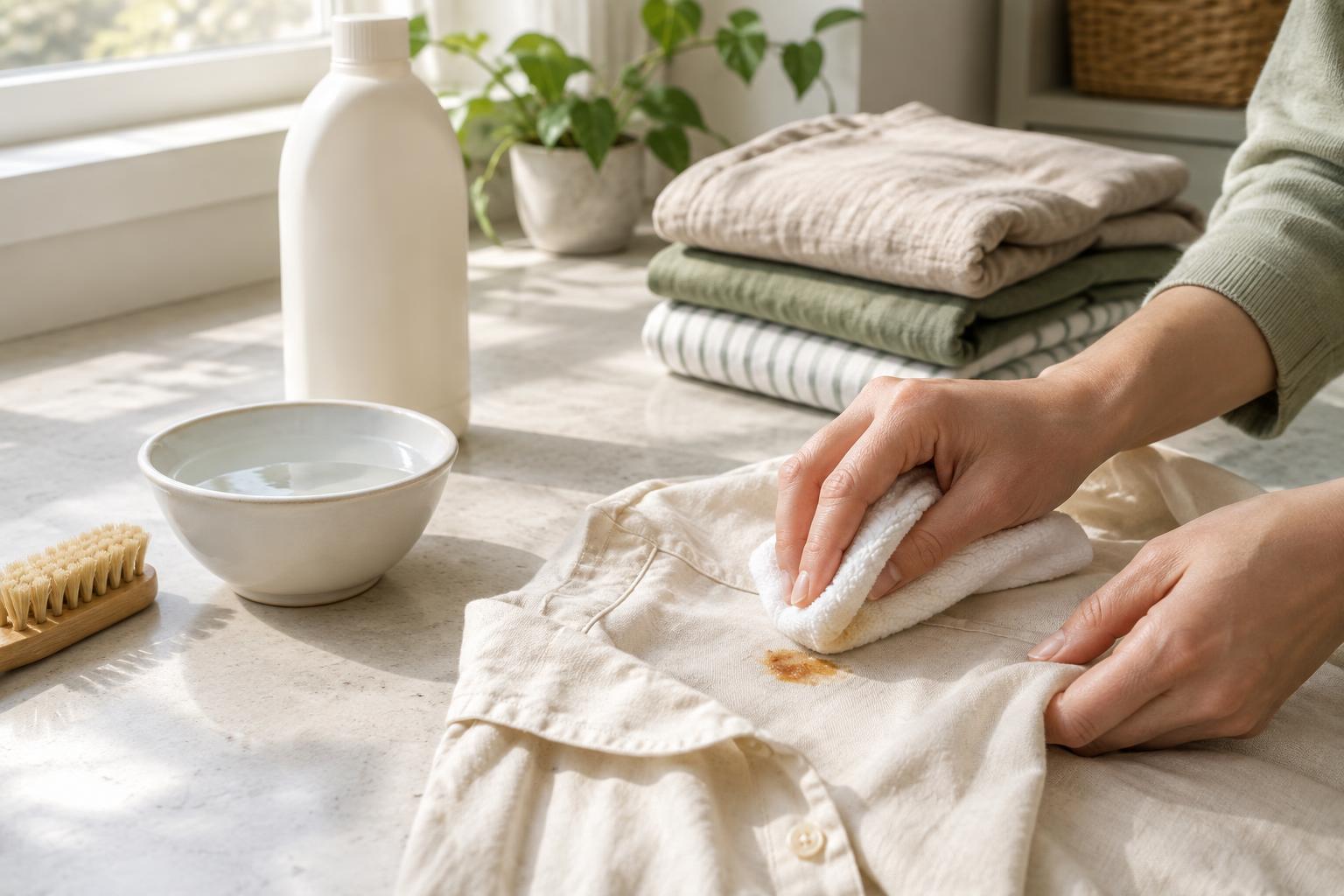
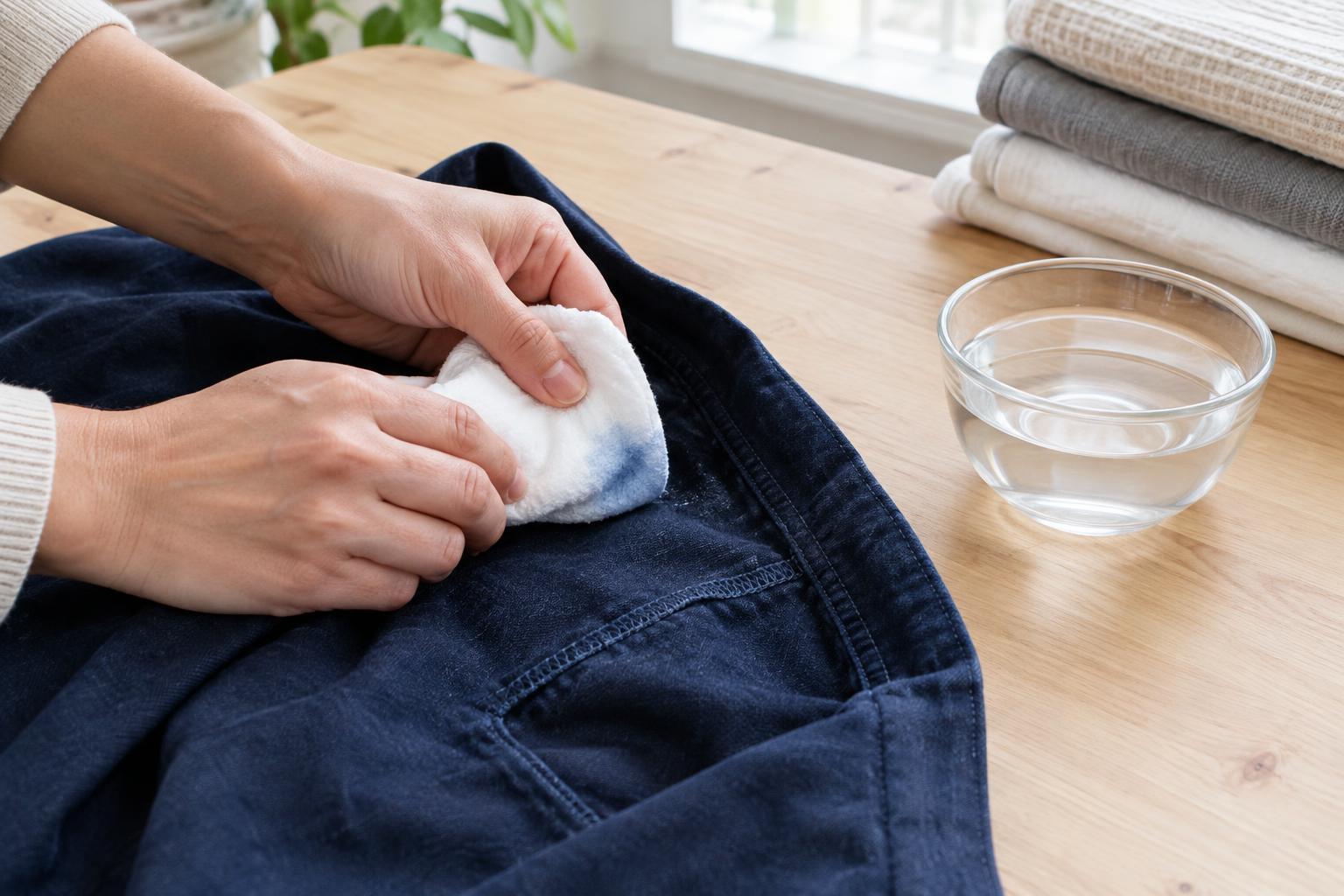
You will need a clean, plain white cloth or cotton pad and a little water. Dampen the cloth so it is wet but not dripping. Press it against the hidden area for about a minute, then gently rub the spot a few times. Use light pressure: vigorous scrubbing may lift fibers or surface dye in a way that does not reflect normal washing.
Lift the cloth and look for transferred color. A clearly tinted patch suggests that the garment may bleed in water. If the cloth stays white, let the test spot dry and check it for a water mark or change in texture. No visible transfer is reassuring, but it is not a promise that no dye will release during a longer wash.
For a garment with several distinct colors, test each color in a separate hidden spot with a fresh white area of cloth. That makes it easier to tell which part, if any, is transferring dye.
What the result means for laundry day
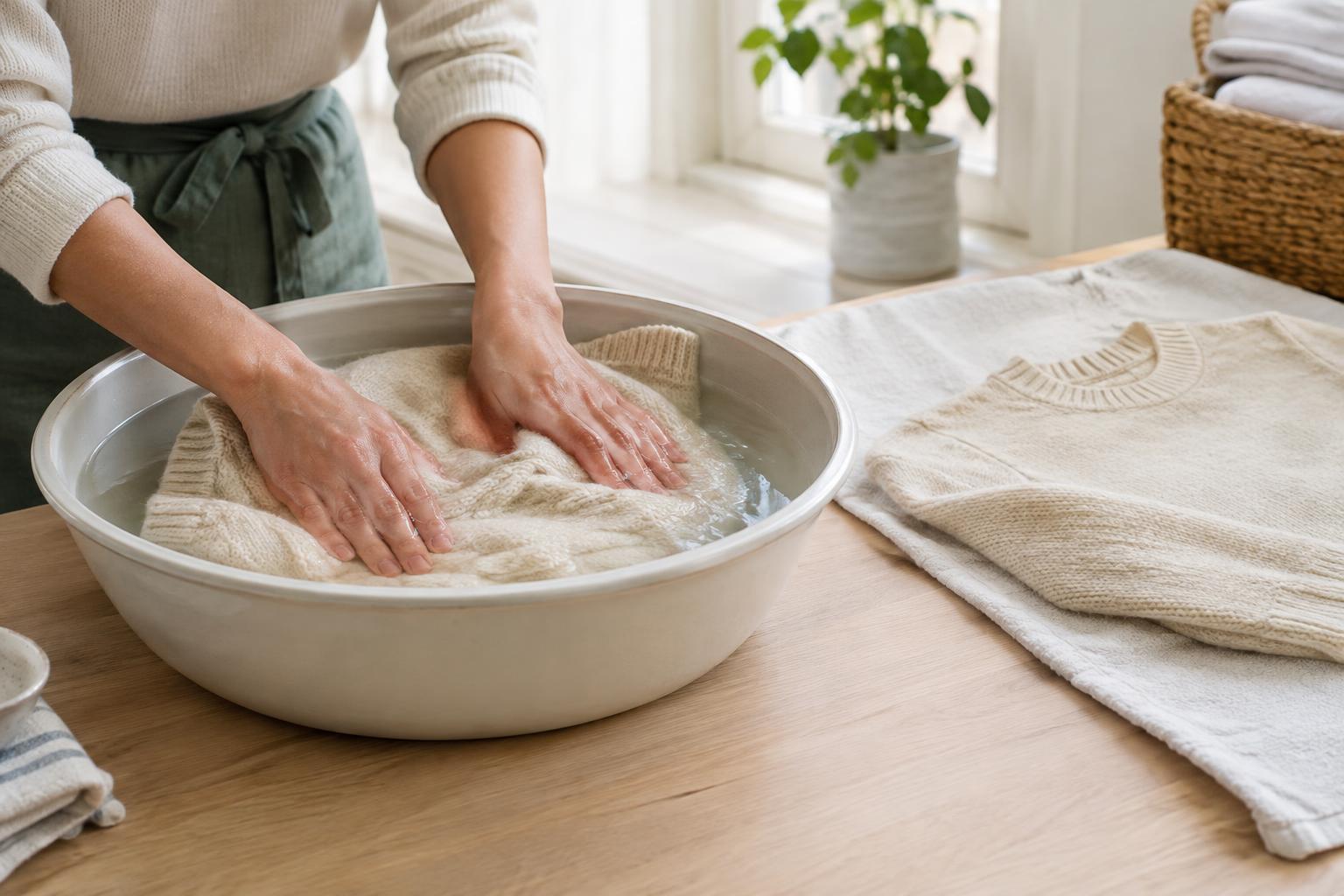
If you see color on the cloth, wash the garment on its own for the first few washes, following its care label. Choose a short, gentle cycle when appropriate, avoid leaving the wet item bundled with other clothes, and dry it according to the label. Check the wash water or a light-colored cloth used during hand-washing before you decide to add the garment to similar colors later.
If the test shows no transfer, it is still sensible to wash a new, deeply colored garment with similar shades at first. A brief spot test uses less water, time, and movement than a full wash, so it may miss dye that comes loose under those conditions. Be particularly cautious with pieces that combine dark and light fabric in one garment: washing them separately from other items protects your laundry, though it cannot prevent transfer between panels on the garment itself.
Watch for dye transfer while wearing it, too
Color can rub off even when a garment is dry, especially onto light accessories or upholstery. To check for this, rub a clean, dry white cloth gently over a concealed area. Then repeat with a barely damp cloth if the care label permits. If either cloth picks up color, take care when pairing the item with a pale bag, scarf, or layer.
Keep the two results in mind: a wet test helps you plan washing, while a rubbing test helps you plan an outfit. Neither requires special equipment, and both give you a practical reason to handle a new garment cautiously rather than relying on its color alone.