Start with the care label and the sweater’s condition
The safest washing method depends on the sweater, not just the word “wool” on its tag. Check the care label for hand-washing, machine-washing or dry-cleaning instructions. A machine-washable wool sweater may have been made or treated to tolerate a gentle cycle; a delicate knit with no such guidance deserves more caution. If the label says dry clean only, follow it rather than testing a home wash on a garment you would hate to lose.
Washing is not always the first step. If a sweater has no visible soil and only needs freshening, let it air out away from direct sun before putting it away. Treat a small mark promptly according to the garment’s care instructions. Less frequent washing means fewer chances for friction, stretching and changes in shape.
Understand what causes shrinking and felting
Wool fibers can catch on one another when a sweater is exposed to moisture, warmth and movement. Vigorous rubbing or a rough wash cycle may encourage those fibers to lock together, making the fabric denser and smaller. This is felting, and it can be difficult to reverse. Heat can also contribute to shrinkage, especially in a dryer.
The practical rule is to keep the process cool, gentle and consistent. Avoid hot water, hard scrubbing and abrupt changes in water temperature. Prepare a clean basin or sink before you begin so the sweater can move from washing to rinsing without unnecessary handling.
Hand-wash with minimal movement
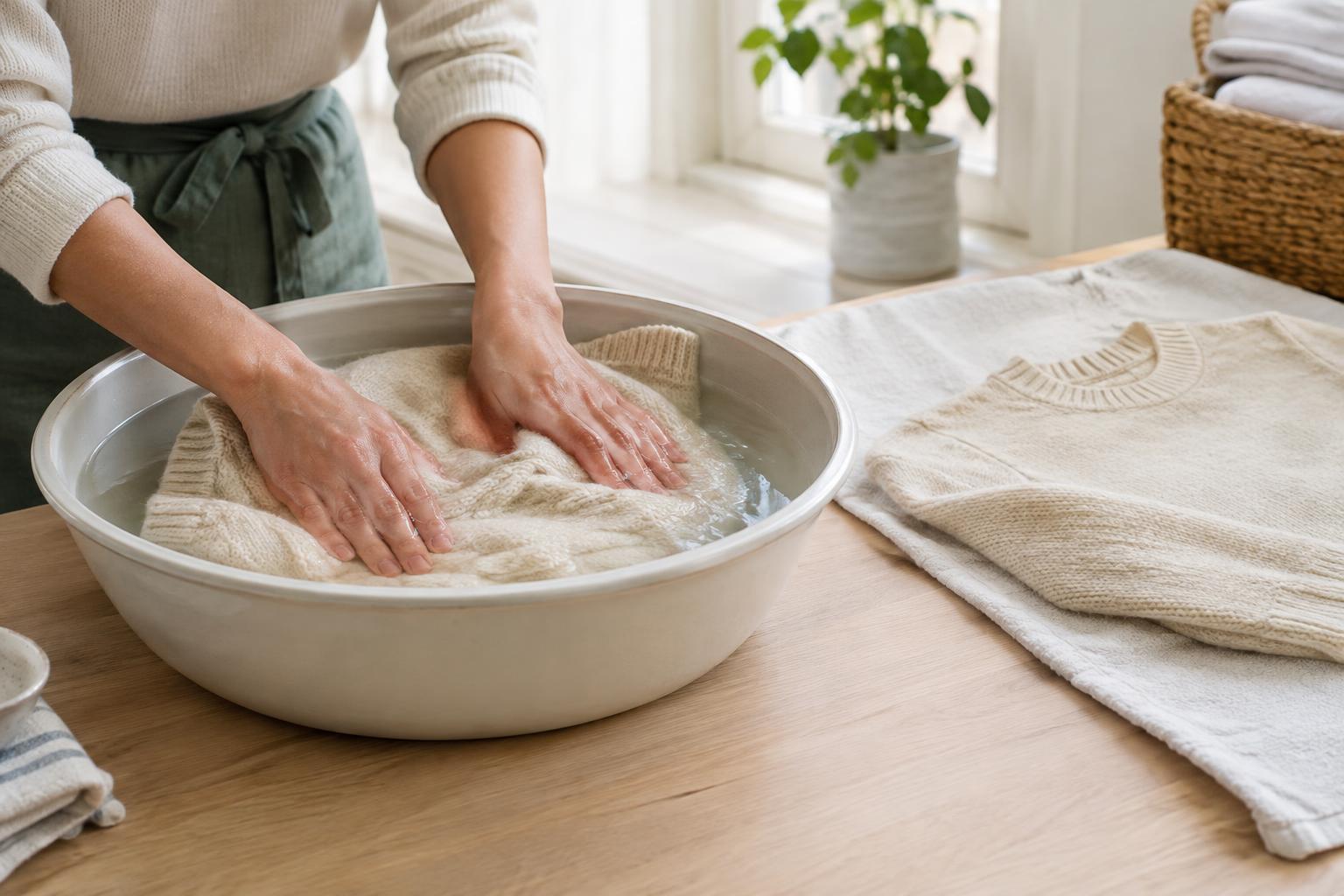
Fill a clean basin with cool water and add a small amount of detergent labeled suitable for wool or delicates, following its dosage directions. Submerge the sweater and press it gently to wet the fibers. Let it soak briefly if the care label allows, then lift and press the fabric through the water a few times. Do not twist, scrub or rub one part of the knit against another.
Drain the basin and rinse with cool water at roughly the same temperature as the wash water. Press gently until the detergent is removed; several light rinses are better than one forceful one. To remove excess water, support the sweater with both hands and press it against the side of the basin. Never wring it out: a wet knit is heavy and can stretch under its own weight.
Use a machine only when the label allows it
If the label permits machine-washing, choose a wool or delicate cycle with cool water and a suitable detergent. A mesh laundry bag can help reduce rubbing against other garments. Wash the sweater with a small load of similarly delicate items, rather than with heavy jeans, towels or anything with exposed fasteners that might snag the knit.
Machine settings vary, so a cycle called “delicate” is not automatically right for every sweater. Check the temperature and spin options before starting, and follow any more specific limits on the label. If you are unsure whether the machine will handle the knit gently enough, hand-washing gives you more control.
Dry flat, reshape and store with care
After washing, lay the sweater on a clean towel, roll the towel up and press to absorb water. Unroll it and place the sweater flat on a dry towel or a mesh drying surface. Smooth the body, align the seams and ease the sleeves back into their usual shape without pulling. Keep it away from a radiator, direct heat and strong sunlight, and turn it over if needed so it dries evenly.
Do not hang a wet wool sweater: its weight can pull the shoulders and hem out of shape. Wait until it is fully dry before folding it for storage. A gentle wash cannot guarantee that every knit will remain unchanged, but following the label and limiting heat, friction and stretching gives the sweater its best chance of keeping its fit.