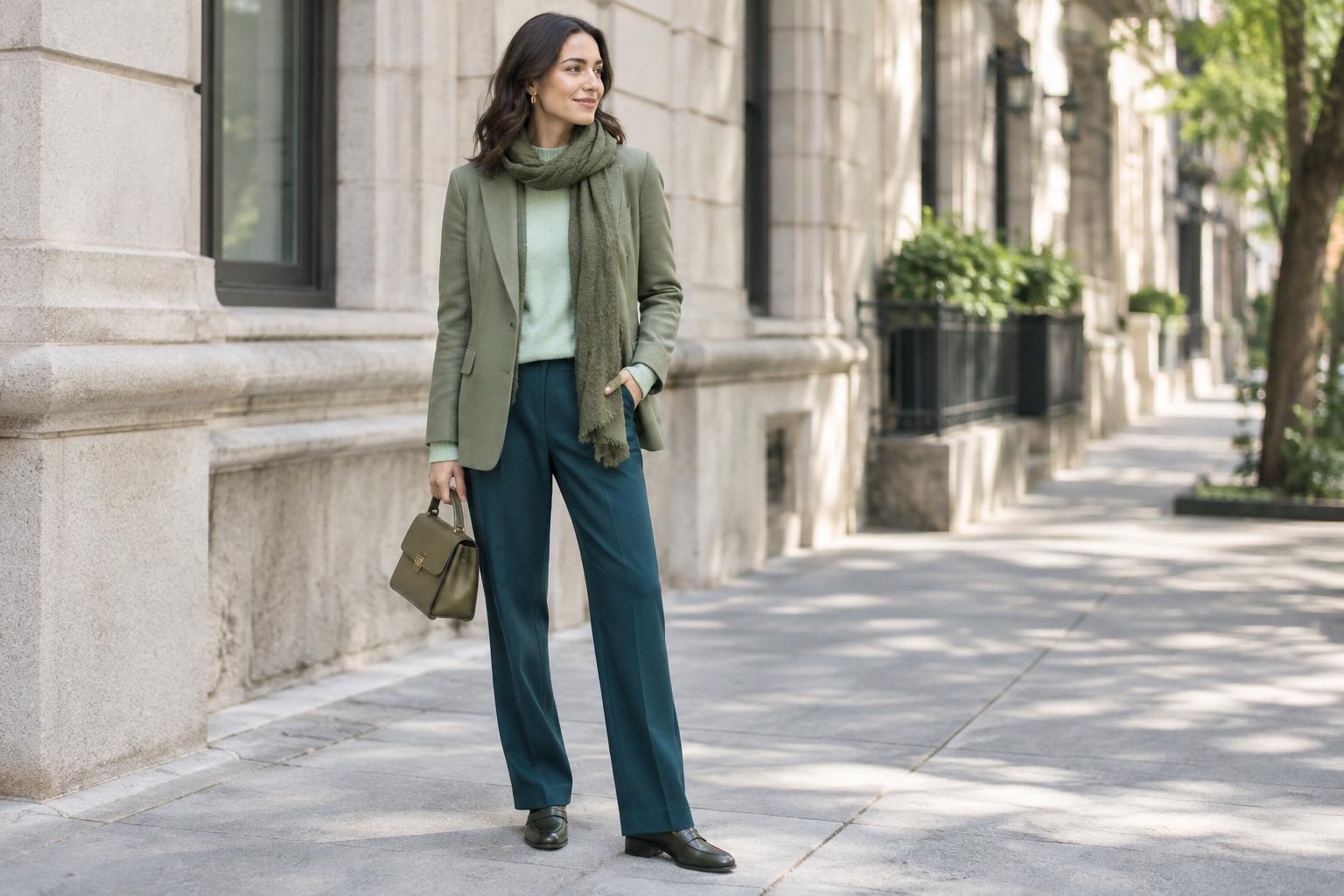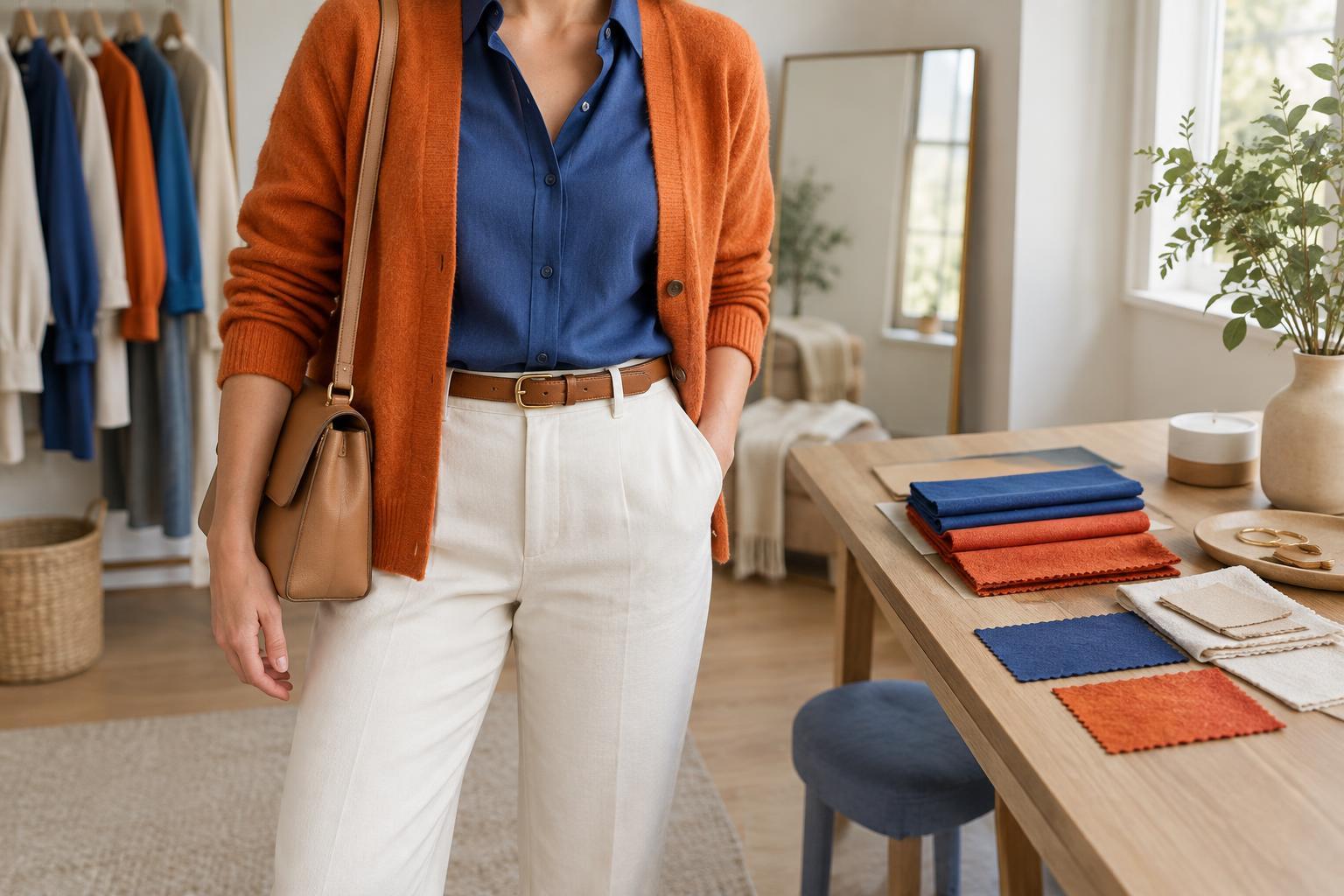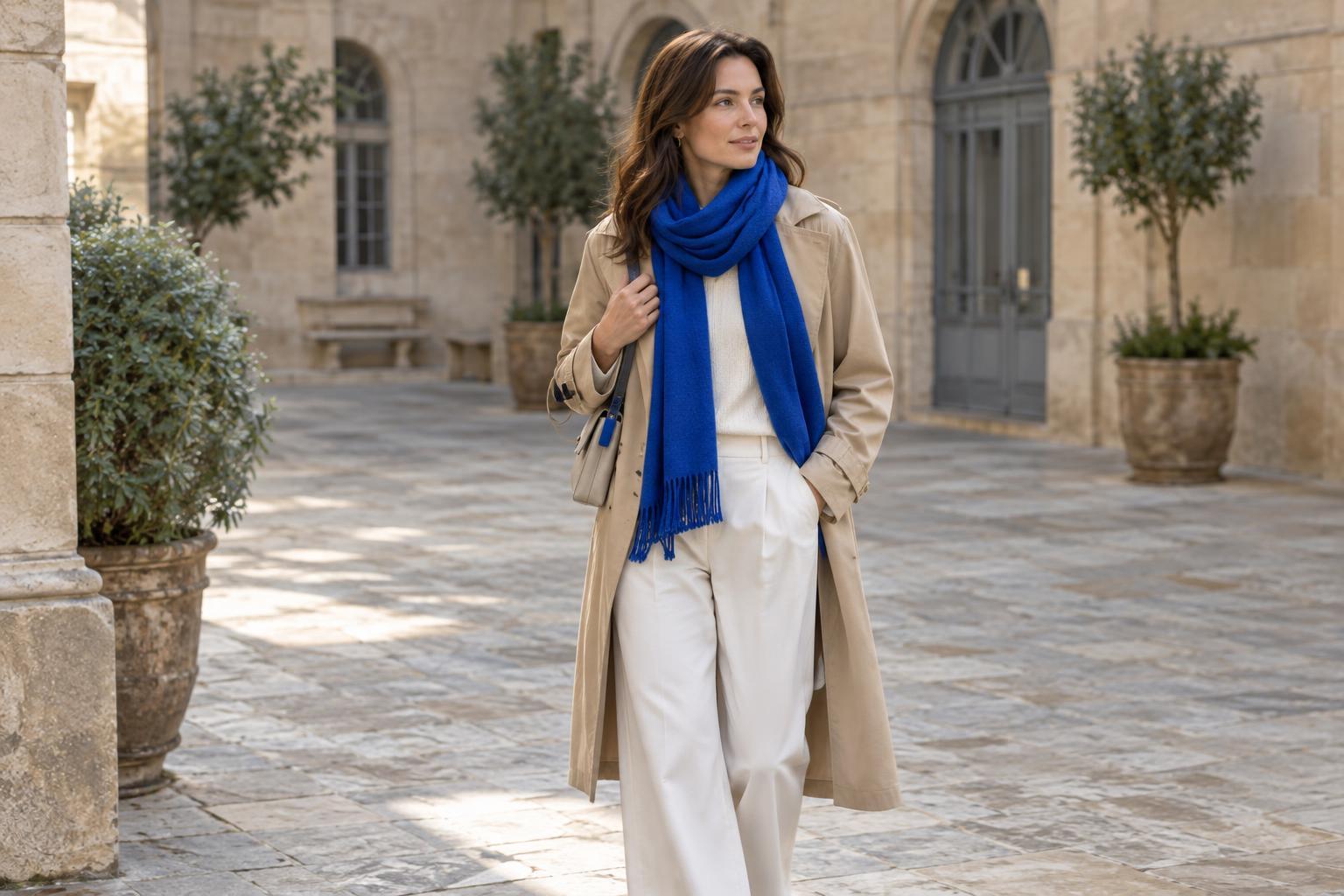
Start with the neutrals you already wear
Bright color can feel like a big change when your wardrobe is mostly black, white, navy, gray, beige, or brown. You do not need to replace those pieces. They can give a vivid item a familiar setting, making it easier to wear on an ordinary day. The simplest place to begin is an outfit you already like: your usual trousers and shirt, for example, with one colorful layer or accessory added.
Notice which neutrals you reach for most. A bright blue knit can look crisp beside white and navy, while a tomato-red bag can bring energy to tan and denim. These are starting points, not rules. Hold the colors together in daylight if you can, and pay attention to whether the combination feels balanced to you. Your own closet is a better guide than a color chart you would never use.
Give one bright piece the lead
When you are new to vivid shades, let one item be the focus and keep the rest of the outfit quiet. Try a green shirt with charcoal trousers and simple shoes, or a bright skirt with a cream sweater. A single clear point of color makes the outfit look deliberate without asking you to coordinate several unfamiliar shades at once.
The size of that colorful item can match your comfort level. Socks, a scarf, or a small bag offer a low-commitment experiment. A sweater or pair of trousers makes a stronger statement but can still fit easily into a neutral wardrobe. If a color feels overwhelming near your face, wear it farther away as a skirt, bag, or shoe. You can enjoy the shade without making it the first thing you see in the mirror.
Use proportion and repetition to make color feel settled
A bright piece does not have to take up half an outfit to have an effect. A narrow strip of color beneath an open jacket, a cuff showing at the wrist, or a vivid belt against dark trousers can be enough. Changing how much color is visible helps you wear the same piece in different ways. A bright shirt buttoned on its own feels bolder than that shirt under a navy cardigan.
Repetition can also make a color feel at home. If you wear a cobalt top, a small blue detail in a scarf or patterned sock can echo it. The shades do not need to match exactly; the point is to create a gentle connection. Keep the echo subtle so it looks relaxed rather than overly coordinated. One bright item often needs no partner at all, especially when its shape or texture already gives the outfit interest.
Let fabric and finish shape the mood
Color is only part of what you notice in a garment. A bright shade in a soft cotton T-shirt may feel casual, while the same shade in a smooth, structured jacket may appear more prominent. Matte fabrics tend to read differently from shiny ones, and a chunky knit has a different presence from a fine layer. If a color seems too intense, try it in a texture that suits the clothes you wear most often.
Your neutral pieces can help with that choice. Denim and washed cotton make many vivid colors feel easygoing; tailored trousers and a neat jacket give them a sharper frame. For a relaxed weekend, try an orange sweatshirt with faded jeans and a gray coat. For a tidier outfit, wear a bright blouse beneath a dark blazer, letting the collar or neckline show. Both outfits use the same idea at different volumes.
Build a small color habit, not a new wardrobe
Before buying a bright piece, imagine at least a few ways to wear it with clothes you own. A colorful sweater is more useful if it works with your favorite jeans, a pair of work trousers, and a coat you wear often. Consider the garment’s fit and care needs as carefully as its color. A shade you love is unlikely to become an everyday favorite if the piece itself is uncomfortable or difficult to maintain.
Try wearing a new color at home first, then on a familiar outing. You may find that you prefer a vivid accessory every day, or that one bright garment is enough variety for now. Either approach works. The aim is not to make your wardrobe louder; it is to give yourself more choices while keeping the dependable outfits that already feel like yours.