Choose what you want people to notice first
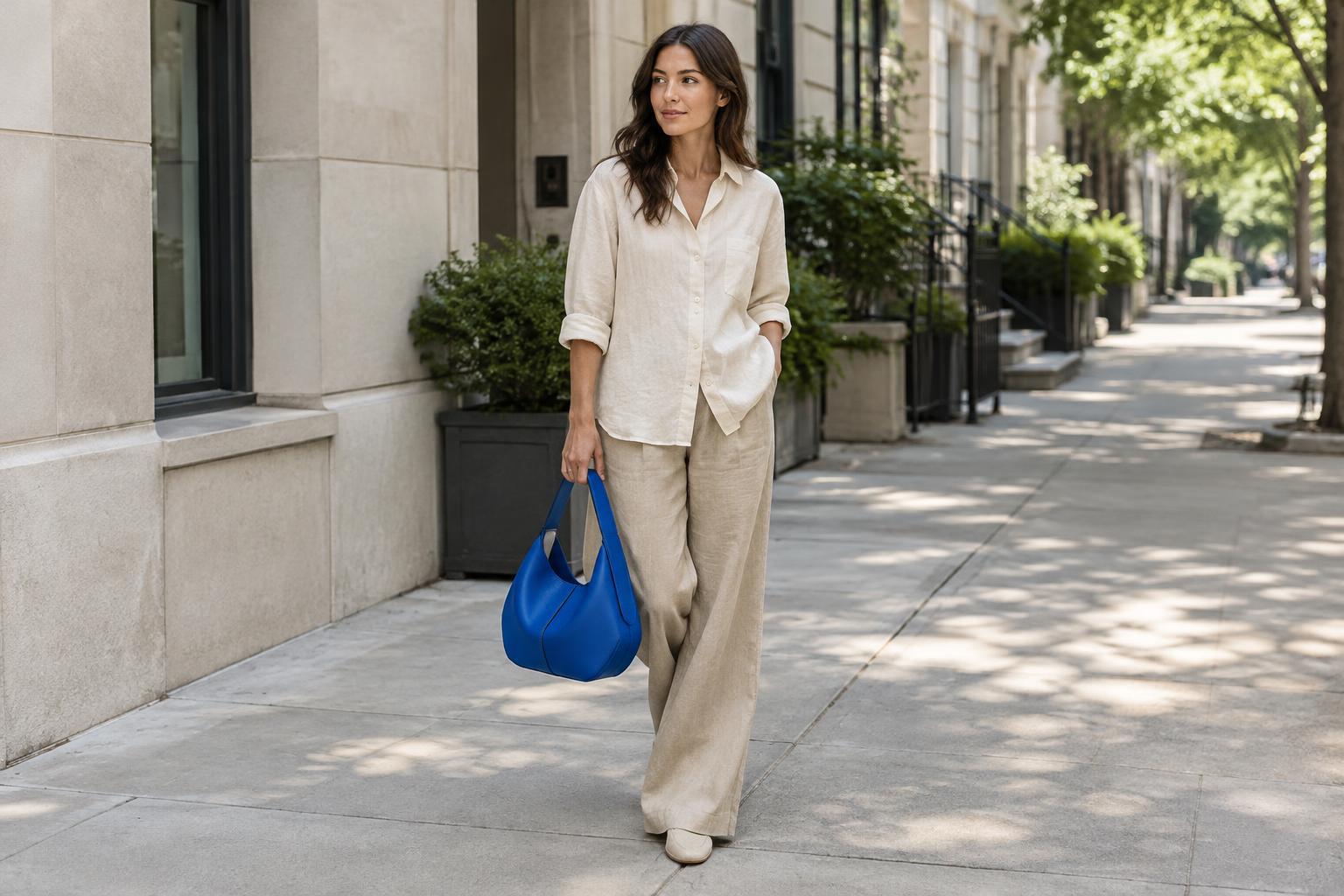
A statement accessory is a piece that draws attention through its color, size, shape, pattern or texture. It does not have to be expensive or dramatic. A bright green bag against a dark outfit, a sculptural silver cuff or a patterned silk scarf can each be the most noticeable part of a look. Before getting dressed, decide which single item will play that role.
Then give it a clear place in the outfit. If you choose oversized earrings, wear your hair in a way that lets them show and consider leaving the necklace at home. If your focal point is a patterned bag, a simple top and trousers give its colors room to stand out. This is not a rule against wearing other accessories; it is a way to give each piece a job. Supporting pieces can add polish without competing for the same attention.
Build a quiet base around it
An easy starting point is an outfit made from familiar shapes and a limited color palette. Straight-leg jeans, a plain knit and a relaxed coat, for example, can make a vivid scarf feel intentional rather than busy. A black dress can provide a backdrop for a chunky necklace, while a white shirt and navy trousers can anchor a brightly colored belt. Simple does not mean dull: the cut and fit of the clothes still contribute to the look.
You can also connect the accessory to one small detail elsewhere. A bag with a warm red pattern might sit well beside brown shoes, or a blue scarf might echo the tone of your denim. The colors need not match exactly. Repeating a general color family or mood is often enough to make the accessory feel like part of the outfit rather than an addition made at the last minute.
Balance scale, shape and texture
Think about how much space the accessory occupies. A large tote has a different effect from a small, vivid handbag, even when both are colorful. A wide belt changes the outline of a dress, while a narrow belt mostly adds a line of contrast. If an accessory has both a bold shape and a strong pattern, try pairing it with cleaner clothing shapes so the overall silhouette remains easy to read.
Texture offers another way to create balance. A glossy bag can bring contrast to a matte cotton shirt and tailored trousers. A thick, textured scarf can add interest to a smooth coat. When the clothes already have several prominent textures, such as a fuzzy knit, distressed denim and a patterned jacket, a statement accessory may have less space to shine. You do not need to remove every other interesting detail, but notice whether the pieces are working together or asking for attention separately.
Adjust the placement for your day
Where you wear the accessory matters as much as what it looks like. Bold earrings frame the face; a belt draws the eye toward the waist; colorful shoes add interest near the hem of an outfit. If a necklace feels too strong beside a printed top, try moving the focal point to a bag or shoes instead. Changing its location can make the same outfit feel more balanced without changing your personal style.
Practicality also helps a statement piece feel natural. If you commute with a bag, make sure it holds what you need and is comfortable to carry. If you plan to wear a large bracelet while working at a desk, check whether it catches on your sleeves or gets in your way. An accessory is easier to wear confidently when you are not constantly adjusting it.
Use a quick check before you leave
Once dressed, step back from the mirror and ask where your eye goes first. If it lands on your chosen accessory, the outfit has a clear focal point. If your eye jumps between a printed shirt, bright shoes, large earrings and a colorful bag, try removing or changing just one item. Often a small edit is more effective than starting over.
Finally, make room for your own taste. Some people enjoy a sharper contrast; others prefer a quieter look. The goal is not to hide everything except one accessory, but to make a deliberate choice about what leads the outfit. Begin with pieces you already wear comfortably, add one item with character, and adjust the balance until the result feels like you.