Start with the pattern, then choose a solid
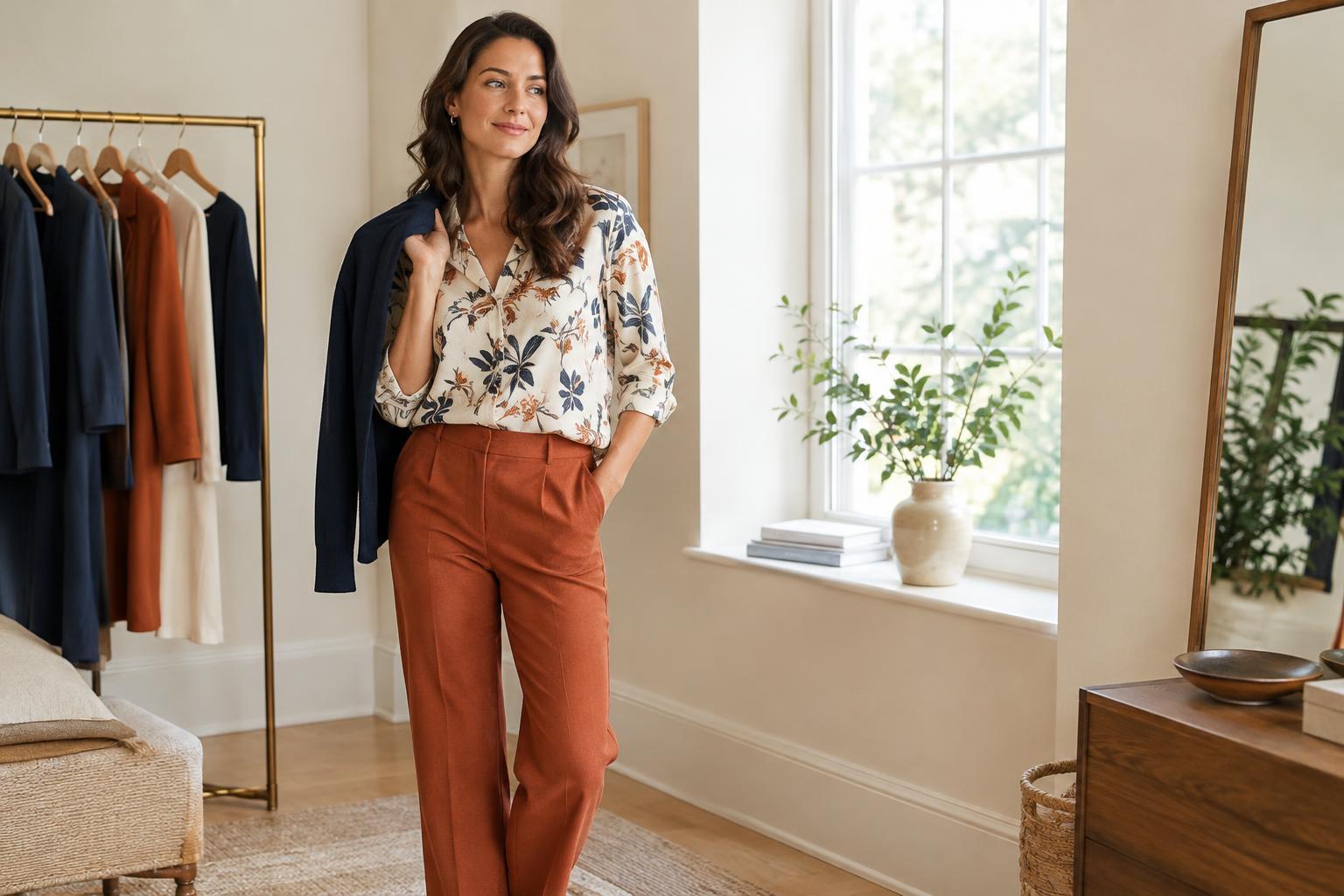
A pattern already contains a color plan. Before choosing the rest of your outfit, look at the garment and identify its background color and one or two smaller accent colors. Pairing it with a solid in the background color usually creates a calm, connected look. Pulling out an accent color makes the outfit feel more deliberate and draws attention to that part of the print.
For example, a blouse with a cream background and small blue flowers works easily with cream trousers. Blue trousers would make a stronger statement, while dark denim would echo the flowers more subtly. You do not need an exact match: colors that are close in depth and warmth often look cohesive together. If matching feels difficult, try a neutral solid such as navy, charcoal, white, or brown and judge the combination in natural light.
Let one piece lead
The simplest way to wear a print is to make it the main point of interest. Give a bold striped shirt room to stand out with plain trousers and uncomplicated shoes. If the pattern is on your skirt or trousers, keep the top solid. This approach works especially well when the print has several colors, a large motif, or strong contrast.
Think about how much of each item is visible. A patterned scarf takes up less space than a patterned coat, so it can sit comfortably beside a brighter solid. A full-length printed dress has more visual weight; a single-color cardigan or jacket can give the eye a place to rest. Leaving one part of the outfit quiet does not make it dull. It helps the pattern look intentional.
Adjust contrast to suit the occasion
Contrast is the difference between the lightest and darkest parts of an outfit. A black-and-white print next to a black jacket looks crisp because the jacket repeats one of the print’s strongest colors. The same print with a soft gray jacket feels gentler. Neither is more correct; the choice depends on the effect you want and how prominent you want the pattern to be.
Color contrast matters too. A green patterned shirt with solid green trousers makes a relatively unified outfit, while pairing it with a contrasting color gives the shirt more energy. For an everyday starting point, choose a solid that is less vivid than the brightest color in the print. If the result seems flat, add interest through shape, such as a relaxed shirt with tailored trousers, rather than adding another bright color.
Use fabric and layers to refine the look
Solid-colored clothing does not have to be visually plain. Texture can make a simple pairing feel complete: try a floral cotton blouse with smooth denim, or a checked wool skirt with a fine-knit sweater. Combining different textures gives the outfit depth while keeping the color choices manageable. Consider weight as well; a lightweight printed top may sit more comfortably under a soft cardigan than beneath a very structured, heavy layer.
Layers are also useful when you want to wear a pattern without putting it fully on display. An open solid shirt over a printed tee narrows the visible area of the print. A solid sweater over a patterned collared shirt can reveal just the collar and cuffs. These small glimpses are an easy way to test a color combination before wearing the patterned piece on its own.
Build a few repeatable outfit formulas
Start with combinations that fit the clothes you already reach for. Try a printed shirt, solid trousers, and shoes close in color to the trousers. Or wear a patterned skirt with a solid top that picks up a minor color in the print. For a patterned dress, add a solid outer layer in its background color. Repeating these formulas makes it easier to get dressed without making every outfit look the same.
Before leaving, take a quick look at the outfit as a whole. If it feels busy, remove one competing color or choose a quieter accessory. If it feels disconnected, repeat a color from the pattern once more, perhaps in a bag, belt, or layer. The goal is not to follow a strict rule. It is to give the pattern a clear place in an outfit that still feels like yours.