Start with the garment, not just the fiber
Merino wool and cashmere are both animal fibers often used for soft knitwear. Merino comes from sheep; cashmere comes from the fine undercoat of cashmere goats. A label tells you what a sweater is made from, but it does not tell you everything about how it will feel or wear. Yarn thickness, knit density, finishing and fit can make two sweaters of the same fiber surprisingly different.
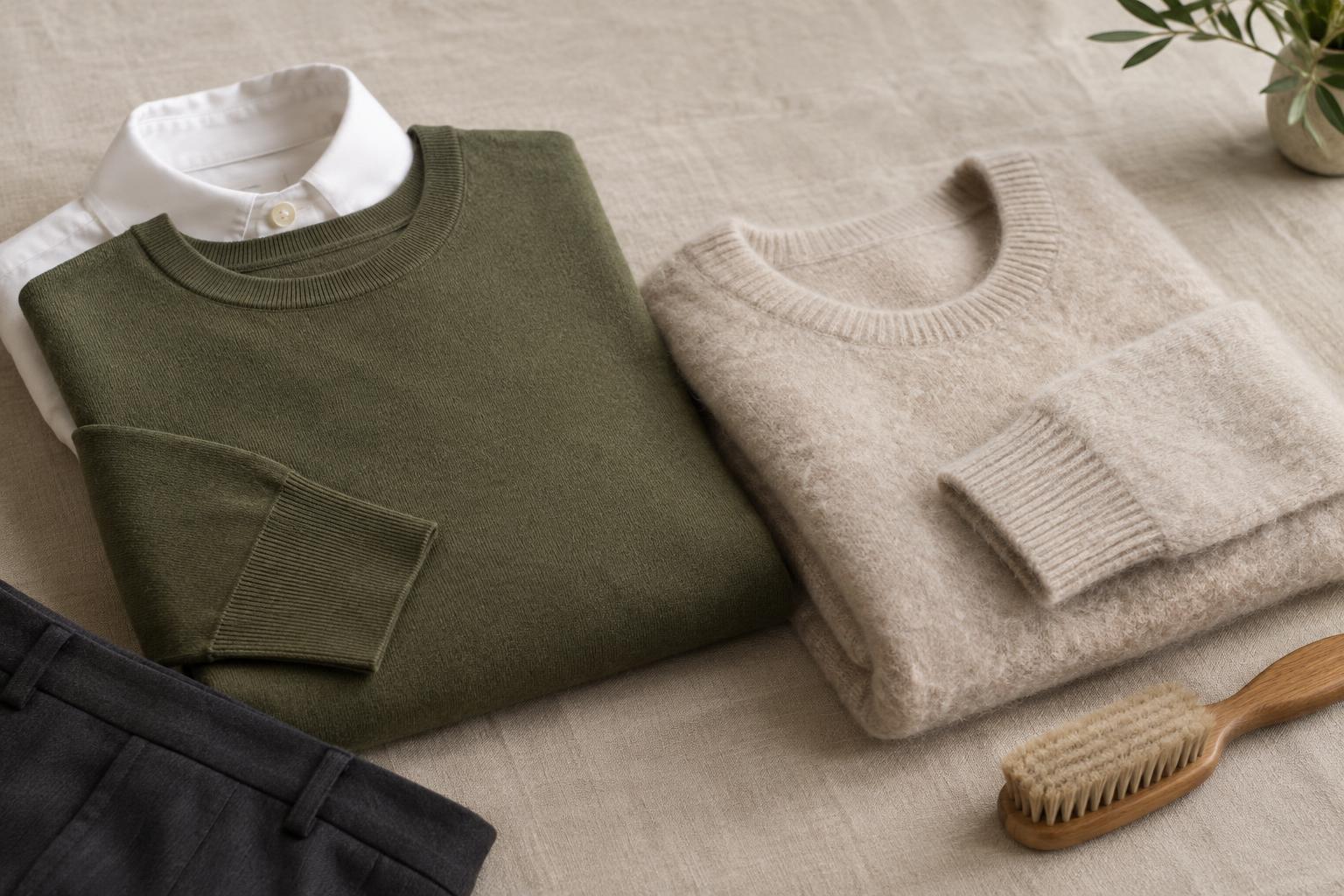
If you are choosing between them, picture the job the garment needs to do. Is it a light layer for a commute, a warm sweater for sitting still, or a piece you want to pack for a trip? Compare garments of similar weight where possible. A thick merino sweater may feel warmer than a thin cashmere one, while a dense knit may hold its shape differently from a loose, airy knit.
How they feel against the skin
Cashmere is often prized for its soft, plush hand. It can feel gentle against bare skin, making it appealing for a crewneck sweater or scarf worn close to the face. Merino can also be very soft, particularly when made with finer fibers, but some people notice more of a woolly feel. Sensitivity is personal: a fabric one wearer finds comfortable may feel prickly to another.
When trying on a knit, give it more than a quick touch with your fingertips. Wear it at your neck and wrists for a few minutes, since those areas often reveal irritation first. Notice whether it feels comfortable over a T-shirt as well as on bare skin. If you plan to wear a sweater over a collared shirt, a slightly textured merino may be perfectly comfortable even if you would not choose it as a base layer.
Warmth and layering in real outfits
Cashmere can provide a cozy feel without much bulk, which is useful when you want warmth under a tailored coat. A fine cashmere crewneck over a shirt, for example, can keep an outfit streamlined. Merino is also available in fine, easy-to-layer knits, as well as substantial sweaters that work as an outer layer on milder days. Neither fiber has one fixed level of warmth: thickness, knit structure, wind and what you wear underneath all matter.
For a flexible wardrobe, think in terms of layers rather than a single warm piece. A fine-gauge merino sweater can sit under a jacket without crowding the sleeves; a cashmere cardigan can add softness over a simple top. If you tend to move between cool streets and heated rooms, choose a layer you can remove easily. In windy weather, a coat or jacket that blocks the breeze may make more difference than switching from one knit fiber to the other.
Which one works harder day to day?
Merino is a practical choice for frequently worn sweaters and travel layers. Many merino garments spring back from light creasing, and wool generally does not need washing after every wear if it is clean and allowed to air out. A dark merino crewneck, for instance, can move between jeans, tailored trousers and a skirt without demanding a new outfit plan each time.
Cashmere can be an everyday piece too, but you may prefer to treat a favorite cashmere sweater more gently. Friction from a shoulder bag, a rough coat lining or repeated rubbing at the elbows can encourage pilling. Merino can pill as well; neither fiber is immune. Price and durability vary by garment, so check the knit in person if you can. Look for even stitching, comfortable seams and cuffs that recover after a gentle stretch. Choose the piece you will actually enjoy wearing, rather than reserving it indefinitely for an imagined special occasion.
Care habits that help both last
Always start with the garment’s care label, especially if a knit includes other fibers or has a special finish. Between wears, let it air out and check for small marks before they set. When washing is appropriate, use a wool-suitable detergent and avoid hot water, vigorous rubbing and wringing. Support the garment while wet and dry it flat to help preserve its shape; hanging a heavy wet sweater can pull it out of proportion.
Store clean, dry knits folded rather than on hangers that may stretch the shoulders. If pills appear, remove them carefully with a tool designed for knitwear instead of pulling at the fibers. The simplest decision rule is this: choose merino when you want an adaptable layer for frequent rotation, and consider cashmere when its particular softness is what will make you reach for the garment. A well-fitting sweater in either fiber is more useful than one that feels lovely on a hanger but does not suit your routine.