Start with the breaks in your outfit
Outfit proportions describe how much space each garment occupies when you look at the whole outfit. A long shirt over trousers creates one balance; the same shirt tucked in creates another. Neither is automatically better. The useful question is where your eye pauses as it moves from your shoulders to your shoes.
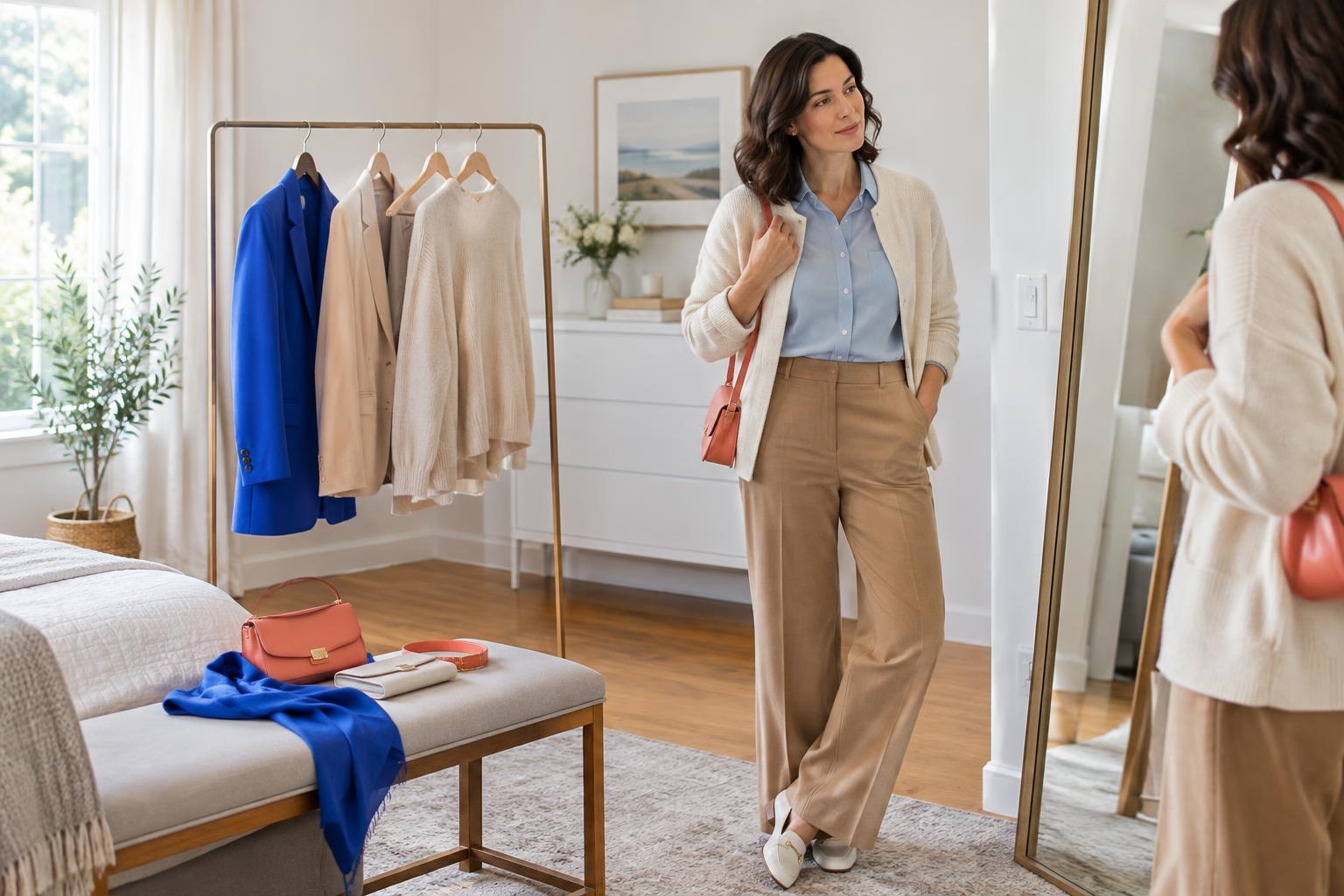
Waistbands, shirt hems, jacket hems and changes in color all create visible breaks. Stand in front of a mirror and notice the strongest one. Is it at your waist, your upper thigh or somewhere lower? If the outfit feels unlike what you had in mind, move just one break before changing the clothes. A tuck can reveal a waistband; an open layer can soften a sharp horizontal line.
Choose a tuck for the effect you want
A full tuck makes the waistband visible all the way around. Try it when you want to show the shape of high-rise trousers, define a waist or keep a shirt from bunching beneath a jacket. After tucking, lift your arms and sit down, then let a little fabric ease back out if needed. The result should feel comfortable rather than tightly pulled.
A front tuck places the visual break near the center while leaving the sides and back loose. It can give a relaxed T-shirt or soft knit some shape without making the entire outfit feel fitted. Tuck a small section above the waistband, then adjust the fabric on either side so it falls naturally. For a button-up shirt, a half tuck of one front panel gives a more noticeable, deliberately uneven line.
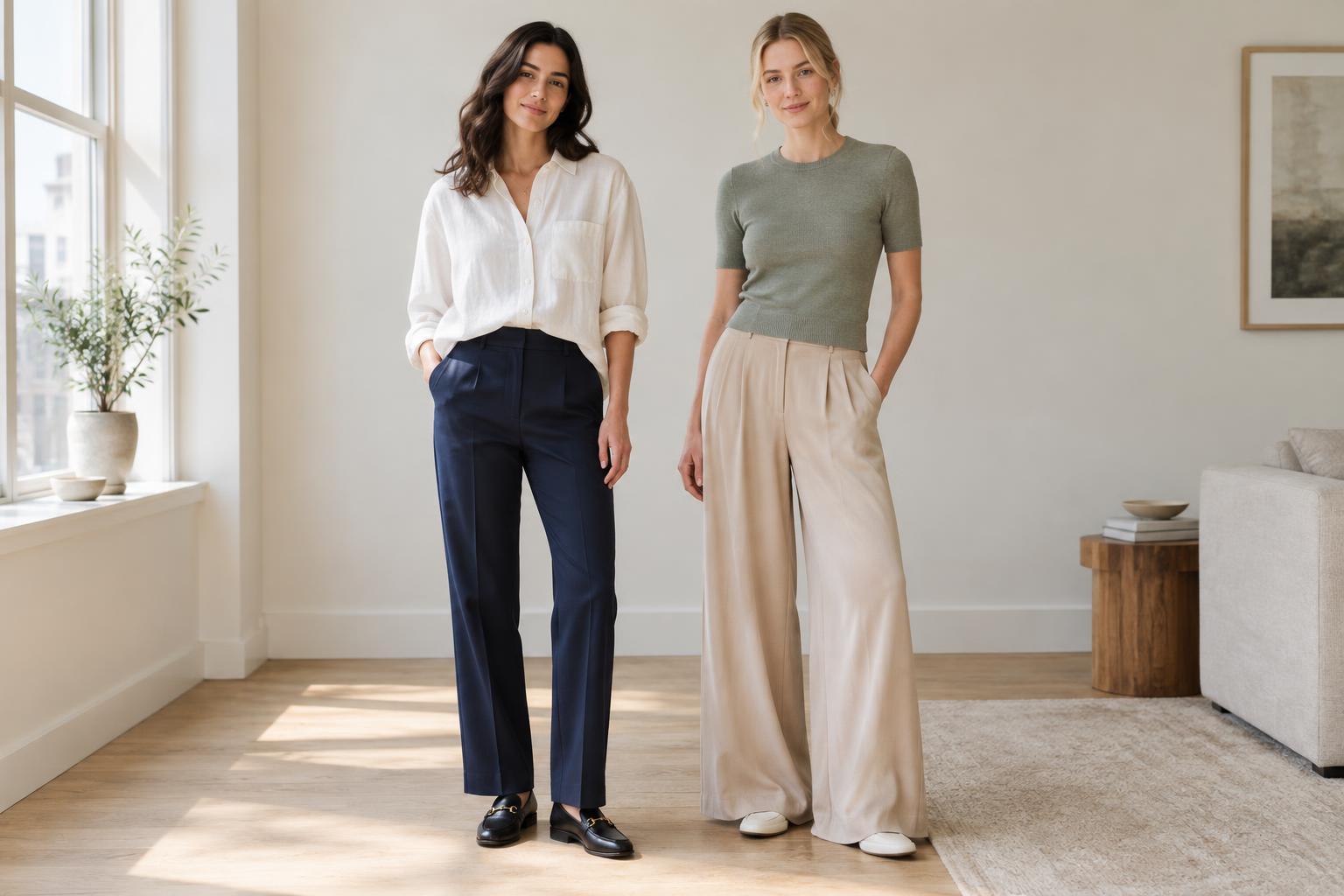
Leaving a top untucked is also a choice, not an omission. It works particularly well when the top’s hem lands where you like it and the fabric hangs cleanly. If the hem falls at a point that feels awkward to you, try a partial tuck before deciding the top is the wrong length.
Use hemlines to shape the silhouette
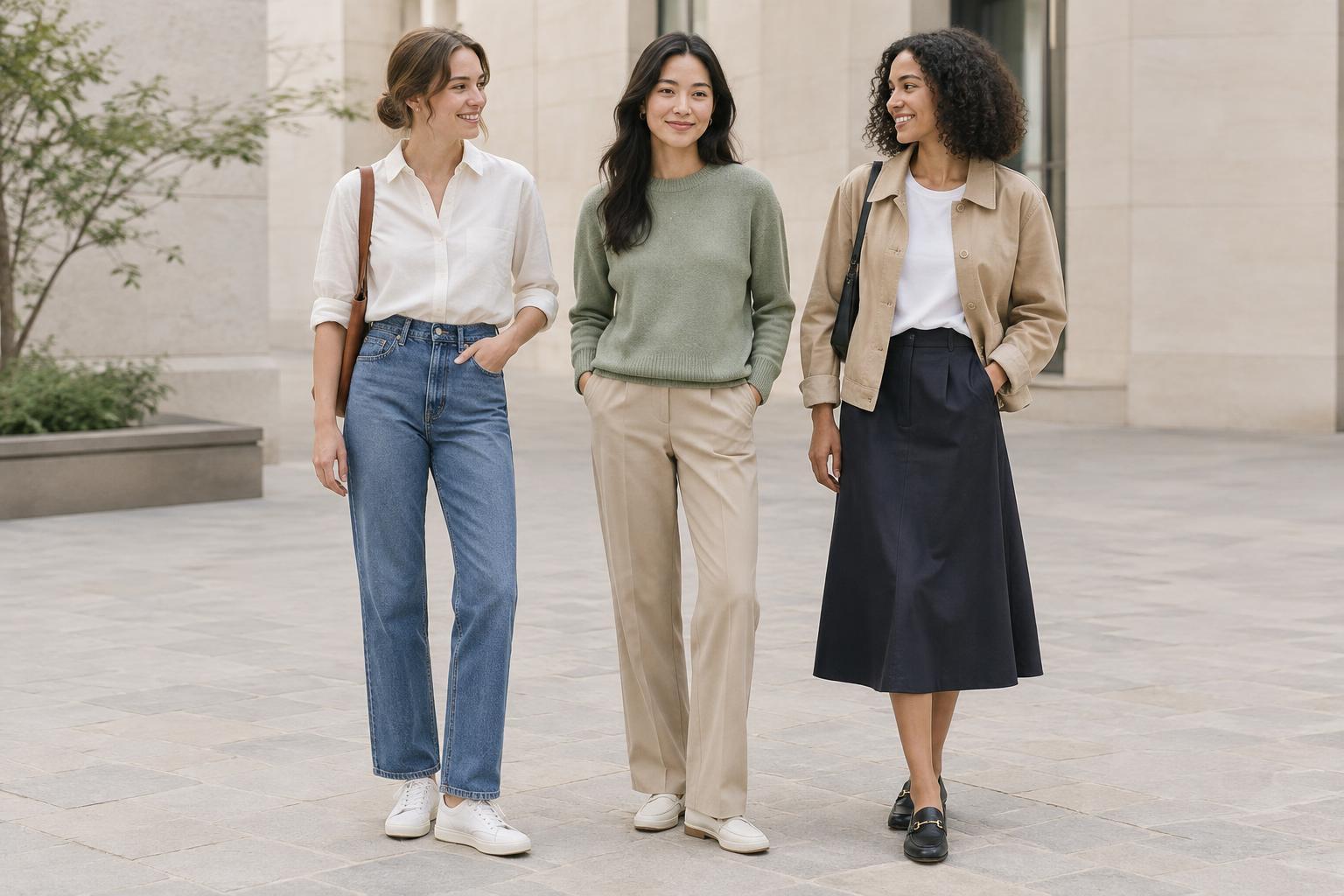
A hemline draws attention to the area where it ends. A cropped jacket over a longer shirt creates two distinct lines, while a longer jacket can cover the shirt hem and make the outfit look more continuous. To see the difference, wear the same trousers and top with two outer layers of different lengths. Notice whether you prefer a clear contrast or a smoother transition.
Think about trousers and skirts in relation to your shoes, too. Cropped trousers leave a visible gap above the shoe; full-length trousers create a longer, less interrupted line. Neither depends on a particular body shape. It is a matter of how much ankle, sock or shoe you want to show. Before altering a hem, try the garment with the shoes you expect to wear most often.
Let color and fabric do some of the work
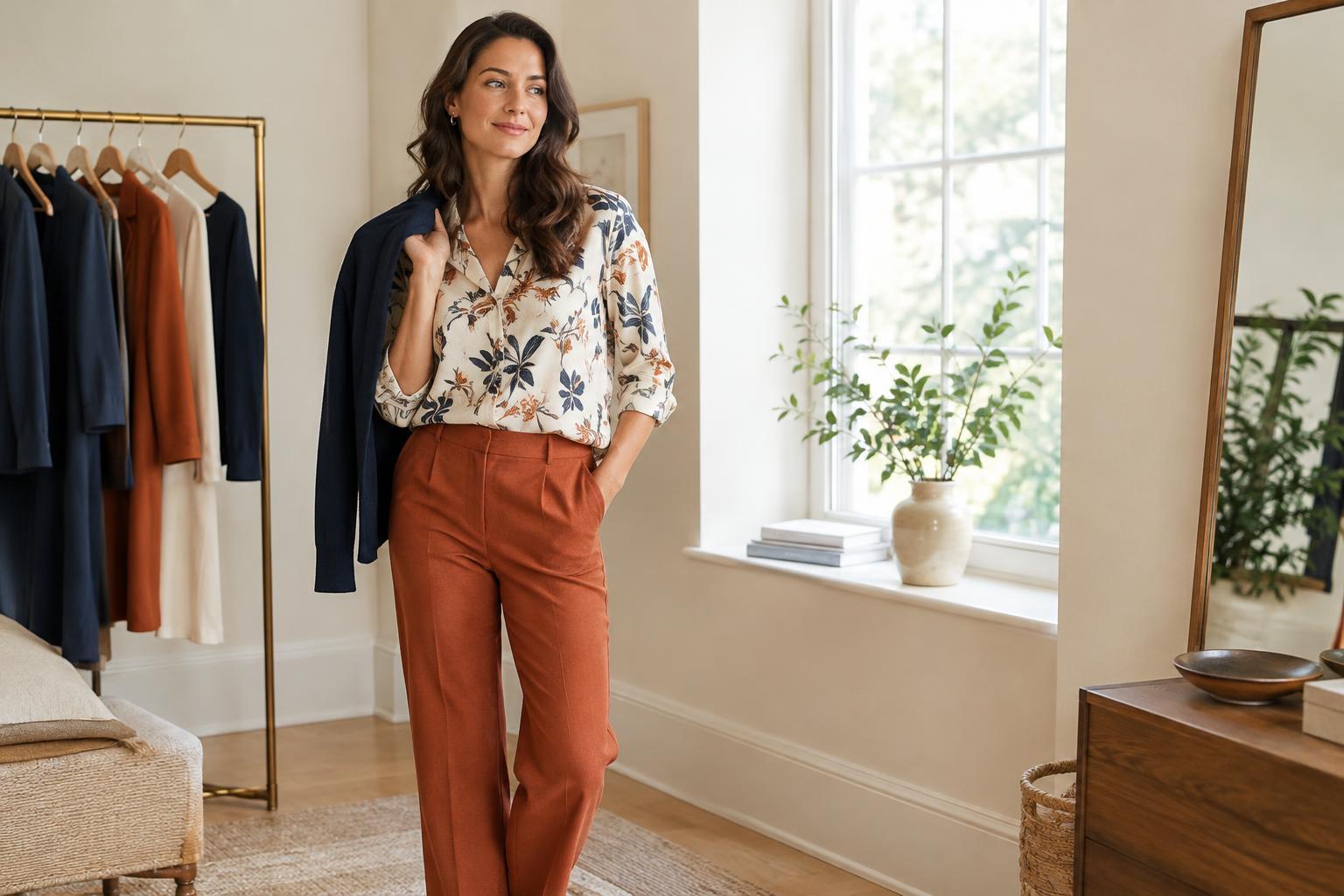
Length is not the only influence on proportion. A dark top tucked into light trousers creates a noticeable break at the waistband. Similar colors above and below make that break quieter, even with the same tuck. If you want to experiment without buying anything, compare an outfit in related colors with one that has a stronger contrast.
Fabric changes how a tuck behaves. A thin tee may sit smoothly under a waistband, while a heavy sweater may add bulk. With thicker pieces, try tucking only a small section at the front or letting the hem rest over the waistband. Stiff fabric tends to hold its shape; soft fabric may drape and shift throughout the day. Check the outfit after moving around, not only while standing still.
Try one change at a time
For a simple practice outfit, start with a plain top, trousers and a layer such as a cardigan or overshirt. First wear the top loose and look at where both hems fall. Then tuck the top fully, try a front tuck and finally leave it loose beneath the open layer. Keep the shoes and everything else the same. This makes it easier to see which change actually affects the balance.
There is no ideal point at which every hem must end. Your preferred proportions may change with the occasion, the weather or how freely you want to move. Use tucks and hemlines as adjustable tools: they can highlight a waistband, add ease around the middle or change how two layers meet. The best placement is one that supports the outfit you want to wear and stays comfortable through the day.