Start with the garment, not just the label
Polyester and nylon are both synthetic fibers used in clothing, linings, bags and outerwear. Either can be made into a smooth, lightweight fabric or something thicker and more structured. That is why two garments labeled “polyester” may feel less alike than a polyester shirt and a nylon shirt. The weave or knit, fabric weight, lining and finish all shape the result.
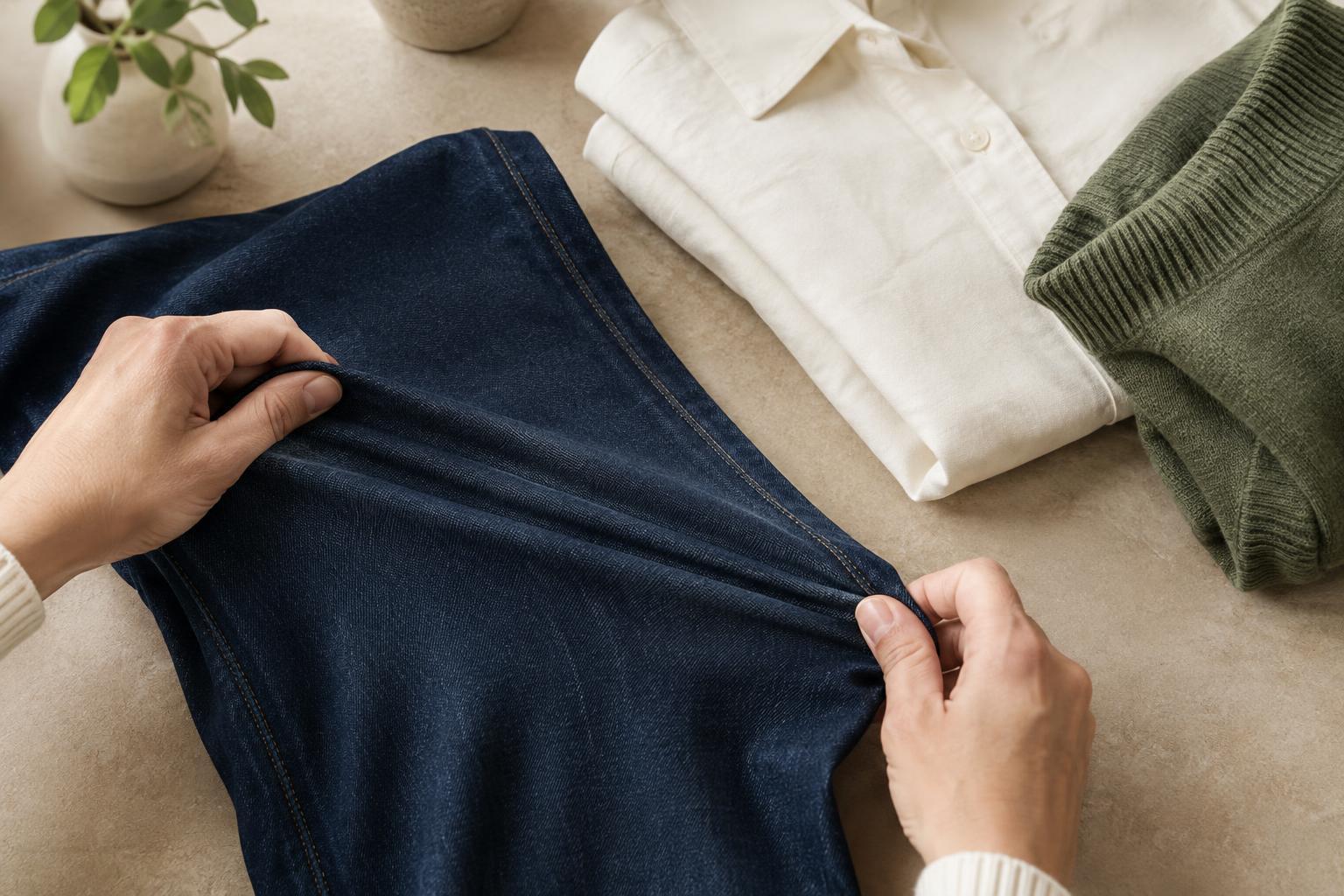
When shopping, handle the item if you can. Does it drape softly or hold its shape? Does it make a rustling sound when it moves? Hold a single layer up to the light to get a sense of its density, then check whether the seams and closures suit the way you plan to use it. Fiber content is a useful clue, but it cannot tell you everything about comfort or quality.
How they tend to feel and wear
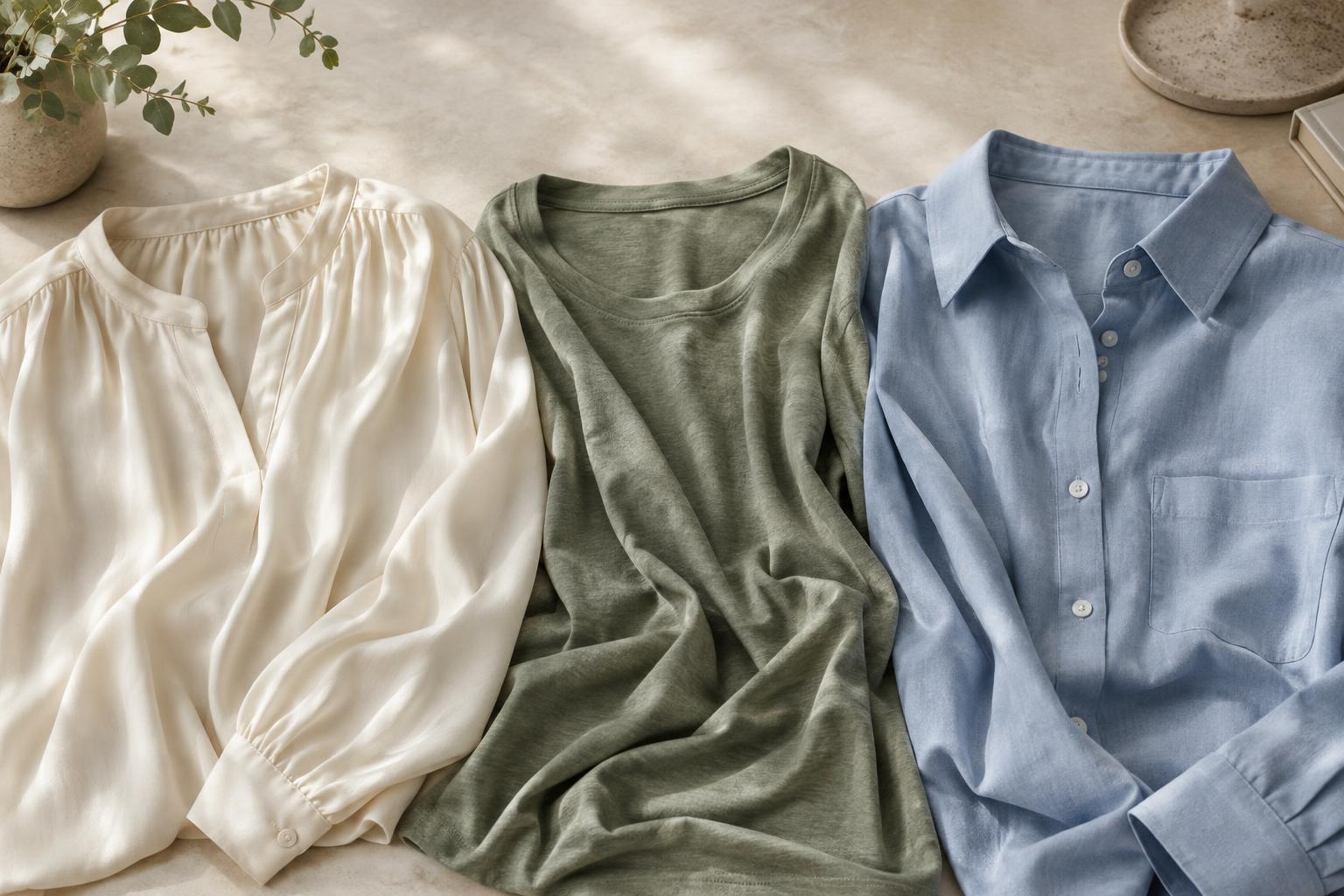
Polyester appears in a wide range of everyday pieces, from smooth blouse fabrics to fleece and textured knits. It generally resists wrinkling and can help a garment keep its shape. A polyester trouser may therefore be handy for a long day out or a packed suitcase. On the other hand, a dense polyester fabric can feel warm or clammy, especially if the garment sits close to the skin.
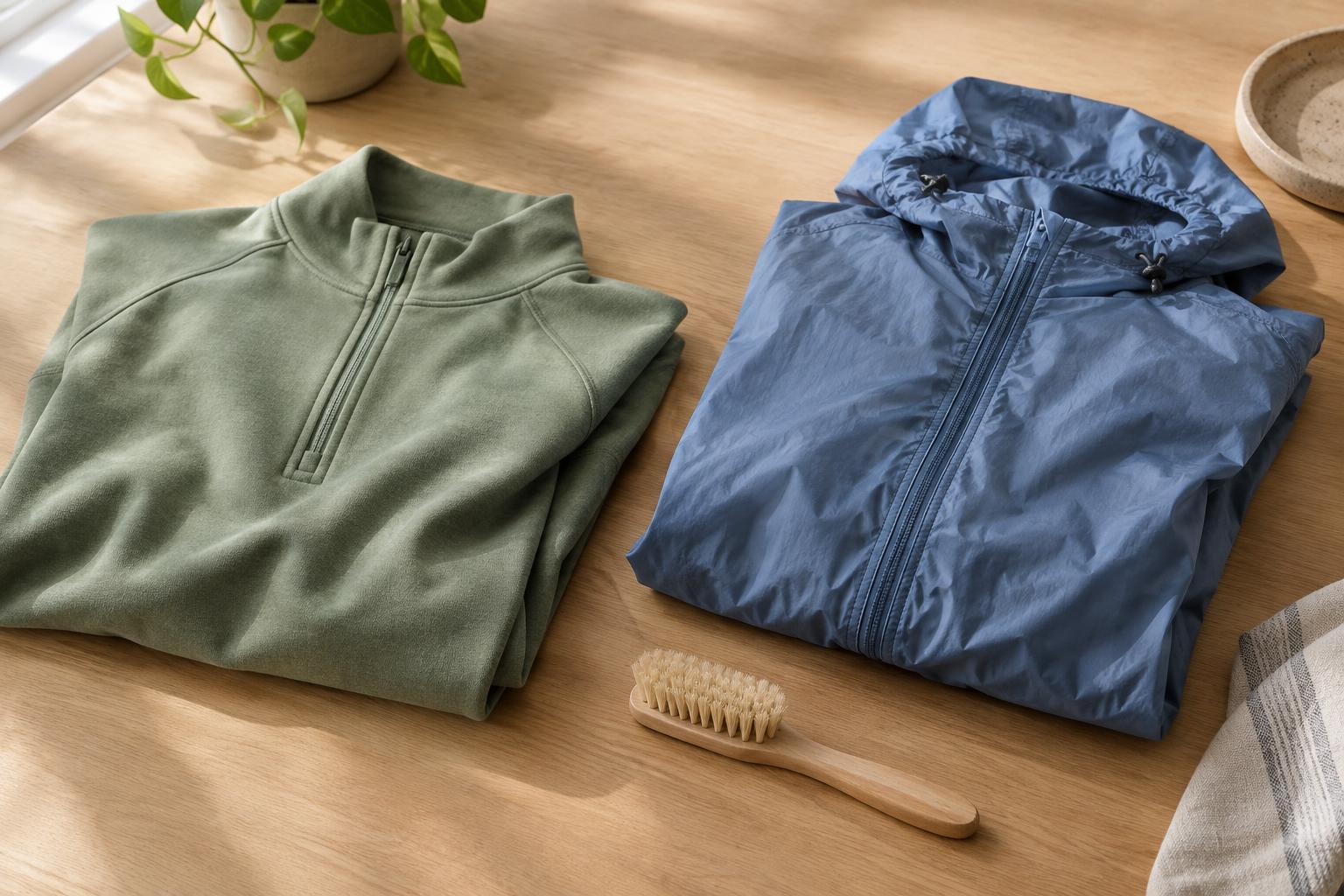
Nylon is often used where a light, strong fabric is helpful, such as in windbreakers, tights and bags. It can have a smooth, sometimes slightly slick hand, though its texture varies considerably. Nylon generally stands up well to abrasion, making it a sensible material to consider for an accessory that rubs against clothing or travels frequently. For either fiber, inspect areas such as knees, cuffs and bag corners: construction matters as much as the fiber name.
Moisture, airflow and changing weather
Neither fiber guarantees that a garment will feel cool or breathable. An open knit can allow more air movement than a tightly woven shell, regardless of whether it is made from polyester or nylon. Polyester absorbs relatively little moisture into the fiber, which can help a lightweight item dry quickly after washing. Nylon typically absorbs somewhat more, although fabric thickness, finishes and drying conditions can matter more in practice.
For a warm commute, look beyond claims such as “quick-drying.” Consider the cut, vents and whether you can remove a layer easily. A loose polyester overshirt might feel more comfortable than a snug nylon one simply because air can move around the body. For a light rain layer, pay attention to the garment’s coating, seams and intended use; the word “nylon” or “polyester” alone does not mean it is waterproof.
Choosing between them for an outfit or wardrobe
For travel, polyester can be a practical choice for a shirt or dress that you want to pack, hang up and wear with minimal fuss. A lightweight nylon jacket can be useful as an outer layer that folds into a small bag. These are starting points, not fixed rules: a heavy fabric will take more space, and a delicate construction needs more care, whatever the fiber.
Think about the role of each piece in an outfit. If you like soft texture, try a polyester knit under a crisp cotton shirt rather than judging polyester by shiny linings alone. If a nylon crossbody bag looks too sporty for your wardrobe, a matte finish and simple hardware may make it easier to pair with everyday clothes. Color, texture and silhouette often have a greater effect on an outfit than the difference between these two fibers.
Care that helps both fabrics last
Always check the garment’s care label first, particularly for coated fabrics, pleats, trims or blended fibers. In general, both polyester and nylon can be damaged by excessive heat. A cooler wash when appropriate, gentle drying and caution with the iron help reduce avoidable wear. Turn garments inside out before washing if the surface is prone to rubbing, and close zips or hooks so they do not catch on other items.
Wash when needed rather than after every brief wear, and let items dry fully before storing them. If a garment holds on to odors, washing it according to its label is more useful than relying on fragrance to cover them. Ultimately, the better choice is the piece whose feel, fit and care routine work for you. Compare actual garments side by side, and let the label inform your decision without making it for you.