Start with the part of the garment you are reading about
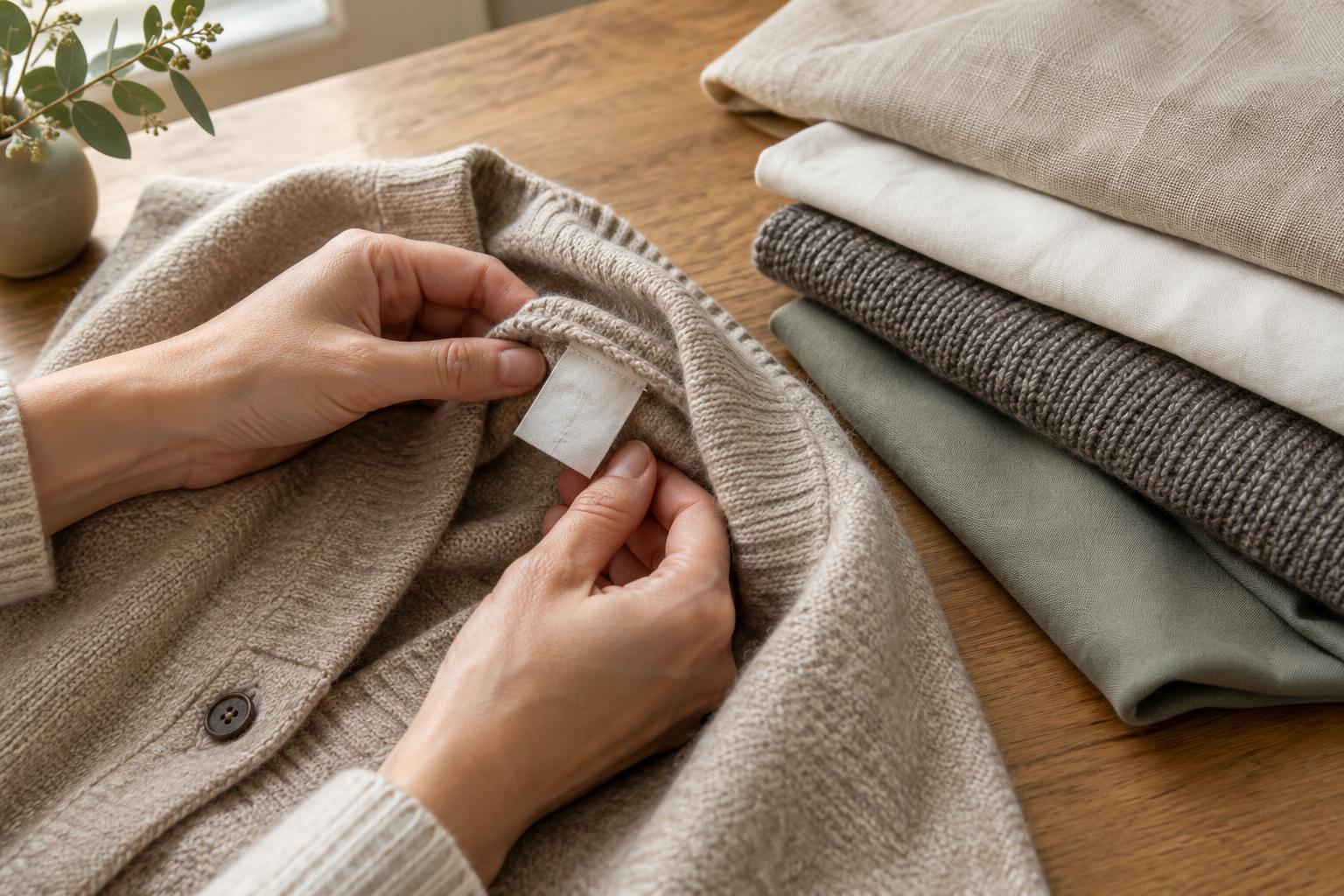
A composition label lists the fibers used in a garment, usually as percentages. Before comparing two pieces, check whether those percentages describe the main fabric, a lining, a trim or a separate panel. A jacket with a wool-blend outer fabric and a polyester lining may feel quite different inside than its outer composition suggests. Likewise, a dress may have a stretchy side panel even when its main fabric has no stretch fiber.
Percentages describe fiber content, not a guaranteed wearing experience. A label saying 60% cotton and 40% polyester gives you a starting point, but it does not tell you how thick the fabric is, how tightly it is woven or how soft its surface feels. Read the label to narrow your expectations, then use your hands and eyes to assess the actual garment.
Think about what each fiber brings to a blend
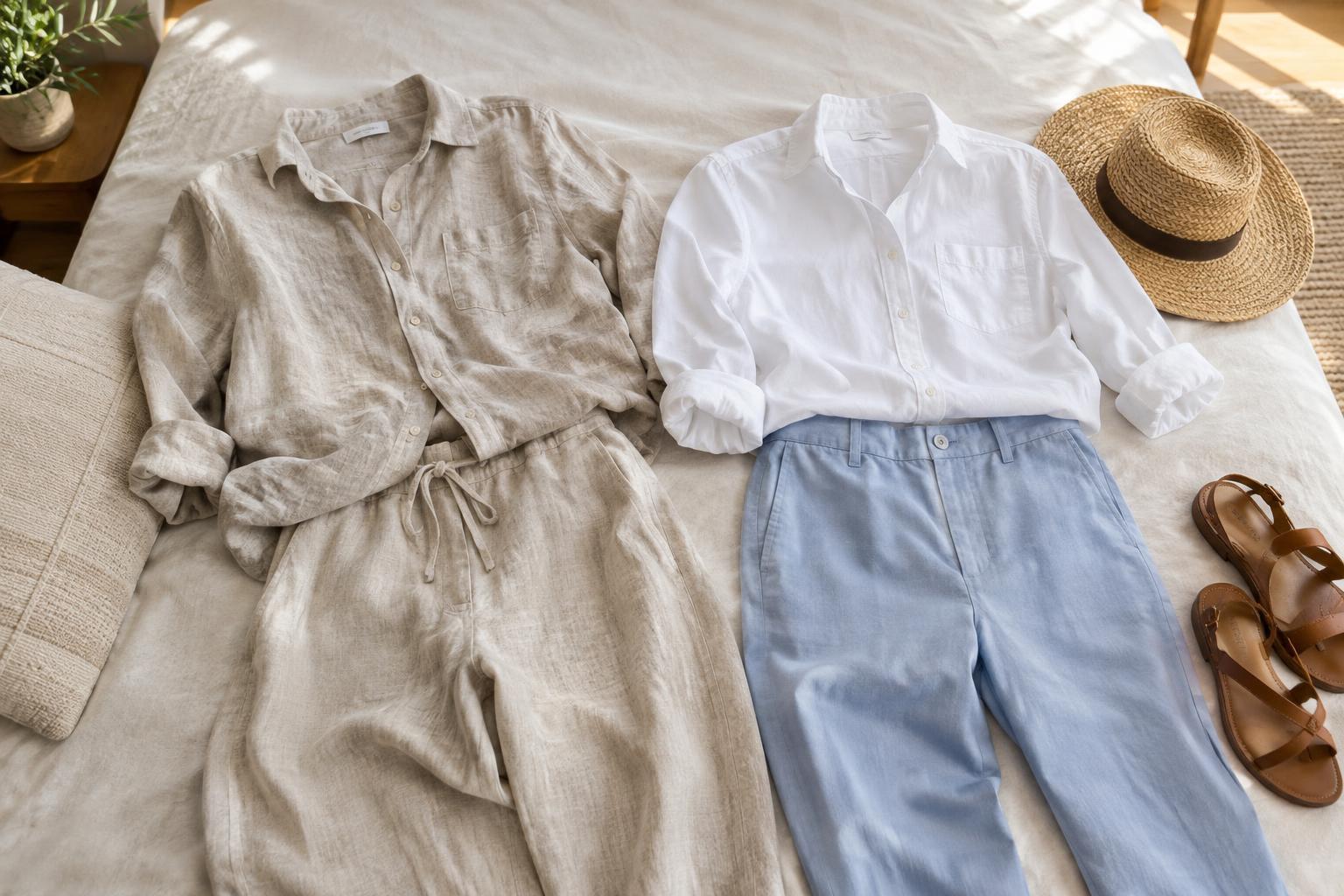
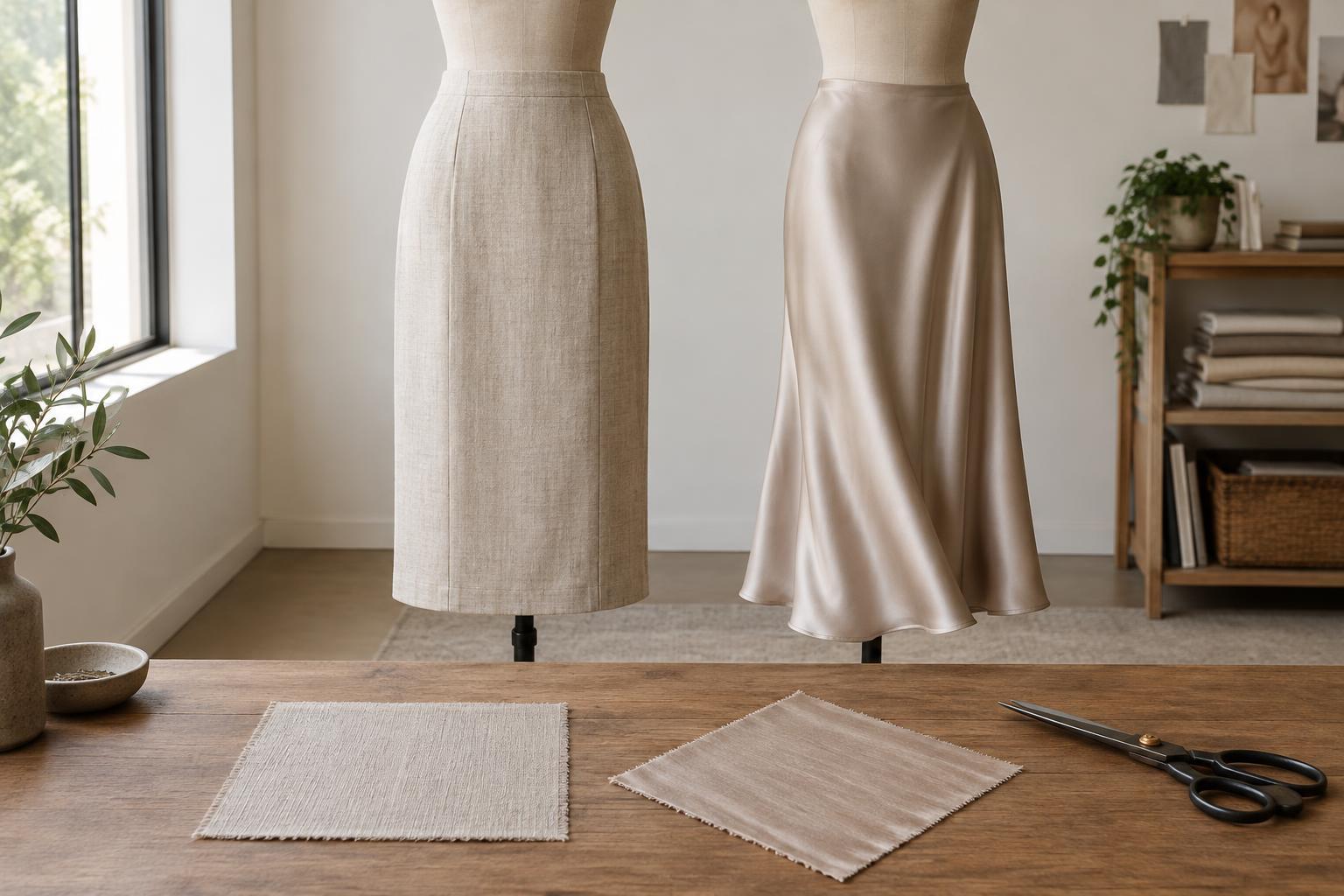
Blends often combine qualities that a designer wants in one fabric. Cotton can give a shirt a familiar, comfortable feel, while polyester may help it hold its shape and dry more readily after washing. Linen adds a crisp, airy character to a summer trouser; a blend with viscose may feel softer and hang with a looser drape. Neither version is automatically better. The useful question is whether its texture and behavior suit the outfit you want to build.
Wool blended with nylon is another common example. Wool contributes warmth and a distinctive texture, while nylon can add strength, particularly in pieces that see frequent rubbing, such as socks or knitwear. The proportions matter, but so do the yarn, knit and finishing. Two sweaters with similar labels can look and feel surprisingly different when one is densely knitted and the other is light and open.
Notice small percentages with a big effect
A small amount of elastane can change how a garment moves. In jeans, tailored trousers or a close-fitting top, even a modest stretch-fiber content may make bending and sitting more comfortable. It can also affect the way the garment returns to shape. But the label cannot tell you whether the stretch feels gentle or restrictive; that depends on the fabric and cut. Try moving naturally in the piece rather than judging it while standing still.
Small percentages can also explain details you might otherwise miss. A little nylon in a wool sweater may be there to reinforce the yarn, while a small amount of another fiber might change its surface or drape. Do not dismiss a fiber simply because it appears near the end of a list. Equally, do not assume its presence solves every concern about durability, wrinkles or fit.
Match the blend to how you will wear it
For a travel wardrobe, consider how a piece behaves after a day of sitting, layering and packing. A lightweight cotton-polyester shirt might be convenient if it washes easily and needs less attention before wearing. A linen-rich shirt may crease more visibly, but those creases can be part of its relaxed look. If you prefer a crisp finish, handle the fabric in the shop and consider whether you are happy to press it.
For layering, feel the surface as well as reading the percentages. A smooth lining can help a jacket slip over a knit, while a textured sweater may catch on a similarly textured coat. Check whether a blouse feels comfortable under a cardigan and whether its sleeves bunch up. Composition offers clues about these combinations, but a quick try-on tells you more about the layers together.
Use the care label and your senses to finish the picture
Composition and care are related, but they are not interchangeable. A wool-blend garment may have different care instructions from another wool blend because of its construction, lining or finish. Read the care directions for the whole garment before buying, especially if you need pieces that fit an easy washing routine. If the label is unclear, avoid assuming that a familiar fiber name means familiar care.
Finally, inspect the garment itself. Hold it up to the light to judge its opacity, gently scrunch a small area to see how it creases, and check seams and areas likely to rub. Ask whether its feel, weight and drape work with what you already own. A composition label is most useful as one piece of evidence: it helps you ask better questions, while the garment in your hands provides the answers that matter for your style.