What the fabric names describe
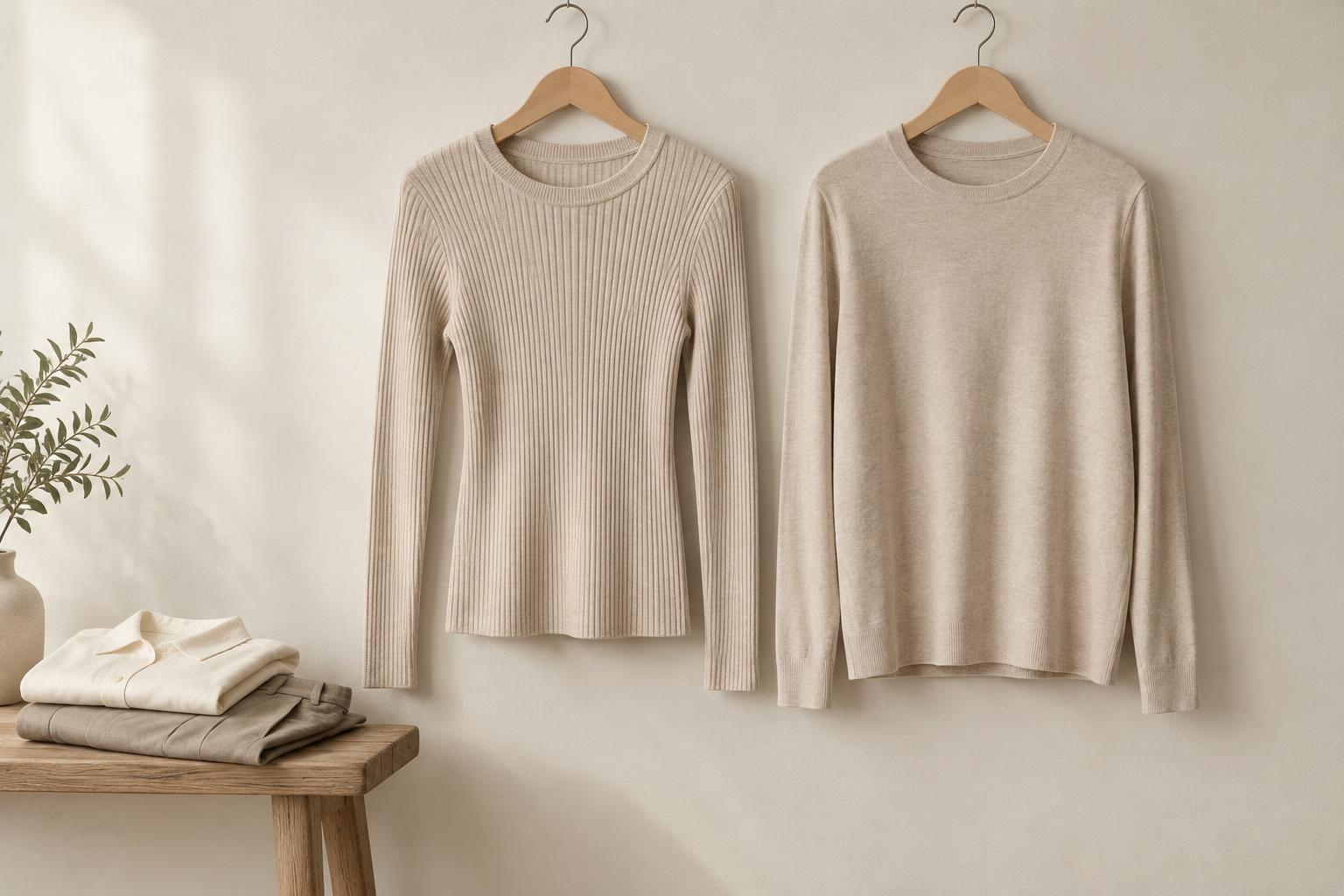
A ribbed knit has alternating raised and recessed columns that you can usually see and feel. Those columns give the fabric its familiar lined appearance and allow many ribs to expand across the body, then draw back in. Ribbing is often used for cuffs and neckbands, but it can also make up an entire T-shirt, tank, dress or sweater.
A plain knit, in everyday clothing descriptions, usually means a knit with a relatively smooth, even face rather than prominent ribs. A basic jersey T-shirt is a common example. The term is not a promise that the fabric will be rigid or thin: yarn, knit density, fiber content and finishing all affect the result. When shopping, compare the actual garments rather than relying on the fabric names alone.
How each one fits
Ribbed fabric generally has more give across its columns than a comparable smooth knit. A close-fitting ribbed top can therefore follow the waist and arms without needing lots of shaping in its cut. That does not mean every ribbed garment feels forgiving. A narrow, dense rib may cling closely, while a heavy ribbed sweater may feel structured. Stretch also differs from recovery: a fabric that expands easily does not necessarily spring back well after a day of wear.
Plain knits often present a smoother line over the body. Depending on the cut, a plain knit tee may skim rather than hug the torso, making it a useful choice when you want ease beneath a jacket. A lightweight plain knit can still cling, especially when it is stretched or made from a fluid yarn. If you want a relaxed fit, look at the garment’s shape and size, not just its surface texture.
Try the same small movements in either style: raise your arms, sit down and gently pull the fabric away from your body. Notice whether the hem rides up, the fabric becomes sheer when stretched, or the neckline loses its shape. These checks say more about how a piece will wear than its label does.
The visual difference in an outfit
Ribs add visible texture and vertical lines. Fine ribs can create a quiet, tailored-looking surface, while wide ribs make a bolder feature of the fabric. On a fitted top, the lines may curve or spread where the garment is under tension. This is normal, but it changes the look: a ribbed top can draw attention to its contours even when its color is understated.
Plain knits offer a calmer surface that lets a silhouette, print or accessory take the lead. A smooth navy tee, for example, can sit beneath an open shirt without adding much visual detail. Swap it for a navy ribbed tee and the outfit gains texture even though the color combination stays the same. Neither effect is inherently dressier; the yarn, weight, finish and overall styling matter too.
Choosing for layers and proportions
A fine ribbed tank or long-sleeved top can work well as a base layer because it sits close to the body and is less likely to bunch beneath another garment. Under a loose blazer or overshirt, its texture provides contrast without requiring a pattern. If you prefer less definition through the torso, choose a ribbed piece with a roomier cut or place it under an open layer.
A plain knit is an easy option when the outer layer already has texture, such as a chunky cardigan or corduroy jacket. Its smooth surface keeps the combination from feeling busy. Fabric weight matters for layering as much as texture does: a substantial plain knit may take up more room under a fitted jacket than a thin rib, while a thick ribbed sweater may be better worn as the outer layer.
For a simple comparison, pair the same trousers with two tops of similar color and weight. Look at the outline from the side as well as the front, then add your usual jacket. You may find that the ribbed version gives a neat tucked-in look, while the plain version creates a softer line when left untucked.
What to check before buying and caring for either knit
Inspect the fabric in good light. Hold it up to see how much light passes through, then stretch a small area gently to check whether it returns to shape. Look at the seams and hem: twisting, rippling or uneven tension can affect how a knit hangs. For ribbed garments, check that the columns run as intended and do not become noticeably distorted at the chest or hips.
Care depends on the fiber and the garment’s construction, so follow its care label. As a general habit, avoid hanging a heavy knit for long periods if its weight pulls the shoulders out of shape; folded storage may suit it better. Let washed knits dry in the shape you want them to keep. Whether you choose ribs or a smooth surface, a piece that feels comfortable, holds its shape and works with your existing layers will be the more versatile one.