Choose by garment, not by packing trend
Rolling, folding and packing cubes solve different problems. Rolling can help you fit flexible clothes into narrow spaces. Folding keeps a garment's shape easier to control. Cubes contain groups of items so you can find what you need without disturbing the rest of your bag. They can be used together: a rolled T-shirt can go inside a cube, while a folded shirt can sit flat beside it.
Before packing, consider three things: how easily the fabric creases, whether the garment has a defined shape, and when you will wear it. A soft weekend wardrobe may call for mostly rolled pieces. A trip with a dinner outfit or work clothes may need more flat space. Neither method guarantees wrinkle-free clothes, especially if the bag is tightly filled.
Roll soft, casual pieces
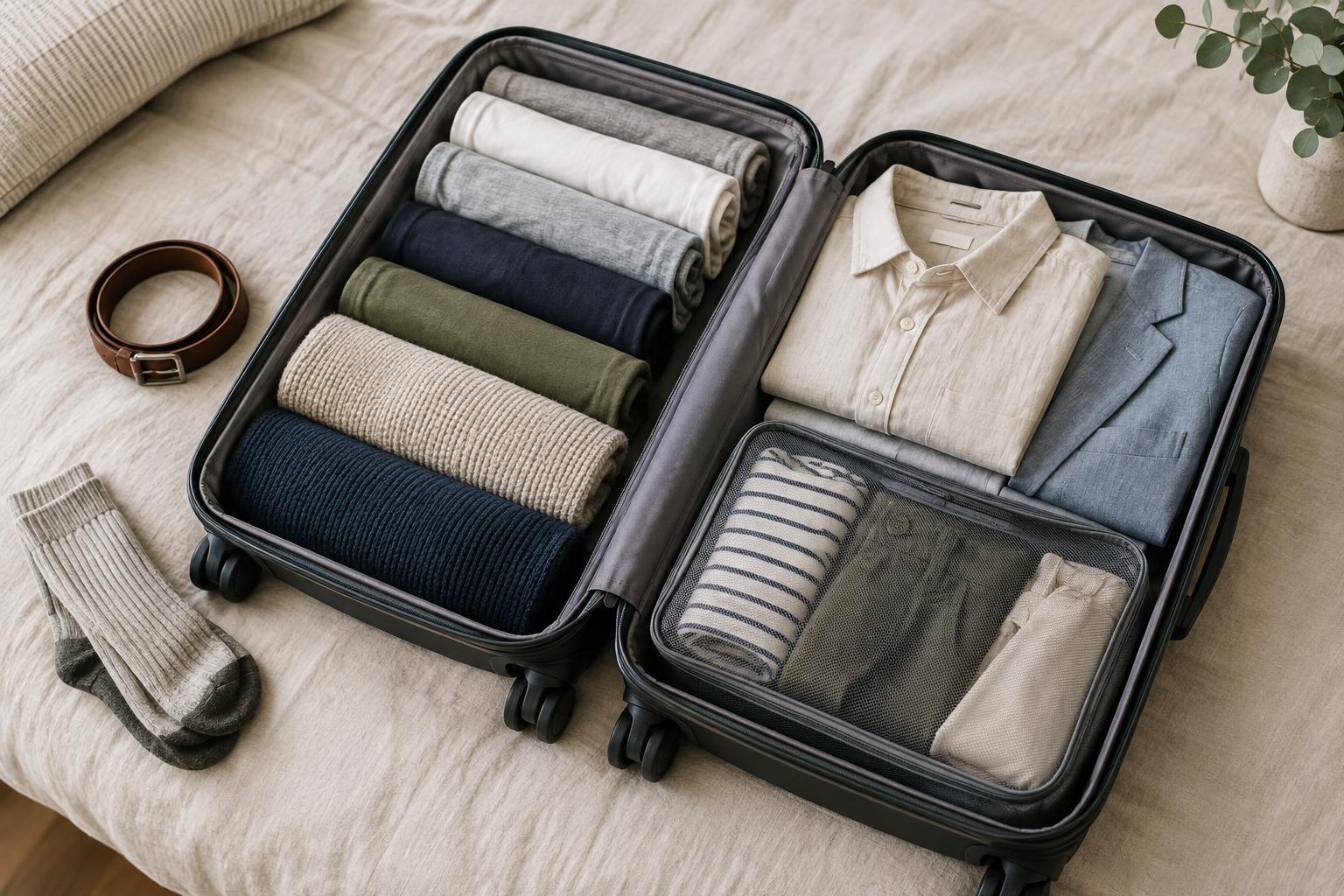
T-shirts, leggings, casual trousers, pajamas and many lightweight knits are good candidates for rolling. Lay each piece flat, smooth out obvious folds, bring in sleeves or loose edges, then roll without pulling the fabric tight. Place rolls side by side so you can see them at a glance. This works particularly well in the corners of a suitcase or in a packing cube.
Rolling is useful when you want to remove one item without lifting an entire stack. It also makes small pieces easy to group: workout clothes can form one row, while sleepwear forms another. For an outfit you plan to wear immediately after arrival, be more cautious. A fabric that holds creases may show lines where it was tucked into the roll. Try rolling a garment at home for a day if you are unsure how it will look.
Fold pieces that need room to hold their shape
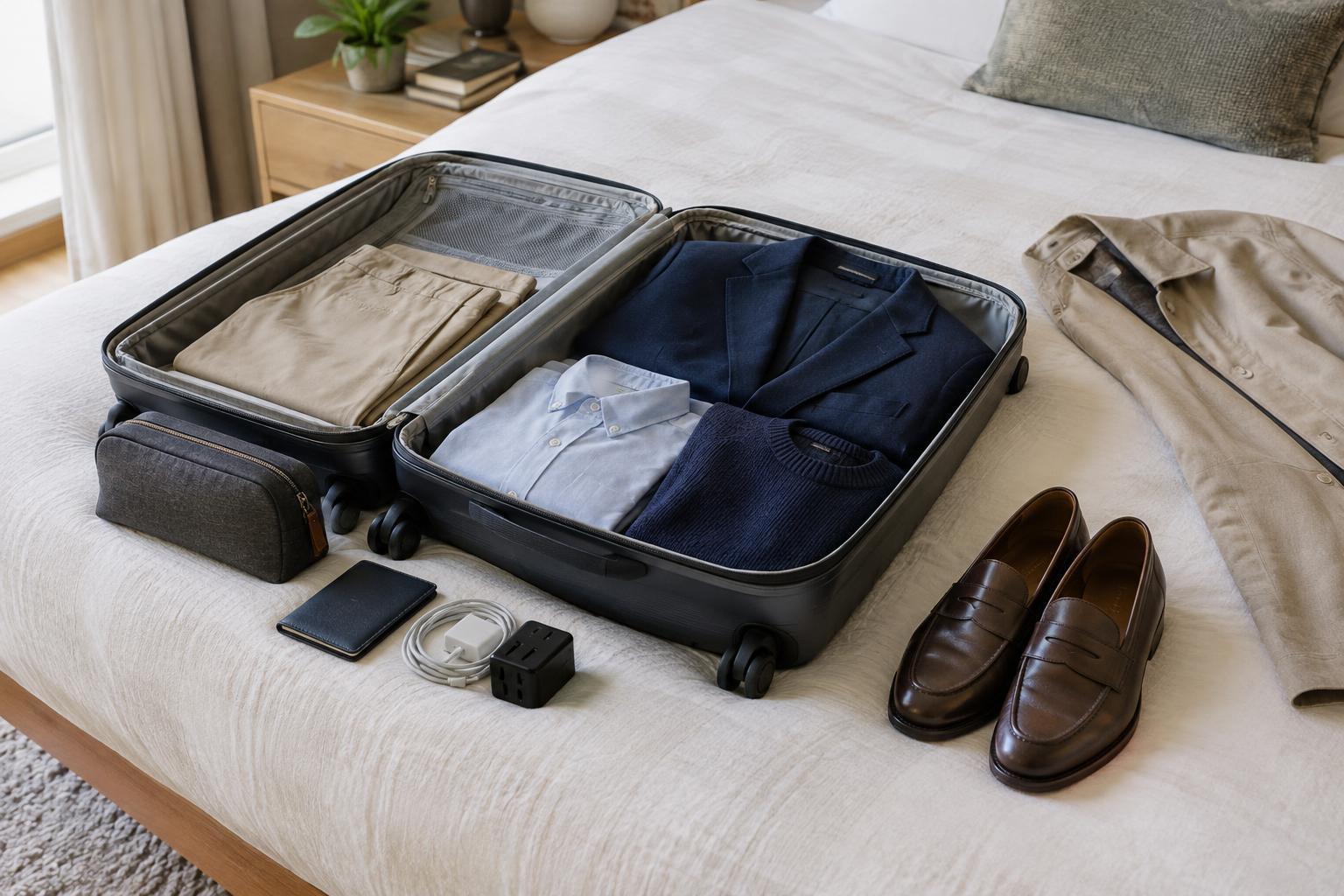
Button-down shirts, blouses, tailored trousers and jackets are usually easier to manage when folded. Fasten a few buttons on a shirt, smooth the front, fold the sleeves inward and make as few large folds as your bag allows. For tailored trousers, align the legs and fold them once or twice rather than making a tight roll. Put these pieces near the top of a suitcase, where heavier items are less likely to press into them.
A jacket deserves particular care. If you have space, fold it gently along its natural lines and avoid packing heavy shoes or toiletries on top. Delicate fabrics and embellishments also benefit from a loose fold, with another soft garment around them to prevent rubbing. Folding will not eliminate creases, but it lets you decide where they occur. If a piece is especially important to an outfit, leaving extra space around it is often more useful than perfecting a complicated fold.
Use packing cubes for access, not just space
Packing cubes are most helpful when they give your bag a simple system. You might use one for everyday tops, one for underwear and socks, and one for clothes reserved for later in the trip. They are also convenient when you are moving between places: you can lift out one category instead of unpacking the whole suitcase. A separate cube or pouch for worn clothes keeps them apart from clean items.
Cubes do not automatically create more room. Their seams and fabric take up some space, and an overfilled cube can press wrinkles into its contents. Compression cubes may make bulky, soft clothing easier to contain, but compressed clothes can emerge more creased. Use them for pieces that recover well, such as casual knits, rather than for a crisp shirt. Leave enough give that you can close the cube without forcing the zipper.
Build a bag you can unpack easily
Start with the clothes you expect to wear, then choose a method for each one. Fold the structured pieces and place them against a flat side of the suitcase. Fill remaining spaces with rolled casual clothes or small cubes. Keep shoes contained so their soles do not touch clothing, and position heavier items where they will not crush a delicate outfit. If you are using a backpack, put items you will need first somewhere you can reach them.
At your destination, take out crease-prone clothes soon after arrival and hang them if you can. Unroll or unfold anything packed tightly so it can settle before you wear it. The most useful packing method is the one that protects the clothes you care about while making the next outfit easy to find. A mixed approach usually does that better than treating every garment the same way.