The distinction that makes shopping easier
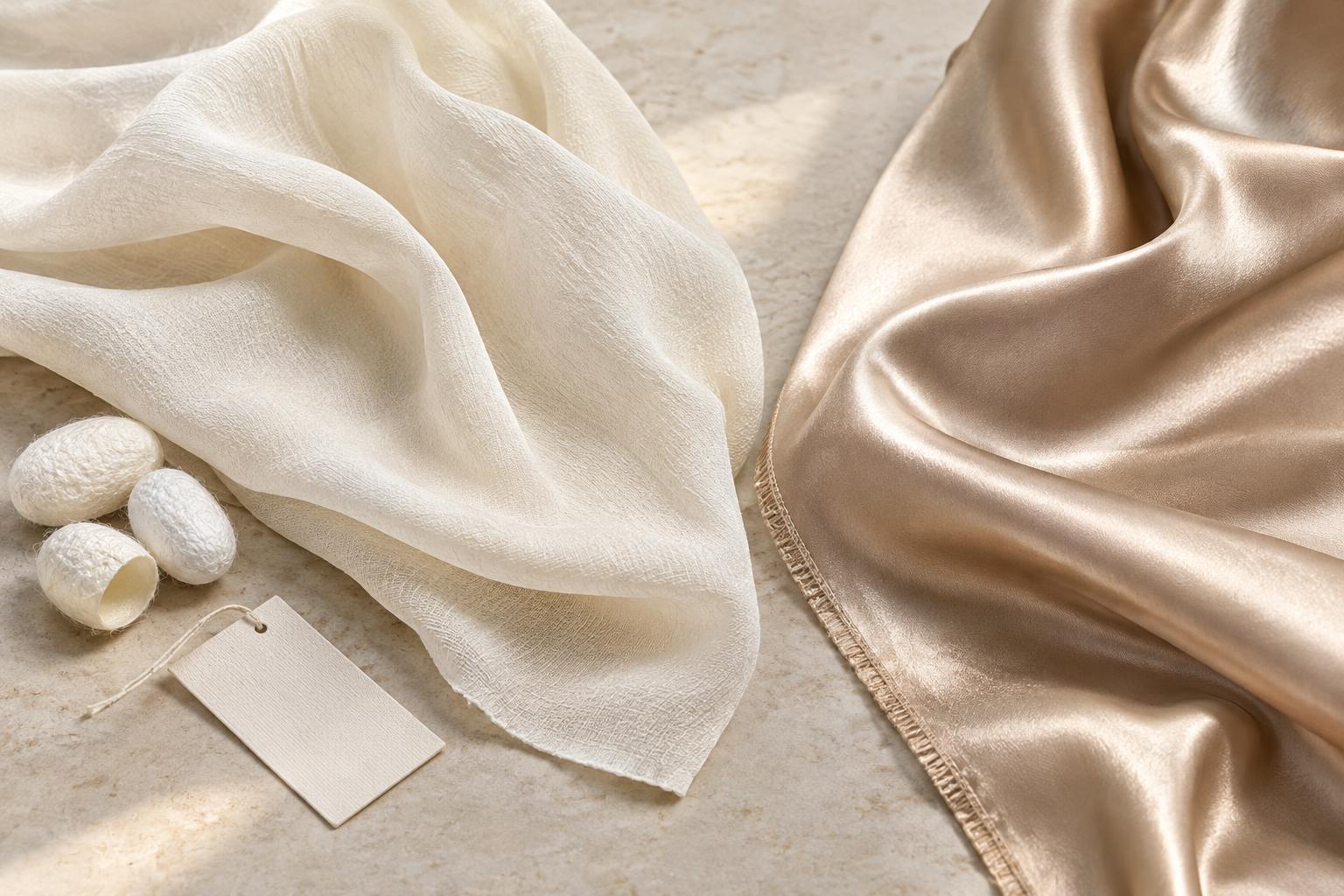
A blouse labeled silk and a blouse labeled satin might both have a fluid shape and a soft sheen. The words are not interchangeable, though. Silk tells you what the yarn is made from: it is a natural protein fiber produced by silkworms. Satin tells you how yarns are woven. Its structure places longer stretches of yarn on the fabric’s surface, creating the smooth, light-catching face associated with satin.
That means a fabric can be silk satin, combining silk yarn with a satin weave. It can also be polyester satin, made with polyester yarn, or silk woven in a different way. Once you separate fiber from weave, product descriptions become more useful. You can ask two questions instead of one: What is this made from, and how is it constructed?
What each term can—and cannot—tell you
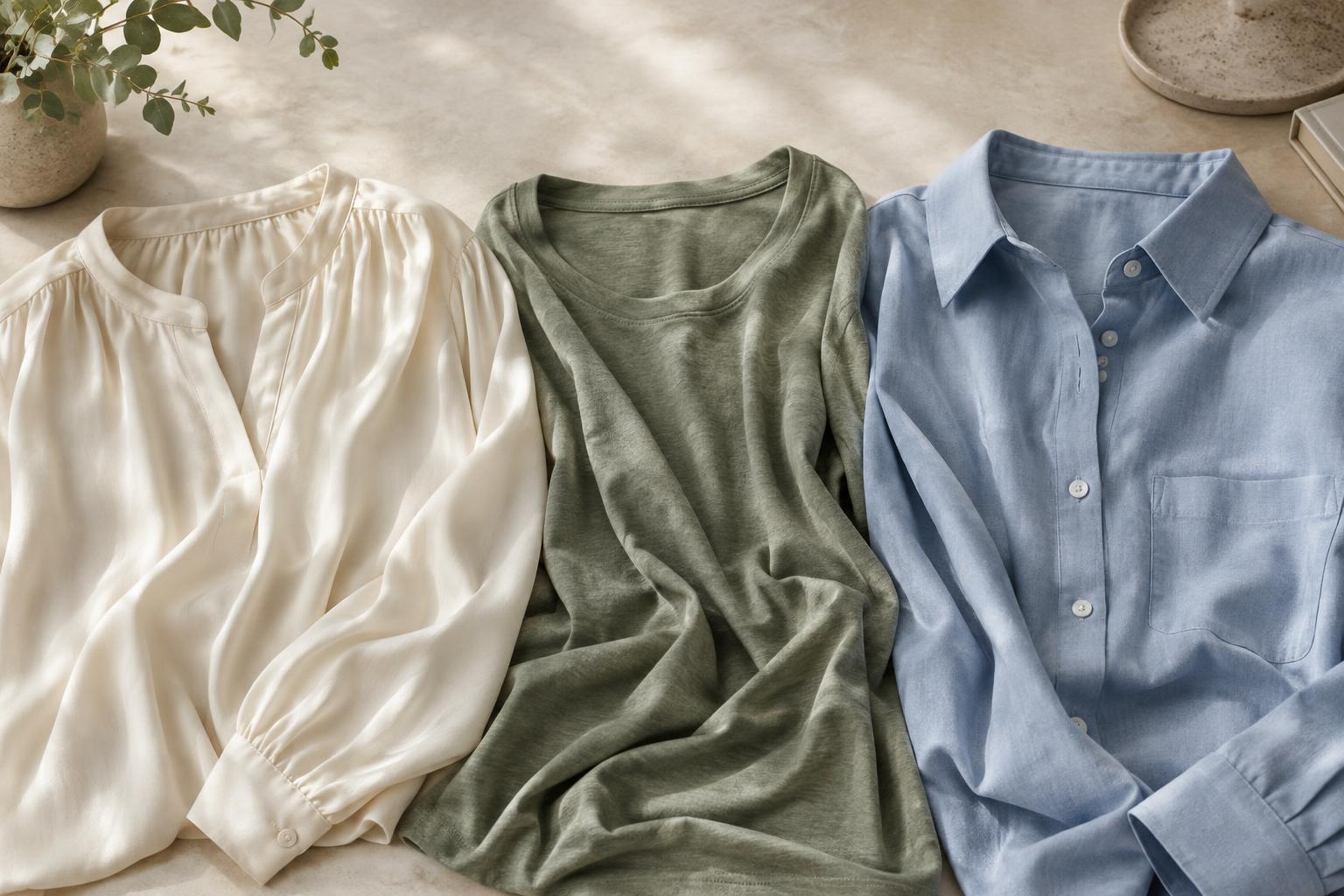
Silk describes the fiber, not a single texture. A silk shirt might be crisp, sheer, matte, softly textured or glossy, depending on its yarns, weave and finish. Silk charmeuse, for example, is often smooth and lustrous, while silk crepe usually has a more subdued, lightly textured surface. Seeing “100% silk” on a label therefore does not guarantee the slippery feel you may have in mind.
Satin describes a weave known for its smooth face and comparatively less lustrous reverse side. Its longer surface floats reflect light, but they may also catch on rough jewelry, bag hardware or uneven nails. Satin can be made from different fibers, so the word alone does not tell you whether a garment contains silk, how breathable it will feel or what care it needs.
The look also varies with weight and construction. A lightweight satin scarf may drape around the neck, while a heavier satin skirt may hold a cleaner line. Neither behavior is guaranteed by the name. If you can, handle the fabric: notice whether it feels substantial, whether it clings, and how it falls when you lift an edge.
How to read the label before you buy
Start with the fiber-content label, then look at the fabric description. “Polyester satin” gives you both pieces of information. “Silk” gives you the fiber but may not identify the weave. A product named simply “satin” needs a closer look at the fiber label. Check for linings and blends, too: the outer fabric and the layer against your skin may be made from different materials.
Next, consider the job the item needs to do. For a frequently worn blouse, think about how the fabric feels against your skin, whether it shows wrinkles and how much care you are willing to give it. For an occasion skirt, drape and surface shine may matter more. If shopping online, close-up images can help you judge texture, but descriptions and photographs cannot fully convey weight or feel. A clear care label and a return option are useful when you cannot examine the garment first.
Price alone is not a reliable guide to how well a piece will work for you. Inspect visible stitching, seams and how the fabric hangs on the garment. A beautiful surface will be less satisfying if the cut pulls across the hips or the seams twist when worn.
Choosing a texture for your outfits
Silk and satin both offer ways to add contrast to everyday clothes. A glossy satin skirt can soften the look of a chunky knit; a matte jacket can make a lustrous blouse feel less formal. Keep the silhouettes simple if the shine is already the focal point. A smooth top with straight-leg trousers, for instance, creates texture contrast without requiring a complicated color scheme.
Pay attention to where a fabric will meet other pieces. A satin camisole under an open shirt may glide beneath the outer layer, while a satin sleeve next to rough bag straps could be more vulnerable to snags. If a silk scarf is your accent, tying it to a bag may expose it to hardware and friction; wearing it at the neck may be gentler. These choices do not make one fabric better than another. They help match the item to the way you actually dress.
Care depends on the whole garment
Neither “silk” nor “satin” is a complete care instruction. Fiber content, dye, finish, lining and construction all matter, so follow the garment’s care label. Some silk items call for dry cleaning, while others permit gentle hand washing. Satin made from another fiber may have different instructions. When in doubt, test a hidden area before treating a spot, and avoid rubbing a snag or stain into the fabric.
For storage, keep smooth fabrics away from sharp accessories and crowded hangers that can cause pulls or creases. Give a garment room to hang or fold it neatly according to its weight and shape. The simplest rule is also the most useful: identify the fiber, understand the weave, and care for the finished piece rather than making assumptions from its shine.