What the rule actually means
The three-color outfit rule suggests building a look around no more than three noticeable colors. It is a quick way to give your clothes a sense of connection: one color usually does most of the work, a second adds variety, and a third provides a small accent. For example, navy trousers and a navy jacket could form the base, a white shirt could lighten the outfit, and a rust scarf could draw the eye.
It is not a test you have to pass. There is no universal method for counting every shade, seam or button. The rule is most useful when it helps you make a decision, not when it makes you second-guess whether off-white and cream are technically separate colors. Think about what someone notices from a few steps away. If two pieces read as part of the same color family, you can usually treat them as one for this purpose.
Use it when an outfit feels busy
The rule is especially handy when several pieces compete for attention. Start with the item you want to wear, then choose a base color that supports it. If you have a bright green sweater, for instance, dark denim and a tan coat give it room to stand out. Repeating the tan in a belt or bag can make the look feel intentional without introducing another prominent color.
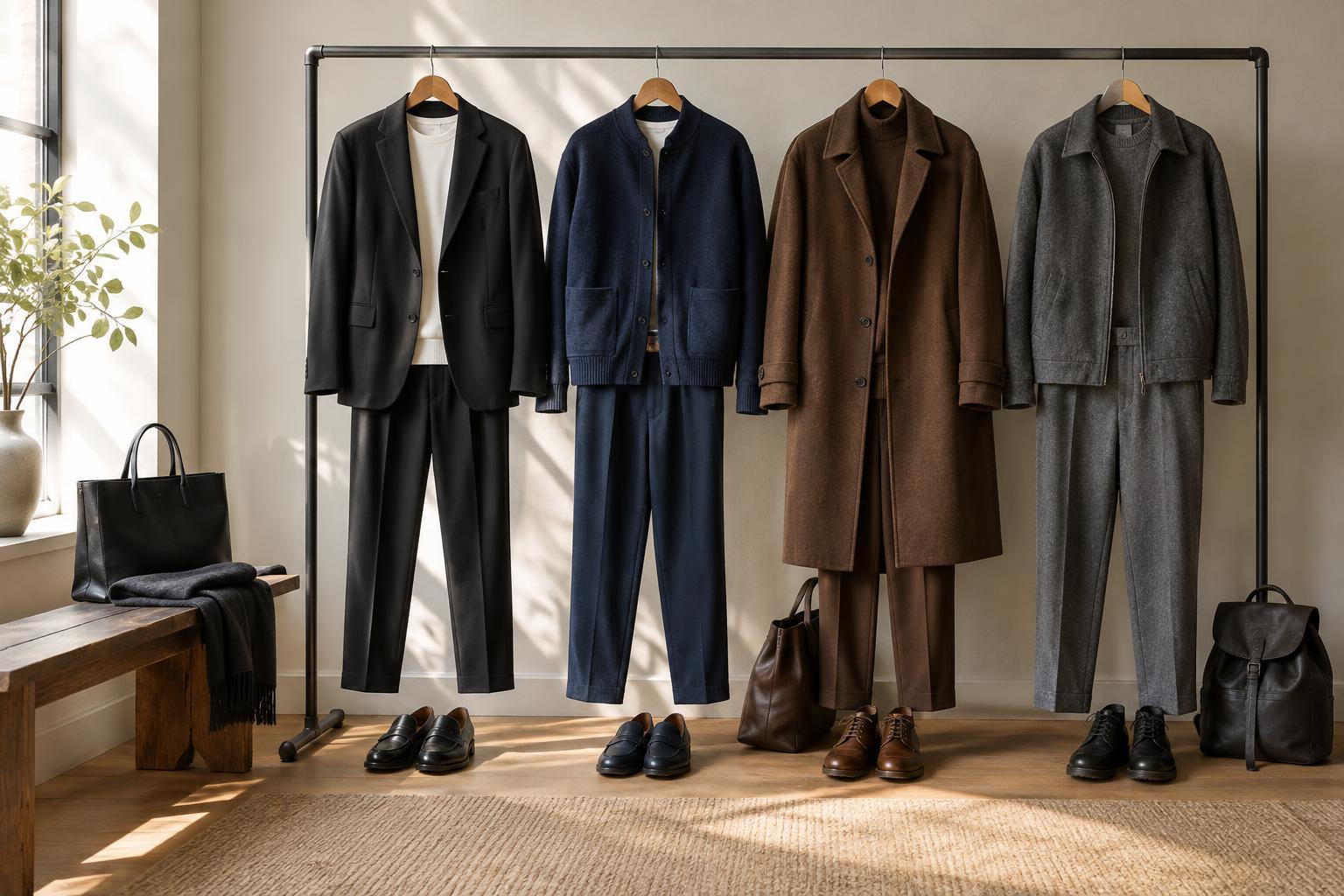
It can also simplify packing or getting dressed in a hurry. A small group of clothes built around two dependable colors, such as charcoal and blue, leaves space for one accent you enjoy. Tops, bottoms and layers become easier to combine because fewer color decisions have to be made each morning. You can change the mood by changing proportions: a blue shirt under a charcoal jacket feels different from a mostly blue outfit with charcoal shoes, even though the palette stays the same.
If you are unsure where to begin, try a rough balance: let one color cover most of the outfit, use another on a substantial piece, and keep the third to a smaller area. This is a starting point, not a formula. The shape of the clothes, the lightness or darkness of each color, and the textures you choose matter too.
Count what you see, not every detail
Shoes, bags and jewelry are part of the outfit, but they do not all need their own slot in a color count. Black shoes with a black belt may read as one repeated note. A small silver buckle may barely register, while a large metallic bag will be much more visible. Look at the whole outfit in a mirror and ask which colors actually command attention.
Patterns require similar judgment. A striped shirt in navy and white already supplies two clear colors; adding a red jacket creates a straightforward three-color look. A floral print with many small colors does not mean you must avoid everything else. Pick up one color from the print for another garment, or place it against a quiet neutral. The aim is to create a connection that the eye can follow, not to complete an inventory of every thread.
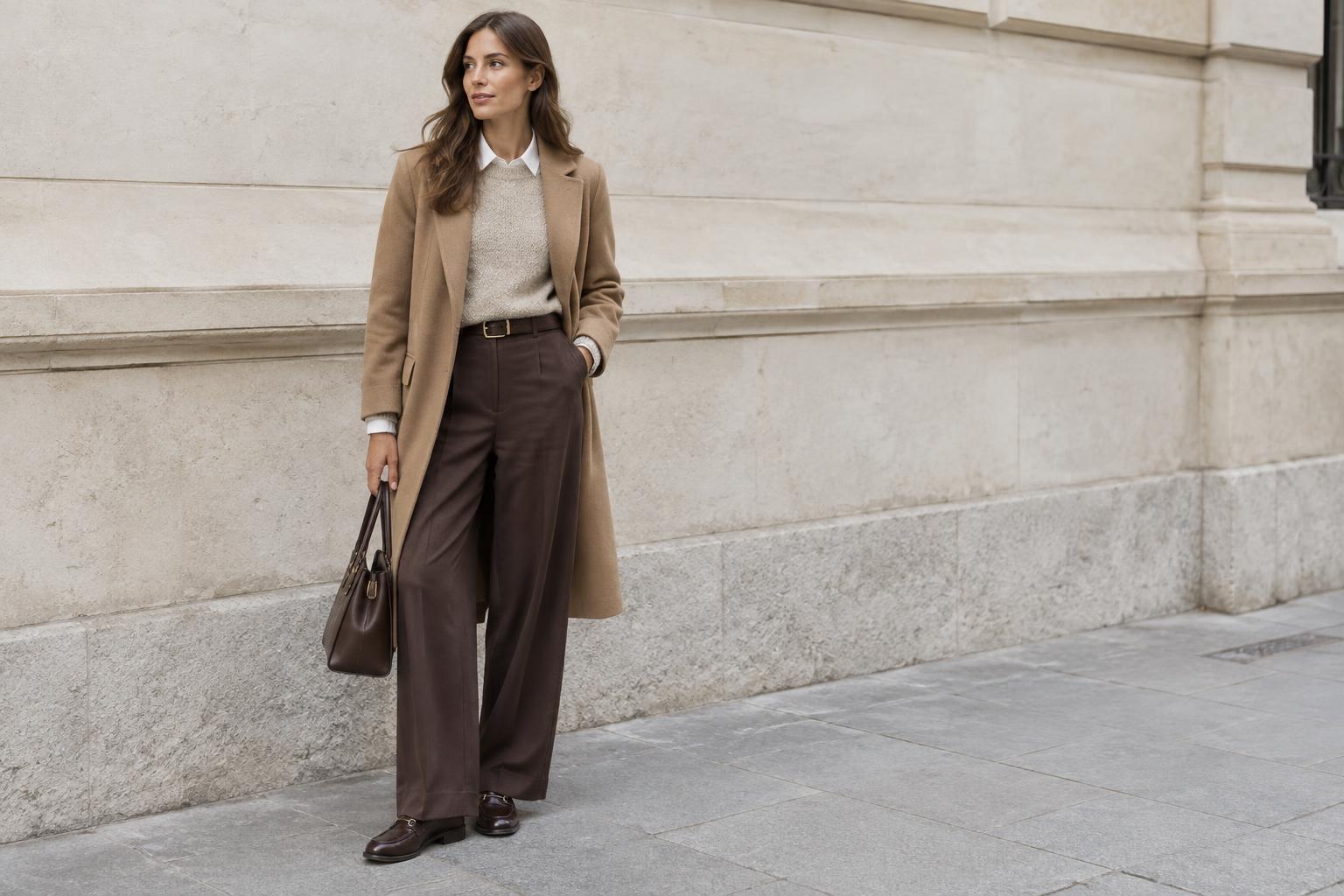
Neutrals count when they are visually prominent. A camel coat over black trousers and a white top presents three distinct colors, even if each is easy to pair. On the other hand, a white undershirt showing only at the collar may not affect the overall impression. This flexible approach keeps the rule useful in real wardrobes.
When fewer—or more—colors work better
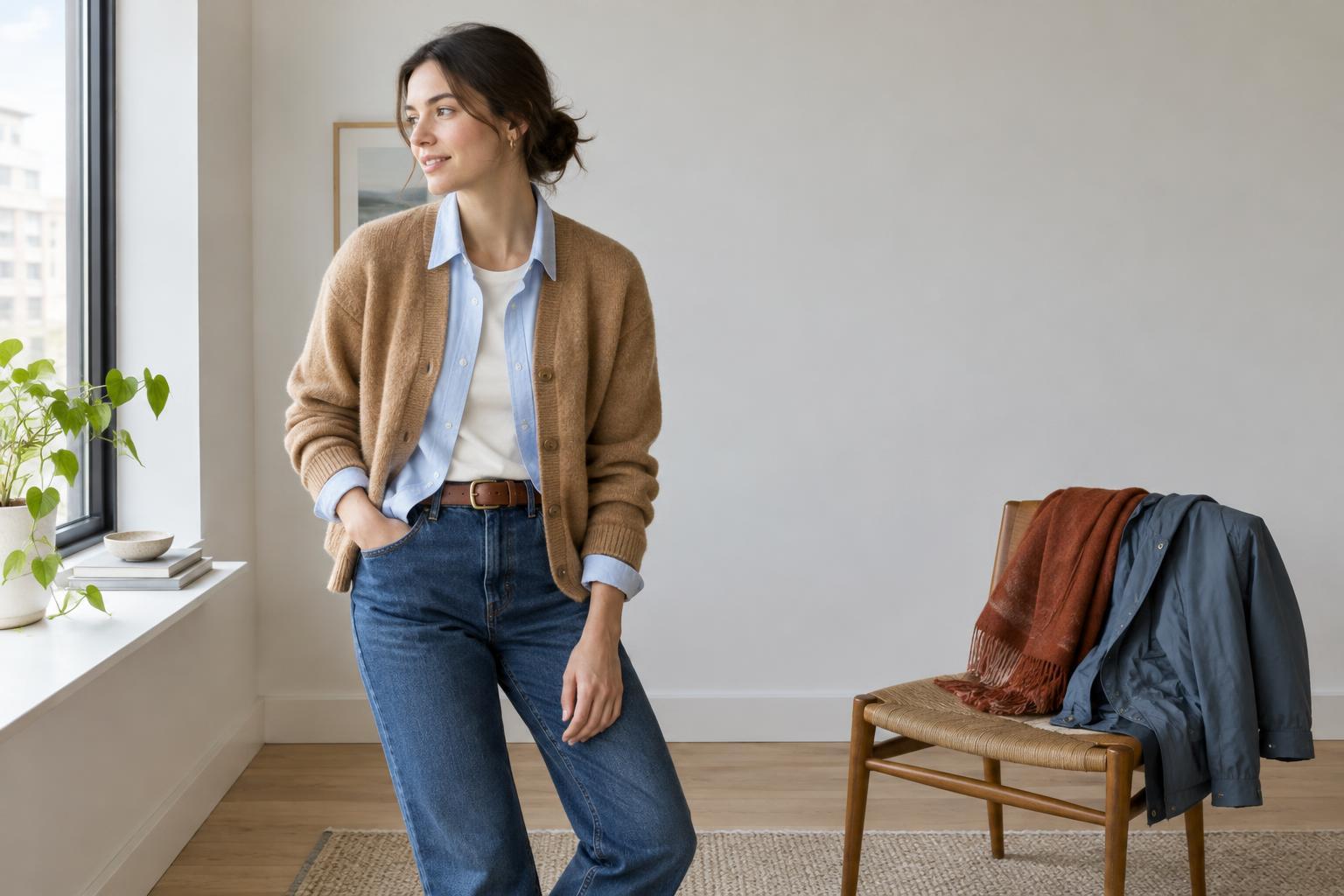
Ignore the rule when it gets in the way of a look you like. One-color dressing can be expressive, especially when you mix textures: a soft knit, crisp cotton and smooth leather can add depth to an all-brown outfit. Closely related shades also give you variety without sharp contrast. Try a pale blue shirt, mid-blue jeans and a deep blue overshirt, then decide whether the result needs an accent at all.
More than three colors can work when they share something. A multicolored scarf may tie together a green coat, blue jeans, cream knit and burgundy shoes if those shades appear in its pattern. You can also let one bright piece lead while keeping the other colors muted. What matters is whether the outfit has a clear point of focus and whether the colors feel deliberate to you.
Before changing clothes to satisfy a number, check the outfit’s overall balance. Is one element unintentionally distracting? Could repeating a color make the pieces feel more connected? If the answer is no and you feel comfortable wearing it, the rule has already done its job: it gave you a way to look closely, then let you choose for yourself.