Pack for the trip you expect to take
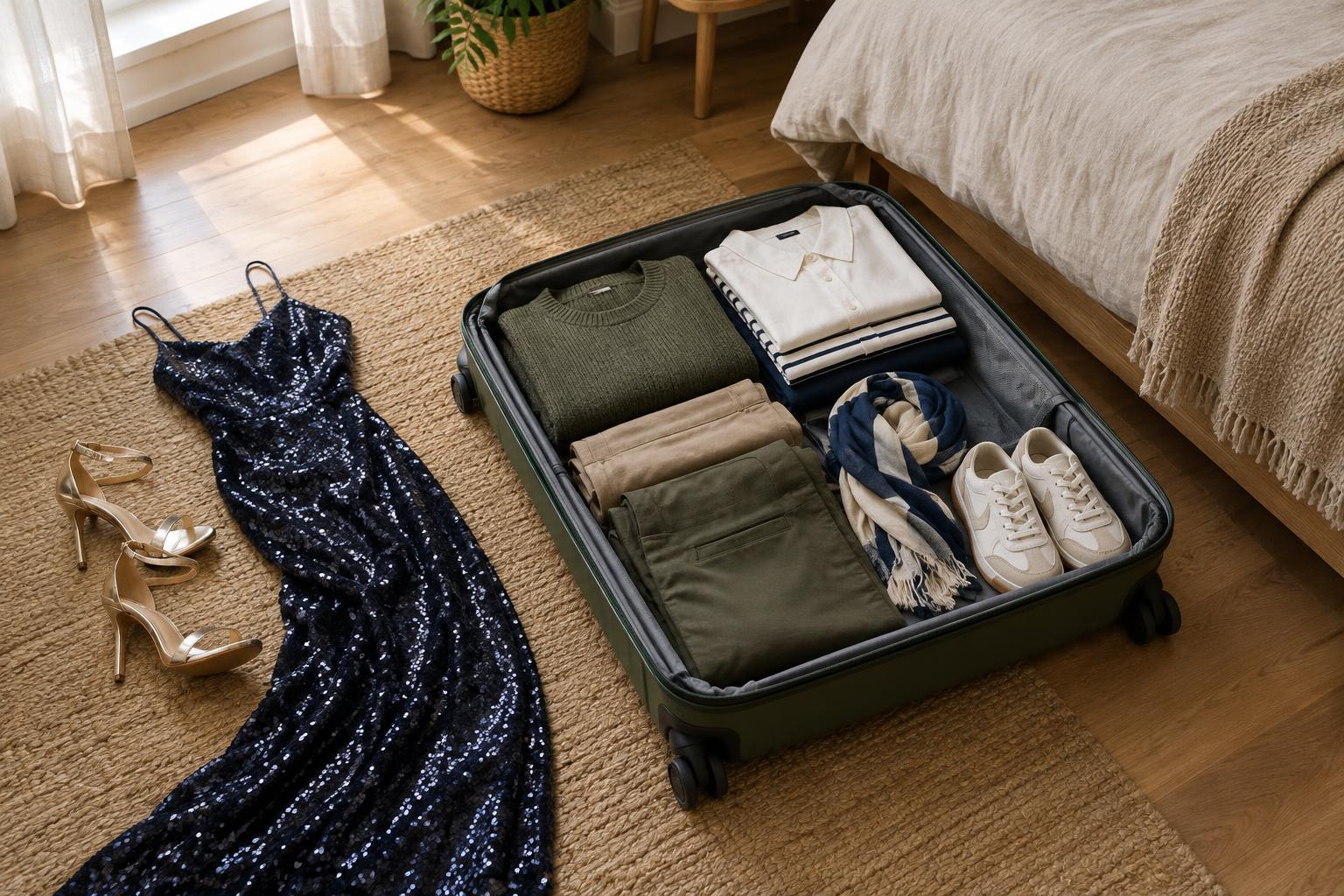
It is easy to fill a suitcase with clothes for possible versions of a trip: a formal dinner, an ambitious hike, a sudden change in style. Those plans might happen, but each unlikely scenario can add another garment that never leaves the bag. Start with what you know instead. Note your travel days, planned activities, likely dress codes and access to laundry. Then identify the outfits those days call for.
Leave some room for flexibility without packing a separate wardrobe for every possibility. A neat shirt that works with your daytime trousers may also suit an unplanned dinner. A comfortable layer can serve on a cool evening and during a chilly journey. If a possible activity requires special clothing, consider how likely it is and whether you can reasonably use something already in your bag.
Build complete outfits, not a collection of favorites
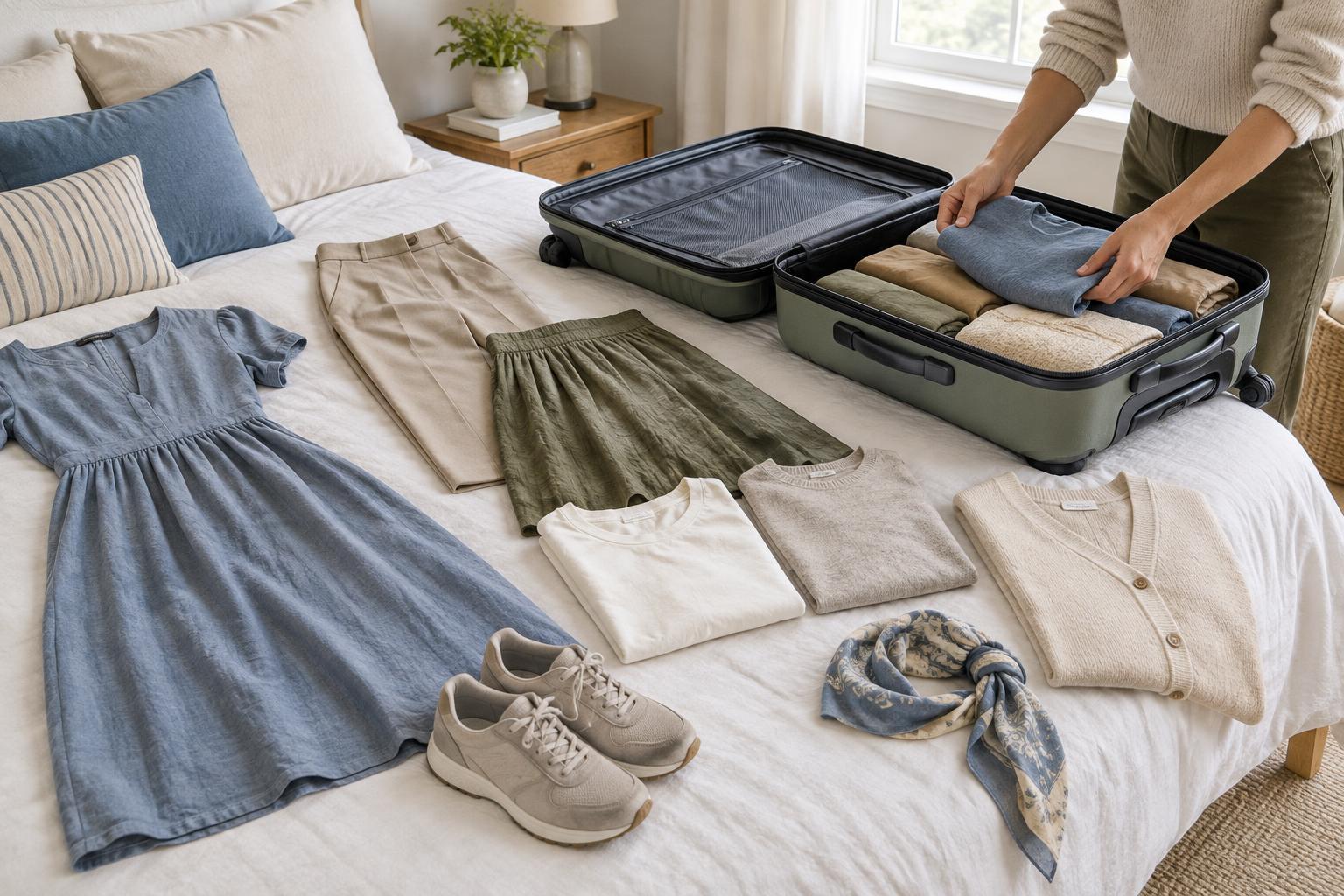
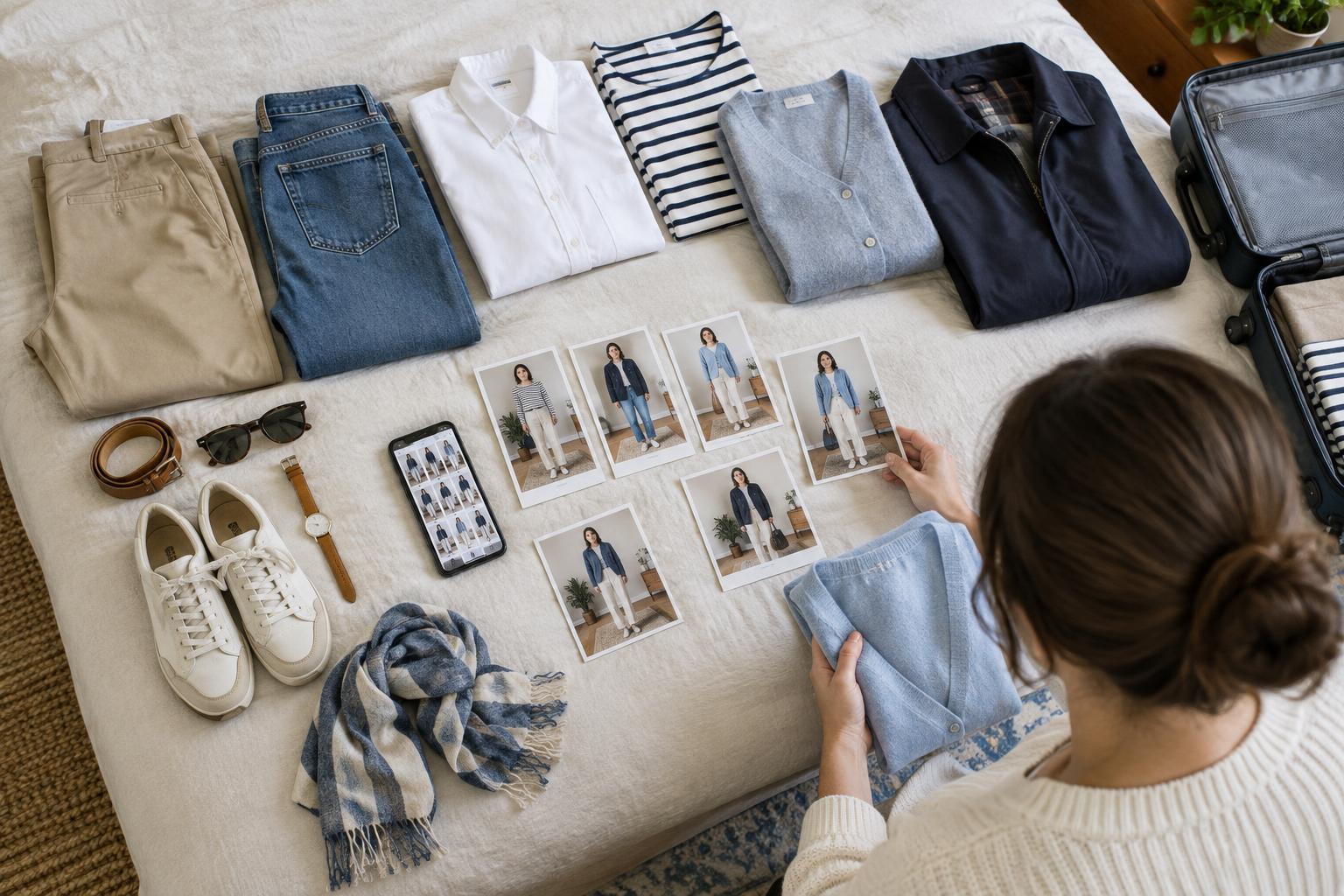
A suitcase can contain clothes you love and still offer few outfits. This often happens when each item was chosen on its own: a striking top needs different trousers, a skirt needs shoes you did not bring, or two layers cannot be worn comfortably together. Before packing, lay out complete looks, including shoes and outerwear. Try on combinations if the fit or proportions are uncertain.
Choose a few pieces that connect several outfits. For example, one pair of trousers might work with a T-shirt for sightseeing, a shirt for dinner and a sweater for travel. Repeating a garment is not a packing failure; it is how a smaller wardrobe becomes useful. If a piece works with only one other item, decide whether that single outfit earns its space.
Give your colors and layers a shared purpose
You do not need a perfectly coordinated capsule wardrobe, but a loose color plan makes mixing easier. Pick a small group of colors you enjoy wearing and check that your main layers work with your bottoms. Neutrals can provide a base, while a favorite color adds variety through a shirt, scarf or other accessory. The goal is not to make every outfit look alike; it is to avoid carrying pieces that have no companions.
Think about layers as actual combinations, too. A jacket should fit over the tops you plan to wear beneath it. A warm sweater may be useful on its own but awkward under a close-fitting coat. For variable conditions, lighter layers can offer more options than one bulky piece, provided they suit your destination and activities. Check the forecast close to departure, then keep the clothing plan grounded in the conditions you are likely to face.
Do not let shoes dictate the suitcase
Shoes are easy to underestimate because they can change both the comfort and the look of an outfit. A pair that works for a short dinner may not suit a full day on your feet. Conversely, packing several pairs for hypothetical occasions takes up space quickly. Begin with the shoes your most frequent activities require, then see whether another pair fills a real gap.
Check each planned outfit against the shoes you are bringing. If a hem, style or level of formality works with only a pair left at home, adjust the outfit before it goes into the suitcase. Wear shoes you already know are comfortable for substantial walking rather than relying on a new pair to become comfortable during the trip.
Make one final outfit check
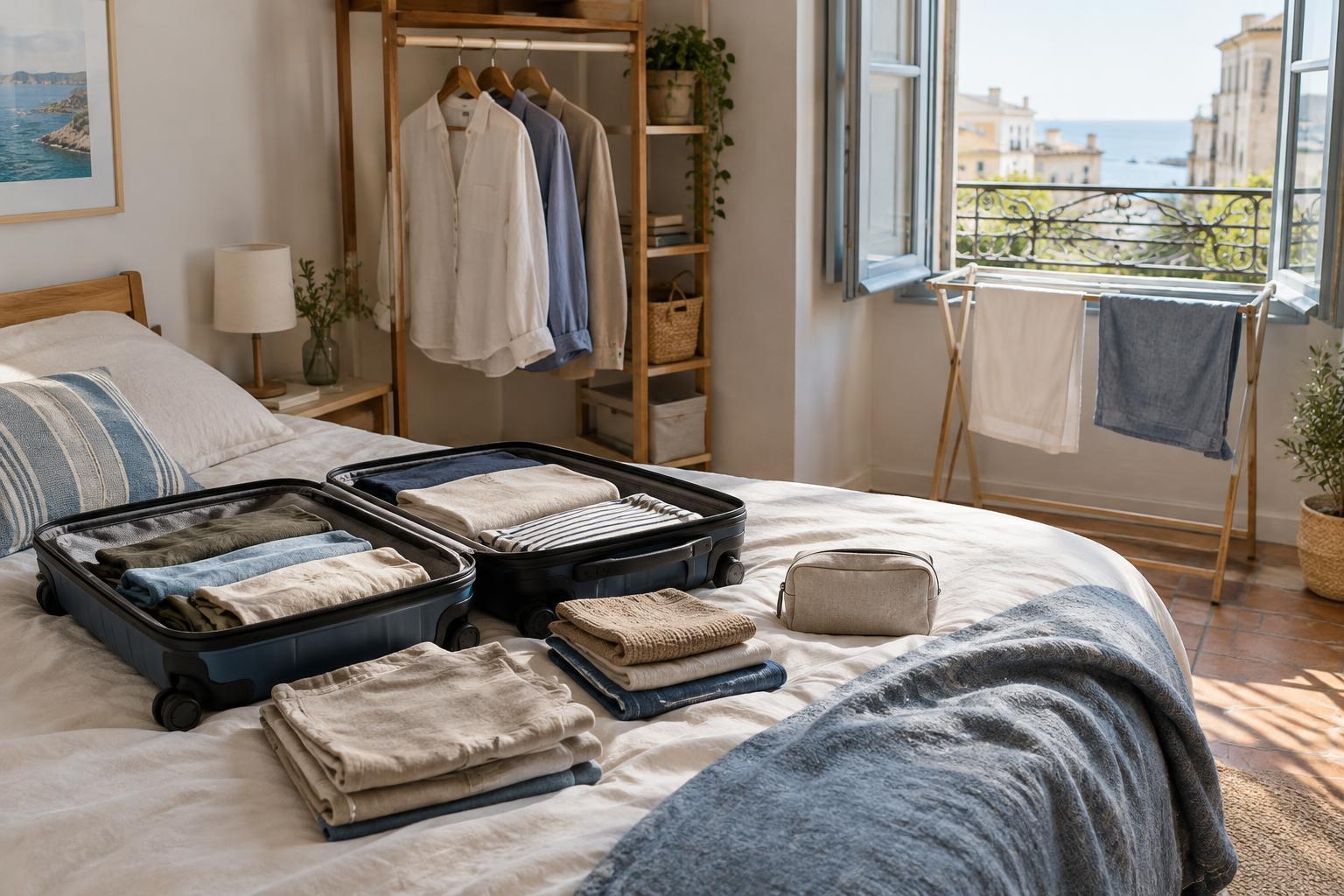
Once everything is selected, review your packed clothes by day rather than by garment type. Can you dress for your main plans without depending on an item that might be in the wash? Do you have appropriate underwear, socks and any necessary accessories? If you expect to rewear pieces, consider how they will stay fresh between uses. Fabric choice, drying time and laundry access can matter as much as the number of outfits.
Finally, remove the items that belong only to vague plans or require missing pieces to work. Keep a little flexibility for a change in weather or schedule, but make it flexibility you can actually wear. A useful travel wardrobe is not the one that covers every imagined event. It is the one that helps you get dressed comfortably for the trip in front of you.