Why the names can be confusing
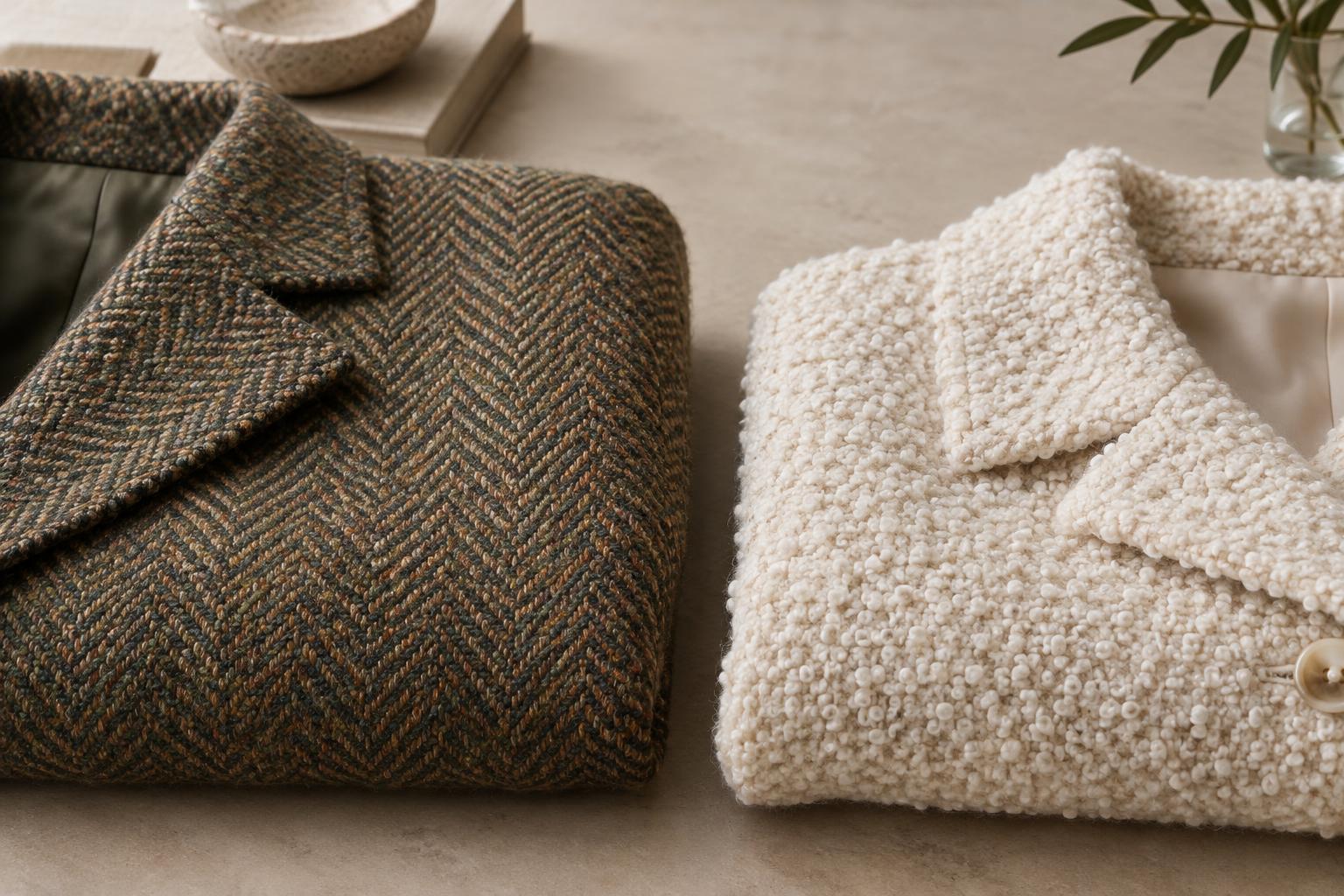
A textured jacket with flecks of color might be called tweed in one shop and bouclé in another. The labels are not necessarily describing the same feature. Tweed is generally a woven fabric associated with a firm, textured surface, often made from wool. Bouclé describes a looped yarn or a fabric made with looped yarns. A fabric can therefore have qualities of both: a tweed-like weave might include bouclé yarn that gives it visible curls.
This distinction is useful when you are shopping, because appearance alone does not tell you how a garment will feel or behave. Two jackets with similarly nubby surfaces may differ in weight, drape and snag resistance. Treat the fabric name as a starting point, then look closely at the cloth and check its fiber-content and care labels.
What to look for in tweed
Start by looking beneath the surface texture. Tweed usually has an identifiable woven structure: threads cross over and under one another, even when the yarns are thick or uneven. You may notice small color flecks, a diagonal pattern, a check or a herringbone design. Run your hand lightly over the fabric and it may feel grainy, compact or softly fuzzy rather than distinctly looped.
Tweed is often chosen for pieces that benefit from some body, such as blazers, coats, skirts and trousers. That does not mean every tweed is heavy or stiff. The weight and finish vary, and the lining and cut of a garment affect how it wears. If you want a jacket that holds a defined shape, examine the whole garment rather than relying on the word “tweed” on its tag.
What makes bouclé look different
Bouclé yarn has small loops or curls along its length. When used in a fabric, those loops create an irregular surface that can resemble tiny knots, rings or soft bumps. From a short distance, the cloth may look plush or pebbled; up close, you can often pick out individual looped strands. Bouclé fabrics may be woven or knitted, and they can contain wool, cotton, synthetic fibers or blends.
A bouclé cardigan and a bouclé jacket may feel quite different. The cardigan might stretch and hang softly, while a woven jacket might have a structured shape. The loops also vary: some sit close to the surface, and others project enough to catch on jewelry or a rough bag strap. If a piece will see frequent wear, gently brush a fingertip across it to get a sense of how exposed the loops are. Avoid pulling any loose-looking yarn.
A simple way to compare them in a shop
First, step back and notice the overall effect. Is the texture created mainly by a visible crossing pattern and flecked yarns, or by little curls standing out from the surface? Then move closer and inspect an area near a seam, where the fabric structure may be easier to see. A regular interlacing of threads points toward a woven cloth; prominent loops point toward bouclé yarn. Neither observation, by itself, rules out the other name.
Next, consider the garment in use. Hold a jacket by its shoulders to see whether it keeps a crisp outline or falls more softly. Check whether a sleeve brushes comfortably against your skin, and whether a shoulder bag catches on the surface. Read the label for fiber content and care instructions. Those details are more helpful for everyday decisions than assuming that all tweed feels sturdy or all bouclé feels delicate.
Styling and caring for textured pieces
Both fabrics can add interest to an otherwise simple outfit. A flecked tweed blazer works with a plain knit and trousers because its colors and weave supply detail without requiring a busy print. A looped bouclé jacket can play a similar role over a smooth top and straight-leg jeans. If the garment has several colors, choose one quieter shade from the fabric for the rest of the outfit. Smooth accessories provide contrast and let the texture stand out.
For care, follow the garment label rather than the fabric name. After wearing, allow the piece to air out and store it with enough space that its surface is not crushed. A soft garment brush may lift surface dust from some woven pieces, but test gently in an inconspicuous spot. With bouclé loops, be especially careful around sharp jewelry, hook-and-loop fasteners and abrasive bags. If a yarn catches, do not tug or cut it immediately; easing it back into place may preserve the surrounding fabric.