What makes a fabric a pile fabric?
Run your hand across a smooth cotton shirt, then across a velvet jacket. The jacket has a raised surface made from fibers or yarns that stand above a base fabric. That surface is called pile. Pile can be cut into short ends, left as loops or brushed in a particular direction. These differences affect how a garment looks, feels and responds to wear.
A useful first question is not simply whether a fabric feels soft, but what creates that softness. Short, dense pile may reflect light differently depending on which way it lies. Loops can give a fabric a more casual, absorbent feel. A brushed surface may look fuzzy without having the same construction as velvet or terry. Knowing what you are touching makes it easier to choose a texture for the way you will wear it.
Velvet, velour and terry are not interchangeable
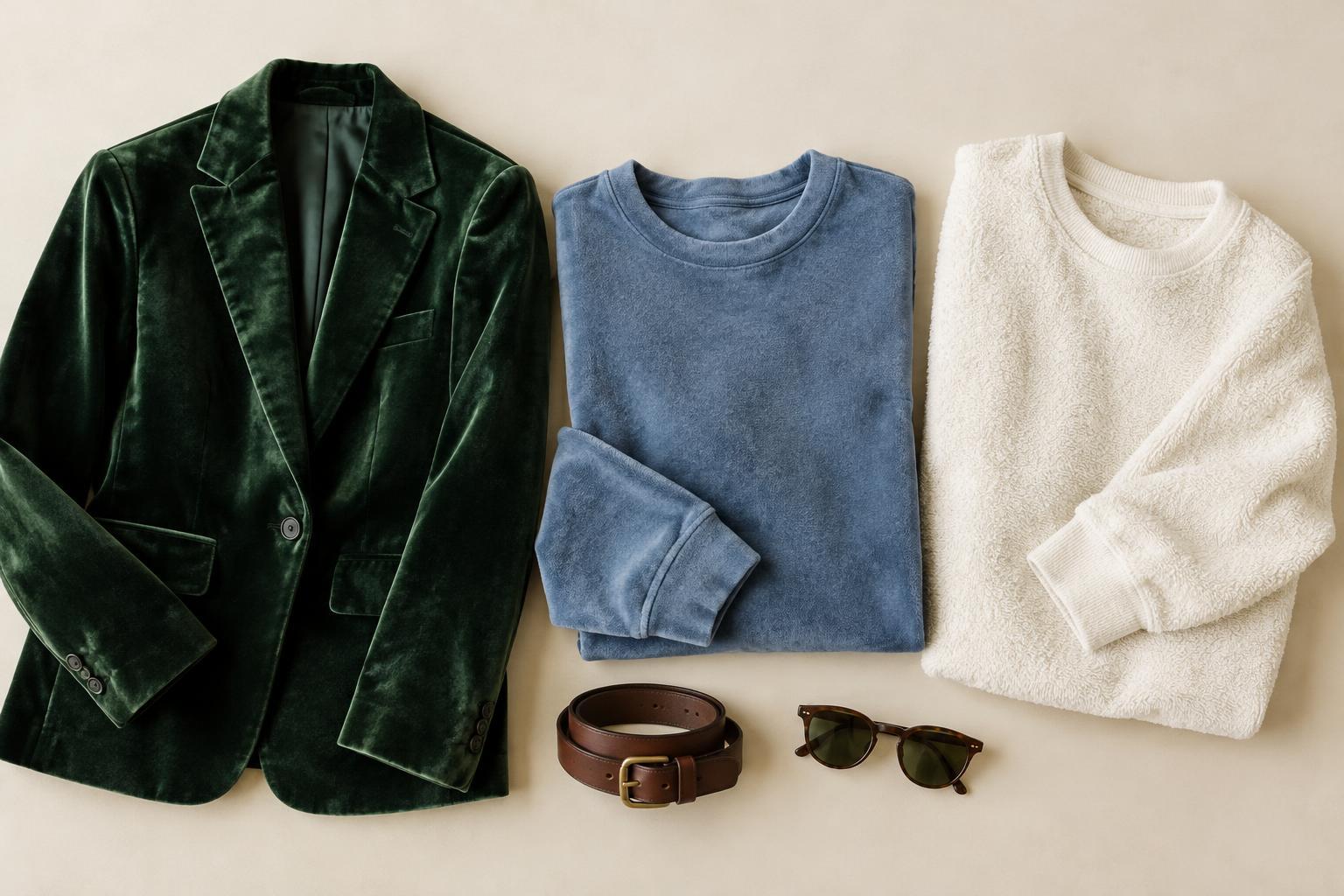
Velvet usually has a closely cut pile on a woven base. Its surface can look deep or luminous as the pile catches light, making even a simple shape feel more dressed up. Velvet is not a fiber: you may encounter versions made with different fibers or blends, which can change the garment’s weight, drape and care requirements.
Velour generally has a soft cut pile on a knitted base. Compared with many velvets, a velour garment may have more give and a more relaxed appearance. That can suit a comfortable zip-up top or easy trousers, though the actual fit depends on the knit and the garment’s design.
Terry is best recognized by its loops. Familiar towel-like terry has visible loops; French terry, often used in sweatshirts and casual trousers, commonly has loops on the inside and a smoother face. Look at both sides of the fabric before buying. Two garments described as terry can feel quite different against the skin.
Check the surface before you commit
If you can examine a garment in person, tilt it toward and away from the light. On cut-pile fabrics, areas that appear lighter or darker may simply have pile lying in different directions. Gently brush one small area with your hand to see whether the appearance changes. Check seams, pocket edges and elbows for flattened patches, especially on a secondhand piece.
Next, consider what will touch the fabric during a normal day. A shoulder bag may press against a velvet jacket; a coat worn over velour may create friction along the sleeves. This does not mean you must avoid either combination, but it helps to know where the pile might flatten or pick up lint. For terry, inspect the loops for snags and consider whether jewelry or a hook-and-loop closure might catch them.
Product photos can show the overall effect, but close-up images are more useful for judging pile length and density. If you are shopping online, read the composition and care label rather than assuming that a fabric name tells you how to wash it.
Use pile to set the tone of an outfit
Pile adds visual depth, so it can do the work of a print without introducing another color. For a restrained outfit, try a velvet blazer over a plain top and smooth trousers. The contrast keeps the raised surface noticeable while letting the rest of the outfit stay simple. A matching dark color across the pieces can make the change in texture especially clear.
Velour suits a softer, more relaxed approach. Pair a velour top with crisp cotton trousers if you want comfort without making every piece feel lounge-like. French terry works well as an everyday base: a sweatshirt under a structured coat offers a contrast between its casual knit and the coat’s cleaner lines. If several pile fabrics compete in one outfit, vary their scale or separate them with a smooth layer.
Keep the pile looking intentional
Start with the garment’s care label, since fiber content and construction matter as much as the fabric name. Before washing a washable pile garment, turn it inside out when the label permits and keep items with rough fasteners away from delicate surfaces or loops. Avoid overloading the machine so garments have room to move.
After wear, give a pile garment space rather than leaving it compressed under a stack of clothes. Hanging may help some jackets retain their shape, while a heavier knit may be better folded to avoid stretching. If the surface looks flattened, resist aggressive rubbing or ironing directly on the pile. A gentler approach, guided by the care label, is less likely to leave a conspicuous patch. With pile fabrics, preserving the surface is part of preserving the outfit.